The women's major season resumes this week, though not yet at Royal Lytham. The ISPS HANDA Women's Scottish Open tees off Thursday at Dundonald Links, the last tune-up before the AIG Women's Open opens July 29 with the Final Practice and Pro-Am, ahead of competitive play beginning July 30. Here's why this build-up week matters almost as much as the major itself.
Ryu Hae-ran won the Evian Championship in a playoff over Brooke Henderson on July 12, the last women's major on the calendar.
The LPGA moves to Dundonald Links in North Ayrshire for the Scottish Open, July 23 to 26, the final tune-up before the next major.
The AIG Women's Open opens July 29 at Royal Lytham & St Annes with the Final Practice and Pro-Am, ahead of competitive play beginning July 30.
What happened at the Evian Championship
The Evian Championship, the most recent women's major, wrapped July 9 to 12 with Ryu Hae-ran beating Brooke Henderson in a playoff. It was the kind of finish that resets the conversation heading into the back half of the women's major season: a fresh champion, a proven contender in Henderson who took it to extra holes, and a two-week gap before the tour's attention turns fully toward Lancashire.
That gap isn't dead time. It is exactly the stretch where a player's game either holds its form or drifts, and where the rest of the field either arrives at the next major sharp or still searching. A playoff finish carries its own momentum question too: does the winner arrive at the next start carrying that form forward, or does the emotional and physical toll of extra holes leave a hangover a couple of weeks later? Neither answer is obvious from the Evian result alone, which is exactly why the build-up week exists on the calendar in the first place. It gives every contender, winner included, one competitive week to answer that question before a major is on the line again.
The Scottish Open is where that question starts to get answered.
The Scottish Open's role as the last tune-up
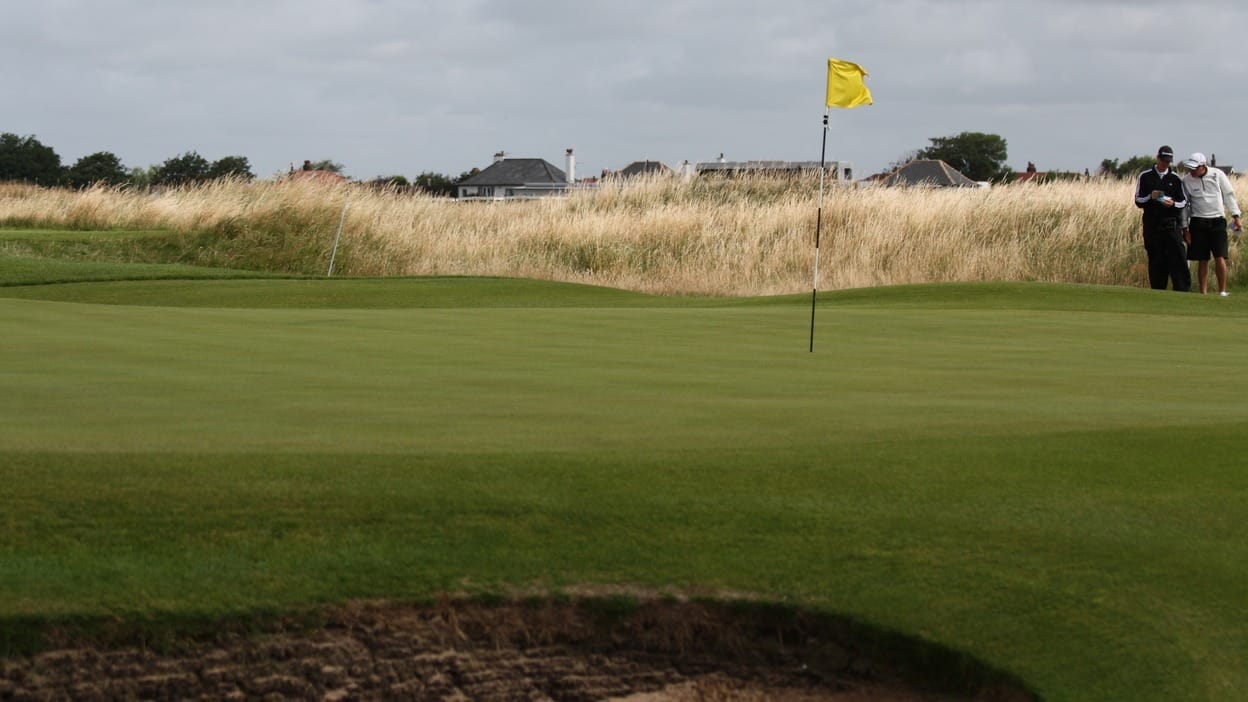
The ISPS HANDA Women's Scottish Open isn't a major. It carries the same job the men's Scottish Open carries every July: the final competitive dress rehearsal before the sport's biggest week, played on the kind of coastal turf that will define the major itself. On the men's side, this site covered why the Scottish Open functioned as the Open's final dress rehearsal in exactly these terms, and the logic holds just as well here. Royal Lytham & St Annes is a links course. Dundonald Links, on the Ayrshire coast, is too. A player who figures out how to control ball flight in the wind at Dundonald this week arrives at Lytham already having done the hard part once.
That is the real value of a build-up week: it isn't a lesser event tacked onto the calendar before the one that counts, it is a rehearsal for the specific conditions the major will demand. Parkland golf and links golf are close to different sports played with the same clubs. A tee shot that carries and stops on a soft inland fairway can bounce through a green's worth of run-out on a firm coastal one, and a putt that reads straight on a sheltered green can drift a foot in a crosswind off the water. Players who spend the season on tour stops built around target golf get exactly one week, this week, to recalibrate before the conditions change under them completely.
What to watch at Dundonald Links this week
The Scottish Open field will include players making their final case for form heading into a major, and the round-by-round story worth following is less about the leaderboard on Thursday and more about who is still playing clean, controlled golf into a coastal wind by Sunday. Scores at a links venue tend to run higher than a standard tour stop, and a player who can post a respectable number here, rather than fight the course all week, is a player worth watching again at Lytham.
The tournament runs July 23 to 26, giving the field four rounds to work out exactly the kind of shot-shaping and wind management that a parkland-style venue never tests. Four rounds is also enough to expose the difference between a player having one good day in the wind and a player who has actually solved it, which is the distinction that tends to separate a strong Scottish Open finish from a genuine major contender the following week. A single good round at a links course can be luck of the draw, catching calmer weather in the morning wave. Four rounds of solid golf across changing conditions isn't luck.
The road to Royal Lytham
Championship week opens Wednesday, July 29, with the Final Practice and Pro-Am, before competitive play begins Thursday, July 30, and runs through Sunday, August 2, at Royal Lytham & St Annes, a course with a long championship pedigree on the men's side as well. The men's major season, for comparison, already has its 2026 champion crowned: Fox won at Birkdale by one shot to close it out earlier this month. The women's season is still building toward its next chapter, which is exactly what makes this week matter. The Scottish Open isn't the story. It is the last data point before the story starts.
That is the pattern worth watching through the rest of the summer: one major closes, a build-up week sets the terms, and the next major opens with a field that has either adapted or is about to find out it hasn't. Ryu Hae-ran arrives at Dundonald as the most recent major winner, but a playoff win two weeks ago says nothing about how her game holds up on a firm, wind-exposed coastal layout, and that is precisely the kind of question this week is built to answer before Lytham does it for real.
For a sport that runs almost year-round, the gap between majors is where the real groundwork gets done, and this is the week it happens.