
The Right Order to Fit Your Own Driver
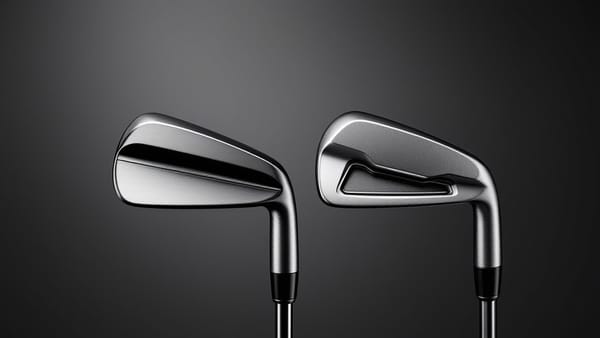
Fit your own driver in the right order: length, then loft, then shaft, then face angle. Skip a step and you fit the wrong target.
Expert tips, guides, and insights to help you play your best golf.
How to Plan a Golf Trip That's Actually Worth the Money
A framework for judging a golf trip before you book it: the real cost per round, when to go, and how to match the course to the golf you actually play.
Fit your own driver in the right order: length, then loft, then shaft, then face angle. Skip a step and you fit the wrong target.
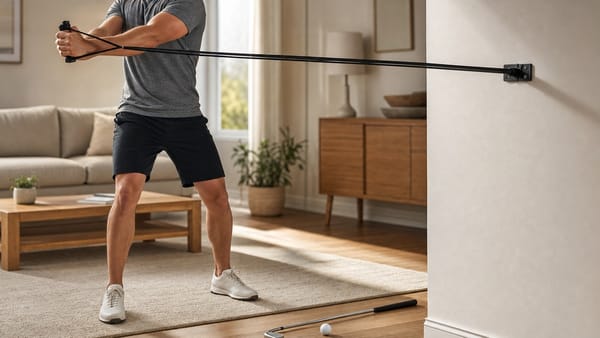
Most golfers practice. Fewer test whether that practice transferred. The gap between those two things is where handicaps stall, and it's the problem the 10-Shot Validation System is designed to close. 1. 1The 10-Shot Validation Check is an exit protocol, not a drill. You run it
Breaking 100 is a strategy problem, not a swing problem. The data on where 100+ golfers lose strokes points to big-number holes, three-putts, and short-game decisions inside 100 yards, not driving distance.
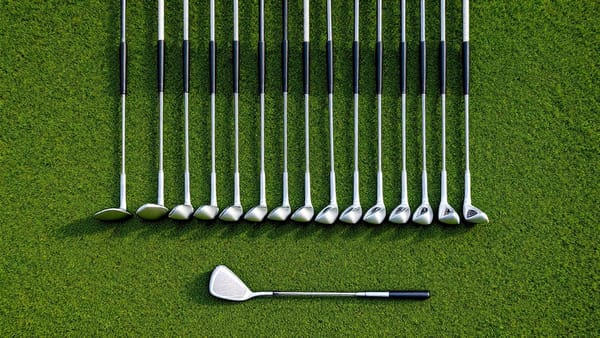
Most golfers have an undetected loft gap in their scoring zone. Here's how to audit your wedge setup and fix the configuration for your game.
Strokes gained appears on Arccos dashboards, Shot Scope summaries, and Garmin Golf reports. Most golfers glance at it, don't fully understand what it's measuring, and move on. That's a mistake, because strokes gained is probably the single most useful piece of data an amateur
The launch monitor total cost guide on this site lays out the five-year TCO for every major device on the market. A predictable follow-up question arrives: what if I bought used? The honest answer is that it depends almost entirely on how the device handles subscriptions. A used
There are two things most golfers believe about custom fittings that aren't quite right. The first is that fitting is something you earn: you need to be a certain level of player before it's worth your time or money. This is backwards. A higher handicapper playing
If you've spent any time with a launch monitor, you've seen the number. Smash factor sits there alongside ball speed and club head speed, gets glanced at, and then gets ignored in favor of carry distance. That's a mistake, and a correctable one: smash
The price you see on the product page isn't the price you'll pay over five years. For most launch monitors in this comparison, hardware accounts for 80% or more of the total five-year cost. The remaining 20% arrives in layers: annual platform subscriptions, sim software
A launch monitor is a device that measures the physics of your golf swing and ball flight, including club head speed, ball speed, launch angle, spin rate, and carry distance. It gives you accurate, objective data about your game instead of estimates.
No, but having one makes your practice more efficient. Without data, you are guessing whether a swing change is working. With a launch monitor, you can see exactly what changed and whether it moved in the right direction.
James Whitfield synthesizes published data from independent testing labs (MyGolfSpy robot testing, Golf Digest equipment labs), verified club fitter and instructor assessments, and long-term ownership reports. He does not run his own launch monitor sessions. Every performance claim is attributed to a named source with a date.