How to Choose the Right Golf Ball for Your Game
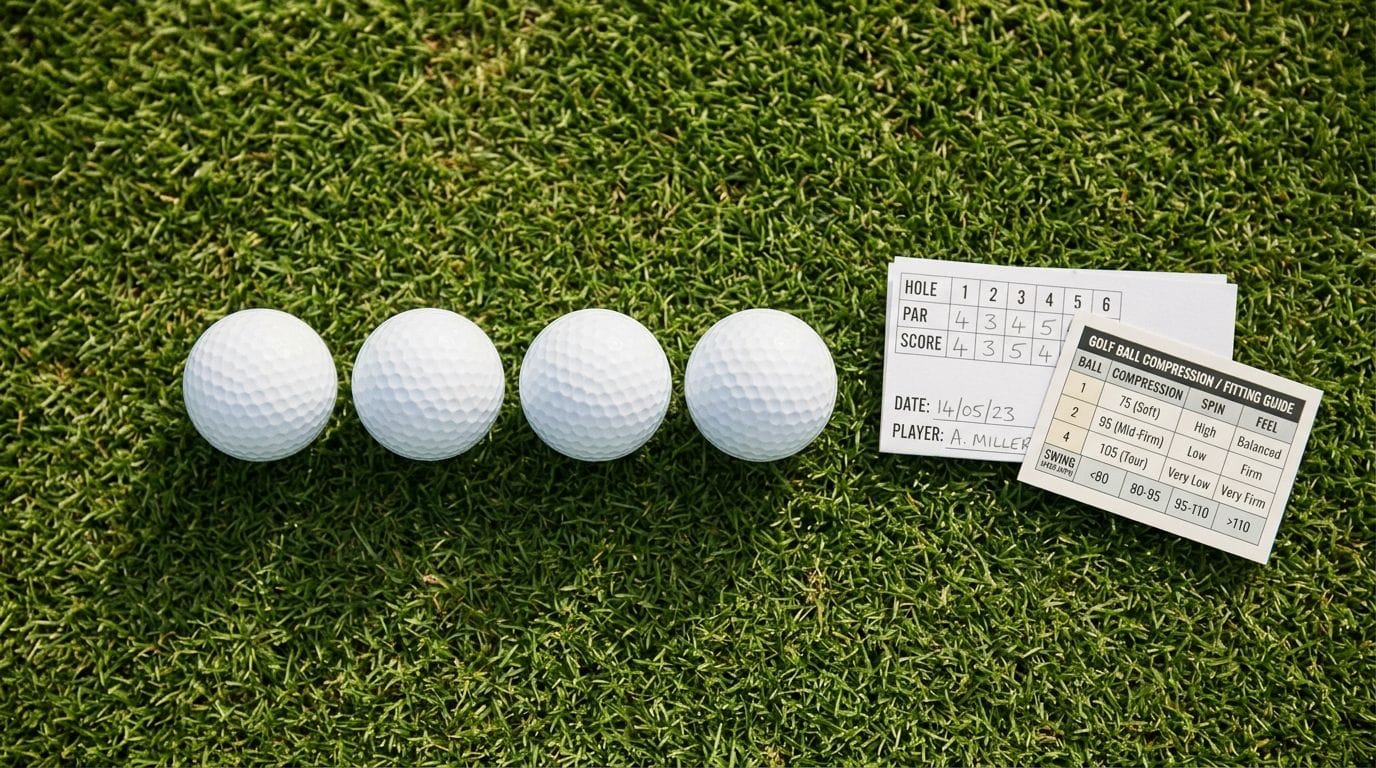
Most golfers pick a ball the way they pick a gas station snack: whatever's in front of them, or whatever's on sale. A dozen Pro V1s went on clearance at the pro shop. Someone left a sleeve of Callaway Supersoft in the cart. The ball selection process ends there.
The problem is that ball fitting is one of the few equipment decisions where the mismatch between golfer and gear is measurable in real time, on the course, without any special equipment. A golfer with a slow swing speed playing a high-compression ball loses distance because the ball doesn't compress correctly at impact. A mid-handicapper playing a soft ionomer ball around the green doesn't get the spin control a urethane cover provides. Both of these are correctable with a different ball.
This isn't about brand loyalty or equipment status. It's two variables: compression and cover material. Get those right for your swing speed and scoring range, and the rest is marketing.
The mid-handicapper guide on this site runs this same analysis with full robot-test data: seven specific products, detailed numbers, side-by-side comparisons. If that's the level of detail you're looking for, start there. If you haven't made a deliberate ball choice yet, this is the right entry point.
- 1Match compression to swing speed first. Under 85 mph (137 km/h): low compression. 85 to 100 mph (137 to 161 km/h): mid compression. Over 100 mph (161 km/h): high compression. Playing the wrong compression loses distance without changing your swing.
- 2Cover material is the second variable: urethane gives more spin and feel around the green; ionomer is more durable and forgiving. For most golfers shooting above 90, ionomer is fine.
- 3Price doesn't equal fit. A premium urethane ball played by a slow-swing-speed golfer doesn't outperform a well-matched lower-compression ionomer. The match matters more than the brand.
- 4The fastest way to find your fit is a 9-hole split: play the first nine with your current ball and the back nine with the candidate ball, tracking distance, wedge behavior, and feel.
- 5Four options cover most golfer profiles: Callaway Supersoft for slow swing speeds, Srixon Soft Feel for mid-swing ionomer, TaylorMade TP5 as a mid-price urethane option, and Titleist Pro V1 for fast swing speeds and short-game feel.
- 6If you have a launch monitor, smash factor and spin rate give you the numbers to confirm fit. If not, feel at impact and distance consistency are the right proxies.
Why ball fitting actually matters
The case for fitting a ball to your swing isn't about marginal gains. It's about a predictable, correctable error that's built into every shot when the ball doesn't match the golfer.
Compression is the central mechanism. Every golf ball is designed to compress and rebound at a specific force, which corresponds roughly to club head speed at impact. A ball with a compression rating too high for your swing speed doesn't compress fully at impact: it bounces off the face with reduced energy transfer, lower launch, and shorter carry. A ball too soft for a fast swing overcompresses, losing the rebound efficiency the design intended.
The distance implication is real. Independent ball testing consistently shows that playing a mismatched compression can cost a slow-swing-speed golfer meaningful carry distance compared with a well-matched alternative at the same swing speed.
The cover material implication matters more around the green than off the tee. A urethane cover interacts with wedge grooves to generate spin; an ionomer cover generates less. For a golfer whose short game depends on stopping the ball quickly from tight lies, the difference between cover types is real. For a golfer who runs the ball onto greens anyway, it isn't.
Compression explained
Compression is a number that describes how much a ball deforms under the load of impact. Lower compression means the ball deforms more easily; higher compression means it requires more force to activate.
The standard guidance divides compression into three tiers based on swing speed:
| Swing speed | Compression range | Examples |
|---|---|---|
| Under 85 mph | 55 or below | Callaway Supersoft (~38), Srixon Soft Feel (~60) |
| 85 to 100 mph | 65 to 90 | TaylorMade TP5 (~85) |
| Over 100 mph | 85 and above | Titleist Pro V1 (~87), Titleist Pro V1x (~100) |
The overlap between tiers is intentional. A golfer who swings at 90 mph may find a mid-compression ball that fits their tempo and impact feel better than a purely speed-based recommendation. Swing speed is the primary variable; feel is secondary.
If you don't know your driver swing speed, a Garmin GPS watch running the Garmin Golf app, or a round tracked with Arccos Caddie, will give you the number. The launch monitor TCO guide covers the full range of devices if you want the data directly from a launch monitor session.
Cover material: urethane vs ionomer
There are two main cover materials in consumer golf balls: urethane and ionomer (sometimes called Surlyn, a common trade name for this cover type).
Urethane is the cover material on premium tour balls: Pro V1, TP5, Srixon Z-Star. It's softer, generates more friction with wedge grooves, and produces higher spin on short shots. For a golfer with a consistent wedge game who needs to land the ball and stop it quickly, urethane provides meaningful short-game control.
Ionomer is harder, more durable, and lower-spin. It's the cover material on most mid-range and budget balls. For tee shots, the difference between urethane and ionomer is minor. Around the green, it's more noticeable, but the difference only matters when the golfer can already control trajectory, landing point, and technique with enough consistency to put that spin to use.
The honest takeaway for golfers shooting above 90: ionomer is fine. A Callaway Supersoft or Srixon Soft Feel provides adequate performance for every part of the game at this scoring level. The extra spin from a urethane cover matters most when the golfer is already landing chips and pitches in the right zone and the question becomes how much the ball releases afterward. That's when a switch to urethane is worth testing (which for James came about two years later than the data would have suggested, after one session on tight lies with a urethane sleeve made the spin difference obvious enough that he didn't switch back).
Ball recommendations by golfer profile
These four cover the most common golfer profiles across the compression and cover material variables.
Callaway Supersoft (for slow swing speeds)
Compression approximately 38, ionomer cover, two-piece construction. Designed for swing speeds under 85 mph. The low compression means a slower swinger still compresses the ball fully at impact, getting the energy transfer and launch that higher-compression balls don't provide at that speed. One of the best-selling balls in the US for this reason: the market has sorted itself and the Supersoft consistently comes out where slow-swing-speed golfers look for it. Priced at the lower end of the market, which makes the decision straightforward.
Srixon Soft Feel (for mid-swing speeds on an ionomer budget)
Compression approximately 60, ionomer cover. Works well across the 80 to 95 mph range for golfers who want a soft feel without the price of a urethane ball. Comes up regularly in GolfWRX discussions as the strongest ionomer option for mid-handicappers. For a golfer in this swing speed tier whose short game doesn't yet depend on urethane spin, there's no performance reason to pay more.
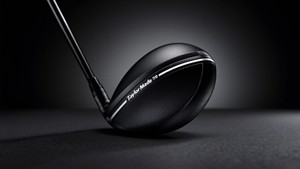
TaylorMade TP5 (mid-price urethane)
Compression approximately 85, urethane cover, five-layer construction. Designed for the 90 to 105 mph range. The TP5 comes up consistently in independent ball testing as the strongest mid-field urethane option: it competes with the Pro V1 on short-game spin while pricing about $5 to $10 per dozen cheaper depending on the retailer. For golfers around a 10 to 18 handicap who've tightened up their wedge game and want urethane performance without going straight to Pro V1 pricing, this is the right starting point.
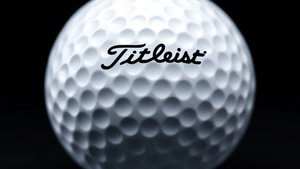
Titleist Pro V1 (for fast swing speeds and short-game feel)
Compression approximately 87, urethane cover. The most widely played ball on tour. Above 95 mph, the Pro V1 is doing exactly what it's designed to do: high ball speed, controlled spin on longer shots, high spin on wedge shots. It runs roughly $50 to $55 per dozen; for golfers who lose two or three balls a round, the TP5 is a better economic fit until the loss rate drops.
The one-session on-course test
Ball testing on a driving range is less useful than most golfers assume. Range balls have non-standard compression and durability, which means the feedback they give on feel and distance doesn't transfer to course conditions.
The practical test is a 9-hole split: play the first nine with your current ball and the back nine with the candidate ball. Track four data points after each round: driver carry on a familiar hole (a rough distance estimate from a known landmark is enough), wedge spin behavior (does the ball stop quickly or release?), putting feel (softer or firmer off the face?), and durability (any scuffing after nine holes that affects feel or distance?).
Nine holes isn't enough to draw firm conclusions from a single day, but two or three 9-hole split tests across different course conditions will surface a clear preference. Most golfers find the compression match reveals itself in driver feel and carry on the first hole. The cover material reveals itself around the green by hole four or five.
If you have a launch monitor, smash factor gives you a more direct read on whether the compression match is working. The smash factor guide explains the diagnostic in detail.
Frequently Asked Questions
What compression ball should I use with a 90 mph swing speed?
A swing speed of 90 mph puts you in the mid-compression range, roughly 65 to 85 compression. Balls like the Srixon Soft Feel (approximately 60) or TaylorMade TP5 (approximately 85) bracket this range. If feel is the priority and you don't need urethane short-game spin, the Srixon Soft Feel is a well-matched, lower-cost option. If you want urethane and your wedge game has the consistency to use extra spin, the TP5 is the right step up.
Does ball brand matter for high handicappers?
Not much. The variable that matters is compression match, not brand. A well-matched compression ionomer ball from any reputable manufacturer outperforms a mismatched premium ball for a slower-swinging golfer. High handicappers lose more strokes to penalty shots, three-putts, and short-game misses than they'd ever recover from a brand switch. Compression fit is real; brand-to-brand performance differences within the same compression tier are small enough that golfers above 90 won't measure them.
Should I use a urethane ball if I'm a bogey golfer?
Maybe, but it isn't the priority. For most bogey golfers, the short game isn't yet consistent enough to put urethane's extra spin to reliable use. A urethane ball costs more and doesn't provide an automatic spin advantage unless you have the technique and landing precision to use it. The more important decision at bogey-golf level is compression match. Once the short game tightens up and you're relying on wedge spin to control distance and release, that's the time to run the 9-hole split test with a urethane option.
What to do next
Start with compression. If you don't know your driver swing speed, a tracked round with a Garmin or Arccos setup gives you the number. Once you know the tier, the choice within that tier is mostly cover material: for most golfers above 90, ionomer is the right starting point.
If you're also working through a club fitting, the custom club fitting guide covers how ball selection interacts with the equipment fitting process.
Some links in this article are affiliate links. If you buy through them, I earn a small commission at no extra cost to you. This never influences what I recommend. I link to gear I'd buy myself.





The golf newsletter that cuts the hype
Data-backed reviews and advice that works. No brand spin.
Recommended products