Titleist Pro V1 2025 Review: Robot Data and Handicap Verdict
Tour's most-played ball, with independent data that holds up


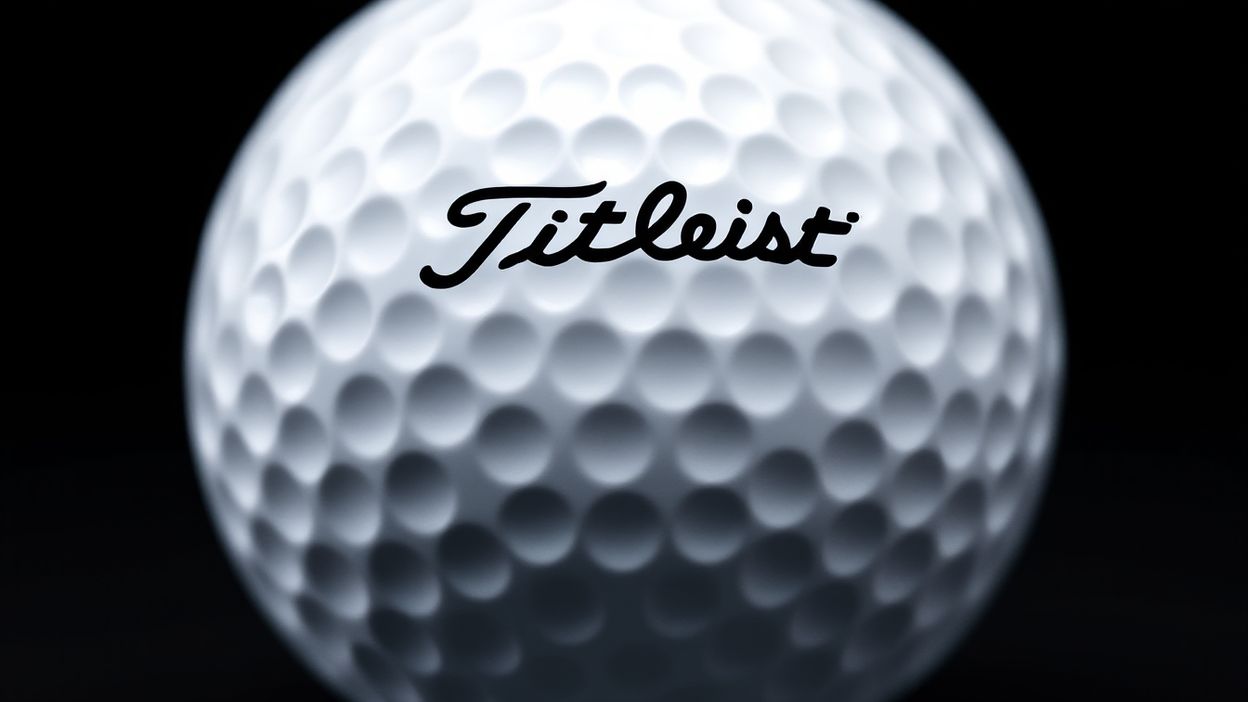
The Titleist Pro V1 is the default premium golf ball. Titleist reports that more than 73% of all teed balls on the PGA Tour in 2025 were Pro V1 or Pro V1x. That stat carries weight. But tour dominance doesn't tell a 14-handicapper whether $54.99 per dozen is money well spent or money better allocated to range sessions and a lesson.
This review synthesizes published data from multiple independent sources: Titleist’s published specifications and compression data, MyGolfSpy’s robot ball-flight testing (a primary benchmark for compression, spin, and carry accuracy in ball reviews), verified fitting-community analysis from GolfWRX, and real-world reports from r/golf and GolfWRX. Manufacturer compression ratings, spin claims, and carry figures are labeled as manufacturer figures throughout. Independent test results are attributed to their source with a date. James doesn’t run his own ball-testing sessions.
Here's what I do at Launch Point Golf: I don't test golf balls. I compile what the independent robot labs found, cross-reference the community data, and tell you what it means for your game. The 2025 Pro V1 has been through Loughborough University's Sports Technology Institute (for Today's Golfer) and MyGolfSpy's 2025 ball test. The data is in.
- 1.There’s no meaningful distance difference between Pro V1 and Pro V1x at mid-handicap swing speeds: just 0.2 yards separates them at 93 mph (MyGolfSpy 2025). Choose on feel.
- 2.The spin gap around the green is real: V1x generates 260 rpm more than V1 on a 40-yard pitch (36.6m). If greenside control is your priority, the V1x does more.
- 3.Pro V1 is not the spin leader in its tier: TP5, Tour B XS, and Chrome Tour X all out-spin it around the green in MGS 2025 testing.
- 4.Kirkland Performance+ v3.5 tested "slightly longer and straighter" than Pro V1 at $19.99 per dozen (MGS 2025). Worth knowing before paying the premium.
- 5.The value question: if you lose two or more balls per round, the Pro V1 premium doesn’t hold up. Above 85 mph with low ball-loss rates, the consistency and spin justify the cost.
What Titleist Changed in 2025
Titleist launched the 2025 Pro V1 and Pro V1x on January 25, 2025, billing the update as a "spin slope" reformulation. In plain terms: the new core is designed to produce lower driver spin (for carry distance) while maintaining or increasing wedge spin (for stopping power). Same cast urethane cover concept as the prior generation.
How much did it move the needle? Independent testing from Today's Golfer measured a 0.5 mph ball speed gain over the 2023 model. That's modest. Titleist's marketing will frame it as progress, and it is, but you won't feel 0.5 mph off the tee. The improvement is incremental, not a reason to switch from another premium urethane ball you're happy with.
The construction stays at three pieces (Pro V1) and four pieces (Pro V1x). The dimple patterns remain distinct: 388 tetrahedral on the V1, 348 on the V1x. This matters because dimple count affects trajectory and wind performance, though the real-world difference between these two patterns is small for most amateurs.
Pro V1 vs Pro V1x: Key Specs
| Spec | Pro V1 | Pro V1x |
|---|---|---|
| Construction | 3-piece | 4-piece |
| Dimples | 388 tetrahedral | 348 tetrahedral |
| Compression | ~98 (independent lab) | ~108 (independent lab) |
| Feel | Softer | Firmer |
| MAP | $54.99/dozen | $54.99/dozen |
Source: Titleist Newsroom, Jan 25, 2025. Compression figures from independent lab measurement (Today's Golfer robot test), as Titleist does not publish official compression ratings.
One note on compression: ~98 vs ~108 is a 10-point gap. That's perceptible on chip shots and putts if you're paying attention. Players who prefer a softer feel off the putter face will lean toward the V1. Players who want a firmer, more "clicky" response tend to prefer the V1x. Neither is better. It's preference.
What the Robot Data Shows
Loughborough University's Sports Technology Institute tested both balls for Today's Golfer across three swing speed categories and multiple clubs. This is robot data, not human data, so it strips out the variable of strike quality. Here's what it found.
Carry Distance
| Club / Speed | Pro V1 | Pro V1x | Difference |
|---|---|---|---|
| Driver 114 mph (tour speed) | 273.2 yds (249.7m) | 272.7 yds (249.3m) | 0.5 yds, negligible |
| Driver 93 mph (mid-HCP) | 208.7 yds (190.8m) | 208.5 yds (190.6m) | 0.2 yds, coin flip |
| Driver 78 mph (slower swing) | 161.0 yds (147.2m) | 159.6 yds (145.9m) | Pro V1 +1.4 yds |
| 7-iron | 155.3 yds (142.0m) | 155.8 yds (142.4m) | V1x +0.5 yds |
| 40-yard pitch (36.6m) | 39.9 yds (36.5m) | 39.1 yds (35.8m) | Pro V1 +0.8 yds |
Spin Rates
| Club / Speed | Pro V1 | Pro V1x | Difference |
|---|---|---|---|
| Driver 114 mph | 2,684 rpm | 2,711 rpm | V1x +27 rpm |
| Driver 93 mph | 2,709 rpm | 2,717 rpm | V1x +8 rpm, negligible |
| 7-iron | 4,598 rpm | 4,699 rpm | V1x +101 rpm |
| 40-yard pitch (36.6m) | 5,692 rpm | 5,952 rpm | V1x +260 rpm |
Source: Today's Golfer, 2025 (Loughborough University Sports Technology Institute robot test).
The headline: at 93 mph (a common mid-handicap driver speed), the carry difference between Pro V1 and Pro V1x is 0.2 yards (0.18m). Pick based on feel preference, not distance.
Where the gap opens is wedge spin. On a 40-yard pitch (36.6m), the V1x generates 260 rpm more spin than the V1. That translates to more check and stop on approach shots. For a golfer who plays aggressive pitches into firm greens, the V1x offers a tangible advantage. For a golfer who prefers bump-and-run short game, the lower-spin V1 is fine.
One more data point: at 78 mph driver speed, the Pro V1 gains 1.4 yards (1.3m) over the V1x. Slower swingers get a bit more carry from the lower-compression V1. Not a huge gap, but it compounds over 18 holes.
Today's Golfer put it well: "The most surprising thing is just how similar the Titleist Pro V1 and Pro V1x perform across the bag."
How It Compares to the Rest of the Field
MyGolfSpy's 2025 ball test uses the Pro V1 as its calibration ball. That's a quiet compliment: it means the Pro V1 is the consistency benchmark against which every other ball is measured.
But "most consistent" and "best at everything" aren't the same thing. MyGolfSpy (2025) found that the Pro V1 is not the greenside spin leader. The TaylorMade TP5, Bridgestone Tour B XS, and Callaway Chrome Tour X all generate higher peak wedge spin. If your strokes gained data shows you're bleeding shots around the green, a higher-spin alternative might serve you better.
Then there's the Kirkland Performance+ v3.5. MyGolfSpy's data shows it testing "slightly longer and straighter" than the Pro V1. At $19.99 per dozen, that's a fraction of the Pro V1's price. The catch: Kirkland's availability is inconsistent (Costco membership required), and its batch-to-batch consistency hasn't been tested at the same depth.
Price Comparison
| Ball | Price/Dozen | Cover | Construction |
|---|---|---|---|
| Titleist Pro V1 (2025) | $54.99 | Urethane | 3-piece |
| Titleist Pro V1x (2025) | $54.99 | Urethane | 4-piece |
| Callaway Chrome Tour | $54.99 | Urethane | 3-piece |
| TaylorMade TP5 | ~$44.99 to $49.99 | Urethane | 5-piece |
| Srixon Z-Star (2025) | $49.99 | Urethane | 3-piece |
| Vice Pro Plus | ~$39.99 | Urethane | 3-piece |
| Cut DC | $29.95 | Urethane | 3-piece |
| TaylorMade Tour Response | ~$34.99 to $39.99 | Urethane | 3-piece |
| Kirkland Performance+ v3.5 | ~$19.99 | Urethane | 3-piece |
The economic maths is simple. A golfer losing two balls per round over 40 rounds loses about seven dozen per year. At Pro V1 pricing, that's $385 in lost balls. The same loss rate with TaylorMade Tour Response costs $245 to $280. That's a $100 to $140 annual difference going into the water.
Who Should Play the Pro V1
Play it if:
- Your driver swing speed is 85 mph or above
- Your short game matters to your scoring (you chip, pitch, and play partial wedges where spin separation counts)
- You play 25+ rounds per year, making the consistency investment worthwhile
- Your ball loss rate is under two per round
Skip it if:
- You're losing two or more balls per round. A $35 to $40 urethane ball performs within a yard of the Pro V1 off the tee, and you won't wince fishing your wallet out after a pond ball
- Your swing speed is below 80 mph. A lower-compression ball may deliver more distance at slower speeds
- Brand loyalty, not performance data, is driving your purchase. There's no shame in playing what you like, but don't confuse preference with measurable advantage
Pro V1 or Pro V1x? The robot data makes this straightforward. If you prefer softer feel and don't need maximum greenside spin, go V1. If you want that extra 260 rpm on pitches and don't mind a firmer feel, go V1x. Distance difference between them is a rounding error at any swing speed.
Pros
- Best-documented consistency of any golf ball on the market (MyGolfSpy calibration standard)
- Near-identical carry performance across swing speeds, removing the "am I playing the wrong ball" question
- Strong short-game spin (5,692 rpm on 40-yard pitch) with soft feel off the putter
Cons
- Most expensive mass-market ball at $54.99/dozen, with competitors offering comparable performance for $10 to $20 less
- Not the greenside spin leader: TP5, Tour B XS, and Chrome Tour X out-spin it on wedge shots
- 2023-to-2025 improvement is incremental (0.5 mph ball speed gain), not a compelling upgrade if you're already playing the prior model
What Reviewers and Golfers Are Saying
Today's Golfer's takeaway matches what the tables above show: V1 vs V1x is a feel and spin-preference decision, not a distance one.
GolfMagic's 2025 coverage positioned the TaylorMade TP5 as its preferred premium ball, noting that the TP5 edged the Pro V1 in their assessment while costing $5 to $10 less per dozen. They also flagged the generational improvement as small, measuring a 0.5 mph ball speed increase from 2023 to 2025.
Community forums (GolfWRX, Reddit r/golf) tell the same story: the Pro V1 performs well at 85 to 90 mph swing speeds, but many mid-handicappers report they can't feel an on-course difference between it and $35 to $40 urethane alternatives like the Tour Response or Vice Pro Plus. Nobody's saying the Pro V1 is bad. They're saying the performance gap doesn't justify the price gap if you're feeding balls to the water.
Verdict
LPG Rating: 4.5 / 5, aggregated from independent published reviews.
The 2025 Titleist Pro V1 is a great golf ball. It's consistent, it spins where you need it to, and it carries within a yard of every competitor at mid-handicap swing speeds. The robot data from Today's Golfer (2025) and the calibration-standard status from MyGolfSpy (2025) confirm that it does what Titleist says it does.
But "great" and "worth the premium for you" are different questions. If you're a mid-handicapper playing 30+ rounds per year with a swing speed above 85 mph and a low ball loss rate, the Pro V1 is a solid choice. You're paying for consistency, and consistency compounds over a season.
If you're losing balls or your swing speed sits below 80 mph, the data says your money goes further with a Tour Response or Srixon Z-Star. Performance differences measured in fractions of a yard don't survive contact with a pond or a tree line.
For most readers of this site, the honest recommendation is this: check your strokes gained numbers. If approach play and short game are where you're losing shots, and you're keeping balls in play, the Pro V1's spin profile earns its place in your bag. If you're bleeding strokes off the tee with lost balls and poor course management, spend the $140 annual savings on a launch monitor or a lesson package. That'll move your handicap further than any ball ever will.
Frequently Asked Questions
What is the compression of the Titleist Pro V1?
Independent lab testing (Today's Golfer, 2025) measured the 2025 Pro V1 at about 98 compression. The Pro V1x measured at about 108. Titleist does not publish official compression figures, so these numbers come from third-party robot testing at Loughborough University's Sports Technology Institute. A 98 compression is mid-range for a tour-level ball and suits swing speeds of 85 mph and above.
What is the difference between Pro V1 and Pro V1x?
The Pro V1 is a 3-piece ball with 388 dimples and about 98 compression. The Pro V1x is a 4-piece ball with 348 dimples and about 108 compression. In robot testing (Today's Golfer, 2025), carry distance between the two was within 0.2 yards (0.18m) at 93 mph driver speed. The meaningful difference is short-game spin: the V1x generates 260 rpm more on a 40-yard pitch (36.6m). Choose the V1 for softer feel; choose the V1x for more greenside stopping power.
Should a mid-handicapper play the Titleist Pro V1?
It depends on your ball loss rate and swing speed. If your driver speed is 85 mph or above, you play 25+ rounds per year, and you lose fewer than two balls per round, the Pro V1's consistency and spin performance justify the $54.99 price. If you're losing two or more balls per round, a $35 to $40 urethane alternative like the TaylorMade Tour Response delivers performance within a fraction of a yard off the tee at a much lower annual cost. MyGolfSpy (2025) and community reports on GolfWRX confirm that most mid-handicappers can't detect a meaningful on-course difference.
Is there a cheaper ball that performs like the Pro V1?
Yes. MyGolfSpy's 2025 ball test found that the Kirkland Performance+ v3.5 ($19.99/dozen) tested "slightly longer and straighter" than the Pro V1. The TaylorMade Tour Response ($34.99 to $39.99/dozen) is a 3-piece urethane ball that carries within a yard of the Pro V1 at mid-handicap swing speeds. The Vice Pro Plus ($39.99/dozen) and Srixon Z-Star ($49.99/dozen) are also urethane alternatives that close the performance gap at lower price points. The trade-off with budget options is that batch consistency and greenside spin separation may not match the Pro V1's levels.
What is "spin slope" in a golf ball?
Spin slope describes how a ball's spin rate changes across different clubs and swing speeds. A ball with a steep spin slope produces low spin on driver shots (for more carry distance) and high spin on wedge shots (for more stopping power on the green). Titleist designed the 2025 Pro V1 and Pro V1x with steeper spin slopes than prior generations. In practice, robot testing (Today's Golfer, 2025) confirmed this pattern: the Pro V1 spins at 2,709 rpm on a 93 mph driver swing but jumps to 5,692 rpm on a 40-yard pitch (36.6m).
Titleist Pro V1 2025
$54.99/dozen Check price
3-piece urethane with 388 dimples, the tour benchmark ball MyGolfSpy uses to calibrate its entire ball test. Softer feel than the V1x at the same price.
Titleist Pro V1x 2025
$54.99/dozen Check price
4-piece urethane, firmer feel, 260 rpm more wedge spin than the V1. Same price, different spin profile.
TaylorMade Tour Response
$34.99 to $39.99/dozen Check price
3-piece urethane at $34.99 to $39.99/dozen. Carries within a yard of the Pro V1 at mid-handicap speeds. The budget pick for golfers who lose balls.
Cut DC Golf Balls
$29.95/dozen Check price
DTC urethane at $29.95/dozen. Golf Digest Hot List pick. TrackMan-validated performance and a 30-day money-back guarantee. Half the price of a Pro V1 with tour-level urethane cover: the strongest value case for mid-handicappers who lose balls or want to test tour-level urethane without the tour-level price.
Some links in this article are affiliate links. If you buy through them, I earn a small commission at no extra cost to you. This never influences what I cover or recommend. I link to gear I'd buy myself.







The golf newsletter that cuts the hype
Data-backed reviews and advice that works. No brand spin.
Recommended products