









how-to
How to Hit a Fairway Wood Off the Ground
You can smash a 3-wood off a tee. Put the same club on the turf and the
A five-step process for building a pre-shot routine that holds up when the round is on the line, backed by the sport psychology research on routine consistency.
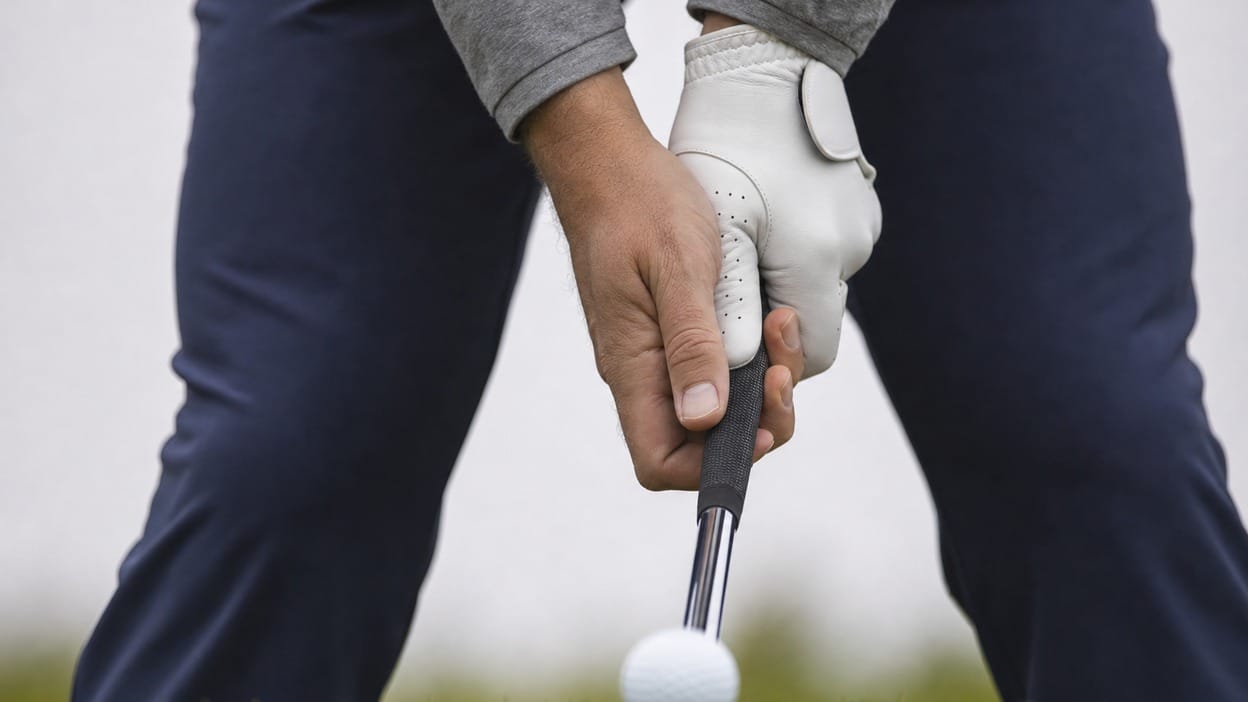
The routine that actually survives the moment it was built for, not just the practice green.
A pre-shot routine that only works on the range isn't a routine. It's a warm-up habit that quits the moment the shot matters, and it quits at the worst possible time: over the ball, on the tee you've been dreading since you saw the scorecard.
The good news is that the parts of a routine that fail under pressure are identifiable, and they are fixable. This guide focuses on the mental architecture of a pre-shot routine, not the physical stretching and activation you do before the round starts (that's covered in how to build a pre-round warm-up routine), and not the strategic decisions about which club or line to choose (covered in five course management mistakes that cost mid-handicap golfers strokes). This is specifically about what you do, think, and feel in the 20 to 30 seconds before you pull the trigger, and how to make that sequence identical whether you're hitting a wedge on a Tuesday nine or standing over a four-footer to win a club championship.
Sport psychology has looked at pre-performance routines for decades, and the findings are more specific than the general advice ("stay in your routine") usually suggests.
A 2021 meta-analysis by Rupprecht, Tran, and Gröpel, published in the International Review of Sport and Exercise Psychology, pooled results across multiple sports and found that pre-performance routines produce a larger performance benefit under high-pressure conditions than under low-pressure ones. In plain terms: the routine isn't just a nice habit for a relaxed range session. Its measurable value shows up precisely when the round is tight and the nerves are up, which is also when golfers are most likely to abandon it and rush.
An earlier and more specific study, Boutcher and Crews (1987, International Journal of Sport Psychology), looked directly at golfers and pre-shot routines, and found a genuinely mixed result: routine training improved putting performance for the women in the study but produced no significant change for the men. It's an honest, unglamorous finding, and it's worth stating plainly rather than rounding it up into a universal law. What both studies agree on is the underlying mechanism: a routine works by occupying attention with a fixed, low-effort physical and mental sequence, which crowds out the kind of conscious, step-by-step thinking about the swing that wrecks performance under pressure. Sport psychologists sometimes call this the difference between an automatic process and a controlled one. A routine's entire purpose is to keep the shot in the automatic category for as long as possible, even when the moment isn't automatic at all.
None of this means a routine is a magic trick. It means it's a tool with a specific job: reducing the number of decisions and doubts available to you in the 20 to 30 seconds before the swing.
The instinct is to design a pre-shot routine when you need one most, usually mid-round, usually after a shot that scared you. That's the wrong time to build anything. Build the routine on the range, with no scorecard in your pocket and nothing riding on the shot.
Start by writing down, in order, every physical thing you already do before a shot: how many practice swings, where you stand to read the shot, when you take your grip, how many looks at the target. Most golfers discover their current "routine" isn't consistent at all. It varies with mood, with how the last shot went, with how much time they feel they have.
Pick one version of that sequence and commit to it as the routine, even if it feels arbitrary at first. Two practice swings, not one or three. One look from behind the ball, one from the side. The specific content matters less than the fact that it doesn't change.
This is where most self-built routines quietly fail. Golfers build a mental checklist that includes items like "feel confident" or "clear my mind," and those instructions are useless precisely when you need them, because confidence and a clear mind are the first things pressure takes away.
A routine that holds up is built entirely from things you can physically do on command: a practice swing, a fixed number of looks at the target, a grip check, a waggle. None of these require you to feel a particular way first. You can take a practice swing while nervous. You can't "feel confident" on command, and building a step that requires it sets the routine up to break at the exact moment it needs to hold.
Consistency of timing turns out to matter as much as consistency of steps. Annika Sorenstam has described her own pre-shot sequence, split into what she called a think box (where she reads the shot and makes a decision) and a play box (where she executes it), as running to a fixed rhythm of roughly 24 seconds from the first look at the shot to the strike, largely unchanged regardless of the situation. The specific number is less important than the principle: elite routines are timed, not just sequenced, and the golfer holds that tempo whether the shot is a Tuesday range ball or a tournament putt.
You don't need a stopwatch on the course. What you do need is a routine short enough to repeat without variation and long enough to complete every step. Time yourself on the range a handful of times, note roughly how long your routine takes, and treat that number as a target rather than something that stretches under pressure. Golfers under stress tend to do one of two things: rush the whole sequence, or freeze partway through it and add extra practice swings and extra looks that were never part of the plan. Both are the routine breaking, just in opposite directions.
The decision box has to close before the play box opens. Club selection, target line, shot shape: all of that gets decided from behind the ball, during the "think" phase of the routine, and none of it gets revisited once you step in.
This matters because indecision over the ball is one of the most reliable ways to produce a bad swing. A golfer who is still negotiating between two clubs, or second-guessing the line, while standing over the shot has split their attention between the decision and the execution, and the swing suffers for it. Committing before you step in isn't about false confidence in the choice. It's about making sure only one thing is happening once the club starts moving.
If you catch yourself renegotiating mid-routine, the fix isn't to push through faster. It's to step away, restart the decision phase from behind the ball, and only step back in once the choice is actually settled.
A routine you've only used on a quiet range hasn't actually been tested. Before you trust it on the course, put it under some artificial stress: a 6-foot putt (1.8m) with a small stake riding on it against a practice partner, a par-3 challenge where you only get one ball, a wedge shot you have to land on a towel or lose your turn.
The point isn't the specific drill. It's giving yourself a version of the stomach-drop that shows up on the course, in a setting low-stakes enough to notice what your routine actually does under that feeling. Does it stay the same length? Do you skip steps? Do you rush the practice swings? Whatever breaks under manufactured pressure is what will break on the course, and it's far cheaper to find that out on the range than on the 18th tee.
Even a well-built routine slips sometimes, usually after a shot that rattles you. The instinct in that moment is to abandon the routine and try to grind through on willpower. The better move is to reset, not rebuild: go back to the first physical step, slow the timing back down to what you tested on the range (I know this tendency well myself, rushing practice swings the moment a round starts to slip), and let the routine do its job rather than trying to manufacture calm on top of it.
If the mental side of golf is new territory, Dr. Bob Rotella's Golf is Not a Game of Perfect is the standard starting point, and it goes considerably deeper into the thinking behind routines, commitment, and course management than a single article can. It has held up as a reference for decades for a reason.
There's no single correct length. What matters more than the number of seconds is that the length stays the same shot after shot. Time your routine on the range a few times, note roughly what it takes, and hold that pace on the course rather than letting it stretch or shrink with the situation.
Yes, in content but not in principle. Most golfers run one sequence for full swings and a separate, shorter one for putts, and that's fine. Each one should still be built from fixed physical steps, decided before you step in, and tested under pressure the same way.
Don't try to reconstruct it perfectly from memory in real time. Go back to the first physical step you always do, even if you skip the rest, and let the rest follow. A partial routine done calmly beats a full one rushed through under panic.
The research suggests it's doing real work, not just providing comfort. A 2021 meta-analysis by Rupprecht, Tran, and Gröpel found pre-performance routines produced a larger benefit under high-pressure conditions than low-pressure ones, and earlier golf-specific research from Boutcher and Crews found routine training improved putting performance for the women in their study but produced no significant change for the men, an honest, mixed result rather than a clean win. The mechanism appears to be attentional: a fixed sequence keeps you executing on autopilot instead of thinking through the swing step by step.
Some links in this article are affiliate links. If you buy through them, I earn a small commission at no extra cost to you. This never influences what I cover or recommend. I link to gear I'd buy myself.
Data-backed reviews and advice that works. No brand spin.