








reviews
Torrey Pines South Course Review
Torrey Pines South is a municipal golf course that any golfer can book, and it has still hosted
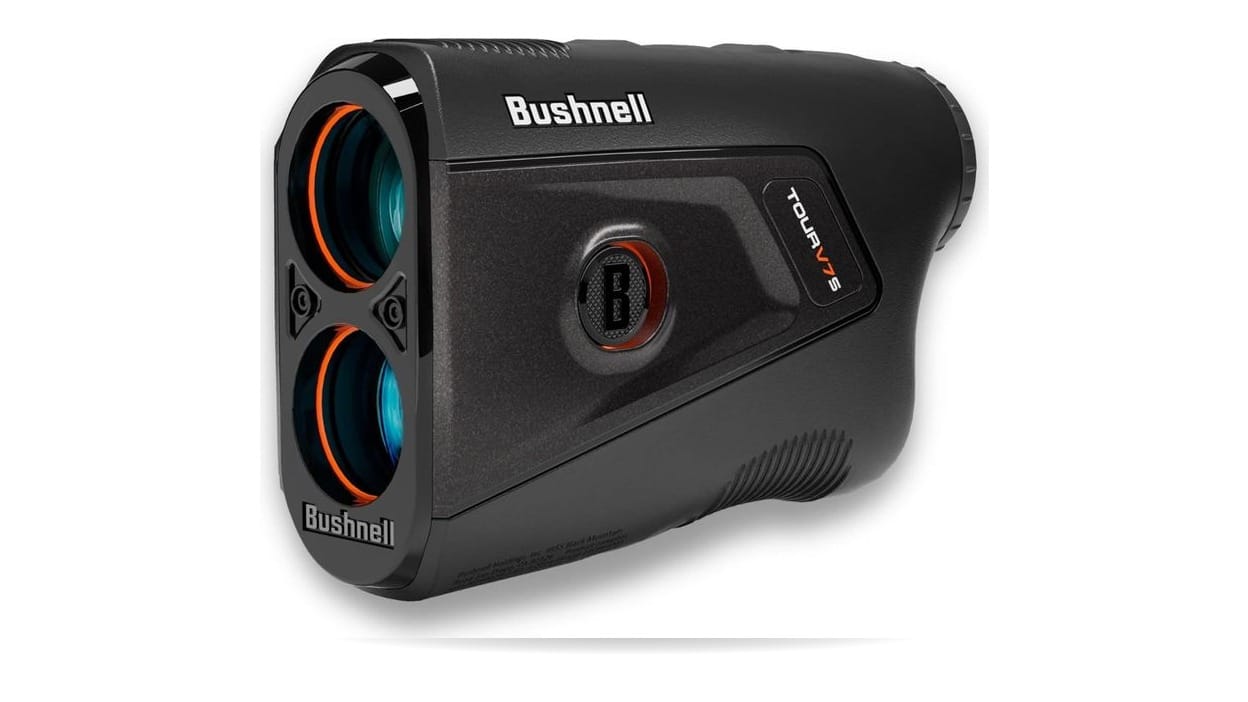
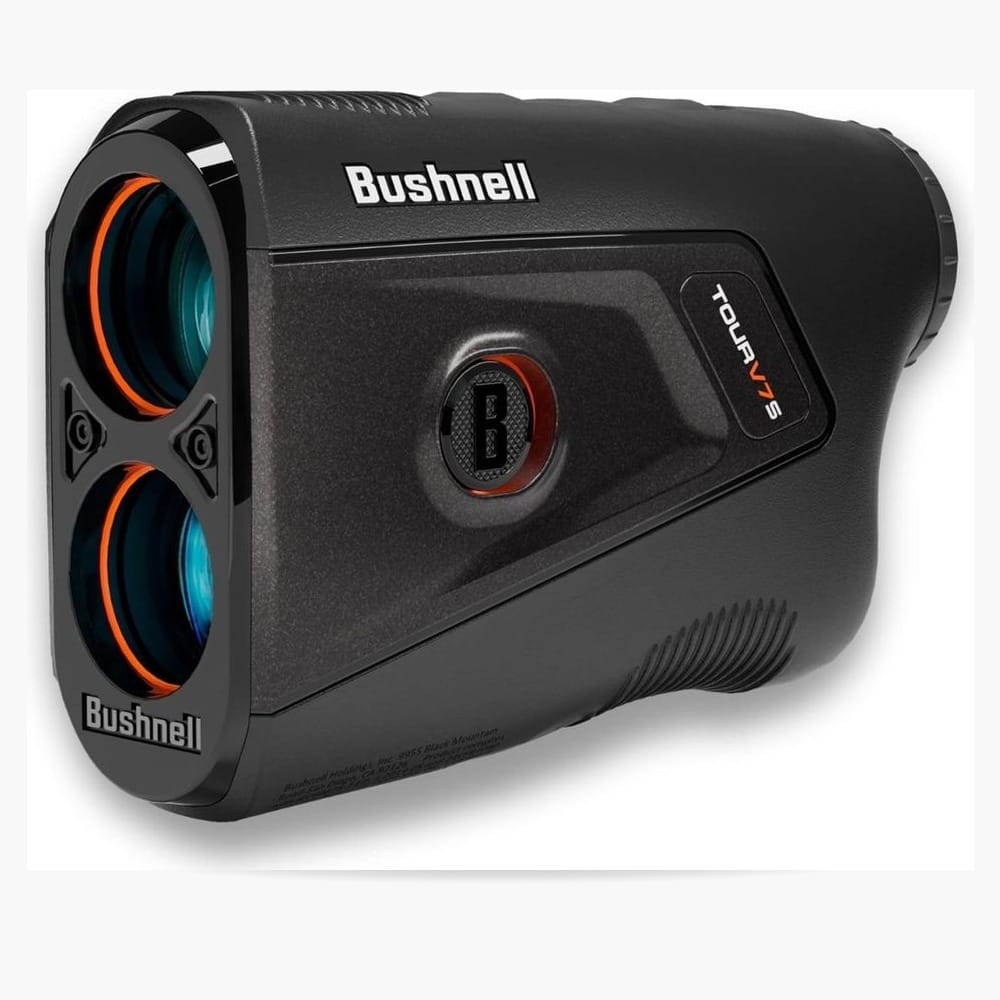
The Bushnell Tour V7 Shift (Amazon, $399.99) is a significant step up from any previous Tour model. It's the first sub-$400 Bushnell with a dual-color OLED display showing raw and slope-adjusted yardage together, a physical tournament-legal toggle, and LINK connectivity for data-driven club recommendations. Whether it's the right $400 for you depends on two things: how much the tournament toggle matters to your comp life, and whether you own a Foresight launch monitor.
Pros:
Cons:
The optics verdict across independent reviewers is consistent. Breaking Eighty called the V7 "comfortably the best display I've seen in the Tour series," and at 6x magnification with a 24mm objective lens the V7 Shift produces a sharper sight picture than its predecessors. The dual-color OLED reads cleanly in varying light, something a single-color display can't match when you're moving between shaded lies and open fairways in the same round.
Accuracy is ±1 yd across the full 5 to 1,300 yd (4.6 to 1,189m) range. Plugged In Golf called it "Bushnell's fastest rangefinder yet" for lock speed, with accuracy described as "outstanding." PinSeeker with Visual JOLT delivers flag-lock confirmation through a vibration burst that cheaper rangefinders imitate and don't replicate well. Plugged In Golf noted the V7's confirmation is "accurate in a way that a lot of cheaper rangefinders simply aren't."
Yardage Range Recall is the other practical addition: it resurfaces your last measured distance without re-ranging. Useful when another player is mid-shot and you want to double-check your number. Small feature, real friction removed.
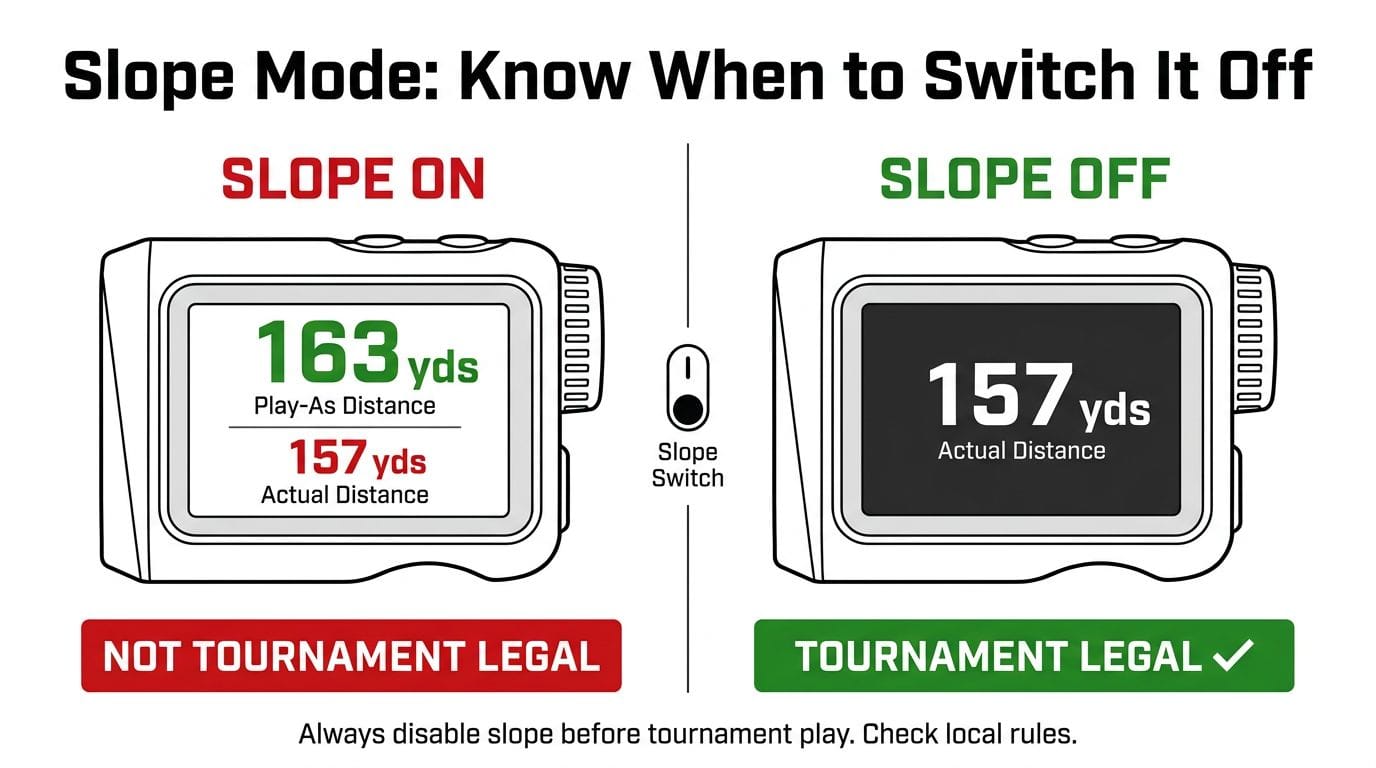
The dual-color display is the headline upgrade over the V6 Shift. Where the V6 shows a single yardage you toggle between modes to switch, the V7 shows both simultaneously: raw distance in red, slope-adjusted in green. You don't choose which to read. You see both, read the relevant number, and pull the club. It's a faster workflow than any single-display rangefinder offers.
The V7's Slope-Switch is the physical answer to a familiar comp-day worry: quietly wondering whether you switched it off before your marker noticed. One press produces an audible lock; the OLED shifts to raw yardage only. There's no menu, no setting to navigate, and no ambiguity about the state it's in. Hand it to your marker.
In tournament mode the device is USGA and R&A compliant. The lock is visible on-screen and confirmed by the audible click, so both you and your marker know exactly what mode it's in.
LINK syncs the V7 Shift with Foresight Sports launch monitor data (GCQuad, GCHawk, GC3, GCX, GC2, and GS Pro software) to generate personalized club recommendations mid-round. The system learns your actual carry distances from tracked sessions and surfaces a "play this club" suggestion alongside your yardage. Until the V7, this connectivity was exclusive to the Pro X3+ at around $600. Breaking Eighty noted that LINK reaching a sub-$400 model puts the feature within reach of serious amateurs for the first time.
For golfers who own a Foresight unit, this is genuinely useful. The recommendations are grounded in your personal launch-monitor data, not generic yardage assumptions, and they improve as the system logs more rounds.
For golfers who don't own a compatible unit, LINK is premium hardware you're paying for and not getting. Plugged In Golf flagged that LINK "requires a Foresight or Bushnell launch monitor for full functionality." That's a meaningful qualifier. When LINK is enabled, the display also gets "pretty crowded" in Plugged In Golf's assessment, a real UX trade-off to weigh before paying the LINK premium over the V6 Shift.
Buy the V7 Shift if:
Skip the V7 Shift if:
For the full GPS watch vs rangefinder breakdown: GPS Watch vs Rangefinder: Which One Should You Use?
| Rangefinder | Price | Dual-color OLED | Slope-Switch | LINK | GPS |
|---|---|---|---|---|---|
| Bushnell Tour V7 Shift | $399.99 | Yes | Yes | Yes | No |
| Bushnell Tour V6 Shift | ~$329 to $349 | No | Yes | No | No |
| Blue Tees Captain Pro | ~$300 | No | Yes | No | No |
| Shot Scope PRO ZR | ~$280 | No | Yes | No | Yes |
| Nikon Coolshot 20i | ~$280 | No | Software only | No | No |
| Bushnell Pro X3+ | ~$500+ | Yes | Yes | Yes | No |
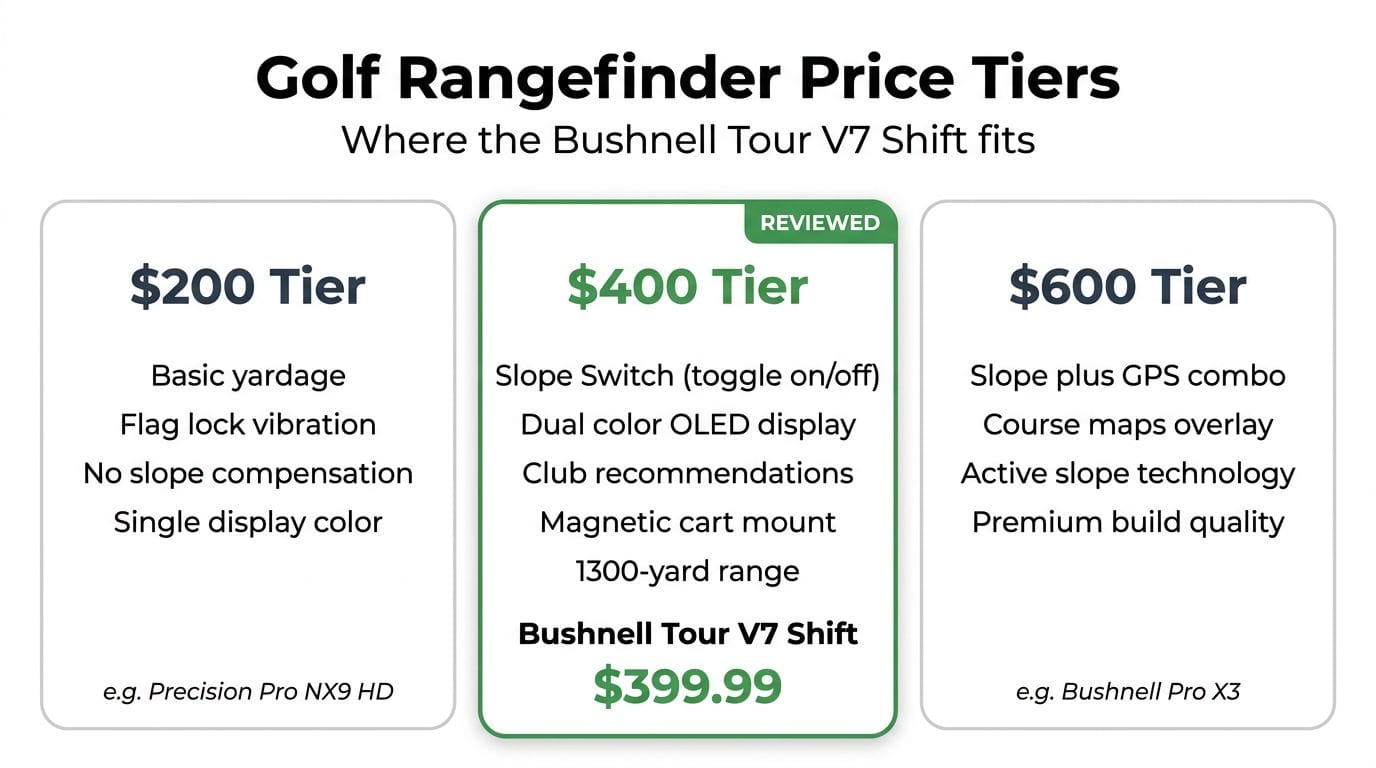
The Blue Tees Captain Pro is the closest non-LINK competitor: accurate, reliable slope, solid optics, around $100 cheaper. If LINK isn't relevant and the dual OLED display isn't a priority, it's a legitimate alternative at this price point.
The Pro X3+ is the ceiling comparison worth making: it adds weather-adjusted ballistic angle compensation and is where the V7 Shift's price makes most sense by contrast. You're paying around $100 more for atmospheric slope correction on top of everything the V7 already does. For most UK and Australian parkland or American parkland conditions, the V7 Shift's angle-adjusted slope is sufficient.
Today's Golfer gave the V7 Shift 4.5 out of 5. Plugged In Golf called it "a very solid value" at $399. Breaking Eighty named it their "favorite Bushnell rangefinder to date." The consensus across independent reviewers is that the V7 Shift earns its price point if the tournament-compliance angle matters to how you play, and it's an easier call if you're already in the Foresight ecosystem.
Buy the Bushnell Tour V7 Shift on Amazon, $399.99
Or, if you don't need LINK: Bushnell Tour V6 Shift, around $329 to $349
The Course Management and Strokes Gained book covers that framework in detail.
For every rangefinder option at every price point, ranked: Best Golf Rangefinders: Tested and Ranked for Every Budget
Yes, with Slope-Switch engaged. One press locks the device to raw unadjusted yardage with an audible confirmation. In that mode it's USGA and R&A compliant, the same legal status as a non-slope rangefinder. In standard mode with slope active it isn't tournament legal in most competitions that prohibit measuring devices that factor in gradient.
LINK syncs the V7 Shift with Foresight Sports launch monitor data (GCQuad, GCHawk, GC3, GCX, GC2, GS Pro) to generate personalized club recommendations mid-round based on your actual tracked carry distances. You need it if you own a compatible Foresight or Bushnell launch monitor and want that data surfaced while you're playing. You don't need it if you don't own a compatible unit. In that case, the V6 Shift at around $50 to $70 less is the better buy.
A CR2 lithium battery. It's not rechargeable. CR2s are widely available at hardware stores, golf shops, and online. A single battery typically lasts one to two seasons of regular use. Carry a spare in cold weather or high-volume rounds, as lithium batteries drain faster in low temperatures.
The V7 Shift adds a dual-color OLED display (red raw yardage and green slope-adjusted yardage shown simultaneously), LINK club recommendation connectivity, and optics reviewers describe as the best in the Tour series. The V6 Shift keeps the same ±1 yd accuracy, PinSeeker Visual JOLT, and Slope-Switch at around $329 to $349 street. If you don't need LINK or the OLED display upgrade, the V6 Shift is the better-value choice.
No. It's a pure laser rangefinder with no GPS functionality, no aerial hole maps, and no layup or carry distances from the tee. For GPS alongside laser in one device, the Garmin Approach Z82 and Shot Scope PRO ZR are the options at this price tier. If you want laser for flagstick precision and GPS for hole management, the more practical route for most golfers is a GPS watch alongside a laser rangefinder. The full comparison is here: GPS Watch vs Rangefinder: Which One Should You Use?
Some links in this article are affiliate links. If you buy through them, I earn a small commission at no extra cost to you. This never influences what I cover or recommend. I link to gear I'd buy myself.
Data-backed reviews and advice that works. No brand spin.