How Many Clubs Do You Actually Need?
Building a 14-club setup that fits your game, not a number you feel obligated to hit.

The rules of golf cap you at 14 clubs. They don't require you to carry that many. That distinction gets lost on a lot of golfers who assume a full bag is a full 14, when the better question is which 14 slots actually earn their place for the way you play. A weekend golfer hauling a 3-iron he can't launch off the deck isn't following a rule, he's just filling a number. This piece walks through what each part of the bag is for, where most amateur setups go wrong, and a simple way to spot a gap in your own distances without needing a launch monitor to do it.
- The 14-club rule sets a maximum, not a requirement. Fewer clubs, chosen well, beat 14 chosen out of habit.
- Long irons are the first thing worth questioning. A hybrid usually replaces one with less guesswork.
- Most weekend bags are crowded at the top (driver through 5-iron) and thin at the scoring end (wedges, short game).
- You can spot a real distance gap with a bucket of range balls and a notepad. A launch monitor helps; it isn't required.
The 14-club rule, and what it actually means
The USGA and R&A cap a bag at 14 clubs during a round. That's the entire rule. It says nothing about which 14, and it doesn't penalize you for carrying 12 or 13 if that's genuinely what your game calls for. Tour pros treat 14 as a target because their swing is consistent enough to justify a specialist club for nearly every yardage and lie. Most amateurs aren't playing that kind of golf, and a bag built to mirror a tour pro's rather than your own miss pattern usually has at least one or two clubs doing very little for you.
The better frame is to think of the bag as 14 available slots, not 14 mandatory purchases. Some of those slots are non-negotiable (you need a driver, a putter, and enough wedge coverage to get up and down). Others are genuinely optional depending on your speed, your typical miss, and the course you play most. Working through the bag slot by slot, rather than assuming a standard set makes those decisions for you, is the whole exercise.
Walking the bag, slot by slot
Driver. The one club almost nobody should leave home without, even golfers who don't trust it off the tee. A 3-wood or 5-wood swung under control usually beats an iron off the tee on anything but the tightest holes, but it rarely beats a driver you've made peace with.
Fairway woods. One or two, depending on how often you need to cover 200 yards (183 meters) or more from the fairway or rough. A 3-wood and a 5-wood covering different gaps is common; carrying both plus a hybrid in the same yardage window is usually redundant.
Hybrids. This is where most amateur bags should gain a club, not lose one. A long iron, the 3- or 4-iron most sets still include, is genuinely hard to hit well below a certain swing speed, low loft and a small clubface punishing anything but a clean strike. A hybrid built for the same yardage carries more forgiveness on mis-hits and gets the ball airborne with far less technical demand. A club like the TaylorMade Qi4D Max Rescue is built for exactly this swap, a game-improvement hybrid sized to replace the long iron most weekend golfers already struggle to launch. Our Qi4D Max Rescue review covers the data in full.
Irons. Mid and short irons (roughly 6-iron through pitching wedge) are where most golfers are most comfortable, and they rarely need much second-guessing. The real decision is where the iron set stops and the wedges take over, which leads into the next slot.
Wedges. Two or three, covering the gap between your shortest iron and your most-lofted wedge without leaving a stretch of 15 to 20 yards (14 to 18 meters) where you're stuck between a full swing and a delicate half-shot. If your set's pitching wedge sits around 46 degrees and your sand wedge is 56, a gap wedge in the low 50s (a club like the Cleveland RTX 6 Zipcore at 50 degrees fills that window well) closes the stretch that otherwise turns into your least confident shot on the course. Whether a third or fourth wedge earns a spot beyond that is a deeper question with its own tradeoffs; our wedge-count breakdown covers it in more depth than belongs here.
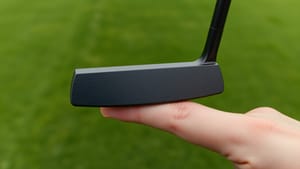
Putter. Non-negotiable, and the one slot where "does it fit your stroke" matters more than any spec on the shaft.
Where weekend bags usually go wrong
Three mistakes show up more than any others. The first is a crowded top of the bag: a driver, a 3-wood, a 5-wood, and a 3-iron all doing work in roughly the same 190-to-230-yard (174-to-210-meter) window, which is more overlap than most players need and leaves no room for a second wedge. The second is a thin scoring end, one wedge asked to cover everything from 100 yards (91 meters) in, which is exactly the range where strokes actually get saved or lost. The third is the club kept out of habit rather than performance, the 2-hybrid that made the bag three years ago and has quietly stopped getting hit since. I carried a 2-iron for longer than I should have, mostly because it had been a gift, and it took an honest look at how rarely I reached for it to admit a hybrid did the same job with far less risk of a mis-hit.
None of these mistakes are really about the specific clubs. They're about a bag that was built once and never revisited as a swing changed or a miss pattern became clearer.
Spotting a gap without a launch monitor
A launch monitor makes this exact, but it isn't required to make it useful. On the range or during a practice round, hit ten balls with each club in your bag and note where the middle six landed, ignoring the best and worst shot in each set as outliers. Lay those numbers out in order. Any stretch of more than about 15 yards (14 meters) between two consecutive clubs is a real gap, one you're likely to face on the course as an awkward in-between yardage more often than you'd expect. A stretch under 10 yards (9 meters) between two clubs usually means one of them is redundant rather than useful.
This same instinct, using what you actually do with a club rather than what the spec sheet promises, is the same idea behind smarter course management overall: the setup in your bag and the decisions you make with it both come down to playing the shot you can actually hit rather than the one you wish you could. Our piece on course management goes further into that decision-making side once the bag itself is sorted.
For golfers just building a bag from scratch rather than auditing an existing one, a beginner-friendly starter set like the Wilson Launch Pad 2 removes most of these decisions up front, pairing forgiving long clubs with a wedge and putter already built to work together.
Frequently Asked Questions
Do I have to carry 14 clubs?
No. Fourteen is the maximum allowed under the rules, not a requirement. Carrying 12 or 13 clubs chosen deliberately beats 14 chosen to fill the number.
Is a hybrid or a long iron better for me?
For most golfers below a faster swing speed, a hybrid is easier to launch and more forgiving on a mis-hit than a 3- or 4-iron covering the same yardage. Golfers who already strike long irons consistently well have less reason to switch.
How many wedges should I carry?
Most golfers do well with two or three, enough to close any gap of more than about 15 yards (14 meters) between your shortest iron and your most-lofted wedge. Whether a fourth wedge is worth the tradeoff depends on your typical approach distance and practice time.
Can I add clubs mid-round?
You can swap clubs between holes as long as you never exceed 14 total in the bag at any point during the round, and you can't borrow a club from another player who's still using theirs.
Do I need a launch monitor to figure this out?
No. A bucket of range balls and a notepad tracking where your middle shots land with each club will surface most real gaps in a setup without any device at all.
Some links in this article are affiliate links. If you buy through them, I earn a small commission at no extra cost to you. This never influences what I cover or recommend. I link to gear I'd buy myself.








The golf newsletter that cuts the hype
Data-backed reviews and advice that works. No brand spin.
Recommended products