Course Management: How to Score Lower Without Hitting Better
Strokes gained data shows mid-handicappers lose more shots to bad decisions than bad swings. Here's the course management framework to score lower this weekend.

Most mid-handicappers think they need a better swing. They don't. They need better decisions.
Mark Broadie's Every Shot Counts (2014) research made it plain: two-thirds of the scoring gap between an 80-shooter and a 90-shooter comes from the long game, approach shots and tee shots combined. Not putting. Not chipping. The shots where your decisions matter most. If you're a mid-handicapper stuck between 12 and 20, course management is the fastest lever for dropping strokes without changing a thing about your swing.
- 1.Approach shots account for 40% of the scoring gap between 80- and 90-shooters (Broadie’s strokes gained data). Drives account for 28%. Putting? Just 15%.
- 2.A 15-handicapper averages 4.68 double bogeys per round but only 0.36 birdies. Scoring lower means eliminating doubles, not making more birdies.
- 3.Most amateurs miss greens short. Aiming at the center of the green and taking one more club fixes this without any swing change.
- 4.Your shot dispersion is wider than you think. Even Jason Day had a 74-yard (68m) driver spread in his best season. Plan for the miss, not the perfect strike.
- 5.The DECADE Golf traffic-light framework (Green/Yellow/Red for every pin position) is built on real ShotLink data and gives you a repeatable decision process.
The Data Makes an Uncomfortable Point About Your Golf Game
Broadie's research breaks the scoring gap between an 80-shooter and a 90-shooter into clear percentages. Approach shots: 40%. Drives: 28%. Short game inside 100 yards (91m): 17%. Putting: 15%.
Read that again. The thing most amateurs practice the most accounts for the smallest share of the gap.
The Shot Scope 2026 Annual Performance Report backs this up from a completely different data set: 870,000 rounds and 74 million shots. Same conclusion. Approach play is where the biggest performance gap between high and low handicaps lives.
So if you're a 15-handicapper spending three practice sessions a week on the putting green and zero time thinking about approach strategy, you're pouring effort into 15% of the problem. The other 85% is where the strokes actually hide, and a large chunk of that comes down to decisions, not mechanics.
Here's how the strokes break down by handicap band:
| Category | 10 HCP | 15 HCP | 20 HCP |
|---|---|---|---|
| GIR per round | 6.3 | 4.1 | 2.9 |
| Doubles per round | ~2.5 | 4.68 | ~7.0 |
| Birdies per round | ~1.5 | 0.36 | ~0.1 |
Sources: Shot Scope 2026 Report; MyGolfSpy (October 2025), citing Shot Scope data.
The gap between a 10 and a 20 handicap isn't about birdies. It's about doubles. That 15-handicapper averaging 4.68 doubles per round and 0.36 birdies doesn't need to manufacture birdies. They need to stop manufacturing doubles.
As Jon Sherman puts it in The Four Foundations of Golf (2022): the goal of course management is to prevent doubles, not chase birdies. Every decision on the course should be filtered through one question: what happens when I miss this shot, not when I flush it?
That mindset runs through everything below.
Why Your Target Selection Is Probably Wrong
A 15-handicapper hits the green in regulation 23% of the time. That's around 4.1 greens per round, per Shot Scope data reported via Practical Golf. From 100 yards (91m) in the fairway, even a 10-handicapper only finds the putting surface 49% of the time, according to MyGolfSpy.
From what most golfers consider a "scoring distance," you're flipping a coin on whether you'll hit the green. A 15-handicapper is worse: around 45% GIR from 75 to 100 yards (69 to 91m).
Now picture what happens when the flag is tucked three paces from a bunker. You aim at it, miss the green on the short side, and you're left with one of the hardest shots in golf: a bunker shot or a tight chip with no green to work with, and the flag running away from you. That's how a bogey becomes a double. That's where the strokes go.
Most amateurs compound the problem by missing short. Broadie's Golf.com analysis found that a 90-shooter's approach pattern from 150 yards (137m) is oblong, 50% longer than it is wide, and centered about 13 yards (12m) short of the target. GAME GOLF tracking data, cited by Sherman, confirms this: the majority of amateur misses fall on the front side of the green or short of it.
The fix is disarmingly simple. Aim at the center of the green. Take one more club than your stock yardage suggests, and play to the back number.
Sherman's data backs this up. If your average miss goes short and your dispersion pattern centers well short of the pin, one extra club moves the center of your scatter onto the green. You'll still miss. But you'll miss in places where you can get up and down for par instead of scrambling for bogey.
When the average 15-handicapper does hit a green in regulation, they're sitting 33 feet (10m) from the hole, per Shot Scope. That's a two-putt almost every time. The green was never going to produce a birdie anyway. Aiming at the flag to save 10 feet (3m) on a putt you're two-putting regardless, at the cost of short-siding yourself 30% of the time? Losing trade.
You're Not Adjusting for Wind and Elevation
Getting the club-selection math right from the "Why Your Target Selection Is Probably Wrong" section still assumes still air and a flat green. Most rounds don't offer either. A 10 mph (16 km/h) headwind adds roughly one club of effective distance; a downwind of the same speed takes about one away. Elevation works the same way in a different direction: an uphill approach to a raised green adds anywhere from half a club on a gentle slope to a full club on a steep one, and a downhill green gives some of that back.
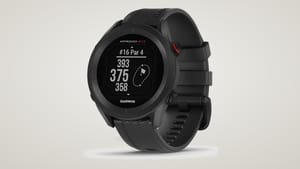
The standard adjustment most instructors teach is one club per 10 mph (16 km/h) of wind, plus half a club for a moderately uphill shot and a full club when the green sits well above the fairway. GPS devices from Garmin and Bushnell, including the Tour V7 Shift referenced later in this piece, build a version of this math into their "plays-like" distance readout, adjusting the raw number for both wind and elevation automatically. That's a genuine scoring advantage over reading a flat yardage and guessing, and it's worth trusting the device's number over a rough mental estimate on any hole where the two disagree by more than half a club, though I'll admit my own instinct is still to double-check the device against the hand math, even knowing the device gets it right more often than a rule of thumb does.
The mistake isn't failing to know the yardage. It's treating the yardage as fixed when wind and elevation have already changed it before the swing starts.
You're Not as Accurate as You Think, and That's the Point
In 2014, Jason Day led the PGA Tour in strokes gained off the tee. His driver dispersion that season? 74 yards (68m) left to right, per DECADE Golf's analysis of ShotLink data.
74 yards. The best driver on Tour that year. Let that calibrate your expectations.
A typical amateur carrying the ball 250 yards (229m) has a driver dispersion of 65 to 70 yards (59 to 64m), based on Practical Golf's driver dispersion analysis using DECADE methodology and community launch monitor data. Similar spread to a Tour pro. The difference is that the amateur's pattern is less centered, and the misses are more penal because they're played into tighter fairways with less recovery skill.
It gets worse on approach shots. MyGolfSpy's stock yardage study found that a 15-handicapper lands within five yards (4.6m) of their stock distance only 14% of the time. If your "stock 7-iron" is 160 yards (146m), you're hitting 160 yards one shot in seven. The rest scatter across a range that spans 20 yards (18m) or more.
This isn't a failure. It's normal human variation. The problem is that most golfers plan each shot as if they're going to hit their number. The data says they almost never will.
Course management means planning for the circle of outcomes, not the dot in the center. Every shot produces a spread. The smart play puts that spread where the average outcome, and the bad outcomes, are still playable.
Scott Fawcett's DECADE Golf system turns this into a repeatable traffic-light framework, built from ShotLink data:
- Green Light pin: Flag is in the middle of the green with no trouble nearby. Attack it.
- Yellow Light pin: Flag is closer to an edge or bunker. Play to the safe half of the green.
- Red Light pin: Sucker pin tucked behind trouble. Aim for the center of the green regardless. The pin is a trap.
Over 50 Tour professionals and more than 1,000 college players use DECADE. For mid-handicappers, the principles hit even harder, because your dispersion is wider and your recovery game is weaker.
The Tee Shot Decision Most Amateurs Get Wrong
A USGA-commissioned study by Shapcott (2021), surveying 2,263 golfers, found that amateurs hit driver on 84% of par 4 tee shots and 91% of par 5 tee shots. The only factors that changed this behavior were visible penalty areas in range and short hole length. Confidence level had no effect. Golfers pulled driver out of habit, not strategy.
But driver isn't always the right play. The decision comes down to one comparison: is the usable landing area wider than your driver dispersion?
Say you're playing a 380-yard (347m) par 4 with a fairway that narrows to 25 yards (23m) at the 250-yard (229m) mark, and your driver dispersion is 65 yards (59m). The maths aren't in your favor. You're spraying shots into a landing zone less than half the width of your spread. A 3-wood or hybrid off the tee leaves you further from the green but in the short grass. From the fairway, your approach shot quality jumps: better lie, better contact, and a realistic GIR probability instead of a recovery scramble from the rough.
None of this means leaving driver in the bag permanently. Driver is the right play on wide holes, on holes where the rough isn't penalizing, and on par 5s where the extra distance genuinely helps the second shot. The point is that you should be making the decision, not defaulting to it.
The Risk/Reward Maths: When to Lay Up, When to Go
"Can I make this shot?" is the wrong question. You can make almost any shot on your best day. The right question: what's my expected score if I go for it versus laying up?
Consider a 500-yard (457m) par 5. You've hit a decent drive and you're sitting 220 yards (201m) from the green, in the light rough. A fairway wood from here, if you catch it clean, gets you on or near the green in two. Tempting.
But a 15-handicapper's GIR probability from 220 yards (201m) in the rough is in single digits. The misses from this distance are ugly: fat, thin, blocked right, pulled left. Each one leaves a 40 to 80-yard (37 to 73m) pitch from somewhere uncomfortable. The expected outcome isn't a birdie or even a par. It's a bogey, with a double on the table.
The alternative: lay up to 80 to 90 yards (73 to 82m) with a comfortable iron, leave yourself a full wedge in. Your GIR probability from this distance is around 45%, far better than from 220 yards. Your miss pattern at 80 yards puts you near the green with a straightforward chip, not in a hazard or deep rough. Expected outcome: par, with bogey as the bad result. Double is nearly off the table.
Broadie's expected value framework in Every Shot Counts formalises this across thousands of shots. DECADE applies it hole by hole. The core principle is simple: you're not evaluating the shot you hope to hit. You're evaluating the average of all the shots you're likely to hit from that spot.
For mid-handicappers, the lay-up wins far more often than intuition suggests. Going for a par 5 in two feels great. The maths behind it are brutal.
Rehearse the Decisions Before You Take Them to the Course
A home simulator setup, running GSPro or E6, strips out the one variable that makes on-course decision-making hard to practice: the scorecard. Every club selection, every aggressive-versus-safe target choice, every risk/reward call in this framework can be run back on the same hole as many times as it takes to see the pattern, something no real round allows.
The advantage is repetition without consequence. Play the same 150-yard approach ten times, alternating between attacking a tucked pin and playing to the center of the green, and the strokes-gained-style shot tracking most simulator software includes will show which choice actually scores lower over the sample, not which one felt better on the one shot that worked. That's the same Green Light, Yellow Light, Red Light logic from earlier in this piece, just run enough times to trust the pattern instead of the anecdote.
It's not a replacement for the first item in the five-step framework below, knowing real shot dispersion from a launch monitor or GPS tracking. It's a way to rehearse what to do with that dispersion once it's known, before the decision has real strokes attached to it.
A Decision Framework You Can Use This Weekend
You don't need an app or on-course calculations. Five repeatable steps, every shot:
1. Know your dispersion. Track 10 to 15 shots per club on a range or with a launch monitor that tracks your actual distances. You need real numbers, not guesses. Most golfers overestimate their carry distance by 10 to 15 yards (9 to 14m).
2. Assess the tee shot. Look at the fairway width at your landing distance. If it's narrower than your driver spread, consider a shorter club. On wide holes, grip it and rip it.
3. Classify the pin. Green Light (center, no trouble): go at it. Yellow Light (edge, some trouble): play to the safe half. Red Light (tucked, trouble everywhere): aim at the center of the green and forget the flag exists.
4. Take one more club on approaches. Your stock distances are shorter than you think. The data says you hit your number 14% of the time, and your misses cluster short. An extra club moves the center of your scatter onto the green instead of short of it.
5. Evaluate risk/reward from the bad outcome. Before every shot, ask: "If I miss this, what's my likely score from the miss location?" If the miss leads to a double, the shot isn't worth it. Choose the option where the bad outcome is bogey, not disaster.
That's it. No complicated system, no course-mapping software, no subscription. Five mental checkpoints that take less time than a practice swing.
The payoff is real. Arccos Golf reports that members using their Smart Distance feature average 14.91 feet (4.5m) closer to the hole on approach shots after 180 holes, simply by using actual club distances instead of assumed ones. Better data leads to better decisions, and better decisions lead to lower scores.
If you want to understand the numbers behind all of this, I've broken down how strokes gained actually works in a separate piece. It's the analytical backbone behind everything here.
A rangefinder that locks distances to the pin quickly, like the Bushnell Tour V7 Shift, removes the guesswork from step one of the framework above and keeps the whole routine fast enough to use on every shot.
Buy now Buy now
Frequently Asked Questions
Is course management more important than swing mechanics for a mid-handicapper?
They're different levers, but course management is the faster one. Mark Broadie's strokes gained research shows that 40% of the scoring gap between an 80-shooter and a 90-shooter comes from approach shot decisions, and 28% from tee shot choices. The combined 68% from these long-game decisions dwarfs the 15% attributable to putting. For a mid-handicapper whose swing is relatively stable, better decisions can save 3 to 5 strokes per round without a single mechanical change. That said, they're not mutually exclusive: a better swing and better decisions compound each other.
What is the DECADE Golf system?
DECADE is a course management framework created by Scott Fawcett, built from PGA Tour ShotLink data. The core idea is that every golfer has a measurable shot dispersion pattern, and target selection should account for that spread rather than assuming the perfect shot. DECADE classifies pin positions as Green Light (attackable), Yellow Light (play safe-side), or Red Light (aim center of green, ignore the flag). Over 50 Tour professionals and more than 1,000 college players use the system. The principles are accessible to amateurs through Fawcett's app and through the general framework, which you can apply without the paid product: know your dispersion, classify the pin, plan for the miss.
Should I always aim at the center of the green?
On Yellow Light and Red Light pins (flags near edges, bunkers, or trouble), yes. Aim center and accept the longer putt. On Green Light pins, where the flag sits in the middle of the green with no nearby hazard, you can be more aggressive. The deciding factor is what happens when you miss. If a miss toward the flag leaves you short-sided with no green to work with, the flag is a trap. If a miss toward the flag still leaves you on the green or in an easy chip position, fire away. The DECADE framework's traffic-light system makes this a quick, repeatable decision.
How can I find out my actual shot dispersion?
Three practical options. First, hit 10 to 15 balls per club on a launch monitor (a commercial fitting session works, or an entry-level home device gives you this data over time). Second, use a GPS shot-tracking system like Arccos or Shot Scope over 5 to 10 rounds to build a real dispersion picture from on-course play. Third, the low-tech version: on a wide driving range, aim at a specific target and note where your shots actually land. The gap between your best and worst shot in any set of 10 is a rough approximation of your dispersion. Whatever method you use, the goal is replacing the number in your head with the number that's real.
The Same Mindset, Applied Differently
Same principle that drives smart equipment buying: data over assumption. Most mid-handicappers assume they need a better swing, a new driver, or another lesson package. The strokes gained data says they need better decisions. Decisions are free to change.
Keep working on your swing if you want to. But only one of these requires no range sessions, no new gear, no booking a lesson, and no waiting for muscle memory to catch up. You can walk onto the first tee this weekend with the same swing and a different process.
Center of the green. One more club. "What happens when I miss?" That's three strokes off your next round, minimum.
Some links in this article are affiliate links. If you buy through them, I earn a small commission at no extra cost to you. This never influences what I recommend. I link to gear I'd buy myself.









The golf newsletter that cuts the hype
Data-backed reviews and advice that works. No brand spin.
Recommended products