SKLZ Pro Alignment Rods Review: Is It Worth It?

The Verdict
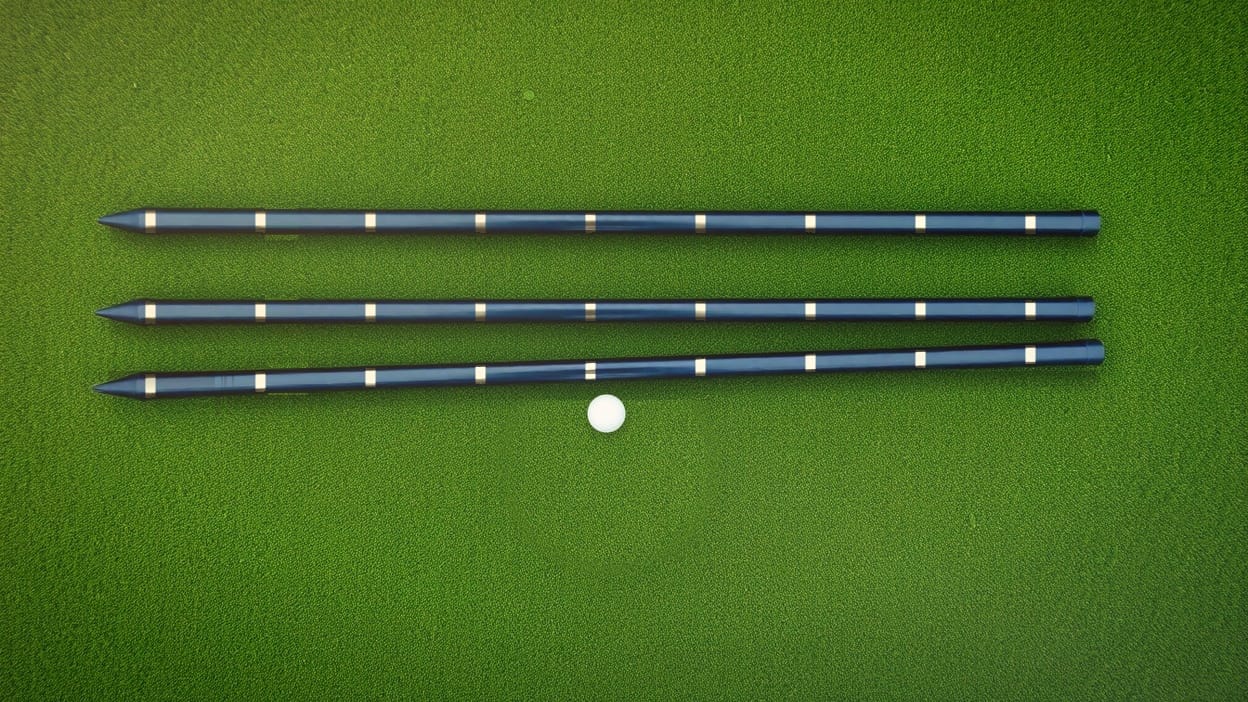
The SKLZ Pro Alignment Rods are three fiberglass rods, 48 inches (122cm) each, built around a nine-ring system that turns "am I aimed right" into something you can actually measure instead of eyeball. Golf Sidekick ranks the set first in its alignment-stick roundup and calls it "the toughest in terms of durability," and TellMeMoreGolf's own number-one pick agrees, docking it only for shipping with no printed instructions in the box. CompleteGolfStore scores it 9.5 out of 10, with the main complaint being the rod color, which it says "can blend into grass."
At $25 to $35 depending on retailer (Dick's Sporting Goods has it at $24.99, Golf Galaxy at $34.99, GolfGear360 quotes $28 to $33), it sits well above a hardware-store dowel and well below most launch-monitor-adjacent gear. The honest framing: a spare club on the ground checks basic aim for free. What the rods add is the nine-ring measurement and three-rod gate drills a single club or a two-stick set cannot replicate.
- The verdict: a durable, well-reviewed 3-rod set worth the $25 to $35 once you want repeatable ring measurements and gate drills, not just a straight line.
- The real feature: nine rings per rod turn ball position and stance width into a repeatable number, not a guess.
- Free alternative exists: a spare club or a string line handles basic "am I aimed right" at zero cost, you just lose the ring measurement and gate drills.
- Four drills, one baseline: start with the Two-Club Check, then use the rods for swing plane, slice setup, and a bonus putting gate.
- Not a fix-all: it won't force a textbook putting stroke or explain a shank on its own.
Pros and cons
Pros:
- Durability ranking: Golf Sidekick ranks the set first in its alignment-stick roundup for being "the toughest in terms of durability."
- Nine-ring system turns ball position and stance width into a repeatable number instead of a guess.
- Three-rod design opens up gate drills a two-stick set can't replicate.
Cons:
- No printed instructions in the box, per TellMeMoreGolf.
- Dark rod color can blend into grass, per CompleteGolfStore.
- Costs $25 to $35 when a spare club on the ground handles basic aim for free.
SKLZ Pro Alignment Rods
Who It's For (and Who Should Skip It)
This is built for the weekend golfer who has genuinely never checked their own alignment. Aim feels right from inside your own setup even when it isn't, which is exactly the blind spot the rings are built to close. If you practice two or three times a week and want a number instead of a feeling, that's the gap worth closing. GolfGear360's point on the ring system specifically is that it turns ball position into something repeatable, "ball at ring three," rather than an eyeballed guess you rebuild from memory every session. The three-rod set also opens up gate drills that a two-stick set cannot, as SavvyScores notes when comparing set sizes.
Skip it if you're already consistent with a spare club laid on the ground for basic aim, since that costs nothing and does the same job for a straight-line check. If a shank is what you're chasing, treat alignment as one input rather than the fix: alignment alone rarely explains a shank, though a spare rod does make the gate drill in our guide to stopping the shanks easy to set up. And your stroke arc isn't a clean binary either, so the rods can show you your start line without dictating whether your stroke should travel straight back and through or on a slight arc. I'll admit I lean toward tools that turn a feeling into a measurable number anyway, which is as much a personal bias toward this kind of aid as it is a review of it.
Four Drills the Rings Actually Help With
The Two-Club Check. This is the baseline setup from our guide to aiming and aligning correctly: one rod on your target line just outside the ball, a second rod laid parallel along your toe line. Check in sequence, clubface first, then feet, then hips, then shoulders, then eyes. The rings don't change this drill, but they let you note exactly which ring the ball sits at so the setup repeats the next time you practice, which GolfGear360 highlights as the system's main practical use: "ball at ring three" is a repeatable instruction in a way "about there" isn't.
The swing-plane rail. Push one rod into the ground at the angle of your shaft at address, then make slow, controlled practice swings tracing just outside it. This is a visual rail for a swing that comes over the top, and it pairs directly with our guide to stopping an over-the-top move if that's the fault you're chasing.
The slice parallel setup. Lay two rods parallel to your target line, one at your toes and one a few inches further out, and swing between them. A slice often starts with an open stance or an open clubface at address, and the parallel lines make an open setup obvious before you ever hit a ball. Our slice-fixing guide covers the rest of the fault once setup is ruled out.
The putting gate, as a bonus. Push two rods upright into the green a short distance in front of the ball, spaced just wider than the putter head, using matching rings on each rod so the gate is the same width every time you set it up. Stroke through it: if the putter clips a rod on the way through, the face wasn't square at impact. Treat this as a bonus use, not the main reason to buy the set. It checks your start line, not your stroke shape, and our guide to building a consistent putting stroke is clear that stroke arc isn't one-size-fits-all. If putting is your main focus, our dedicated putting-aids guide names a purpose-built gate trainer (the FINGER TEN) as the better dedicated pick.
Alternatives, Ranked by How Much You Practice
If you practice occasionally and just want a sanity check on aim, a spare club laid on the ground or a length of string does the job for zero dollars. You lose the nine-ring measurement and the three-rod gate drills, but for a single "am I aimed at the target" check, it works.
If you want something dedicated but don't need the ring system, hardware-store options are genuinely usable: yardsticks run $3 to $5 but can snap, PVC pipe runs $8 to $12, and wooden dowels run $4 to $6 but can splinter with repeated ground insertion. Fine for basic straight-line alignment work.
If you're practicing three or more times a week and want durability plus the ring measurement, the branded set earns its place, which is the same conclusion our training-aids guide reaches in naming it the budget pick. And if putting specifically is the priority, a dedicated gate trainer from our putting-aids guide will do more for your stroke than treating this set's bonus gate drill as a primary tool.
Check the current price on Amazon.
Frequently Asked Questions
What comes in the SKLZ Pro Alignment Rods set?
Do the rings actually matter, or is a plain alignment stick just as good?
Can I just use a spare club instead of buying alignment rods?
Will these fix my shank or build a better putting stroke?
Some links in this article are affiliate links. If you buy through them, I earn a small commission at no extra cost to you. This never influences what I cover or recommend. I link to gear I'd buy myself.







The golf newsletter that cuts the hype
Data-backed reviews and advice that works. No brand spin.
Recommended products