TL;DR
- The Ocean Course is a public, bookable Pete Dye design on Kiawah Island, South Carolina, and the host of the 1991 Ryder Cup and two PGA Championships.
- Every hole has an ocean view because Alice Dye proposed raising the entire course, and wind is the course's defining difficulty according to every published source.
- Five named tees run from 5,327 yards (4,871m) to 7,356 yards (6,726m), so forward tees are a real option, not a concession.
- Walking is allowed any time and the resort calls it the easiest walk of its five courses, though the published data shows no score advantage to walking over riding.
- Golf Digest ranks it No. 30 on America's 100 Greatest, No. 5 on America's 100 Greatest Public, and No. 1 in South Carolina.
- The resort doesn't publish a green fee. Check current rates when booking.
The Ocean Course sits in a different category than most bucket list golf trips. Pebble Beach and Bandon Dunes are both public, but getting on either one still takes planning: Pebble Beach effectively sells a resort stay that comes with a tee time, and non-guests are left with a 24-hour lottery window for whatever's left, while Bandon Dunes books through a lottery with set windows rather than a simple call-ahead reservation. The Ocean Course works differently. It's a public, major-championship venue that anyone can book directly, which makes the real question less "can I get on" and more "what does it take to play it well."
What makes it distinctive
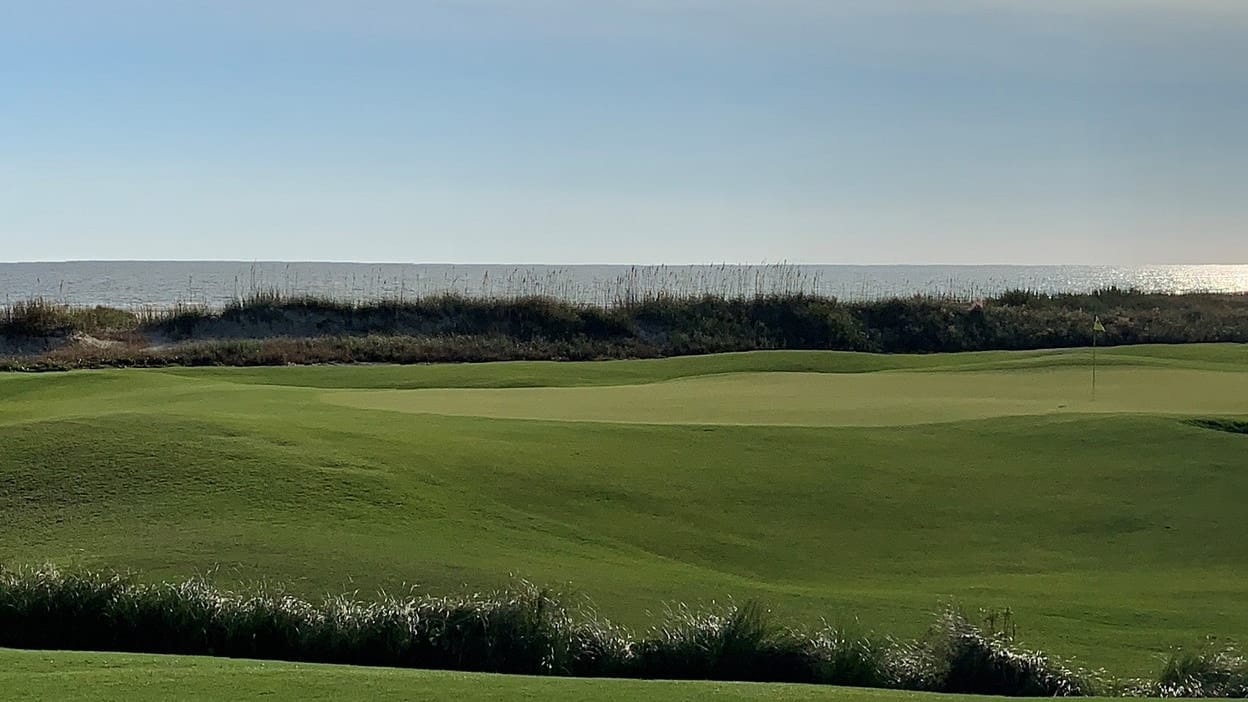
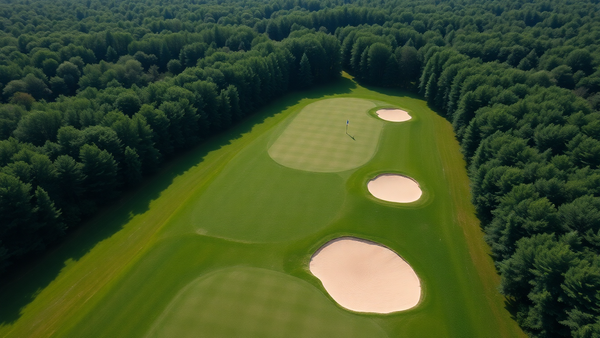
The Ocean Course opened in 1991 as a Pete Dye design, and the resort credits his wife Alice Dye with the course's defining move. The original plan tucked the layout behind the dunes; Alice Dye proposed raising the entire course instead, and the result is a course where the resort states every hole has "unobstructed views" of the coastline.
Every published source treats wind as the course's defining factor, not an occasional complication. Golf.com's course profile notes that the nines run in opposite directions, so a round rarely settles into one crosswind for long; the advice from course staff is to play downwind holes aggressively and simply hold on into the breeze. GolfMagic's 2025 review calls it "a Ryder Cup icon that's as stern a test as they come." Golf Digest's current rankings place it No. 30 on America's 100 Greatest Golf Courses, No. 5 on America's 100 Greatest Public Courses, and No. 1 in South Carolina. For a full breakdown of how to adjust a swing for wind rather than fight it, see our guide to playing golf in the wind.
How it plays across the spectrum
Weekend golfers have real options here. The Kiawah and Carolina tees play at 6,202 yards (5,671m) and 5,327 yards (4,871m), and choosing one of them isn't a concession on a course this exposed to wind; it's how a round stays playable. Taking a caddie or forecaddie is worth considering too, since carts are restricted for most of the year and local knowledge of the wind matters more here than on a sheltered inland course.
Improvers get a clean example of course management working harder than swing changes. Wind and exposure are the whole test on the Ocean Course, which is exactly the kind of course where playing to position beats playing to distance. Our course management guide covers the decision-making in more detail; there's no published rule tying a specific tee to a specific handicap, so pick the tee that matches how far the wind is likely to push a shot off its line, not a number on a chart.
Serious players get the number that matters: 77.3 and a slope of 144 from the Tournament tee. It's hard to find that kind of rating on a course anyone can book a tee time for, let alone one with a Ryder Cup and two PGA Championships in its history.
Major championship history
The Ocean Course earned its reputation in three events. The 1991 Ryder Cup, nicknamed "War by the Shore," ran September 27 to 29 and came down to the final match: the United States won 14 1/2 to 13 1/2 after Bernhard Langer missed a 6-foot (1.8m) putt that would have clinched a 14-all tie and retained the Cup for Europe.
In 2012, Rory McIlroy shot 275 (-13) to win the PGA Championship by eight strokes over David Lynn, a margin that still stands as a PGA Championship record. Nine years later, Phil Mickelson shot 282 (-6) to win the 2021 PGA Championship by two strokes over Brooks Koepka and Louis Oosthuizen, becoming the oldest major champion in history at age 50.
Planning the trip
Booking. The Ocean Course is open to the public. Resort guests with a confirmed stay can book for the length of that stay at a discounted rate, and non-guests can book up to 60 days out. The resort doesn't publish a green fee, so check current rates directly with the resort when booking.
Walking, carts and caddies. Walking is allowed at any time, and the resort calls the Ocean Course the easiest walk of its five courses. Carts are only permitted after 10am in June, July and August, and medical carts are allowed with a placard or a doctor's letter. There's no mandatory caddie fee, but the resort's suggested gratuity is $120 per player for a walking caddie and $60 per player for a forecaddie. The data suggests walking won't change your score: a European Journal of Sport Science study found no meaningful performance difference between walking and riding, so treat the choice as a fitness and pace preference, not a scoring one. I'll admit I weight a course's walkability more heavily than the ranking panels seem to, since it's usually what decides whether a trip works for the whole group, not just the player keeping score.
Packing. Wind-exposed, ocean-adjacent golf rewards packing for conditions that can change by the hole. A rain shell and a wind layer earn their space in the bag; our adidas Rain.RDY jacket review and Callaway Weather Series pullover review cover two options. If you're walking or using a caddie rather than a cart with a mounted screen, a GPS watch like the Garmin Approach S12 or a laser like the Bushnell Tour V7 Shift keeps yardages on your wrist or in your pocket instead of on a cart you won't have; our rangefinder guide compares more options. For the bag itself, see our guide to the best golf travel bags. And if the Ocean Course is one stop on a bigger trip, our guide to planning a golf trip that's actually worth the money is written with exactly this kind of booking decision in mind.
Pros:
- Open to the public, with a straightforward booking path for non-guests
- Genuine major-championship pedigree: a Ryder Cup and two PGA Championships
- Five named tees mean forward options are real, not an afterthought
- Walking allowed year round, and the resort's own easiest walk of its five courses
Cons:
- No published green fee, so budget planning takes an extra step
- Carts are restricted for most of the year, which some golfers will read as a plus and others as a limitation
- Wind can turn a reasonable yardage into a difficult one on short notice
How it compares
The closest comparison on this site is the TPC Sawgrass Stadium Course, which opened in 1980 as a Pete Dye design with Alice Dye co-designing. Both are public championship venues built by the same architect pairing.
For wind and exposure, the comparison runs toward the site's links coverage rather than its other resort courses. Our links versus parkland golf piece describes wind exposure on a links course as "constant, often severe, on most holes," which matches how every source describes the Ocean Course. That's a different test than Pebble Beach, where the ocean holes that make every highlight reel are, by that review's own account, a minority of the round. On the Ocean Course, the coastline is in view all day, and so is the wind coming off it.
Verdict
The Ocean Course earns its reputation honestly: a genuine major-championship test that happens to be open to the public, with tee options wide enough to fit a range of games. Golfers who struggle in heavy wind or with length should play the forward tees, and if neither the wind nor the length looks appealing on paper, this probably isn't the trip to force. Budget-first trips should check current rates with the resort before committing, since there's no published green fee to plan around. For everyone else, especially golfers who want a bucket list round without a membership requirement, it's hard to find a public course with this much tournament history attached to it.
Frequently Asked Questions
Can you walk the Ocean Course at Kiawah?
Yes. Walking is allowed at any time of day, and the resort calls the Ocean Course the easiest walk of its five courses. Carts are only permitted after 10am in June, July and August, with medical carts allowed by placard or doctor's letter.
Can the public play the Ocean Course?
Yes. The course is open to the public. Resort guests with a confirmed stay can book for the length of their stay at a discount, and non-guests can book up to 60 days in advance.
How long is the Kiawah Ocean Course?
It depends on the tee. The Tournament tee plays 7,356 yards (6,726m) at a 77.3 rating and 144 slope, the Ocean tee plays 6,779 yards (6,199m), the Dye tee plays 6,475 yards (5,921m), the Kiawah tee plays 6,202 yards (5,671m), and the Carolina tee plays 5,327 yards (4,871m) on a women's rating.
Who designed the Kiawah Ocean Course?
Pete Dye designed the course. The resort credits his wife, Alice Dye, with the decision to raise the entire course so that every hole has an ocean view.
Photo: N75746 / Wikimedia Commons, CC BY-SA 4.0