Gogogo Sport Vpro GS03 Review: A Budget Laser
A $60-80 laser that nails straight-line distance in independent testing, but skips the physical slope switch and tournament-grade weatherproofing of pricier units.
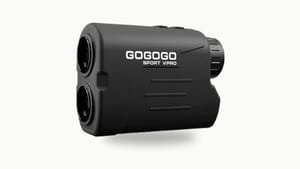

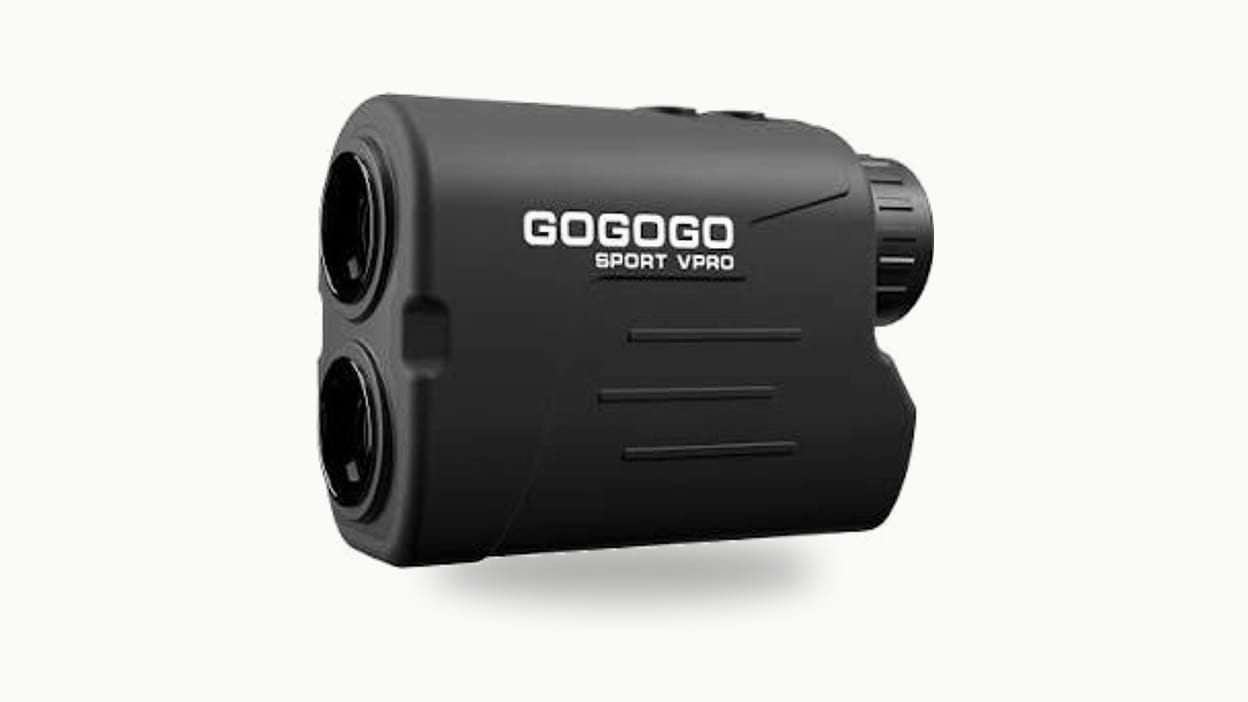
A laser rangefinder can mean spending $400, or choosing a GPS watch instead. The Gogogo Sport Vpro GS03 sits in between: a laser that costs roughly a fifth of a flagship unit and gets the one job a laser has to do, straight-line distance, right according to independent testing. Here's what it gets right, what it gives up against the flagship Bushnell Tour V7 Shift, and who it actually suits.
- The core number holds up: Plugged In Golf found the GS03's straight-line readings consistently within 1 yard (0.9m) of rangefinders costing four times as much.
- Slope drifts at range: with slope mode on, readings differed by up to 5 yards (4.6m) versus pricier units past 200 yards (183m), likely a formula difference rather than a fault.
- No physical slope switch: the GS03 toggles slope by mode, not a switch, so playing partners can't see that slope is off, even though slope is already off-limits in competition on any device.
- Build and value stand out; the screen doesn't: reviewers praised the magnet and solid feel, and knocked the non-illuminated display and IP54 weather sealing.
- Price: roughly $60 to $80 at the time of writing, against $399.99 for the Tour V7 Shift.
Pros:
- Straight-line accuracy that held up against units costing 4x more in independent testing
- Strong magnet and a build that reviewers called more substantial than its price suggests
- 6x magnification and flagpole lock up to 250 yards (229m), per the listing
- Vibration confirms flag lock without needing to check the display
Cons:
- No physical slope switch, so playing partners can't see that slope is off
- Black, non-illuminated display that's harder to read in bright sun
- IP54 weather sealing covers light rain and splashes only, not a downpour
- Target lock slows down when an object sits behind the flag
What the GS03 gets right
The core claim on any budget rangefinder is whether the number on the screen is the actual number. Plugged In Golf tested the GS03 against two rangefinders costing four times as much or more and found that, with slope mode off, it was "consistently within one yard... often produced the same number." That's the measurement a laser exists to deliver, and by that account the GS03 delivers it.
The build gets similar marks. Plugged In Golf called it a unit that "feels more substantial than some rangefinders at twice the price," and singled out the magnet, which lets it stick to a cart bar without a separate case. GolfMagic agreed, calling the design "fantastic value for money, lovely ergonomic design," and praised the flag lock specifically, which pairs a vibration cue with the display when it locks onto the flag. The Golf Buyer's take lands in the same place from a different angle: "accurate enough for recreational play," a verdict aimed squarely at casual and high-handicap golfers rather than anyone chasing tournament-grade slope math.
On the manufacturer's own numbers, the GS03 ranges up to 1,000 yards (914m) and locks a flagpole up to 250 yards (229m), with a claimed accuracy of plus or minus 1 yard (0.9m), 6x magnification, and vibration on flag lock. Those are brand specs, not independently verified figures, but they line up with what the straight-line testing above actually found in practice.
What you give up versus the Tour V7 Shift
The gap between the GS03 and a flagship like our Bushnell Tour V7 Shift shows up away from straight-line distance, where the GS03 already competes.
Slope is the clearest example. With slope mode engaged, Plugged In Golf's readings differed by up to 5 yards (4.6m) from the pricier units past 200 yards (183m), a gap the reviewer attributed to differing slope formulas rather than a defect. It's the kind of result that makes a cheap laser's slope number worth treating as a second opinion rather than gospel, and it's part of why I'd sooner read the GS03's straight distance and adjust the number by eye than lean on its slope math from long range. GolfMagic is blunter about the practical consequence: "the slope mode cannot be used in tournament play." The GS03 has no physical switch to turn slope off, only a mode setting, so a playing partner has no way to glance at the unit and confirm slope is actually disabled. Anyone who plays in competitions should check with their committee before bringing it to the course, or look at the GS03MTL, a sibling model that adds a physical slope switch and costs more.
The Tour V7 Shift solves the same problem with a dedicated Slope-Switch, and its weather sealing is rated IPX6 against the GS03's IP54, which Plugged In Golf notes covers light rain and splashes rather than a genuine downpour. The display is another gap: the GS03's screen is black and non-illuminated, and The Golf Buyer found it harder to read in bright sun, while target lock itself slows down when an object sits behind the flag.
None of that touches the laser-versus-GPS question. The GS03 is the laser half of the pairing our Tour V7 Shift review already recommends for most golfers, a GPS watch alongside a laser rangefinder, and our Garmin Approach S12 review covers the GPS side of that setup. Worth a mention in passing: Plugged In Golf also tested a sibling, the GS24, and found it nearly identical apart from a AAA battery instead of CR2 and a slightly larger body.
Gogogo GS03 vs Bushnell Tour V7 Shift
| Spec | Gogogo GS03 | Bushnell Tour V7 Shift |
|---|---|---|
| Range | Up to 1,000 yards (914m), claimed | 5 to 1,300 yd (4.6 to 1,189m) |
| Accuracy | +/-1 yard (0.9m), claimed | +/-1 yd (0.9m) |
| Slope | Mode toggle, no physical switch | Slope-Switch, physical |
| Magnification | 6x | 6x |
| Weight | 6.5oz (184g) | 9oz (255g) |
| Water resistance | IP54, light rain and splashes only (Plugged In Golf) | IPX6 |
| Battery | CR2 | CR2, not rechargeable |
| Warranty | 1-year | 2-year |
| Price | Roughly $60 to $80 | $399.99 |
Verdict
The GS03 does the one thing a laser rangefinder is for, straight-line distance, about as well as units costing four times as much, and the build and flag lock back that up. What it gives up is everything around the edges: a slope number that drifts at range, no physical switch for playing partners to see that slope is off, a display that struggles in sun, and sealing that won't survive a real soak. For a weekend golfer or improver who wants an honest number on approach shots without a $400 outlay, that trade makes sense. A serious player who competes under slope restrictions or wants tournament-grade weather sealing is the one buyer this unit isn't built for, and the Tour V7 Shift or the switch-equipped GS03MTL are the better fit there.
Frequently Asked Questions
Is the Gogogo GS03 legal for tournaments?
How accurate is the Gogogo GS03 rangefinder?
Is the Gogogo GS03 waterproof?
What's the difference between the GS03 and the GS03MTL?
Some links in this article are affiliate links. If you buy through them, I earn a small commission at no extra cost to you. This never influences what I cover or recommend. I link to gear I'd buy myself.








The golf newsletter that cuts the hype
Data-backed reviews and advice that works. No brand spin.
Recommended products

Rukket SPDR Golf Net Review: 10x7 Bundle for Home Practice.
The Rukket 10x7 SPDR golf net bundle reviewed: what's actually in the box, what MyGolfSpy and PluggedInGolf found, and who it fits best.
Read review