Callaway Supersoft (2025) Review
A budget-friendly pick for slower swings and higher handicaps, with MyGolfSpy's consistency caveat attached.


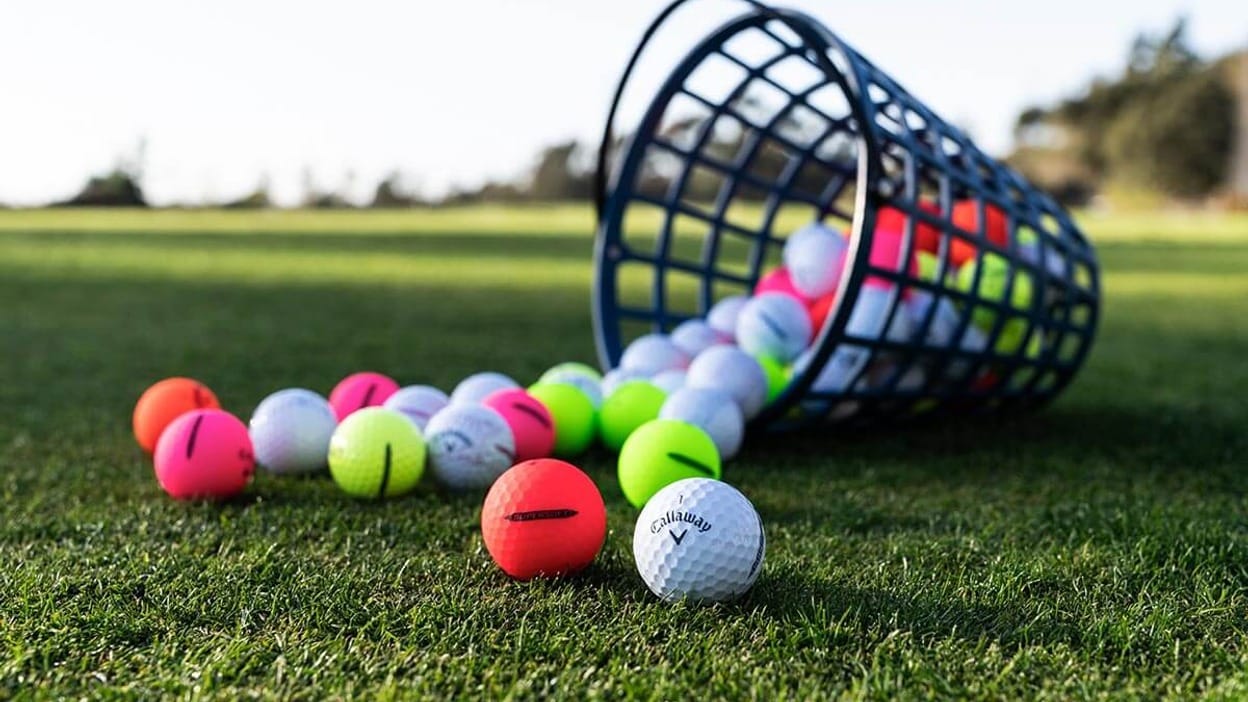
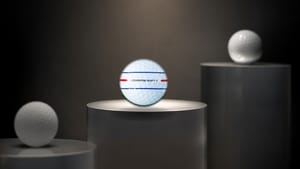
Callaway Supersoft golf balls, outdoor lifestyle shot. Image © Callaway Golf Company. Used by permission.
A budget-friendly pick for slower swings and higher handicaps, with MyGolfSpy's consistency caveat attached.
- Best for: swing speeds under 100 mph (161km/h) and 16 to 24 handicaps, per National Club Golfer and Launch Point Golf's own handicap guide.
- Compression: around 44 in MyGolfSpy's 2026 Ball Lab test (47 in its 2023 test). A figure of 38 still circulates online, but it traces back to 2014 Callaway marketing rather than independent testing.
- Consistency caveat: MyGolfSpy grades it a C and calls it Not Recommended, mainly on ball-to-ball compression spread.
- Price: about $25 to $28 a dozen, among the cheapest balls in this category.
- Skip it if: you need tour-level greenside spin, or your swing speed is high enough to compress a firmer ball anyway.
Specs
| Spec | Callaway Supersoft (2025) |
|---|---|
| Construction | 2-piece |
| Core | HyperElastic SoftFast Core |
| Cover | Hybrid cover with a Paraloid impact modifier |
| Dimple pattern | HEX Aerodynamics |
| Compression | Around 44 (MyGolfSpy 2026); 47 in MyGolfSpy's 2023 test |
| Price | About $25 to $28 a dozen |
| Colors | Matte (pink, orange, red, green); solid white and yellow; Splatter 360 (pink, blue, red) |
Who it's for, who should skip it
The Supersoft is built for golfers whose swing speed can't fully compress a firmer ball at impact. National Club Golfer, which tested the ball on launch monitor data, concluded it's "best suited to swing speeds under 100 mph (161km/h)." That lines up with how LPG already covers this ball: the golf balls by handicap guide names the Supersoft its 16 to 24 handicap pick, and the mid-handicap ball comparison calls it the distance option against the Wilson Duo Soft on value, the Titleist Tour Soft on feel, and the TaylorMade Tour Response on spin. Nothing here argues with either page.
The compression explainer and how to choose a golf ball both cover why this matching matters: a slow swing meeting a high-compression core leaves ball speed unused, while a soft core like this one deforms enough at lower speeds to give that speed back. If your swing speed is already high enough to compress a firmer ball, or your short game depends on spinning wedge shots to a stop on firm greens, this isn't the right ball. A hybrid cover built around a Paraloid impact modifier helps with durability and feel, but it doesn't grip grooves the way a urethane cover does.
The consistency question: what MyGolfSpy found
Here's the tension worth being upfront about. LPG's own guides recommend the Supersoft, and MyGolfSpy's Ball Lab doesn't. Its 2026 test gave the 2025 Supersoft a Grade C, score 74, and rated it Not Recommended, mainly because of how much the ball varies from unit to unit. MyGolfSpy measured compression consistency at C-minus, with individual balls ranging from 40.3 to 53.8, and a symmetry deviation of 3.0 against a field average of 1.9. Its Good Ball Rate, the share of balls that met its own performance tolerance, came in at 92%.
Both things are true at once, and neither cancels the other out. It's the same conversation I have with friends who play off the high teens: a bit of ball-to-ball variation matters less when you're losing three balls a round anyway, and matters more the closer your handicap gets to single figures. For a budget-minded player with a slower swing, the Supersoft's low compression and price still make it a sound pick. For a golfer chasing consistency as the scoring lever, MyGolfSpy's grade is the more useful number, and it's worth reading in full before buying on price alone.
Driver and iron performance
National Club Golfer's launch monitor numbers give the clearest picture of how the Supersoft performs off the tee and through the irons. Off the driver, it produced 154 mph (248km/h) ball speed, about 2,500 rpm of spin, 265 yards (242m) of carry, and 283 yards (259m) total. With a 7-iron, ball speed came in at 116 mph (187km/h) with roughly 5,200 rpm of spin. Golf Monthly's independent review called it "a fantastic performing ball" and "unbelievable value," with its only real complaint being that the dimples "could have been slightly deeper."
Greenside and short-game performance
Around the green, National Club Golfer measured a 58-degree wedge producing roughly a 30-degree launch angle and about 6,700 rpm of spin. That's respectable for a 2-piece ball, but Today's Golfer, which rated the Supersoft 5 out of 5 overall and praised its "very soft feel," still flagged that it "lacks a little control around the greens" compared with a urethane-covered ball. That's consistent with the hybrid cover's design: it's built for distance and feel first, not for stopping a wedge shot dead on a firm green.
How it compares
The Srixon Soft Feel is the Supersoft's closest rival on paper, another 2-piece ball built for the same under-90 mph (145km/h) bracket, priced only a little higher at roughly $27 a dozen. Both trade short-game spin for distance and value; the choice between them often comes down to feel preference and whichever is cheaper at the time.
Stepping up in price moves into a different category entirely. The Titleist Pro V1 and the Callaway Chrome Soft (2026) both trade the Supersoft's low price for a urethane cover and tour-level short-game spin, at several times the cost per dozen. Neither is a direct swap for the Supersoft. They solve a different problem for a different budget and a different swing speed.
Price and where to buy
Current retail runs about $25 to $28 a dozen, with Callaway's own site listing $27.99 at the time of writing. That price, combined with the performance data above, is what makes the Supersoft a repeat recommendation across LPG's handicap and comparison guides despite MyGolfSpy's consistency grade.
 Buy now
Pros
- Soft, forgiving feel built for slower swings, per National Club Golfer and Today's Golfer
- Strong value at about $25 to $28 a dozen
- A 92% Good Ball Rate in MyGolfSpy's 2026 testing
Cons
- MyGolfSpy rates it Grade C, Not Recommended, on compression consistency
- Short-game control trails urethane-covered balls, per Today's Golfer
- Dimples "could have been slightly deeper," per Golf Monthly
Frequently Asked Questions
What is the compression of the Callaway Supersoft?
Is the Callaway Supersoft good for high handicappers?
Why does MyGolfSpy rate the Supersoft "Not Recommended"?
How does the Callaway Supersoft compare to the Srixon Soft Feel?
What swing speed is the Callaway Supersoft best suited to?
Some links in this article are affiliate links. If you buy through them, I earn a small commission at no extra cost to you. This never influences what I cover or recommend. I link to gear I'd buy myself.






The golf newsletter that cuts the hype
Data-backed reviews and advice that works. No brand spin.
Recommended products

Rukket SPDR Golf Net Review: 10x7 Bundle for Home Practice.
The Rukket 10x7 SPDR golf net bundle reviewed: what's actually in the box, what MyGolfSpy and PluggedInGolf found, and who it fits best.
Read review