Your ball is sitting under a tree, there's a window of daylight somewhere between the trunk and the lowest branches, and you've got about four seconds before your group starts wondering what's taking so long. Here's the short version: most of the strokes lost under trees don't come from a badly struck punch shot. They come from a well struck shot that was never the right shot to attempt. Get the decision right first, and the swing itself is a small, repeatable adjustment on a shot you already own.
This guide covers the punch shot specifically as a recovery tool: low, under branches, back into play. If you're fighting wind on an open shot rather than trouble under a tree, the mechanics are the same swing, and our guide to playing golf in the wind covers that version in more depth.
- Fairway first: the default shot out of trees is back into play, not at the green. Only take the gap shot when missing it still leaves you somewhere playable.
- Same swing as the wind shot: a three-quarter swing, an abbreviated finish, hands ahead of the clubhead, ball back in your stance.
- Clearing branches goes further: drop to a more delofted club and move the ball back another inch (2.5cm) or so beyond the standard knockdown position. Same technique, pushed one step further.
- No launch monitor required: an alignment stick wedged into the turf at branch height gives you a real ceiling to hit under at the range.
- Expect more roll: a lower, lower-spin ball flight runs out further once it lands, so land it well short of where you'd normally aim.
Step 1: Read the lie, the ceiling, and the gap
Before you touch a club, answer three questions standing over the ball.
The lie. Is the ball sitting up on pine straw or a clean patch of rough, or is it sitting down in thick grass? A buried lie changes everything else: you'll need more clubhead through the grass, which usually means less control over the low trajectory you're trying to produce. If the ball is genuinely sitting down, our guide to hitting out of the rough covers the lie-reading adjustments that stack on top of everything here. A lie on a slope under the canopy also needs the setup changes in our guide to hitting consistent iron shots from uneven lies.
The ceiling. Pick one specific branch, not a general impression of "low." Stand behind the ball, sight along your intended line, and find the lowest branch your ball flight has to clear. Walk toward the ball from several angles if the first look is unclear. A ceiling estimate made from one spot, usually directly behind the ball, is the most common place this shot goes wrong, because trees are rarely symmetrical and a gap that looks open from one angle closes up from another.
The gap. If there's a gap in the branches that could get you toward the green rather than just back to the fairway, measure it the same honest way: how wide is it really, and what's your margin for error if the shot drifts a yard or two (about 1m) off your intended line? A gap that's comfortably wider than your typical dispersion is a different proposition than one that's only wide enough if you hit it perfectly.
Step 2: Choose the target, fairway by default
This is the decision that determines your score on the hole more than the swing itself does. Our guide to avoiding big numbers calls this the escape priority: the next shot's job is to get the ball back into a playable position, not to chase the green. That rule holds just as well here as it does for any other kind of trouble.
The default target is the fairway, or the nearest flat, open piece of grass that sets up your next shot cleanly. Not the green. Not the pin. Just somewhere you can swing freely at your next shot without still being in the trees.
The exception is the hero shot through the gap, and it earns its place only under one condition: a miss still leaves you somewhere playable. If the gap is genuinely wide, the lie is clean, and a pulled or pushed shot still clears the trouble, go ahead and take it on. If a miss means you're now behind a second obstacle, in a worse lie, or further from your eventual target than a safe punch would have left you, the math doesn't support it, no matter how tempting the gap looks from the ball. I'll admit my own default here is almost always the boring one. Given the choice, I'll take the simple punch back to the fairway over the hero gap shot nearly every time, and the math above is exactly why. Treat the decision the way you'd treat any other hero shot on the course: made before you're standing over the ball with adrenaline arguing the other side, not during.
Step 3: Pick the club for the height you need
Once you know your target, club selection comes down to one simple relationship: a more delofted club produces a lower ball flight for the same swing, because loft is the single biggest driver of launch angle at a given swing speed. Degrees of loft are unit-universal, so there's no conversion needed here, just the relationship itself: less loft, lower window.
Performance Golf's instructional breakdown on punch shots recommends working from a mid-iron, typically a 4-iron through a 7-iron, as the base club range for this shot, then adjusting from there based on how much height you actually need to take out of the shot. A standard recovery punch to clear a moderate ceiling might only need you to drop one or two clubs from what the yardage calls for. Clearing a genuinely low canopy, the kind where the lowest branches sit around head height or lower, calls for going further down the bag: a 5-iron or 6-iron instead of the 8-iron the distance alone would suggest, even if that means landing short of your original target and accepting the roll-out to get there.
This isn't a separate skill from club selection on a normal approach. It's the same club-for-the-shot-you-need logic, just solving for height instead of distance.
Step 4: Set up for the knockdown
The setup is identical to the knockdown used for wind control, with one addition when branches are the specific problem rather than just gusts.
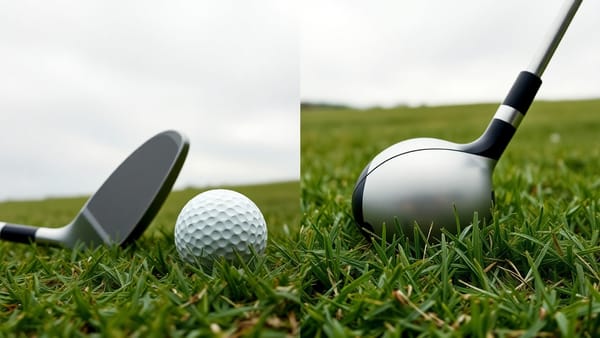
Move the ball back in your stance, roughly 1 to 2 inches (2.5cm to 5cm) behind its normal position for the club you've chosen. This reduces dynamic loft at address before you've even started the swing, which is most of the work. Choke down 1 to 2 inches (2.5cm to 5cm) on the grip as well. That shortens your swing arc, which naturally reduces clubhead speed and spin, both of which push the ball flight lower still.
When the problem is specifically a low ceiling rather than wind, push the ball position back another inch (2.5cm) or so beyond the standard knockdown spot, and lean your weight slightly more onto your lead foot at address. This is the same setup change scaled up, not a new one: the wind knockdown and the branch-clearing punch share one setup, with the branch version turning the same dial a little further.
Step 5: Make the punch swing
The swing itself is a three-quarter swing with an abbreviated finish, your hands staying ahead of the clubhead all the way through impact. Take the club back shorter than your full swing, keep the tempo smooth rather than quick, and stop your finish low and early instead of releasing into a full follow-through. Performance Golf frames the swing length as roughly 50 to 75 percent of a full swing, which lines up with the three-quarter description: enough motion to move the ball the distance you need, short enough that spin and launch stay suppressed.
The swing thought that keeps this shot honest under pressure is simple: pick the target window through the branches before you start your backswing, then commit to swinging through it rather than steering the club mid-swing. A punch shot that gets manipulated partway through almost always balloons back up, because the hands stop staying ahead of the clubhead the moment you start trying to add height back in.
Step 6: Control the rollout once it lands
A lower, lower-spin ball flight does one thing differently from your normal approach shot: it runs out a lot further once it lands, because there's less backspin to check it and a shallower landing angle to begin with. This is the step golfers forget most often, because the swing felt good and the trajectory looked right, and then the ball runs through the green or well past the fairway target they were aiming at.
Plan for it before you swing, not after you watch the ball land. If your target is the fairway, pick a spot well short of where you'd normally land an approach and let the roll carry it the rest of the way. If you're attempting the gap shot toward the green, the same logic applies with more consequence: a low punch that lands on the front of the green with its usual backspin-checked stop in mind will likely run through the back. Take enough off the number, or land it short enough, that the extra roll works for you instead of against you.
Practice the punch without hitting a single ball on the range
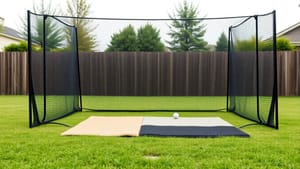
You don't need a launch monitor to groove this shot, and you don't need a tree either. Stick an alignment stick into the ground at a steep angle, or balance one across two range-bucket stands, so it sits at roughly the height of the lowest branch you'd realistically expect to deal with on your course, somewhere around waist to chest height is a reasonable starting ceiling. A rolled towel draped over a range divider or a golf bag works the same way if you don't have a stick handy.
Hit shots under it. If you clip the stick or the towel, your trajectory is too high for that club and setup combination; adjust ball position, club, or both, and try again. This gives you honest, repeatable feedback on launch height without needing any data at all, which matters because this is exactly the kind of shot that most weekend golfers never actually practice until they're standing under a real tree with no rehearsal behind them.
A $10 to $15 set of fiberglass alignment sticks covers this drill and a handful of others, so it's one of the cheaper additions you can make to a practice bag.
Whether you're playing a tree-lined parkland course or working your way through gorse and pot bunkers on a links layout, the drill travels. The branches change; the three-quarter swing and the ceiling check don't.
Frequently Asked Questions
What's the difference between a punch shot and a knockdown shot?
Nothing mechanical. Both names describe the same three-quarter swing with an abbreviated finish, hands ahead, ball back in the stance. "Knockdown" is the more common name when the problem is wind and you're trying to keep spin and launch down on an otherwise open shot. "Punch" is the more common name when the problem is a low ceiling and you're trying to clear branches or stay under a specific obstacle. The adjustment for low branches (more delofted club, ball moved back a little further) is a step beyond the base knockdown, not a different technique.
How many clubs should I take for a punch shot out of the trees?
It depends on how low the ceiling actually is, not on a fixed number. Performance Golf's instructional breakdown recommends a mid-iron range of a 4-iron through a 7-iron as the base for this shot, then adjusting further based on how much height needs to come out of the trajectory. A moderate ceiling might only cost you one or two clubs off the standard yardage club. A genuinely low canopy can mean dropping three or four clubs down and accepting less distance in exchange for clearance.
Should I always try to hit the green from under trees?
No. The default is getting the ball back into a playable position, usually the fairway, not attacking the green. Our guide to avoiding big numbers calls this the escape priority, and it applies directly here: only take the gap shot toward the green when a miss still leaves you somewhere playable. If a miss would put you behind a second obstacle or in a worse spot than a safe punch would have, the fairway shot is the better math, even though it's the less exciting one to attempt.
What if there's no clean gap to swing through at all?
Then it's a chip-out, not a punch shot, and that's a completely reasonable outcome. If the lowest realistic ceiling is too low for even a heavily delofted iron, or there's no usable width anywhere along your line, take the shortest, most reliable club you have (often a wedge or a short iron swung well within itself) and simply get the ball back to grass you can play from. A chip-out that costs one shot and gets you back in position is a better result than a forced punch attempt that clips a branch and leaves you further from the hole than you started.
Do I need a launch monitor to practice the punch shot?
No. The ceiling an alignment stick or a towel creates at the range gives you direct, visible feedback on trajectory without any data at all: clip the stick and the shot flew too high for that setup, clear it cleanly and the combination worked. A launch monitor can confirm launch angle and spin numbers if you have access to one, but it isn't required to learn or groove this shot.
Some links in this article are affiliate links. If you buy through them, I earn a small commission at no extra cost to you. This never influences what I recommend. I link to gear I'd buy myself.