Best Hybrids for High and Mid Handicappers (2026)
Compare the best hybrids for high and mid handicappers in 2026, including forgiveness, adjustability, and value, with picks for every bag and budget.
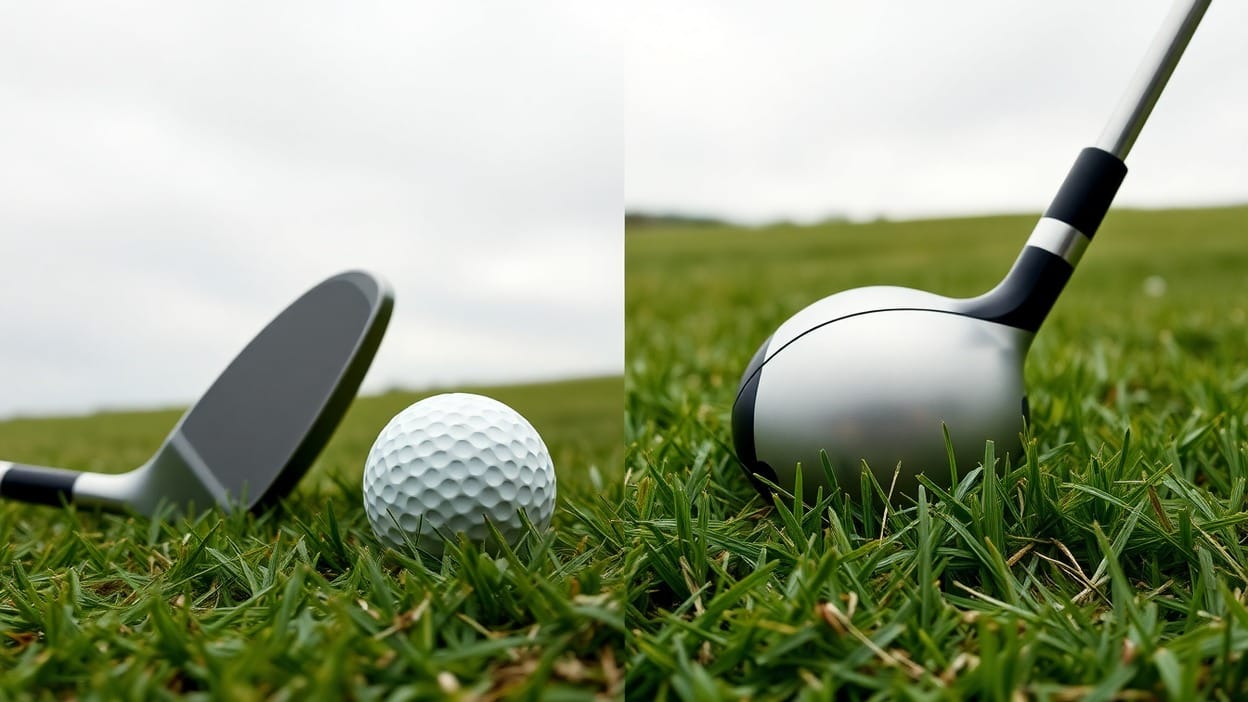
A hybrid earns its spot in the bag by doing one job well: getting a ball in the air from a lie where a long iron won't cooperate. For high and mid handicappers, that job matters more than almost anything else in the bag, because the long-iron gap is usually where a round quietly falls apart. Below are the five best hybrids for high and mid handicappers this year, picked for forgiveness, adjustability, and value rather than raw numbers on a launch monitor sheet.
- Most forgiving: TaylorMade Qi4D Max Rescue, Golf Digest Hot List Gold and called "the most forgiving hybrid of the year."
- Best for high handicappers: Callaway Quantum Max OS, an adjustable-hosel Hot List Gold pick that National Club Golfer calls "the perfect hybrid for high handicappers."
- Most adjustable: Ping G440 Hybrid, an 8-position hosel and a 5.0/5 Hot List Gold score.
- Top-rated overall: Mizuno JPX One, MyGolfSpy's number one overall hybrid, with a higher-spin trade-off worth knowing about.
- Best budget pick: Tour Edge Exotics Max 3, around $229.99 and MyGolfSpy's number one for distance.
Do you actually need a hybrid?
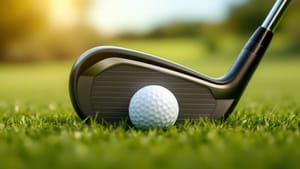
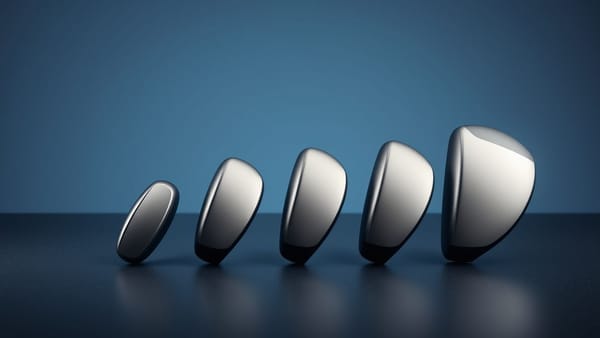
There's a simple test that doesn't require a launch monitor. If you can't consistently get a 4-iron or 5-iron airborne on a clean strike, a hybrid will very likely help. That particular miss, a thin, low flight off a decent swing, is exactly the gap a hybrid is built to close. A hybrid's wider sole and lower center of gravity get the ball up from lies where a long iron's thinner sole and higher CG punish anything slightly off-center.
The reason a hybrid closes that gap isn't a trick of marketing. A long iron's thin sole and compact head concentrate weight high behind a small face, which punishes a strike that lands even slightly low on the face. A hybrid spreads that same weight lower and wider behind a bigger face, so a strike an inch off the sweet spot still gets airborne instead of skidding off the turf. That difference shows up most from rough and off firm fairways, exactly where a mid handicapper's miss tends to happen.
Topping or duffing the ball entirely is a different problem, and a hybrid won't fix it. That's a fundamentals issue, usually tied to setup, ball position, or weight transfer, and it's worth working through before spending on new equipment. The how-to on hitting a hybrid covers that technique in full, so it's not repeated here.
Most hybrids on this list are built to replace a long iron a golfer can't hit consistently, the framing our Qi4D Max Rescue review uses too, though loft isn't a clean 1:1 swap across brands. A 19-degree hybrid from one manufacturer doesn't always fly like a 19-degree hybrid from another, so the loft number on a spec sheet is a starting point, not a guarantee.
How we chose these hybrids
Every hybrid below carries independent verification beyond its own marketing: a Golf Digest Hot List Gold rating, a MyGolfSpy ranking, or a named reviewer's verdict from outlets like Golf Monthly and National Club Golfer. Golf Digest's Hot List draws on a panel of qualified testers hitting each club under the same conditions; MyGolfSpy blends robot testing with real-golfer feedback. Different methods, but both independent of the manufacturers, which is the bar every pick here had to clear. None of these picks are based on a single source's word alone. That said, I'll admit a bias worth naming: given this list is for high and mid handicappers specifically, forgiveness got weighted ahead of raw numbers on a test sheet, even in cases where a flatter-launching alternative might edge out a forgiveness-first club on paper. A club that costs a little distance but gets struck solidly far more often is the better bag fit for this audience, and that preference shapes the order below.
The best hybrids for high and mid handicappers in 2026
TaylorMade Qi4D Max Rescue
Golf Digest's Hot List named the Qi4D Max Rescue Gold and called it the most forgiving hybrid of the year, and Golf Monthly's testing found tighter dispersion on off-center strikes than the standard Qi4D. It's built across a wide loft spread, 19 to 34 degrees, so it covers everything from a 3-iron replacement down to a half-wedge gap club. At around $299.99, it sits mid-pack on price for what it delivers in forgiveness.
Buy on Amazon: TaylorMade Qi4D Max Rescue
Callaway Quantum Max OS
National Club Golfer called the Quantum Max OS "the perfect hybrid for high handicappers," and it's a Hot List Gold winner too. The adjustable hosel lets you fine-tune loft and face angle as your swing changes, which matters more for this audience than for a low handicapper who rarely touches the settings once they're dialed in. Loft runs 18 to 32 degrees, and it's priced around $319.99.
Buy on Amazon: Callaway Quantum Max OS
Ping G440 Hybrid
The G440 is another Hot List Gold winner, scoring a perfect 5.0 out of 5 in that test, and Golf Monthly flagged it as a "must-try." An 8-position hosel gives it the widest adjustability range on this list, spanning 17 to 34 degrees of loft. It runs around $320 to $325 depending on shaft and configuration.
Buy on Amazon: Ping G440 Hybrid
Mizuno JPX One
MyGolfSpy ranked the JPX One as its number one overall hybrid, the strongest showing on this list from that test. The trade-off is spin: it launches higher-spinning than most of the field here, which can cost distance into the wind or on firm, fast courses. Loft covers 19 to 28 degrees, and it's priced around $279.99.
Tour Edge Exotics Max 3 (budget pick)
MyGolfSpy ranked the Max 3 third overall and first for distance, a strong result at the lowest price on this list, around $229.99. The trade-off for that price is a fixed hosel, so there's no on-the-fly loft or face-angle adjustment if your swing changes down the road. Loft options run 17 to 25 degrees.
Buy on Amazon: Tour Edge Exotics Max 3
Picks by use case
If forgiveness on mis-hits matters more than anything else, the Qi4D Max Rescue is the pick. Its wider dispersion margin on off-center strikes, per Golf Monthly's testing, makes it the safest choice for a golfer who doesn't always catch the center of the face.
If you're a high handicapper who wants something built with that exact player in mind, the Quantum Max OS is the direct answer, carrying National Club Golfer's verdict to that effect along with an adjustable hosel that grows with your game.
If you want the widest range to fine-tune loft and lie across your whole bag, the G440's 8-position hosel gives you more configurations than anything else here.
If you want the hybrid that tested best overall and don't mind a bit more spin in exchange, the JPX One is the pick, with MyGolfSpy's number one overall ranking behind it.
If budget is the deciding factor and you're willing to give up adjustability to get there, the Exotics Max 3 is the clear choice: a top-three overall finish and the best distance result in MyGolfSpy's test, at the lowest price on this list.
How these hybrids compare
| Hybrid | Price (approx.) | Loft range | Standout | Trade-off |
|---|---|---|---|---|
| TaylorMade Qi4D Max Rescue | Around $299.99 | 19-34 degrees | Most forgiving (Hot List Gold) | Mid-pack price |
| Callaway Quantum Max OS | Around $319.99 | 18-32 degrees | Adjustable hosel, built for high handicappers | Higher price |
| Ping G440 Hybrid | Around $320-$325 | 17-34 degrees | 8-position hosel, widest adjustability | Highest price |
| Mizuno JPX One | Around $279.99 | 19-28 degrees | MyGolfSpy's #1 overall hybrid | Higher spin |
| Tour Edge Exotics Max 3 | Around $229.99 | 17-25 degrees | MyGolfSpy's #1 for distance, lowest price | Fixed hosel |
For irons that pair well with any of these hybrids in a high-handicap bag, see our guide to the best game-improvement irons for high handicappers.
Frequently Asked Questions
What iron does a hybrid replace?
Most hybrids on this list are built to replace a long iron, the club high and mid handicappers struggle with most. Loft isn't identical across brands, so check the specific hybrid's loft against the iron it's meant to replace rather than assuming every 19-degree hybrid plays the same.
Hybrid or fairway wood off the tee?
It depends on the hole and the miss you're trying to avoid. Our driver vs. 3-wood off the tee breakdown covers the tradeoffs between a fairway wood and other options from the tee box, and the same logic extends to a hybrid: shorter and more controllable than a 3-wood, but not as long.
Do I need an adjustable hybrid?
Not necessarily. An adjustable hosel, like the ones on the Quantum Max OS and the G440, is most useful if your swing is still changing or you want to fine-tune loft and face angle over time. A fixed-hosel hybrid like the Exotics Max 3 costs less and still performs well, it just locks in one setting.
What's the real difference between a $230 hybrid and a $320 one?
Mostly adjustability and dispersion margin, not raw distance. The Exotics Max 3, around $230, still ranked first for distance in MyGolfSpy's testing. What the pricier hybrids like the Quantum Max OS and G440, both around $320, add is hosel adjustability and, in testing, a wider forgiveness margin on strikes away from center.
Should a high handicapper carry more than one hybrid?
Often, yes. A pair of hybrids covering different lofts, say a 19-degree and a 25-degree, can replace both long irons in the bag and leave room for an extra wedge instead. It's a common setup for a handicap range where long irons rarely get struck cleanly anyway.
Some links in this article are affiliate links. If you buy through them, I earn a small commission at no extra cost to you. This never influences what I cover or recommend. I link to gear I'd buy myself.







The golf newsletter that cuts the hype
Data-backed reviews and advice that works. No brand spin.
Recommended products