







guides
Best Golf Shot Tracking Systems 2026
Sensors, tags and an honest answer on whether you need one at all. 1. Most weekend golfers don&
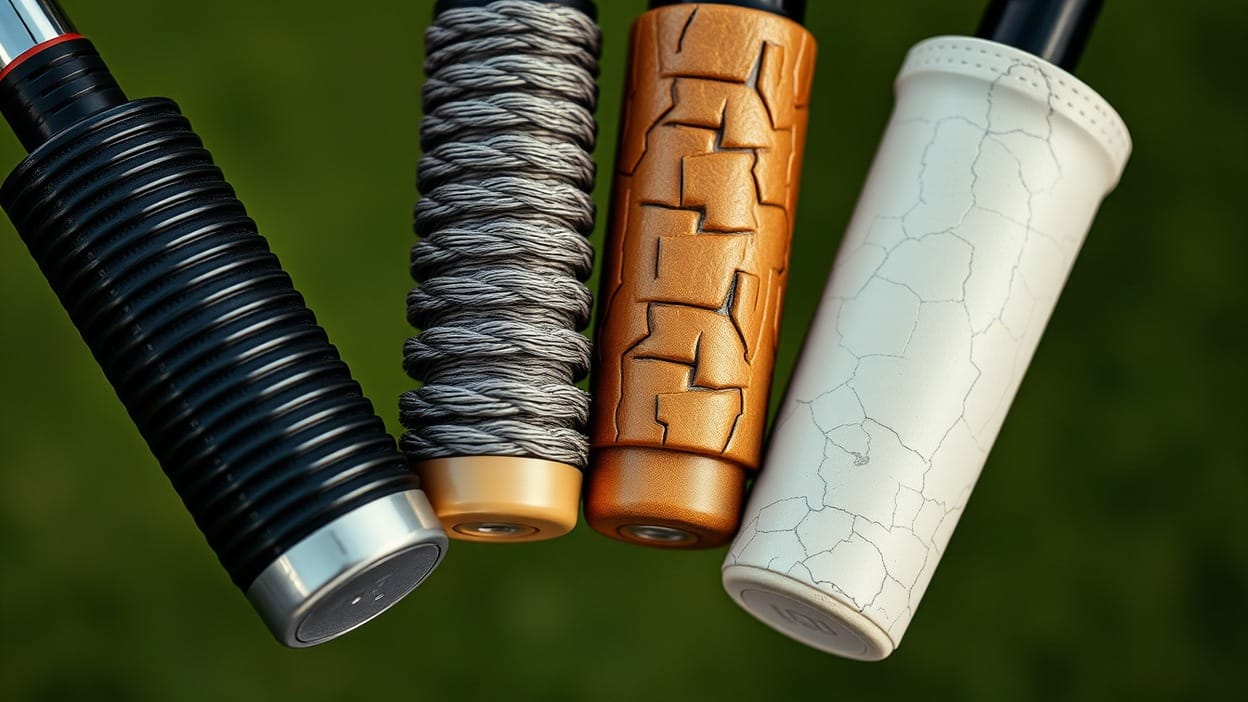
A fresh set of grips touches every full shot you hit, yet it's usually the last piece of equipment anyone thinks to replace. Shafts get fitted, heads get tweaked, and the two things actually connecting a golfer's hands to the club go years without a second look. Five grips below cover most of what a golfer will run into this season: a default for most bags, a softer option for sore hands, a wet-weather hybrid, a budget pick, and a shock-absorbing set for mis-hits.
A grip rarely announces that it's done. It just gets slightly slicker, slightly harder, and a golfer adjusts their hold without noticing they're doing it. The check costs nothing: run a thumb across the surface looking for a shine where the texture used to bite, press into the rubber to see if it's gone hard or stiff compared with a newer grip, and watch for a grip that rotates even slightly in your hands at the top of the backswing. Any one of those is reason enough to regrip, regardless of what the calendar says.
On timing, our regrip how-to carries the sourcing worth repeating here. Jonathan Wall at GOLF.com puts a set of grips good for roughly 40 rounds. Lamkin's vice president Pascal Stolz, quoted by Arccos Golf, puts heavy range users closer to 30 rounds before the same grips start costing them feel. Tour pros change theirs every six to eight weeks regardless of wear, simply because the cost of a grip is nothing next to the cost of a shot that goes sideways. Visible wear overrides all three numbers; a grip that's shiny and hard at round 25 needs replacing at round 25.
The case for not waiting gets more concrete once a grip has actually gone bad. A Golf Pride test using TrackMan found that worn grips cost golfers 1.3 mph (2.1 km/h) of ball speed and 2.3 yards (2.1 meters) of carry, with the dispersion ellipse running 10 to 11 percent wider on both axes than with fresh grips on the same shafts and heads. That study was run by the grip maker, not an independent lab, so treat the exact numbers as directional rather than gospel. The direction itself, worn grips costing speed and tightening nothing about your dispersion, lines up with what any golfer who's ever gripped a slick club in the rain already suspects. I'll admit my own instinct runs the other way on cold mornings: a sluggish, numb-feeling shot gets blamed on worn-out grips before I consider that the rubber has simply stiffened up in the cold, which is a bias worth checking before spending money on a new set.
Grip size is the decision that undoes every other choice on this list if it's wrong, and it's set by hand length, not glove size, height, or swing speed. Measure from the crease of your wrist to the tip of your middle finger with your hand flat.
| Hand length | Recommended size |
|---|---|
| Under 7 inches (18cm) | Undersize |
| 7 to 8.75 inches (18 to 22cm) | Standard |
| 8.75 to 9.5 inches (22 to 24cm) | Midsize |
| Over 9.5 inches (24cm) | Oversize |
No tape measure handy, no problem. Our regrip how-to also covers a glove-size fallback for sizing on the fly, along with the full case for why size matters more than most golfers assume. Every pick below ships in at least three sizes, and a couple go wider than that, so size first and pick a model second.
Four materials cover almost everything sold today, and each one trades off differently between tack, feedback, and weather.
All-rubber grips, the Tour Velvet and the Crossline here, stay firm and give the sharpest feedback at impact; cross-hatch or ribbed texturing keeps them tacky in dry conditions, and they hold up well in heat. Cord grips weave cotton cord into the rubber for a rougher, grippier surface that keeps working when hands sweat or rain gets involved, though the extra texture costs some of the soft feel rubber provides. Hybrid grips split the difference by pairing a cord upper, where sweat and rain land, with a smoother rubber lower hand; GolfMagic's buying guide credits the design for giving golfers wet-weather traction up top without sacrificing feel where the trail hand sits. Soft polymer grips, the build behind the CP2 Wrap, trade some of that sharp feedback for cushion, and that extra cushion is the pick for golfers managing sore hands or arthritis. The Dri-Tac uses a different, proprietary polymer blend; Winn markets it around shock absorption on mis-hits, though ThinkIndoor flags a firmer feel as the tradeoff, and the shock-absorption claim itself traces to Winn's own marketing rather than an independent test.
Best default for most golfers: Golf Pride Tour Velvet. Shop on Amazon. Sizes: Undersize, Standard, Midsize, Jumbo. MyGolfSpy's reporting on tour equipment counts 20 of the top 50 players in the world on some version of the Tour Velvet, including world No. 1 Scottie Scheffler. Golf Monthly tags it a tour favorite. The Tour Velvet also comes in an Align version, with a raised ridge on the underside that Golf Monthly says helps golfers settle into correct hand placement at address. It's firm, traditional, and tacky rather than cushioned, which is exactly why it holds up well through a hot, humid summer.
Best soft feel for sore hands: Golf Pride CP2 Wrap. Shop on Amazon. Sizes: Standard, Midsize, Jumbo. MyGolfSpy's "Golf Grips We Love" names the CP2 Wrap its pick for softest feel, over Golf Pride's own Z-Grip. Today's Golfer's own 2026 grip guide places the CP2 line a small step up in firmness from Golf Pride's softest performance grip, the CPX, and credits both with the brand's Control Core technology, an inner stabilizer built to cut down on torque in the hands. Expect it to wear faster than the Tour Velvet in hot weather, the tradeoff for the extra cushion.
Best wet-weather hybrid: Golf Pride MCC Plus4. Shop on Amazon. Brushed cotton cord upper, rubber lower, with a built-up lower hand that GolfMagic describes as simulating four extra wraps of tape without any actual tape underneath. GolfMagic calls it the most popular hybrid grip on the market and notes it carries the widest size range of any Golf Pride model.
Also consider the Lamkin Crossline Full Cord alongside this pick if the standard MCC Plus4 still feels too soft in the rain. It's a firmer, all-cord build from the same Crossline family as the value pick below, with Lamkin's own spec sheet listing a torsion-control core aimed at resisting twist in wet hands. Shop on Amazon. No independent review of this specific build turned up during research, so treat the description as the maker's own claim rather than a tested verdict.
Best value: Lamkin Crossline. Shop on Amazon. All-rubber, cross-hatch texture. WedgeGuys' own buying guide points golfers specifically toward the Crossline, or its Sonar sibling, when wet-weather traction matters more than anything else in the bag, rather than naming it their top budget pick outright.
Best shock absorption: Winn Dri-Tac. Shop on Amazon. This listing is a set of eight grips, not a single one, which matters for the cost math below. ThinkIndoor's "8 Best Golf Iron Grips of 2026" ranks the Dri-Tac Midsize first overall, pointing to its all-weather tack and its vertical-seam design; the outlet's one knock is a firmer feel than some rivals. Any claim about the Dri-Tac reducing how hard a golfer has to grip the club traces back to Winn's own marketing rather than an independent test.
None of the three makers above showed a current price on their own product pages at the time of writing, so no per-grip prices appear in this guide. A standard bag runs 13 to 14 clubs, and grips are sold two ways: as singles, priced and bought one at a time, or as sets sized for a full bag, like the Dri-Tac's set of eight here, which is sized for irons rather than a complete 13 to 14 club bag on its own.
Labor is the part of the bill that's easy to forget about. A shop regrip adds a per-club labor charge on top of whatever the grip itself costs. A golfer regripping at home with a basic kit skips that labor charge entirely, though they're trading it for their own time and a steadier hand with the solvent.
Some links in this article are affiliate links. If you buy through them, I earn a small commission at no extra cost to you. This never influences what I cover or recommend. I link to gear I'd buy myself.
Data-backed reviews and advice that works. No brand spin.