






how-to
How to Know Your Real Iron Distances (No Launch Monitor)
Most golfers don't actually know their iron distances. They know their best one. Ask a 15
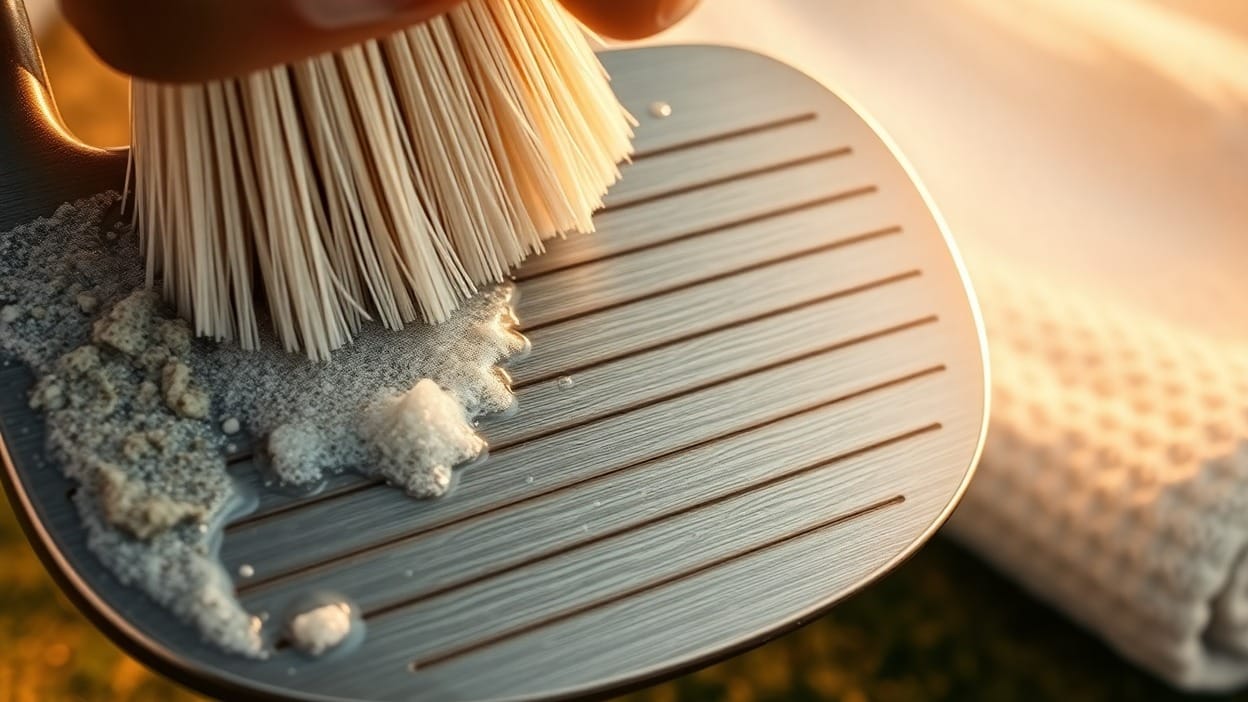
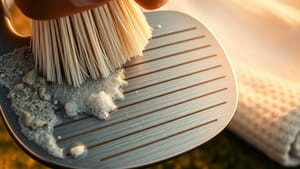
A soft brush and warm soapy water keep grooves clean and spin predictable.
A dirty groove face costs you spin before you even make a bad swing. Golf Digest's March 2026 testing found that a dirty groove face alone causes a 45% spin drop versus a clean one, and that gap shows up most on wedge shots from wet or sandy turf, exactly the lies where you need the most spin to hold the green. The fix costs almost nothing and takes about five minutes a round: a brush, some water, and a towel.
Grooves do one job: channel away water and debris at impact so the clubface can grip the ball. When they fill with dirt, grass residue, or sand, that channel closes and the ball skids slightly across the face instead of gripping it, which is where the spin loss comes from. Our piece on when to replace your golf clubs covers the same Golf Digest figure in the context of worn-out grooves versus dirty ones, and the distinction matters: a worn groove is a replacement problem, a dirty groove is a 5-minute problem. Before you spend $20 to $25 a wedge on a regrip or a few hundred dollars on a new set, clean the grooves and hit a few shots. If spin comes back, the grooves were never the issue.
This piece is about the cleaning half of that equation: the on-course habit, the after-round routine, and the deeper clean that catches what the quick wipe misses. None of it needs a device. A brush, warm water, dish soap, and a towel handle nearly everything described below, and the routine below works the same whether you're swinging wedges from 100 yards (91m) or carving out a full 7-iron.
The single most effective habit is also the easiest to skip: wipe the face after any shot from rough, sand, or wet grass, before it dries into the grooves. None of this needs a trip to a specialty shop. The full kit for every step in this piece, on-course and at home, is a nylon-bristle club brush or groove cleaner, a microfiber towel, a bucket or sink, a few drops of mild dish soap, and an old toothbrush for grips and tight spots like the ferrule collar. Most golfers already own at least the towel and a bucket, and nothing on that list needs replacing often.
This step alone recovers most of the spin loss described above, because wet debris packed into a groove is far harder to remove once it dries than it is to wipe off on the spot.
Once you're home, a 5-minute pass on the clubs you actually used keeps the on-course wipe from being your only defense, and I'll admit I'm not great about this myself: my own wedges routinely go two or three rounds longer than they should between cleans.
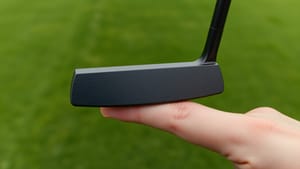
The quick post-round pass misses a handful of spots that build up grime more slowly: woods and hybrids, grips, the putter, and the shaft-to-head connection.
A squeeze bottle and brush combo, like this club-cleaning spray and brush set, speeds up this deeper pass since you're not refilling a bucket for every club.
The right technique also depends on what the clubhead is actually made of.
A few habits cause more damage than the dirt they're meant to remove.
If you're heading into the off-season in the northern hemisphere, clean every club thoroughly before you put the set away for winter. Dirt and moisture left on clubs during months of storage is exactly the setup for the rust and grip damage described above, since there's no next round to catch the problem early. Dry everything completely, including the grips and the inside of the bag's club dividers, before storing, and take the last look you'll get for months to check each grip for cracking or glazing, since a grip that's marginal now will only get worse sitting untouched in a cold garage.
If you're in the southern hemisphere heading into spring, the same deep clean works as a start-up check rather than a shutdown one: a full groove-and-grip pass catches anything that built up over a quieter winter and gets the set back to full spin and grip before the season ramps up.
Headcovers and the travel bag deserve the same attention, since they're the last thing touching your clubs before months of storage. Wipe down headcovers and check the inside for trapped grass or moisture before sliding them back on, because a damp headcover left on a clean clubhead for months defeats the point of cleaning it. If you're boxing clubs into a hard travel case for storage or a flight, make sure every head and shaft is fully dry first, since a sealed case traps humidity against the metal far more effectively than an open bag ever would, and that trapped moisture is exactly the setup for the rust problem this whole piece is trying to avoid.
Wipe the face during the round after any shot from rough or wet grass, do a full brush-and-rinse on irons and wedges after every round, and run the deeper clean on woods, grips, and ferrules monthly or at the start and end of the season.
Yes. A few drops of mild dish soap in warm water is enough to loosen dirt and grass residue on heads, grips, and shafts. Avoid stronger detergents or solvents on painted crowns and soft putter inserts.
In most cases, yes, if the grooves are dirty rather than worn. Golf Digest's testing found a 45% spin drop from a dirty groove face versus a clean one, and that gap closes once the dirt is cleared. If spin stays low after a thorough clean, the grooves themselves are likely worn and it's a replacement question, not a cleaning one.
A brief dunk of iron and wedge heads, around 30 seconds, is fine. Extended soaking isn't, especially for woods and hybrids, because water can work its way into the hosel over time and corrode the shaft bond from the inside.
Avoid wire brushes on chrome-plated or forged finishes, since the bristles can scratch the surface. A nylon-bristle club brush or an old toothbrush clears grooves just as well without marking the metal around them.
Some links in this article are affiliate links. If you buy through them, I earn a small commission at no extra cost to you. This never influences what I cover or recommend. I link to gear I'd buy myself.
Data-backed reviews and advice that works. No brand spin.