







how-to
How to Clean Your Golf Clubs
A dirty groove face costs you spin before you even make a bad swing. Golf Digest's
Why you hook the golf ball and how to fix it: grip, face, path, and ball position causes, plus no-device drills that work on the range.
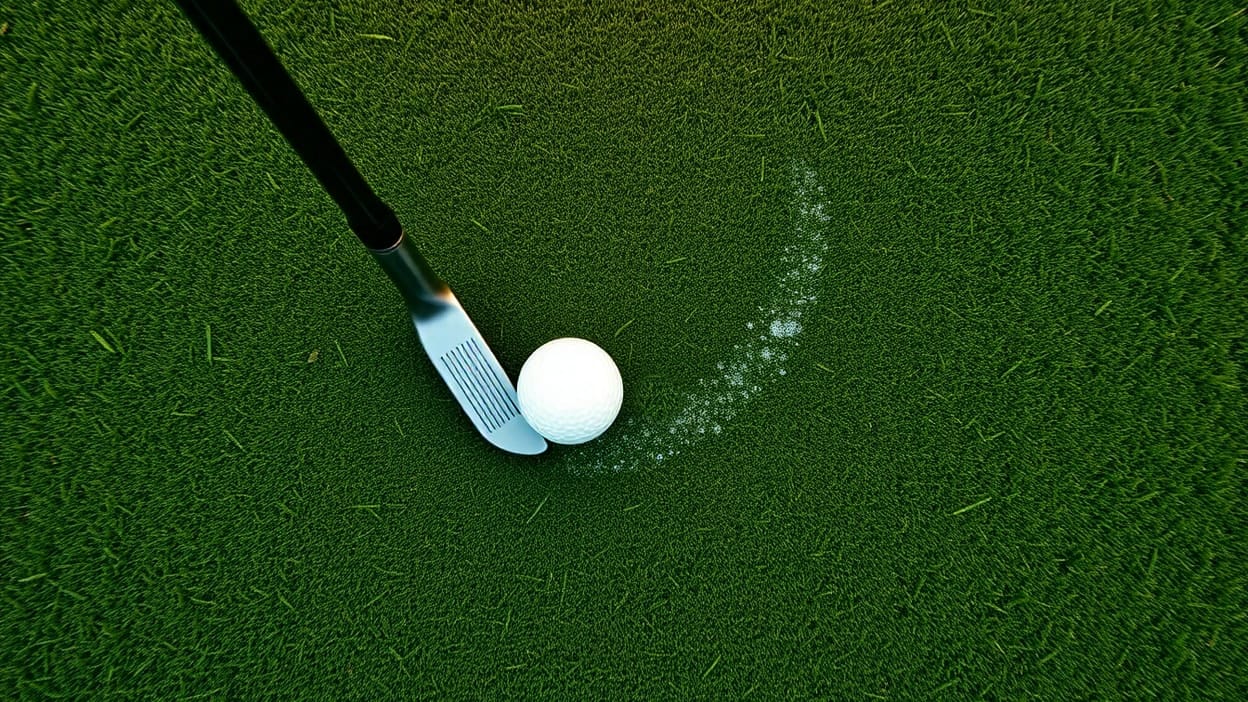
A closed clubface relative to the swing path is what sends the ball curving left into a hook.
A hook starts straight or slightly right, then dives hard left, and it's one of the few misses that gets worse the better you strike it. The fix starts with getting the diagnosis right, because a hook, a pull, and a pull-hook come from different problems and don't share a cure.
These four misses get lumped together because they all send the ball left of the target, but only two of them involve the clubface closing relative to the path.
A draw is a controlled right-to-left curve from a face-to-path differential of -1 to -3 degrees. A hook is the same shape pushed further, to -4 degrees or worse, and it keeps curving well past the point where a draw would have settled down. Here's the full band, pulled from the site's draw breakdown:
| Face-to-path | Shot shape |
|---|---|
| +4 degrees or more | Slice |
| +1 to +3 degrees | Fade |
| 0 degrees | Straight |
| -1 to -3 degrees | Controlled draw |
| -4 degrees or more | Hook |
A pull is a different problem entirely. Face and path are both pointed left, at roughly the same angle, so the face-to-path differential sits near 0 degrees. The ball starts left and stays left in a fairly straight line, because there's no curvature to bring it back. That makes a pull an alignment issue, not a swing-shape fault, and it's not formally covered elsewhere on this site, so here's the plain version: your body and clubface are both aimed left of where you think they are.
A pull-hook combines both problems. It starts left the way a pull does, then keeps curving left the way a hook does, because the face is closed relative to the path on top of the alignment being off. It's the miss most golfers describe as "the bad one," and fixing only the alignment or only the face-to-path half leaves the other one waiting to show up again.
If you want the fuller explanation of how face angle and path combine to produce curvature, the site's ball flight laws breakdown covers it in more depth than this piece needs to.
Work through these in order. A hook is rarely one isolated fault, but these six show up most often, roughly in the order they tend to matter.
A strong grip. Golf Digest's Mark Blackburn, ranked the outlet's No. 1 teacher in America, points to grip first: once you're past two and a half knuckles visible on the lead hand, the face tends to close through impact before you can do anything about it with your hands. Blackburn's own threshold runs a little lower than this site's standard guideline, which puts the line at four: the slice-fix guide calls two to three knuckles neutral, and "Four is too strong and risks a hook." Either way, more visible knuckles means a stronger grip and more hook risk.
A closed face at the top of the backswing. A strong grip doesn't just affect impact. Blackburn notes that strong-grip players often have the clubface pointing toward the sky at the top of the backswing, which is already most of the way to closed before the downswing starts.
A swing path that's too far in-to-out. Blackburn and PGA.com's Vinnie Manginelli both come back to the same mechanism here: when the path swings too far from the inside, the face ends up closed relative to that path at impact, even if the face itself isn't doing anything unusual. This is the direct cause of the hook's curve, whatever put the path there in the first place.
Ball position too far back in the stance. This is usually what puts the path too far inside. Blackburn ties a too-far-back ball position directly to an in-to-out path, and Manginelli's hook-fix guide leads with ball position as well, recommending a custom fitting to find the right spot. Instructors don't fully agree on the direction of the error, though. Manginelli's own material notes that a ball played too far forward can cause problems too, just through a different mechanism, so "move it back" isn't automatically the fix for everyone. For what it's worth, I'd weight the too-far-back explanation more heavily here, since both Blackburn and Manginelli circle back to it independently even while disagreeing on the forward case, and two separate instructors converging on the same fault is a stronger signal than either one alone.
An early, flippy release. GOLFTEC's Josh Troyer describes over-hooking as a result of too much lead-arm supination through impact, where the clubhead exits left and the hands finish high with the face pointed down. HackMotion's wrist-sensor data backs up the same pattern from a different angle: casting, or releasing the club early, drops lag and shaft lean before impact, and if the forearms rotate through that early release instead of after it, the face has already closed by the time it reaches the ball.
Alignment. A body aimed right of the target line often forces a compensating in-to-out path to get the ball started toward the target at all, which closes the face relative to that path the same way a bad ball position does. This site already covers alignment in full elsewhere, so rather than re-teach it here, check your setup against the guide to aiming and aligning correctly if your misses start left from address rather than curving left after a straight start.
Work through these in order. The first three need nothing but a mirror, a towel, and your own hands, which matters if you're trying to fix this before your next round rather than your next trip to a golf shop.
Everything above works without a device. If you do have access to a launch monitor, face-to-path is the number to watch, and TrackMan's own published data shows how much curvature even a small differential produces.
| Face-to-path differential | Approximate curvature (driver, 275-yard (251m) carry) |
|---|---|
| -2 degrees | About 19 yards (17m) of left curvature |
| +5 degrees | About 44 yards (40m) of right curvature |
Those two examples aren't hook-specific numbers, but they show how much a small face-to-path gap compounds over a full drive. If you're seeing a differential past -4 degrees on your own sessions, the causes above are the place to start, in roughly the order they're listed.
A draw is a controlled face-to-path differential of -1 to -3 degrees. A hook is -4 degrees or worse, and it curves noticeably further and less predictably than a draw does.
A pull-hook starts left of the target the way a pull does, from a body and clubface both aimed left at address, and then keeps curving further left the way a hook does, because the face is also closed relative to the path. It needs both an alignment fix and a face-to-path fix.
It's one of the most common causes, not the only one. A ball position too far back in the stance tends to push the swing path too far in-to-out, which closes the face relative to that path. Instructors don't fully agree on the forward side of ball position, so if moving the ball up doesn't help, the grip, path, or release causes are worth checking too.
Not automatically, but it's the most common starting point. Two to three knuckles visible on the lead hand is neutral. Four or more makes it harder to square the face through impact without an active correction, which is where most hooks start.
Check your grip knuckle count first, since it takes seconds and addresses the most common cause. If the grip looks fine, the tuck-and-turn drill is the quickest on-course check for an alignment problem feeding a pull-hook.
Some links in this article are affiliate links. If you buy through them, I earn a small commission at no extra cost to you. This never influences what I cover or recommend. I link to gear I'd buy myself.
Data-backed reviews and advice that works. No brand spin.