Links vs Parkland Golf

What actually changes between the two course types, and how to adjust your game for each.
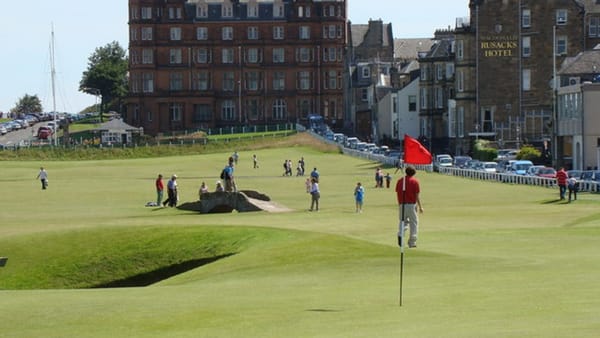
Play a links course after a season of parkland golf and the first thing that goes wrong usually isn't the swing. It's the yardage. A shot that would sit down softly 150 yards (137m) from a parkland green can run through it entirely on a firm, sloped links fairway, and the wind that barely registers behind a tree line can turn a mid-iron into a full club's difference in the open. Links and parkland are both still golf, but enough of the underlying terrain, turf, and sightlines change that the same shot selection doesn't transfer cleanly between them.
- The core difference: links courses play firm and run out along the ground; parkland courses play soft and reward carrying the ball through the air to a target.
- Wind: links courses are built on open, treeless coastal ground, so wind is a constant variable rather than an occasional one.
- Bunkers: links pot bunkers are deep, steep-walled, and often unavoidable; parkland bunkers are shaped more as visual and strategic hazards.
- Greens: links greens tend to run firmer and faster off the tee shot's landing area even when the stimpmeter number is similar to a parkland green.
- Scoring: a "good score" shifts with conditions on a links course in a way it rarely does on a sheltered parkland layout.
Where the two course types actually come from
The split goes back to the ground each was built on. Links courses sit on sandy coastal land, the "link" between farmland and sea, ground too poor and too exposed for crops or grazing, which is exactly why early Scottish and Irish golf ended up there instead of somewhere more useful. The R&A, which governs the game outside the US and Mexico and maintains close ties to the sport's oldest venues, treats that sandy, free-draining base as the defining feature of a links course rather than any specific hole design. Parkland courses came later and inland, cut through farmland, estates, and woodland, with clay or loam soil that holds water and grows thicker grass. That single difference in what's underfoot explains most of what follows: firmness, drainage, and how exposed to wind a course ends up being were all decided before a single hole was routed.
Turf and the ground game
Sandy soil drains fast and firms up, so links fairways and greens play hard and fast almost year round, while heavier parkland soil holds moisture and plays soft and slow by comparison, especially once autumn sets in. Our piece on cold-weather, soft-turf golf covers how a parkland course gets progressively softer and slower as the season turns, which is the opposite trend from a links course that often stays playable and firm well into winter because the sand underneath keeps draining.
That firmness changes the actual shot you should be playing. On a firm links fairway, a ball pitched short of the green and allowed to run is usually the higher-percentage play, because the ground does the work the air would do on a softer course. This is also where the Texas wedge earns its name: it's simply a putter, played with a normal putting stroke, from well off the green. It isn't a separate technique or a special stroke, and our guide to deciding between putting and chipping from just off the green makes the same point, that the decision comes down to the lie and the ground ahead, not to some trick shot you need to learn. On a links course, firm, closely mown run-up areas make the putter the right call far more often than on a parkland course, where longer grass around the green usually takes it off the table.
Wind exposure
Links courses are built on open, largely treeless ground near the coast, which means wind is rarely optional the way it can be on a sheltered, tree-lined parkland layout. Our guide to playing golf in the wind covers the actual adjustments, lower ball flight, more club, and a wider stance, in full, and that advice applies on either course type. What changes between links and parkland is frequency and severity: a parkland round might ask for those adjustments on two or three exposed holes, while a links round can ask for them on every single hole, sometimes from a different direction depending on which way the course turns. Carnoustie's championship layout is as good an example as exists in competitive golf, a course where wind off the water and the meandering Barry Burn have defined the test since well before the 1926 redesign that shaped the modern course, and where a calm morning and an afternoon gale can turn the same set of tees into two different courses entirely.
Bunkers: pot bunkers versus parkland hazards
A links pot bunker is usually small, deep, and walled steeply enough that getting out sideways, not toward the pin, is sometimes the only real option. Our guide to hitting a greenside bunker shot still applies here, open the clubface, strike the sand an inch or two behind the ball, and accelerate through, but a links pot bunker's depth and small footprint make that technique less forgiving than the shallower, wider bunkers common on parkland courses. Fairway bunkers follow the same pattern: our guide to escaping a fairway bunker sets out the ball-first contact and club selection that clears the lip safely, and on a links course that lip is often the entire challenge, since many pot bunkers sit squarely in the line of play rather than off to one side. Parkland bunkers, by contrast, tend to be shaped as much for visual intimidation and strategic framing as for genuine difficulty, and a player who can carry the ball a reasonable distance in the air often has more than one bunker to avoid rather than one unavoidable obstacle.
Green speed and contours
Links greens often run a touch slower on the stimpmeter than their parkland counterparts, commonly in the 9 to 10 foot (2.7 to 3m) range against 10 to 11 feet (3 to 3.4m) or faster on a well-maintained parkland course, but that number alone understates how they actually play. Wind affects a rolling putt on an exposed links green in a way it never does indoors or on a sheltered parkland green, and the natural, often severe contours typical of links putting surfaces, built into existing dunes rather than shaped from flat ground, add a layer of break-reading that a stimpmeter reading doesn't capture. Golf Digest's course-rating coverage has long made the same point about links greens specifically: the number undersells the difficulty because so much of it is wind and contour rather than pure speed.
Targets and sightlines
Parkland courses are usually routed through trees and framed by them, so the target, generally a flag visible against a backdrop, is rarely in doubt even on a course a player has never seen. Links courses frequently ask for the opposite: blind or partially blind tee shots over dunes, fairways that disappear and reappear, and greens tucked behind humps that hide the flag from the fairway. Golf Monthly's travel writing on the Open Championship rota venues returns to this repeatedly, that first-time visitors to a genuine links course often lose more strokes to misreading the target than to any swing fault, because the course simply doesn't show them where to aim the way a parkland layout does.
What a good score actually means
A 78 on a sheltered, tree-lined parkland course in calm weather and a 78 on an exposed links course in a two-club wind aren't the same achievement, even though the card says the same number. The USGA's own course-rating system accounts for this in a formal way, treating firm turf, wind exposure, and green contour as factors that change how a given yardage actually plays, which is part of why the same course can carry a noticeably different rating depending on conditions and tee placement. Scoring expectations should flex the same way in practice: a round where every approach runs out an extra 15 to 20 yards (14 to 18m) and every shot gets pushed or pulled by crosswind is a different test than the number on the card suggests, and I'll admit my own instinct is still to judge a round purely by strokes to par regardless of conditions, which undersells a scrappy 84 played into a stiff coastal wind far more than it should.
| Feature | Links golf | Parkland golf |
|---|---|---|
| Terrain origin | Sandy coastal ground, naturally free-draining | Inland clay or loam, built through farmland or woodland |
| Turf firmness | Firm and fast most of the year | Softer, slower, especially in autumn and winter |
| Primary shot style | Ground game, ball run to the target | Aerial game, ball carried and stopped on the green |
| Wind exposure | Constant, often severe, on most holes | Intermittent, usually limited to exposed holes |
| Bunkers | Deep pot bunkers, often unavoidable | Shallower, shaped more for visual hazard |
| Green speed | Often 9 to 10 feet (2.7 to 3m) on the stimpmeter | Often 10 to 11 feet (3 to 3.4m) or faster |
| Sightlines | Blind or partially blind shots common | Targets usually framed and visible |
Packing for a links trip
Conditions change fast enough on an exposed links course that the gear question matters more than it would for a dry parkland round at home. Our guide to planning a golf trip that's actually worth the money covers the broader planning side, but the single piece of gear worth getting right for a links trip specifically is rain protection, since there's rarely a tree line to duck under when a squall rolls through. Our rain gear roundup for 2026 walks through the full range, and for a fully sealed shell built for exactly this kind of exposed, wet, windy round, the Callaway Swing Tech Stormguard jacket is the pick that guide lands on. It's not the only right answer, but it's the one built for the conditions a links trip is most likely to actually produce.
Frequently Asked Questions
What's the single biggest difference between links and parkland golf?
Firmness. Links courses sit on sandy, free-draining ground and play firm and fast most of the year, which favors a ground-based shot that runs to the target. Parkland courses sit on heavier soil that holds moisture, so they play softer and reward carrying the ball through the air and stopping it on the green.
Do I need different clubs for a links course?
Not necessarily. The adjustment is mostly in shot selection and trajectory rather than equipment, favoring lower, running shots and more club into the wind. Some golfers prefer a lower-lofted driver or a stronger wedge setup for low, punched shots, but the existing set usually handles both course types fine.
What is a Texas wedge, and is it a special technique?
A Texas wedge is just a putter used from well off the green, played with a normal putting stroke. It isn't a separate skill to learn, it's a club selection decision based on the lie and the ground between the ball and the hole, and it comes up far more often on firm links turf than on parkland.
Why are pot bunkers on links courses so much harder than parkland bunkers?
Pot bunkers are typically deeper and narrower, with steep walls, and they're often positioned directly in the line of play rather than off to one side. That combination can make a sideways escape the only realistic option, where a parkland bunker of similar size usually still leaves a shot at the green.
What counts as a good score on a difficult links course?
It depends heavily on the wind that day. A score several shots higher than a player's usual average, shot into strong, shifting coastal wind, can represent better golf than a personal-best round played in calm conditions on a sheltered parkland course. Conditions are part of the result, not just the number on the card.
Some links in this article are affiliate links. If you buy through them, I earn a small commission at no extra cost to you. This never influences what I cover or recommend. I link to gear I'd buy myself.







The golf newsletter that cuts the hype
Data-backed reviews and advice that works. No brand spin.
Recommended products