Autumn Golf: Cold Air, Soft Turf, and Shorter Days
Cold air costs distance, wet turf changes contact, and daylight runs out fast. Here's the club, gear, and rules-of-golf math to keep fall rounds scoring.

Autumn golf punishes the golfer who plays a summer game. The ball flies shorter in cold air, the turf gives up less roll, wet rough turns approach shots into fliers, and the round has to fit inside a shrinking window of daylight. None of that has to cost you strokes. It costs strokes only when you don't adjust for it, and the adjustments are specific enough to make once and then carry into every fall round.
- Cold air costs real distance. A widely cited Trackman-based study puts the loss at roughly 2 yards (1.8m) per club for every 10°F (5.6°C) drop below 75°F (24°C) with a driver, less with shorter clubs. Club up and expect less carry.
- Softer, wetter turf means less roll and more mud-affected lies. Wedges and short irons can fly further than normal out of wet rough, and plugged-lie relief may apply under Rule 16.3.
- Leaves are a loose impediment under Rule 15.1 and can be removed without penalty, even in a bunker; casual water gets free relief under Rule 16.1.
- Shorter daylight windows mean pace of play and tee-time choices matter more in the fall than in June or July.
- A breathable mid-layer, a softer-compression ball, and dry grips do more for fall scoring than any swing change.
What cold air actually costs you off the tee
Air density is the mechanism. Cold air is denser than warm air, and a denser medium means more drag on the ball and less lift once compression drops the spin rate. Golf instructor Andrew Rice, working with Trackman data reported by GOLF.com, put a number on the effect: golfers lose roughly 2 yards (1.8m) of carry per club for every 10°F (5.6°C) the temperature falls below about 75°F (24°C), with the loss concentrated in the driver and shrinking as the club gets shorter. A wedge loses closer to 1.3 yards (1.2m) for the same temperature drop.
| Temperature drop from 75°F (24°C) | Approximate driver carry loss |
|---|---|
| 10°F (5.6°C) | 2 yards (1.8m) |
| 20°F (11.1°C) | 4 yards (3.7m) |
| 30°F (16.7°C) | 6 yards (5.5m) |
The fix is simple arithmetic, not a swing change: take one more club than the season-adjusted number tells you and commit to a full swing rather than steering a bigger club to protect distance. If you don't own a launch monitor, you don't need one to apply this. Pick your baseline summer yardages for each club, subtract using the table above for the morning's temperature, and play the adjusted number. A pocket thermometer or your phone's weather app is the only tool required.
Softer turf changes contact, roll, and relief
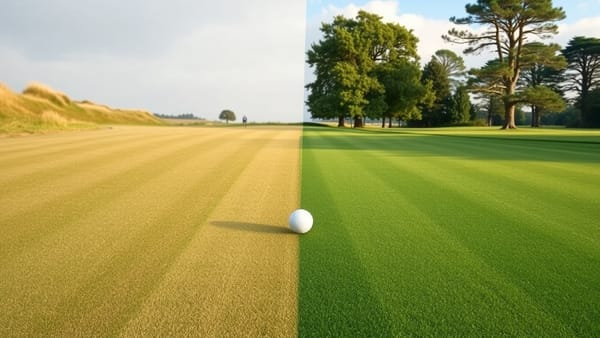
Fall turf holds more moisture than summer turf, and that changes three things at once. First, roll drops off sharply: a drive that ran out 20 yards (18m) on a firm July fairway might add almost nothing to its carry distance on a soft October one, so plan your numbers around carry, not total distance. Second, wet, thick rough produces fliers on approach shots. Grass and moisture get trapped between the clubface and the ball at impact, killing spin and sending the ball further and lower than a clean strike would. When the ball sits down in wet rough, take at least one less club than the flier distance suggests and aim short of the number. Third, softer ground rewards ball-first contact more than ever. A shallow, sweeping strike that catches turf before the ball on wet ground tends to get heavy and short; a steeper, ball-first strike stays cleaner through soft turf.
Fall conditions also bring plugged lies into play more often, and the relief rules are worth knowing cold rather than looking up mid-round. Rule 16.3 allows free relief for a ball plugged in its own pitch-mark anywhere through the general area, not just the rough. For the deeper mechanics of playing wet-turf lies and drying out afterward, our rain golf guide covers the same wet-ball physics in more depth.
Wind, leaves, and casual water: the rules in brief
Fall adds two more variables that summer golf rarely tests: falling leaves and standing water. Leaves are classified as loose impediments under Rule 15.1, so you can remove them from around your ball, including in a bunker or on the green, without penalty, as long as the ball itself doesn't move in the process. If it does move, replace it at no penalty. Casual water, standing water not part of a hazard, gets free relief under Rule 16.1: find the nearest point of complete relief and drop within one club-length, no closer to the hole.
Fall winds tend to be gustier and less predictable than the steady summer breeze, but the fundamentals don't change with the season. Widening your stance, choking down, and playing the wind rather than fighting it are covered in full in our guide to playing golf in the wind; the short version for autumn is to expect more variability shot to shot and to commit to the conservative play rather than the hero number.
Shorter days mean pace and tee times are part of your strategy
By late autumn, the gap between sunrise and sunset can shrink by three or more hours compared to midsummer, and that turns pace of play from a courtesy into a scoring factor. A twosome that dawdles into darkness on the back nine doesn't just annoy the group behind; it forces rushed decisions on the exact holes where a rushed decision costs the most. Book the earliest tee time your course allows, walk instead of ride when the course permits it if walking keeps you moving faster than waiting on a cart path, and set a rough pace target for yourself, something like 15 minutes per hole, so you notice early if the group is falling behind rather than discovering it standing on 16 tee with fading light. Course starters in the fall will often hold a hard cutoff for the last tee time; call ahead and confirm it rather than assuming it matches summer scheduling.
Gear that actually helps you score in the cold
The right layering system matters more than most golfers give it credit for, because a mid-layer that restricts your turn costs more strokes than the cold itself. Callaway's Weather Series quarter-zip, which we've reviewed in full, uses a moisture-wicking, four-way-stretch fabric built specifically so the swing doesn't feel restricted through a cold mid-layer, which is the actual failure point of most winter golf apparel. A restricted backswing costs more distance than the cold air does on its own, and I'll admit it's the kind of tradeoff that's easy to underrate until you're the one making a half-swing through a stiff jacket. Our full guide to playing golf in cold weather covers the rest of the routine, from clubbing up to keeping your hands and ball warm hole to hole.
The ball itself is worth reconsidering, too. Cold stiffens the rubber compounds in a golf ball's core, effectively raising its compression several points above its rated number, a point our golf ball compression guide covers in more detail. A ball that already sits on the lower end of the compression scale, like the Srixon Soft Feel, stays closer to its intended feel and compression once the temperature drops, rather than playing artificially firm the way a high-compression ball can in the cold.
Staying dry matters beyond comfort: wet grips are the fastest way to lose clubhead control in the swing, and a wet glove loses its tack within a few holes. A dedicated cold-weather or rain glove, like the FootJoy WeatherSof, holds grip in damp conditions better than a standard glove, and it's worth buying it from an Amazon-fulfilled listing specifically, since a handful of the product's lowest reviews trace to counterfeit units from third-party sellers rather than the glove itself. Keep a dry towel and a spare glove in the bag on any morning with visible dew or standing moisture.
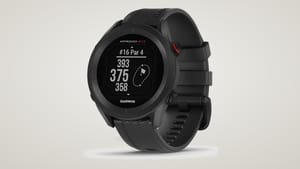
Finally, a rangefinder or GPS device takes the guesswork out of the club-up decision this article is built around: if you already know your adjusted number instead of estimating it, the seasonal math is one less thing to get wrong under pressure. Our rangefinder buying guide ranks the current options by published test data if you're shopping for one.
Frequently Asked Questions
How much distance do you lose in cold weather golf?
A widely cited Trackman-based study reported by GOLF.com found golfers lose roughly 2 yards (1.8m) of driver carry for every 10°F (5.6°C) the temperature drops below about 75°F (24°C), with shorter clubs losing proportionally less, closer to 1.3 yards (1.2m) per 10°F (5.6°C) for a wedge.
Should you use a different golf ball in cold weather?
It helps to use a ball with a lower compression rating in cold conditions. Cold air stiffens the rubber in a golf ball's core, which raises its effective compression, so a ball that's already on the softer end, like the Srixon Soft Feel, tends to stay closer to its intended feel than a firmer ball does once temperatures drop.
Can you remove leaves from around your golf ball?
Yes. Leaves are classified as loose impediments under Rule 15.1, so you can remove them from anywhere on the course, including bunkers and greens, without penalty, as long as your ball doesn't move in the process. If it does move, replace it with no penalty.
What is the relief rule for a plugged ball in the fall?
Rule 16.3 provides free relief for a ball plugged in its own pitch-mark anywhere in the general area of the course, not only in the rough. Drop within one club-length of the nearest point of relief, no closer to the hole.
Why does wet rough produce a flier lie?
Moisture and grass get trapped between the clubface and the ball at impact in wet rough, reducing backspin. With less spin, the ball flies lower, further, and less predictably than a clean strike, which is why a flier lie needs at least one less club and a conservative target.
Some links in this article are affiliate links. If you buy through them, I earn a small commission at no extra cost to you. This never influences what I cover or recommend. I link to gear I'd buy myself.







The golf newsletter that cuts the hype
Data-backed reviews and advice that works. No brand spin.
Recommended products

Rukket SPDR Golf Net Review: 10x7 Bundle for Home Practice.
The Rukket 10x7 SPDR golf net bundle reviewed: what's actually in the box, what MyGolfSpy and PluggedInGolf found, and who it fits best.
Read review