Golf Ball Compression Explained: What the Numbers Mean
Golf ball compression runs 30 to 120. Here is the swing speed matching table, the measurement caveat no one mentions, and the best balls by bracket.
Golf ball compression is a numerical measure of how much a ball's core deforms under load at impact. The scale runs from about 30 (very soft) to 120 (very firm), and a lower number means more deformation when the clubface meets the cover.
The average male amateur swings the driver at 93.4 mph (TrackMan, 2025), which puts most 10 to 24 handicap golfers in the mid-firmness bracket. Yet a sizeable chunk of that group is playing the wrong model, either reaching for a tour offering they can't compress or grabbing the softest box on the rack and giving up ball speed they could keep. This piece covers what the rating means, how to match it to your swing, the numbers worth trusting, and which models sit where.
TL;DR
- 1Compression measures core deformation at impact. The scale runs about 30 to 120, with lower meaning softer.
- 2Most 10 to 24 handicap golfers swing 85 to 100 mph and belong in the 65 to 90 mid-compression bracket.
- 3Compression numbers are not cross-brand comparable. Readings vary by 2 to 8 points between gauges, so use the ranges as starting brackets, not absolutes.
- 4Cut Blue (90 compression, 4-piece urethane, $24.95/dozen) is the value play for the 85 to 100 mph swing speed bracket.
- 5In cold weather below 50°F (10°C), balls play firmer than rated. Drop one tier in winter.
- 6Soft does not always mean longer for slower swingers. MyGolfSpy 2025 robot data showed the longest balls at 100 mph were high-compression models.
What is golf ball compression?
It measures how much force is needed to deform the core. At impact, the core flattens against the clubface, then rebounds like a loaded spring as it leaves the face. A 60-compression model flattens more under the same load than a 90, and the rebound characteristics shift with it.
Two test rigs dominate the industry. The Atti deflection gauge and the PGA index gauge both squeeze the ball under a fixed load and read the deflection, but they use different load values and different scales. According to Titleist Learning Lab (updated July 2025), neither the USGA nor the R&A regulates the test, and brands publish numbers from whichever rig they prefer. That is why a Titleist Pro V1 listed at 87 is not a like-for-like comparison with a Cut Blue listed at 90. Treat any single number as accurate to within 2 to 8 points depending on the gauge.
Three brackets are useful for matching:
- 30 to 65: low compression
- 65 to 90: mid compression
- 90 and above: high compression
One thing compression does not control: greenside spin. That comes from the cover material. A urethane cover grabs the grooves and produces tour-level spin around the green, and an ionomer (Surlyn) cover does not, regardless of what the core is doing. If you read a "soft, low-spin" claim, the soft is the core and the low-spin is the cover, and they are independent variables. For a full breakdown of why wedge design amplifies or kills that spin, the bounce explainer I wrote covers the groove and sole side of the equation.
How compression affects distance, feel, and spin
Three real-world effects matter when you are choosing a ball.
Distance comes from core engagement. If the swing speed is too low for the compression rating, the core never engages, energy transfer drops, and ball speed drops with it. Classic guidance flips at the top end too. In the MyGolfSpy 2025 ball test (44 models, robot tested at 85, 100, and 115 mph, published August 21 2025), the three longest balls at 100 mph were high-compression tour models: Maxfli Tour X, Callaway Chrome Tour X, and Srixon Z-Star XV. The "soft ball goes farther for slow swingers" rule is a simplification that breaks down once you cross into mid-speed territory.
Feel is a putting and short-iron sensation, not a driver one. The clack you hear on a 30-foot lag putt is what most golfers describe when they say a ball feels "soft" or "firm". Off the driver, ball speed is so high that the difference between an 87 and a 99 compression is hard to detect. If you tell me a ball feels mushy, I will assume you putted with it before you ever swung the driver.
Cold weather firms everything up. Below about 50°F (10°C), the rubber compounds in the core stiffen, and a 90-compression ball plays closer to a 95. Practical guidance from Snyder Golf USA (June 2025) is to drop one tier in winter conditions. That is a working rule of thumb rather than a number from a peer-reviewed study, so treat it as direction, not gospel.
Which compression suits your swing speed?
Use the bracket below as a starting point. Match your driver swing speed to the range, and you will be in the right ballpark.
| Swing speed | Compression range | Typical carry (driver) | Example balls |
|---|---|---|---|
| Under 85 mph (137km/h) | 30 to 65 (Low) | Under 195 yards (178m) | Callaway Supersoft (47), Srixon Soft Feel (60), Cut Red (60) |
| 85 to 100 mph (137 to 161km/h) | 65 to 90 (Mid) | 195 to 245 yards (178 to 224m) | Srixon Q-Star Tour (70), TaylorMade Tour Response (73), Cut Blue (90), Titleist Pro V1 (87*) |
| 100+ mph (161+km/h) | 90+ (High) | 245+ yards (224m+) | Cut DC (99), Titleist Pro V1x (96), Srixon Z-Star XV (94) |
*Compression values are gauge-dependent. The Pro V1's published compression of 87 (Golf Insider UK, February 2026) can read 2 to 8 points off on other measurement systems. Use these numbers as a starting bracket, not a precise specification. Sources: MyGolfSpy (May 2022), Titleist Learning Lab (July 2025), Golf Insider UK (February 2026).
A note on those swing speed numbers. The first column converts mph to km/h for international readers, but the unit golfers quote in launch monitor sessions is mph, so I have kept that as the primary. Carry distance gives you a useful proxy if you don't have access to a launch monitor. If you carry the driver 210 yards (192m), the rough conversion gives you about 91 mph using carry divided by 2.3 (Snyder Golf USA, June 2025). Contact quality and conditions shift the number a few mph either way, but for ball selection you don't need precision down to the decimal.
Don't know your swing speed? Work backwards from your driver carry distance. A 250-yard (229m) carry suggests something close to 109 mph. A 220-yard (201m) carry sits around 96 mph. Math is rough, and it assumes centered contact. If you thin or block tee shots more often than not, your raw clubhead speed is faster than the carry suggests.
How to find your swing speed
Three options, ranked by how much I trust them.
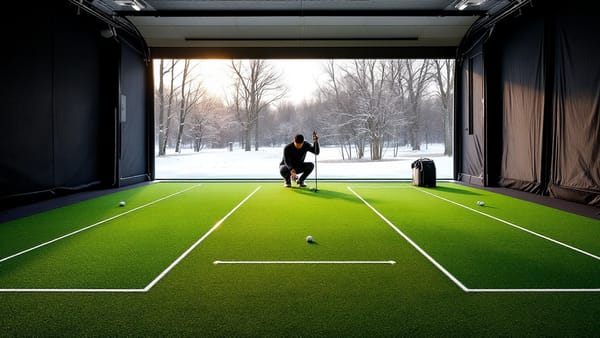
Cleanest answer: a launch monitor session. Ten minutes on a Trackman or FlightScope at the local indoor range gives you ball speed, clubhead speed, smash factor, and spin. Most golf retailers in Tier 1 markets (US, UK, Australia, Canada) now have one in store, and the session is free if you are buying a ball or club. If your local shop has one, use it before you buy a dozen of anything.
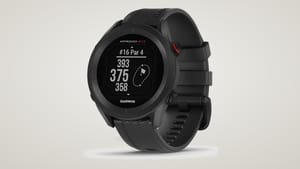
Second option: the carry distance formula. Carry yards divided by 2.3 gives you an approximate clubhead speed in mph (Snyder Golf USA, June 2025). It is rough, and it leans on you knowing your real carry rather than your roll-out total. A typical amateur over-estimates carry by 15 to 20 yards because they count the bounce. If you have a GPS watch with shot tracking, use the carry number from that, not the visual estimate.
Third: handicap as a proxy. According to deWiz (2025) data on driver swing speed by handicap, a 10 handicapper averages around 96 mph, a 15 handicapper sits near 93 mph, and a 20 handicapper is around 92 mph. The spread inside any handicap bracket is wide, so this is only a starting point. Use it if you have nothing else, but get to a launch monitor before you commit.
A working principle: ten minutes on a launch monitor beats any chart, including this one. Get a number you trust before you spend $58 on a dozen Pro V1s.
Best golf balls by compression
Three tiers, brief takes on each. This is a product section inside an explainer, not a full review of any single ball.
Low compression (under 70)
Callaway Supersoft 2025
47 compression (gauge unspecified). $27/dozen. Best-selling low-compression ball in the US. Hybrid cover, two-piece construction, ionomer not urethane. Best for swing speeds under 85 mph who want consistent feel on off-center hits. Will not produce tour-level greenside spin.
Cut Red
60 compression (Cut's published gauge). $16/dozen. Two-piece, ionomer cover. The value case for slower swingers, full stop. You give up greenside spin compared to urethane balls, and you save about $11 a dozen against the Supersoft. For the "I lose three balls a round" golfer, this is the math.
Mid compression (70 to 90), the bracket most LPG readers are in
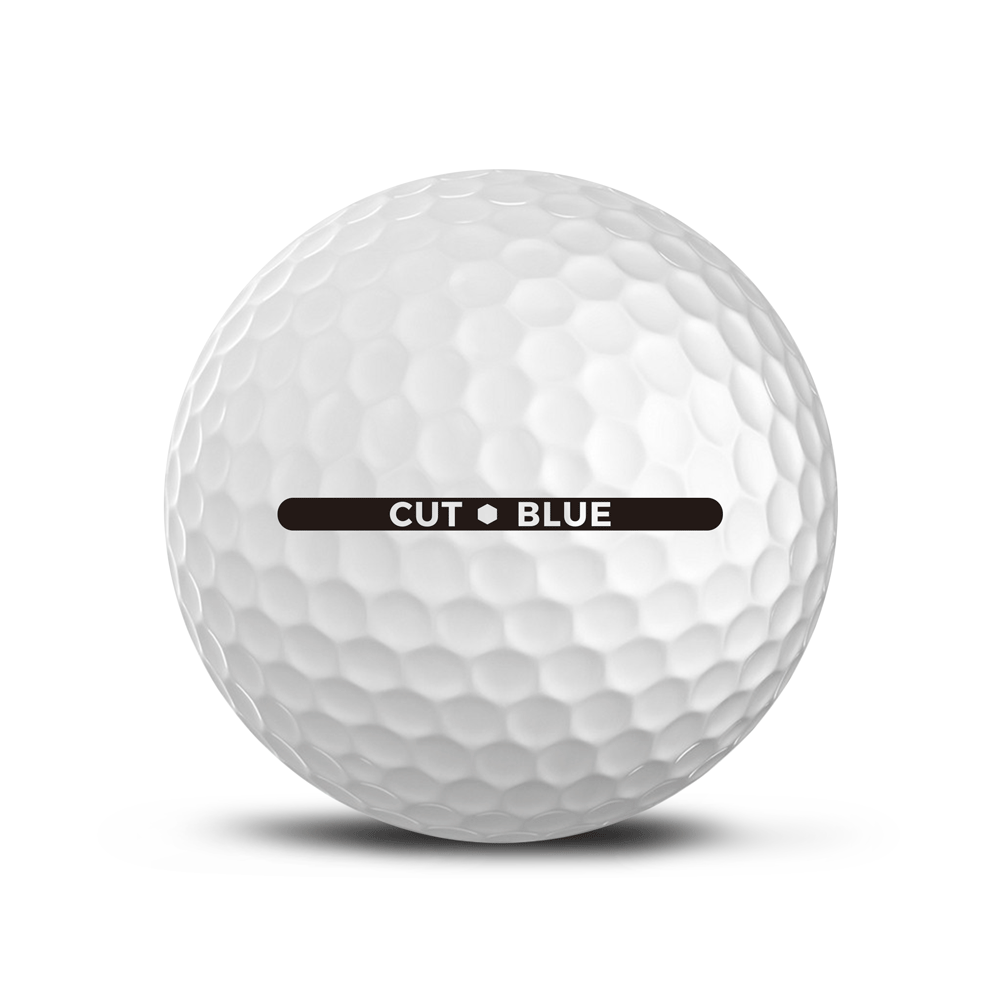
Cut Blue Golf Balls (Dozen)
For a 14 handicapper swinging at 90 to 100 mph, this is the value case I would make first. Four-piece urethane construction at less than half the price of a Pro V1, and the compression sits right where most amateurs need it. The trade-off: brand cachet and a less refined short-game window than the Titleist, both of which matter less than the spreadsheet.
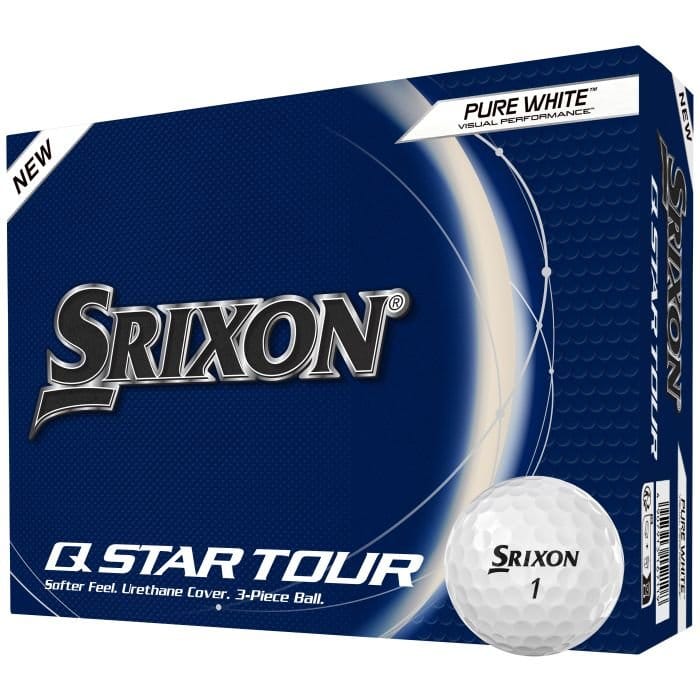
Srixon Q-Star Tour 5 Golf Balls
Srixon's Q-Star Tour sits at the soft end of the mid bracket. Three-piece urethane, 70 compression on Srixon's gauge, around $35 a dozen. Best for the 85 to 92 mph crowd who want the urethane short-game feel without the firmness of a Pro V1.
TaylorMade Tour Response
73 compression (TaylorMade's spec). About $38/dozen. Three-piece urethane. Golf Digest Hot List Silver 2026. Sits between the Q-Star Tour and the Pro V1 on the spectrum, leans toward soft feel with respectable spin numbers.
Titleist Pro V1
87 compression (Golf Insider UK, February 2026, gauge unspecified). Around $58/dozen. The benchmark mid-to-high compression tour ball. At that price, you should be carrying it 230+ yards (210m) and playing 80+ rounds a year for the math to make sense. If you lose two a round, the value calculation collapses. Most amateurs in the 85 to 100 mph bracket will get 90% of the performance from the Cut Blue at 40% of the cost.
High compression (90+)
Cut DC
99 compression (Cut's gauge). $29.95/dozen. Dual-core, 4-piece urethane. Golf Digest Hot List recognized. Best for 100+ mph swings and sub-15 handicaps who want tour-level performance without the Titleist tax.
Titleist Pro V1x
96 compression (Titleist's spec, gauge unspecified). Around $58/dozen. The high-compression benchmark. Higher launch and lower long-iron spin than the Pro V1, with a firmer feel at the same price. Pick this over the V1 if you struggle to launch the ball or generate height with mid-irons.
Srixon Z-Star XV
94 compression (Srixon's spec). About $50/dozen. The MyGolfSpy 2025 robot test flagged it as the longest at mid speeds among the tour-ball field. Worth a sleeve test for any 95+ mph player who has been defaulting to a Pro V1x without checking alternatives.
The compression myth worth calling out
The most stubborn claim in golf ball marketing is that softer balls always go farther for slower swingers. The MyGolfSpy 2025 ball test killed that one in robot data. At 100 mph, the three longest balls in a 44-model field were Maxfli Tour X, Callaway Chrome Tour X, and Srixon Z-Star XV, all high-compression models well above 90. Distance is a function of launch angle, spin rate, and ball speed, and compression is one input among several, not the lever that decides the answer.
Honest version of the rule: narrower than the marketing suggests. At swing speeds under 85 mph, low-compression balls do tend to produce better launch conditions and more carry on average, because the player is under-compressing the firmer balls. Above 85 mph, the relationship gets murky, and above 95 mph, the high-compression balls win on distance in robot data while the low-compression options leak ball speed.
My editorial position: compression gives you the right starting bracket. It does not give you the right ball. Test a sleeve before committing to a dozen, and if your local shop has a launch monitor, hit two or three options back-to-back and look at the carry numbers. Data on a screen is worth more than brochure copy, every time.
Frequently Asked Questions
What compression golf ball should a 15-handicapper use?
A 15 handicapper averages around 93 mph driver swing speed (deWiz, 2025), which puts them in the 65 to 90 mid-compression bracket. Honest options: Cut Blue (90 compression, $24.95/dozen), Srixon Q-Star Tour (70 compression, $34.99/dozen), or TaylorMade Tour Response (73 compression, around $38/dozen). Pro V1 sits at the top of this bracket at 87 compression, and it works for that swing speed, but you are paying $58 a dozen for a ball most 15 handicappers cannot extract another stroke out of compared to the Cut Blue. Test a sleeve of two or three before settling.
Does golf ball compression make a real difference to my score?
It makes a small but real difference, mainly through ball speed and short-game feel. Picking the wrong compression for your swing can cost you 5 to 10 yards of carry off the driver, and the wrong cover material (ionomer instead of urethane) can cost you 1,000 to 2,000 rpm of greenside spin on a wedge shot. Across 80 rounds a year, that adds up to a handful of strokes. It's not the biggest lever in your game. Course management, putting, and wedge distance control move the needle more (I covered where the strokes actually go in the handicap-reduction piece), but at the price of a dozen balls, getting compression right is one of the cheaper wins available.
Why are compression numbers different between brands?
Because there is no universal compression standard. According to Titleist Learning Lab (July 2025), the USGA and R&A do not regulate compression measurement, and brands use different gauges (the Atti deflection gauge and the PGA index gauge being the two most common). Readings between rigs can vary by 2 to 8 points on the same ball, which is why a Titleist 87 and a Cut 90 are not a like-for-like comparison. Use the published numbers as a bracket guide, not a precise specification, and lean on independent tests like MyGolfSpy when you want a like-for-like comparison.
Does cold weather affect golf ball compression?
Yes. Below about 50°F (10°C), the rubber compounds in the core stiffen, and the ball plays firmer than its rated compression. Practical guidance from Snyder Golf USA (June 2025) is to drop one compression tier in winter, so a 90-compression mid-tier ball might be replaced with a 70-compression option from October through March in northern climates. The effect is most noticeable on short game feel and ball speed off the driver in deep cold. In summer above 70°F (21°C), the rated compression is the right reference.
Is the Titleist Pro V1 the right ball for a 15-handicapper?
It can be, but it is not the obvious answer. The Pro V1 sits at 87 compression (Golf Insider UK, February 2026), which fits a 93 mph swing well enough, and the urethane cover gives tour-level greenside spin. Catch is the price: $58/dozen, and a 15 handicapper who loses two balls a round burns through a sleeve in three rounds. The Cut Blue at $24.95/dozen offers 4-piece urethane construction in the same compression bracket. For most 15 handicappers, the Cut Blue is the smarter buy until ball loss drops below one a round and round count climbs above 60 a year.
The compression number is a starting bracket, not a law. Pick the range that fits your swing speed, buy a sleeve of two or three options inside it, and decide based on what you feel at 10 feet (3m) on the putting green and what the launch monitor says off the driver. Brochure copy is the worst input you can use. The fastest win after ball selection: ten minutes on a launch monitor with the top two contenders side-by-side, looking at carry and spin. If you want to turn better equipment choices into lower scores on the card, the short game practice system I put together is where the strokes tend to hide.
Some links in this article are affiliate links. If you buy through them, I earn a small commission at no extra cost to you. This never influences what I cover or recommend. I link to gear I'd buy myself.







The golf newsletter that cuts the hype
Data-backed reviews and advice that works. No brand spin.
Recommended products