Chipping vs Pitching: How to Choose the Right Shot
Arccos data from 870,000 rounds shows mid-handicappers reach for the lob wedge too often and pay for it. Here is the decision framework.
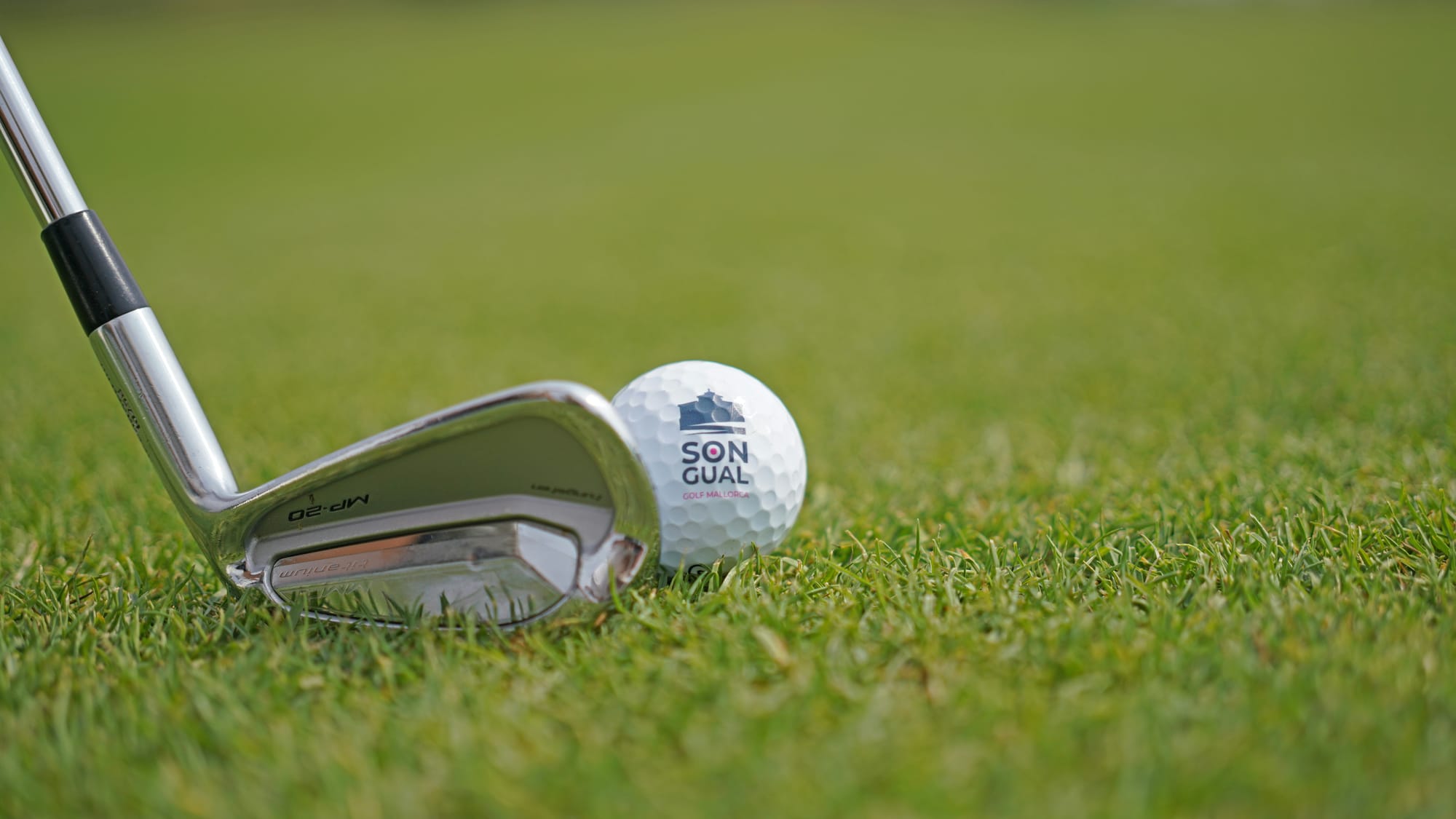
Mid-handicappers have a short-game habit that costs them shots, and the data has been pointing at it for years. From 25 yards (23m) out, a 15-handicap finishes an average of 22.0 feet (6.7m) from the hole with a lob wedge. From the same spot with a pitching wedge? 20.5 feet (6.2m). That’s the finding from Arccos and Lou Stagner (Oct 2025), pulled from hundreds of thousands of tracked rounds.
Why does the 60-degree get pulled so often? It feels like the safe call. Plenty of loft, soft landing, looks like what tour players do. But this isn’t a feel question first. It’s a decision problem. Solve the decision, and technique becomes a much smaller obstacle.
TL;DR
- 1A chip flies low and rolls out. A pitch flies high and stops. The clean dividing line, per Trackman (Andrea Zanardelli, Aug 2025): landing angle under 37 degrees and spin below 3,750 rpm puts you in chipping territory.
- 2Chip first, every time. Reach for the higher-lofted option only when one of five conditions forces your hand.
- 3Those five triggers: an obstacle to carry, a short-sided pin, a sunk lie in rough, an uphill slope between you and the flag, or a fast green with no runway to the hole.
- 4Arccos data (Oct 2025): from 25 yards (23m) the PW beats the 60 for 10-handicappers (18.5 vs 20.8 feet / 5.6m vs 6.3m) and 15-handicappers (20.5 vs 22.0 feet / 6.2m vs 6.7m).
- 5The 60 isn’t wrong. It’s overused. Match the shot to the situation and your up-and-down rate climbs without changing your swing.
What makes a chip a chip (and a pitch a pitch)
A chip shot is a one-lever move. The wrists stay quiet, the shoulders rock the club back and through, and the strike comes off lower than a full swing. Loft is borrowed from the head of the club, not manufactured by the body. Dr. Alison Curdt at PGA.com (Mar 2021) frames it the same way: minimal wrist hinge, body-driven motion, ball-first contact with a forward shaft lean.
A pitch shot is a two-lever move. The hands hinge on the way back, the torso still leads through impact, and the loft gets used at full value. Flight goes higher, the landing turns softer, and rollout shrinks.
The cleanest objective definition comes from launch numbers. Trackman’s study set the dividing line at a 37-degree landing angle with spin below 3,750 rpm. Anything that lands above 45 degrees with more spin is functioning as a pitch. Names are coaching shorthand. Numbers are what the ball actually does.
The rollout numbers
If you only remember one thing from this article, make it the rollout ratios. They turn club selection into arithmetic.
| Club loft | Roll vs carry ratio |
|---|---|
| 30 to 36 degrees (6 to 7 iron) | 3.5x carry or more |
| 38 to 44 degrees (8 to 9 iron / PW) | about 2.5x carry |
| 46 to 52 degrees (gap wedge) | about 1.5x carry |
| 54 to 60 degrees (sand / lob wedge) | about 1x carry |
Source: Trackman (Andrea Zanardelli, Aug 2025). Tested on medium-fast greens with Titleist Pro V1. Club speed under 30 mph (48km/h).
Read it like this. You’re 10 yards (9m) off the fringe, and the pin sits another 10 yards (9m) past the green’s edge. Total distance: 20 yards (18m). A 9-iron only needs to fly about a third of the way, since the rest arrives as rollout at a 2.5x ratio. Land it on the front of the surface, and physics handles what’s left. With a 60-degree, that flight has to cover all 20 yards (18m), because the ball stops where it lands.
A 9-iron play asks for less precision. A lob wedge play asks for a perfect strike. Same shot, very different demand on the swing.
That’s why the rollout table matters more than any technique tip. Once you know the ratio, club selection stops being a guess. Where do you want the ball to land? How much green sits between the landing zone and the pin? Your club picks itself once you answer those two, and the motion you bring to the shot stays the same simple stroke regardless of distance.
When to chip, and when pitching forces itself
Default is chip. Pitching is a response to a problem that a chip can’t solve. So which problems force the issue?
Chip when all of these apply:
- No obstacle between the ball and the pin
- At least 5 to 6 feet (1.5 to 1.8m) of green beyond your landing zone
- The lie is clean on fairway, fringe, or tight rough
- The approach to the pin is flat or downhill
Pitch when any one of these is true:
- An obstacle has to be carried (bunker, mound, rough collar, water)
- The pin is short-sided, with little green between the flag and the near edge
- The ball is sitting down in rough, where the grass will grab the leading edge
- An uphill slope sits between the ball and the pin, killing rollout in the wrong way
- The green is fast and the runway is gone, meaning a chip will skid past before it has a chance to settle
Which condition applies right now? That’s the question to ask before the club leaves the bag. If none of the five pitch triggers are in play, you’re chipping. If even one is, the higher-lofted shot earns its keep.
A note on the fast-green condition: “fast green” alone isn’t a trigger. Plenty of fast greens still have plenty of runway to a back pin. A real trigger is fast green plus no runway plus a downhill putt waiting if you skid past. All three.
Why mid-handicappers reach for the lob wedge too much
Here’s the part that catches people off guard. The lob wedge isn’t easier from 25 yards (23m). It’s harder.
Arccos pulled the numbers from over 870,000 rounds. From 25 yards (23m), a 10-handicap averages 20.8 feet (6.3m) from the hole with a 60-degree, and 18.5 feet (5.6m) with a pitching wedge. The 15-handicap split is wider in absolute terms: 22.0 feet (6.7m) with the lob, 20.5 feet (6.2m) with the PW. Lou Stagner’s read on it: “When players have plenty of green to work with, they tend to perform better when they don’t use a lob wedge.”
Shot Scope’s data backs the same direction. Up-and-down percentage climbs about eight points when amateurs default to a lower-lofted club, and proximity averages around six feet (1.8m) closer.
Why does the lower-lofted shot beat the higher-lofted one? Margin for error on the strike. A 9-iron chip uses minimal swing speed and a shallow attack. Catch it a fraction thin and the ball still rolls onto the green at about the right pace. A 60-degree pitch needs a precise low point, full loft delivery, and clean contact under the ball. Catch it a fraction thin and you blade it across the green into the back bunker. Catch it a fraction fat and you advance ten feet (3m) and stop in the fringe.
A lob wedge punishes a bad strike harder. The data is just the visible end of that physics.
I’ll add the bias I bring to this read: I’m a 7-handicap who came to the game through the simulator rabbit hole, so I find numerical proof more compelling than feel-based instruction. If you’re someone for whom feel matters more than landing-angle data, weight my take accordingly. The Arccos numbers still apply to your scorecard, though.
Equipment: loft and bounce for each shot
The club doesn’t fix the decision, but the wrong wedge makes the right decision harder.
For chips, the useful range is 7-iron through gap wedge, which puts you at 30 to 52 degrees of loft. Lower bounce works well here, in the 6 to 10-degree range, because tight lies and firm fringes don’t punish a thin sole. High-bounce wedges can bounce off the turf before the ball, sending the leading edge into the equator.
For pitches, the working tool is a 52 to 60-degree wedge with medium-to-high bounce, somewhere around 10 to 14 degrees. Higher bounce gives you forgiveness from rough and softer turf, and from sand if the same wedge plays double duty as your sand club.
If you’re buying one wedge to handle both shots, the Titleist Vokey SM10 in 56 degrees with the S Grind hits the center of the workable range. Ten degrees of bounce, mid-sole width, and a sole shape that handles square-faced chips and open-faced pitches without complaint. Cleveland’s RTX 6 ZipCore 56 Mid sits in similar territory at a lower price. I went through the bounce and grind details in a separate piece if you want a deeper read on why grind selection matters as much as loft choice.
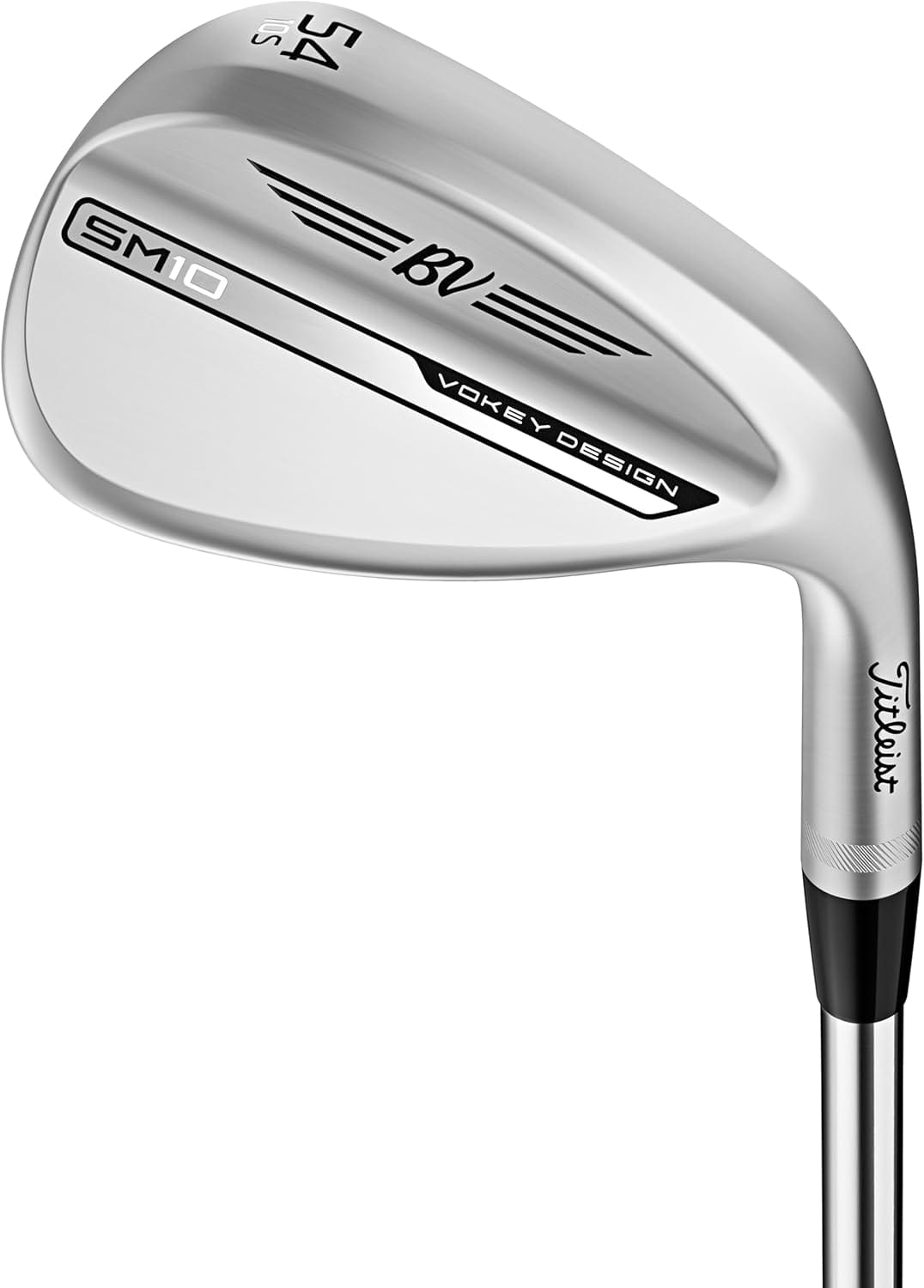
Titleist Vokey SM10 56° S Grind
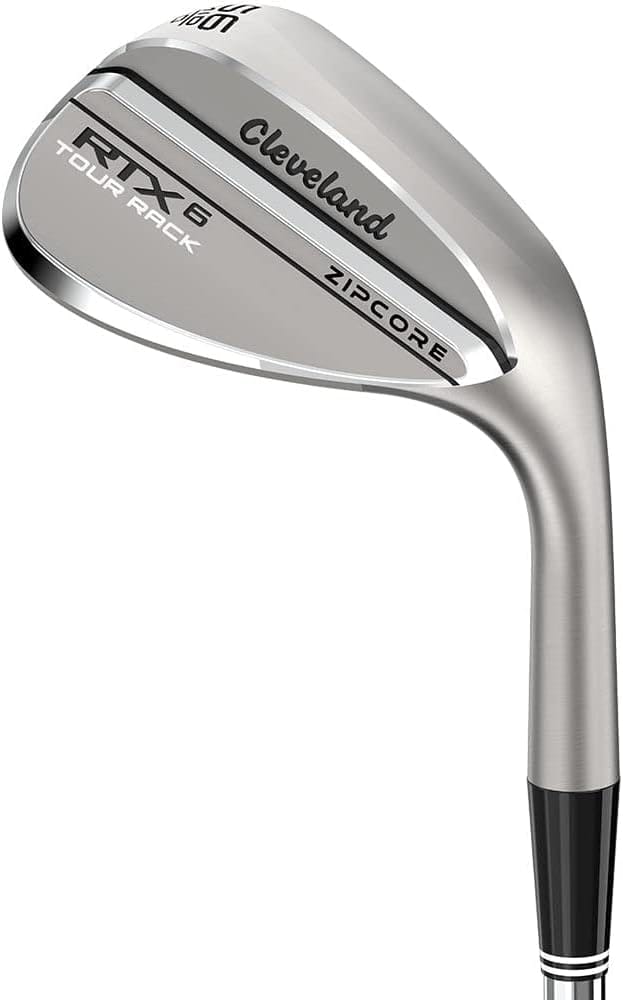
Cleveland RTX 6 ZipCore 56° Mid
A quick word on Vokey grind shorthand for anyone unfamiliar. An S Grind is the all-rounder. A D Grind adds bounce (around 12 degrees) and suits steeper attack angles or softer course conditions. K and T Grinds work the opposite way for tight lies and shallow attack angles. None of these are right or wrong on their own. They map to the turf you play and the swing you bring.
The verdict
Chip is the default. Pitch is the exception.
Stop treating the 60-degree as the automatic choice when you’re off the green. Unless one of the five pitch triggers is in play, put the lob wedge back in the bag and chip it with less loft. The Arccos data, the Trackman rollout numbers, and the Shot Scope up-and-down rates all push in the same direction. I’m happy to be proven wrong by a future dataset, but right now the evidence is one-sided.
Lower loft, more rollout, less margin you have to manufacture with the swing. That’s the entire argument.
Frequently Asked Questions
What is the main difference between a chip shot and a pitch shot?
A chip flies low and rolls out, using the club’s loft for elevation rather than the swing. A pitch flies high and stops short, with the wrists hinging on the backswing to add loft. Trackman’s working line: a chip lands at under 37 degrees with spin below 3,750 rpm. A pitch lands at over 45 degrees with more spin.
When should I chip instead of pitch?
Chip whenever there’s no obstacle to carry, at least 5 to 6 feet (1.5 to 1.8m) of green beyond your landing zone, the lie is clean, and the approach to the pin isn’t uphill. If none of the five pitch triggers apply, the chip is the higher-percentage play. Arccos data backs that across both 10 and 15-handicap groups.
What club should I use for chipping around the green?
Anything from a 7-iron through a gap wedge, depending on how much green you have to work with. Use the rollout ratios as your guide: a 9-iron gives you about 2.5 times more roll than carry, a gap wedge about 1.5 times. Pick the club whose ratio puts your landing zone safely on the green with the rest as rollout to the pin. For the full club-by-club system behind these ratios, see our guide to controlling chip shot distance.
Does bounce angle matter for chip and pitch shots?
It matters a lot. Lower bounce (6 to 10 degrees) suits tight lies and firm fringes for chipping, where high bounce can cause the leading edge to skip into the ball. Higher bounce (10 to 14 degrees) helps for pitching out of rough and softer turf, where the sole needs to glide rather than dig. If you carry one wedge for both, a 56-degree with 10 degrees of bounce sits in the workable middle.
Why does my lob wedge keep leaving me farther from the hole?
Because the lob wedge punishes a fractionally off strike harder than a less-lofted club does. From 25 yards (23m), Arccos data shows a 10-handicap averages 20.8 feet (6.3m) from the hole with a 60-degree versus 18.5 feet (5.6m) with a pitching wedge. The lob needs precise low-point control. The pitching wedge is more forgiving on a thin or fat strike, and the rollout closes a lot of the gap to the pin without any extra skill required.
Pick one shot to drill this week. If your instinct off the green is the lob wedge, spend a practice session hitting 9-iron chips from 15 to 25 yards (14 to 23m) and write down where the ball finishes. Compare it against your usual proximity with the 60-degree. The numbers will tell you which side to keep practicing. While you’re at it, I rounded up the training aids worth keeping in the bag for short-game work that transfers to the course rather than the range.
Some links in this article are affiliate links. If you buy through them, I earn a small commission at no extra cost to you. This never influences what I cover or recommend. I link to gear I'd buy myself.








The golf newsletter that cuts the hype
Data-backed reviews and advice that works. No brand spin.
Recommended products