Golf Training Aids That Actually Work (and Which to Skip)
Golf training aids that work: Orange Whip, SuperSpeed, impact bags. Skip these gimmicks. Evidence-backed picks for mid-handicappers in 2026.
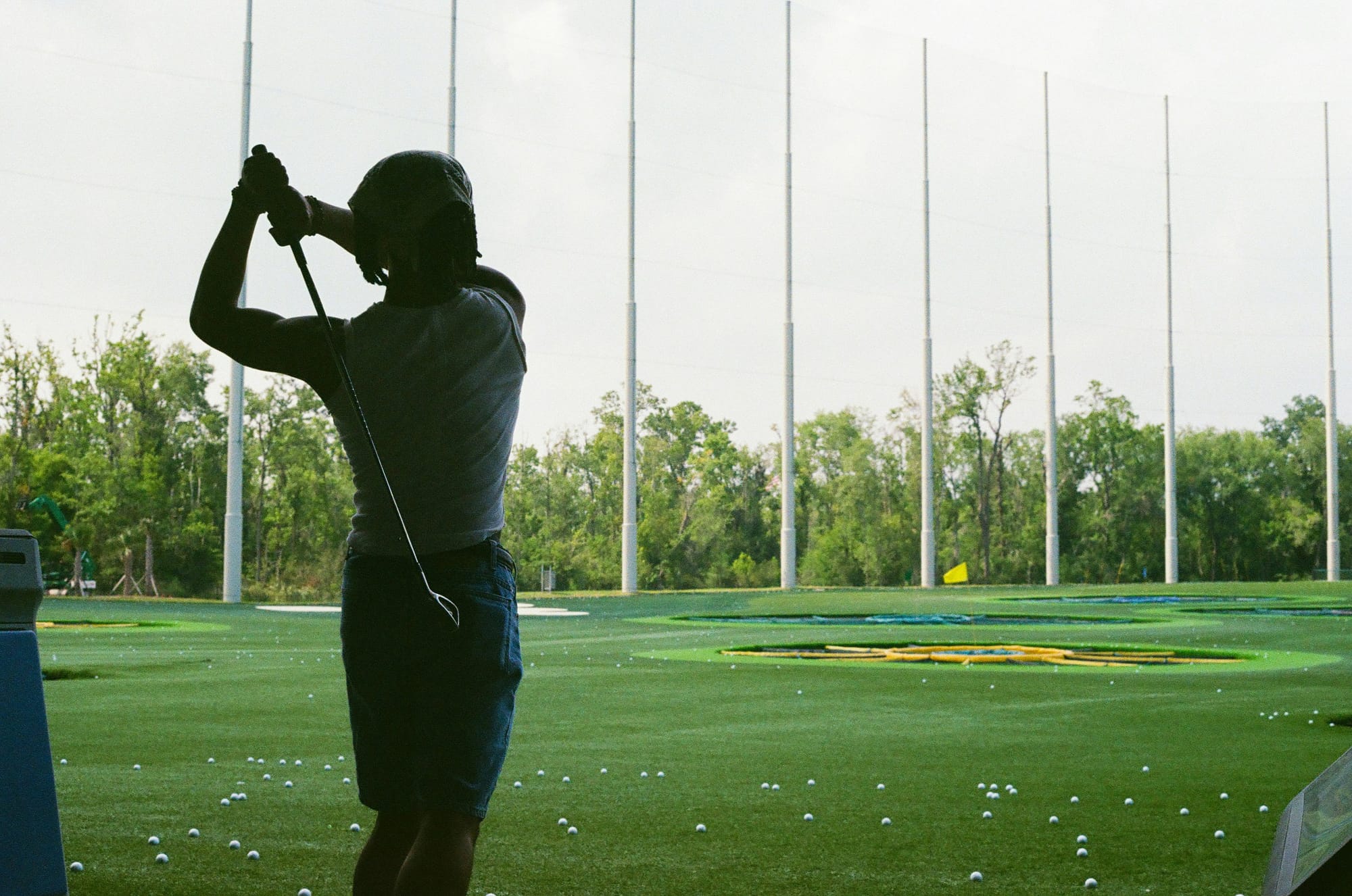
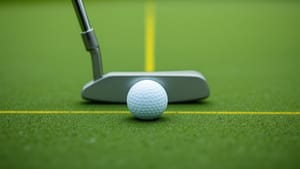
Photo by Alexander Korte on Unsplash
Most golf training aids end up as garage ornaments. You buy one in March, use it twice, and by June it's behind the recycling bin holding up a tarp. The shortlist that survives is small, and the reason is boring: the aids that work give you immediate feedback, let you hit a real ball or make a real swing, and fit into a routine you can run three times a week.
This guide covers the aids backed by motor learning research and independent testing, plus four categories worth skipping. The selection criteria is simple. An aid earns a spot if it does two of three things: gives instant feedback on a swing fault, allows full-speed reps with a real ball or club, and survives six weeks of regular use. Anything that fails all three is a souvenir, not a tool.
Mid-handicappers (15 to 20) lose more strokes on approach play and around the green than on putting, according to the Shot Scope 2024 data report covering 18.7 million holes. Most training aid budgets go on putting trinkets while the strokes are bleeding from elsewhere.
- 1.Best overall training aid: Orange Whip Full-Size Swing Trainer ($119.99). Tempo, sequencing, and rotation in one tool.
- 2.Best budget tempo trainer: SKLZ Gold Flex 40" ($79.99). Same idea as the Orange Whip, less polished build.
- 3.Best speed trainer: SuperSpeed Golf System ($139.99). Independent testing shows 5 to 9% gains over 12 weeks.
- 4.Best impact trainer: Gary Wiren Impact Bag ($54.99). Trains the position the ball flight depends on.
- 5.Best putting aid (only if alignment is your fault): EyeLine Putting Mirror ($39.95).
- 6.Most underused tool: a $20 set of alignment sticks. Eight drills, one piece of fibreglass.
- 7.Skip: weighted swing donuts, force-position grip gloves, $20 path gadgets that block real ball strikes, and anything sold as a 60-second slice fix.
| Product | Price | Category | What It Fixes | Who It's For |
|---|---|---|---|---|
| Orange Whip Full-Size | $119.99 | Tempo / sequencing | Casting, rushed transition, poor rotation | Anyone with rhythm or sequence faults |
| SKLZ Gold Flex 40" | $79.99 | Tempo / sequencing | Same as Orange Whip, lower budget | Budget-conscious tempo trainees |
| EyeLine Putting Mirror | $39.95 | Putting alignment | Eye position and aim | Golfers whose putting fault is alignment |
| Gary Wiren Impact Bag | $54.99 | Impact position | Scoopy impact, flippy hands | Mid-handicappers fighting fat / thin contact |
| SuperSpeed System L1 | $139.99 | Clubhead speed | Slow, fixed swing speed | Anyone under 95 mph (153km/h) driver speed |
| Lag Shot 7-Iron | ~$130 | Lag / sequencing | Casting, no lag | Casters who want feel feedback |
| Callaway Alignment Stix | ~$20 | Alignment / path / ball position | Multiple faults across the bag | Everyone who owns clubs |
How to Pick a Training Aid That Won't Collect Dust
The 2024 systematic review on motor learning in golf, published in Frontiers in Sports and Active Living, lands on two findings worth remembering before you spend money.
First, external focus of attention is the cognitive cue you give yourself during a swing that points at a target outside your body, like the ball, the clubface, or a hit point on the wall. The review found external focus produces faster skill acquisition and better retention than internal focus (thinking about your wrists, hips, or shoulders). Training aids that force external focus, like an impact bag or a steel rod path gate, beat aids that drag your attention onto your body parts.
Second, distributed practice is short, frequent practice spaced across days rather than long single sessions. Ten minutes a day for six days outperforms one ninety-minute Sunday block. Any aid that can't survive a ten-minute session in your living room or backyard is fighting the research.
Now layer the Shot Scope strokes-gained data on top. Mid-handicappers lose more strokes per round on approach shots from 100 to 175 yards (91 to 160m) and on chips and pitches inside 30 yards (27m). They lose the fewest strokes, in share of total, on putts. So if you have $150 to spend on training aids, the smart allocation is impact, sequencing, and speed. Putting aids come last unless you have a known alignment fault.
Two filters before you click buy. Does the aid let you hit a real ball, or at least make a real swing? Can you use it three times a week without setting up a range? If both answers are yes, it has a chance. If either is no, it's a garage ornament.
Building a structured home practice routine matters more than which aid you pick. Cheap aids used three times a week beat pricey aids used three times a year.
Orange Whip Full-Size Swing Trainer
The Orange Whip is the rare aid that survives every honest review list. Jon Sherman's Practical Golf training aids breakdown ranks it first, and the reason is mechanical. The weighted ball at the tip plus the flexible shaft do two things at once. They expose any rushed transition or arm-driven swing because the head wobbles when you cast. And they build rotation feel because your hands can't muscle it.
Why it works: it forces external focus. You're tracking what the orange ball does at the top of the backswing and through the impact zone, not thinking about wrist hinge. The flex creates feedback you can feel without a coach.
Who it's for: anyone with a tempo, sequencing, or rotation fault. That's most amateurs.
Skip if: your problems are technical (grip, aim, swing path geometry). The Whip won't fix a faulty clubface. It rewards a body that already knows where to send the club.
Ten swings before a round, ten swings as a wake-up drill in the morning. That's the use case. Anyone telling you to do hundred-rep sessions is overselling it.
SKLZ Gold Flex Swing Trainer
The SKLZ Gold Flex does the same job as the Orange Whip for $40 less. It's heavier at the head, the shaft flex is similar, and the body rotation feel translates. The difference is finish quality. Reviewers note the grip wears faster and the head can loosen on the shaft after a year of regular use.
If you're committed to the tempo trainer category and the Orange Whip price gives you pause, the Gold Flex is the right pick. If you swing it three times a week for two years and the head goes wobbly, you've still spent less than the Whip and gotten 80% of the value.
Caveat on the grip: re-grip it the moment the original starts slipping. A loose grip on a weighted trainer is how people pull tendons. The fix is a $5 standard rubber grip from any club repair shop.
Use case is identical to the Whip. Pre-round warmup, morning ten-minute drill, indoor swing maintenance through winter.
EyeLine Golf Putting Mirror
Honest framing on this one. Putting isn't where mid-handicappers lose the most strokes. The Shot Scope data is clear on that, and most golfers buying putting aids are spending in the wrong place.
Buy the EyeLine mirror only if you've identified alignment as your specific putting fault. The fix it provides is real: eye position over the ball, shoulder line square to the target line, consistent ball position relative to the lead foot. If your putting misses are because you're aimed left without knowing it, the mirror is a $40 confidence builder.
If your putting fault is speed control, green reading, or a yippy stroke, the mirror won't help. Spend the money on green-reading practice or a lesson with a putting coach.
How to use it: five minutes before any practice session. Stand over a few putts on the mirror, check eye position, hit ten putts on the line. Pack it away. It's a setup tool, not a stroke tool.
Gary Wiren Impact Bag
The impact bag is the most underrated aid for mid-handicappers because it trains the single position that matters most for ball flight: hands ahead, shaft leaning forward, lead wrist flat. Hit the bag in that position and you get a thud. Hit it scoopy with a flipped lead wrist and you feel the difference in your hands. Instant feedback, external focus, no theory required.
Why it works for the strokes-gained data mentioned earlier: poor approach play comes from inconsistent strike. Inconsistent strike comes from inconsistent impact position. The bag teaches the position by giving you a target that punishes flippy hands and rewards forward shaft lean.
Who it's for: any golfer fighting fat shots, thin shots, or a chronic chunk-and-thin pattern from 100 yards in (91m).
Use it ten reps at a time, three or four times a week. Not for full-speed driver swings: it's an iron-impact trainer.
Put the bag against a wall or fence. Loose impact bags slide on grass and you'll chase it across the yard between every swing.
Lag Shot 7-Iron
The Lag Shot is a 7-iron with a very soft shaft built to expose casting. If you fire your hands from the top, the shaft loads and unloads at the wrong moment and you feel it. If you let the club lag, the shaft stays loaded into impact and the strike is clean.
It's a useful tool for one specific fault: casting. If you've been told by a coach or a launch monitor that you're losing lag, the Lag Shot lets you train the feel at home with a real ball on a mat. The flex is exaggerated enough that you can't ignore the feedback.
Who it's not for: anyone with a transition or sequence problem that isn't casting. The Whip or the Gold Flex are better general tempo trainers. The Lag Shot is a specialist tool.
Pricing sits around $130 at retail. That puts it in Orange Whip territory, so the question becomes: do you have a casting fault specifically, or a general tempo problem? If the answer is general, the Whip is the better buy.
SuperSpeed Golf Training System
Overspeed training is a protocol where you swing a lighter-than-normal club to train the nervous system to fire faster, creating carryover to your standard club. SuperSpeed packages three clubs (heavier, normal, lighter) into a structured 6 to 8 minute protocol you run three times a week.
The evidence is the strongest of any aid on this list. The MyGolfSpy SuperSpeed community test ran nine recreational golfers through 12 to 14 weeks of the protocol in 2023. The slow-speed group (under 95 mph / 153km/h baseline) gained 8.8% on swing speed. The mid-speed group gained 7.6%. The high-speed group gained 5.5%. Those are session-tested numbers, not marketing claims.
Dr. Tyler Standifird's biomechanics study at Utah Valley University, brand-commissioned but using independent methodology, ran 11 recreational golfers (average handicap around 15) through 6 weeks. Average gains: 4 mph (6.4km/h) clubhead speed and 22 yards (20m) carry distance.
The catch is the protocol. SuperSpeed only works if you do it three times a week for three months. Skip a week and the gains stall. This is the aid that requires the most discipline, and it's where most people fail. Buy it only if you'll commit to the calendar.
See our full SuperSpeed Golf Swing Speed Training System review for the independent testing breakdown, including five reviewer results and the clinical contraindications.
Who it's for: golfers under 100 mph (161km/h) driver speed who want more distance. Older golfers benefit because nervous system recruitment falls off with age and overspeed training offsets some of that decline.
Alignment Sticks: The One Everyone Underuses
Callaway Alignment Stix (48", set of 2)
Two fibreglass rods, $20, eight drills. Alignment sticks are the cheapest serious aid in the bag and the one most amateurs own without using.
Here's the system. Stick one on the ground parallel to your target line at every range session: that fixes aim drift. Two sticks angled into a "V" gate around the ball trains swing path: too inside-out and you hit the back stick, too over-the-top and you clip the front. One stick laid down with markers at 6 inches and 12 inches (15cm and 30cm) past the ball position trains low-point control for irons. One stick stuck vertically at hip height, near your trail leg, gives you a sway gate during the backswing.
That's four drills. Add ball position checks, shoulder alignment checks, and chipping landing-zone markers and you're at eight uses for a $20 piece of gear.
Why it works: every alignment stick drill forces external focus. You're not thinking about your hips, you're avoiding the stick. That's what the motor learning research says to do.
What Should You Skip?
Four categories of training aids do more harm than good. They either don't deliver the promised effect, build the wrong motor pattern, or cost money that should go to a lesson instead.
Weighted swing donuts for full-speed swings. Adding a donut to your driver and swinging at 100% load is a recipe for shoulder and elbow strain, and the motor pattern you build under heavy load doesn't transfer to your unloaded swing. Weighted training has its place (see SuperSpeed), but only at controlled speeds with a structured protocol. Donuts on a real club at full effort are an injury waiting to happen.
Force-position grip trainer gloves. These are gloves with rigid plastic pieces that lock your hands into a specific grip. Grip changes need feel and feedback, not constraint. Forcing a grip with a rigid frame teaches your hands to fight the constraint rather than learn the position. A 30-minute session with a coach and a sharpie line on your lead glove will fix grip faster.
$20 to $30 path gadgets that don't let you hit a real ball. Any swing path trainer that clips onto your club and prevents real impact is feedback-free in the moment that matters most. The swing happens during impact, not before it. If the gadget gets in the way of a struck ball, it's training a partial movement.
Anything marketed as a 60-second slice fix. Slice patterns come from a clubface-to-path mismatch at impact, and that mismatch has multiple sources (grip, alignment, swing path, body rotation, attack angle). No single aid fixes it in 60 seconds. Products with this language are selling certainty that the underlying biomechanics don't support.
If you're tempted by any of these and you're a mid-handicapper looking to lower your handicap, redirect the money toward a coaching session or a launch monitor hour. The diagnostic is worth more than another gadget.
Quick picks
- Best first training aid (under $25): Callaway Alignment Stix
- Best overall (one-aid pick): Orange Whip Full-Size Swing Trainer
- Best for distance: SuperSpeed Golf System Level 1
- Best for ball-striking: Gary Wiren Impact Bag
- Best budget tempo trainer: SKLZ Gold Flex 40"
- Best putting aid (alignment fault only): EyeLine Putting Mirror
Frequently Asked Questions
What is the single best golf training aid for a mid-handicapper?
The Orange Whip Full-Size Swing Trainer at $119.99 is the most-recommended single aid. It trains tempo, sequencing, and rotation in one tool, gives external-focus feedback through the weighted ball at the tip, and works in 10-minute sessions at home. If your specific fault is impact position rather than tempo, the Gary Wiren Impact Bag at $54.99 is a better first buy. For mid-handicappers losing strokes on approach play, the impact bag often delivers a faster ball-striking improvement than any tempo trainer.
Do golf training aids actually transfer to lower scores?
Some do, when the user sticks with them. The Frontiers motor learning systematic review (2024) found that aids forcing external focus and supporting distributed practice produce skill retention. SuperSpeed has the strongest direct evidence: MyGolfSpy testing showed 5 to 9% clubhead speed gains over 12 to 14 weeks across nine recreational golfers. Most aids fail not because the design is wrong, but because users abandon them after two weeks. Three sessions a week for six weeks is the minimum effective protocol for any training aid on this list.
Is SuperSpeed Golf legit or just marketing?
It's legit, with the strongest independent evidence of any speed trainer. The MyGolfSpy 2023 community test ran nine recreational golfers through the protocol for 12 to 14 weeks: slow-speed group gained 8.8%, mid-speed gained 7.6%, high-speed gained 5.5%. Dr. Tyler Standifird's biomechanics study at Utah Valley University, while brand-commissioned, used independent methodology and showed 4 mph (6.4km/h) clubhead speed gains and 22 yards (20m) carry gains across 11 golfers in 6 weeks. The catch is the protocol: three sessions a week for three months minimum.
Are weighted swing trainers safe for older golfers?
Flexible weighted trainers like the Orange Whip and SKLZ Gold Flex are safe at controlled speeds because the flex absorbs load that would otherwise hit the joints. Rigid weighted donuts on a regular driver swung at full speed are a different story and can stress the lead shoulder and trail elbow. Older golfers benefit most from overspeed training (lighter-than-normal clubs), which is the exact opposite of weighted donuts. SuperSpeed's protocol is built around this and is well tolerated by golfers in their 50s and 60s when started at the entry pace.
Do I need a putting aid if my putting is below average?
Maybe, but only if you've identified the specific fault. Shot Scope 2024 data covering 18.7 million holes shows mid-handicappers (15 to 20) lose more strokes per round on approach play and around the green than on putting. If your putting issue is alignment or eye position, the EyeLine Mirror at $39.95 is worth it. If the issue is speed control, green reading, or a yippy stroke, the mirror won't help. A 30-minute lesson with a putting coach delivers more diagnostic value than a $40 mirror used without context.
How much should I spend on training aids before booking a coaching session?
If your total training aid spend is approaching $200 and your handicap hasn't moved in a year, the next dollar belongs to a coach or a launch monitor session. Aids work for fixing known faults and grooving feel. They don't diagnose the fault for you. A single coaching hour with a launch monitor will identify your specific clubface-path-attack-angle pattern, and from there you can pick aids that target the real problem. Spending $200 on aids without knowing the fault is how garage ornaments accumulate.
The shortlist is short on purpose. Buy one aid that targets your specific fault, commit to three sessions a week for six weeks, and judge it on whether your strike or your scores moved. If neither did, the aid wasn't the problem and the next dollar belongs to a coach. If both moved, you've found a tool that earns its place in the bag closet instead of the donate pile.
Some links in this article are affiliate links. If you buy through them, I earn a small commission at no extra cost to you. This never influences what I cover or recommend. I link to gear I'd buy myself.








The golf newsletter that cuts the hype
Data-backed reviews and advice that works. No brand spin.
Recommended products