Gap Wedge vs Sand Wedge vs Lob Wedge: Which to Carry
Gap wedge vs sand wedge vs lob wedge: data-led guide to which wedges a mid-handicapper actually needs, with carry distances and gapping rules.
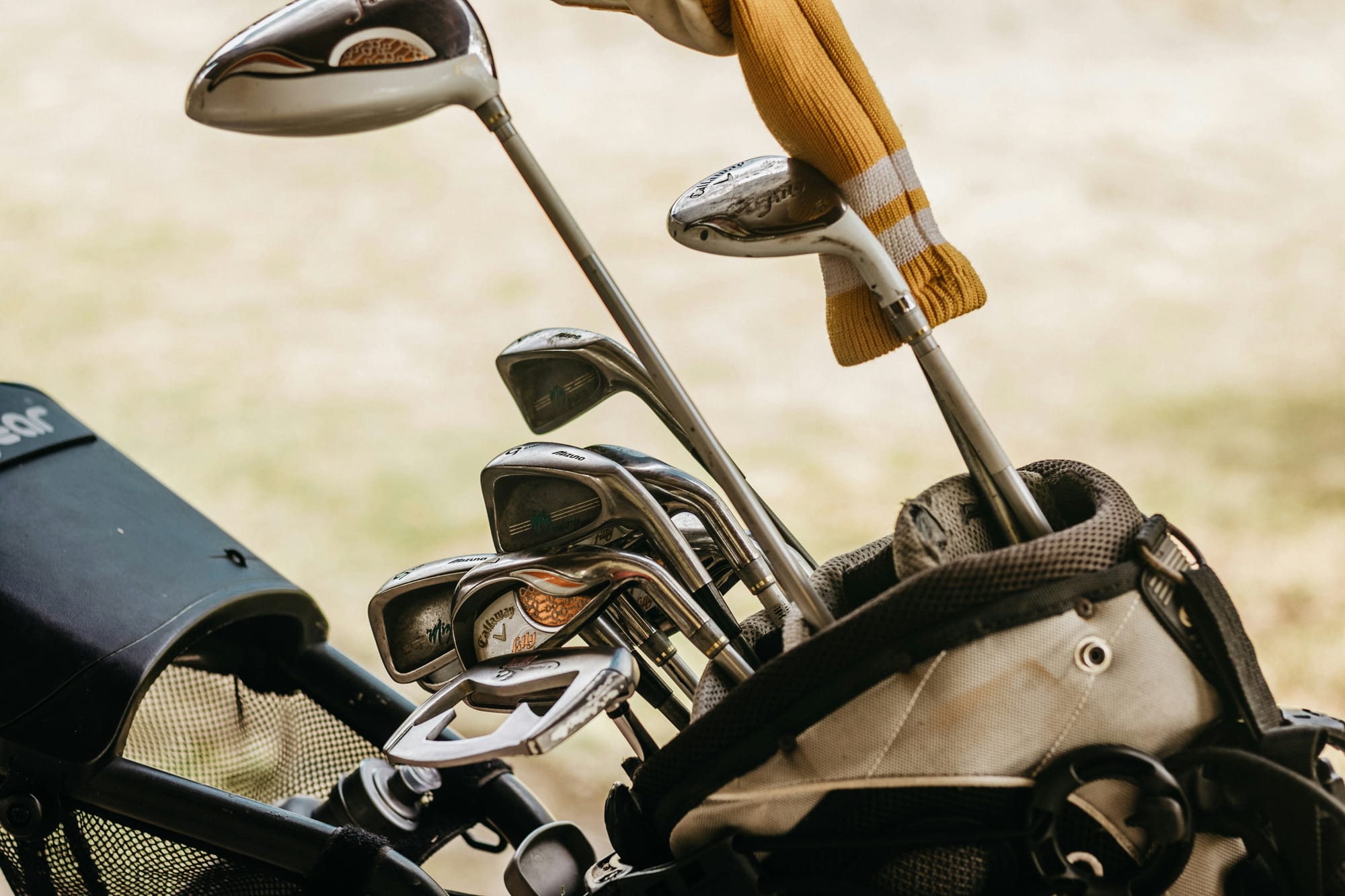
Photo by Kawê Rodrigues on Unsplash
TL;DR
- Most mid-handicappers need exactly three wedges: pitching wedge, gap wedge, and sand wedge
- A gap wedge (50 to 52 degrees) fills a 15 to 20 yard (14 to 18m) hole most modern iron sets leave between PW and SW
- A sand wedge (54 to 58 degrees) is the most versatile club in your scoring bag (bunkers, rough, standard pitches)
- A lob wedge only earns its spot if you consistently drive 240 yards (219m) or more and have practiced it extensively
- The goal is even 10 to 15 yard (9 to 14m) gaps. Map your distances before buying anything
Most mid-handicappers I know carry a pitching wedge and a 56, then guess at everything in between. They've never written down their carry numbers. Never measured a single yardage gap. When 95 yards turns into a chunked half-swing or a thinned full one, they wonder where the round went sideways.
Buying "one of every loft" won't fix it. That's how golfers end up with four short clubs, no hybrid, and the same scoring hole at 105 yards. The real question is coverage: how many scoring clubs do you need to keep each yardage gap under 15 yards (14m)? For players inside any 10 to 25 handicap range, my read of available data says three. That fourth option, a 60-degree lob, only earns its spot when your driver carry and practice hours both clear a specific bar.
What each scoring club is actually for
Definitions first, gapping maths second. If you can't picture what each club does on the course, the loft numbers won't mean much.
| Wedge | Loft | 15-HCP avg carry | Primary purpose | Bounce range |
|---|---|---|---|---|
| Gap Wedge | 50 to 52° | 104 yds (95m) | Approach shots, fill PW-SW distance gap | 8 to 12° |
| Sand Wedge | 54 to 58° | 84 yds (77m) | Bunkers, pitching, versatility | 10 to 14° |
| Lob Wedge | 58 to 62° | 75 yds (69m) | High, soft shots from tight lies | 4 to 12° |
Gap wedge (50 to 52 degrees)
A gap wedge is a lofted iron carrying 48 to 52 degrees, built to plug the distance hole between a player's PW and SW. It exists because iron lofts have got stronger over recent decades. A 1995 PW measured 48 degrees; a 2024 game-improvement model often runs 43 or 44. Sand designs haven't shifted, holding at 54 to 56. That widening hole is why this category was invented.
Bounce on a 50-degree option sits in an 8 to 12 degree window. Enough to keep the leading edge from digging on full swings, without causing trouble off tight lies. If you want more depth, my guide on how bounce behaves on each club covers turf interaction in detail.
Sand wedge (54 to 58 degrees)
A sand wedge runs 54 to 58 degrees of loft with a wide, flanged sole designed to skip through bunkers rather than dig in. The shape has barely changed since Gene Sarazen invented it in 1931. Sarazen used the prototype at Prince's Golf Club to win the 1932 Open Championship, and the same basic idea, a sole that bounces off the surface instead of cutting into it, is still what defines the category.
If I had to keep one club and bin the rest of my short game, this is the one. It's the most versatile tool in the scoring kit. Bunkers are the job description, but it handles 60-yard pitches, thick rough, and anything where you need height with forgiveness. Bounce of 10 to 14 degrees is standard. Wider sole, more forgiving for steep, divot-taking swings.
Lob wedge (58 to 64 degrees)
A lob wedge sits at 58 to 64 degrees of loft, the highest of any standard club, built for short, high shots that stop fast near the green. This is the flop-shot tool. The pin-tucked-tight, no-green-to-work-with, going-over-a-bunker-from-three-yards specialist.
It's also the club that punishes you hardest on a mis-hit. A thin 60 from a tight lie travels low, fast, and across the green into trouble. Bounce on a lob gets interesting for serious players: a low-bounce L grind (4 to 6 degrees) for firm conditions, a higher-bounce or M grind (8 to 12) for softer turf or face-opening shots. My breakdown of how grinds change the way a wedge sits digs into the matchups.
The 10 to 15 yard gapping rule
Here's the maths every fitter starts with: 4 to 6 degrees of loft separation produces 10 to 15 yards of carry distance. That's Bob Vokey's working number, cited in Golf Digest's wedge gapping piece (May 2024), and it holds across most swing speeds.
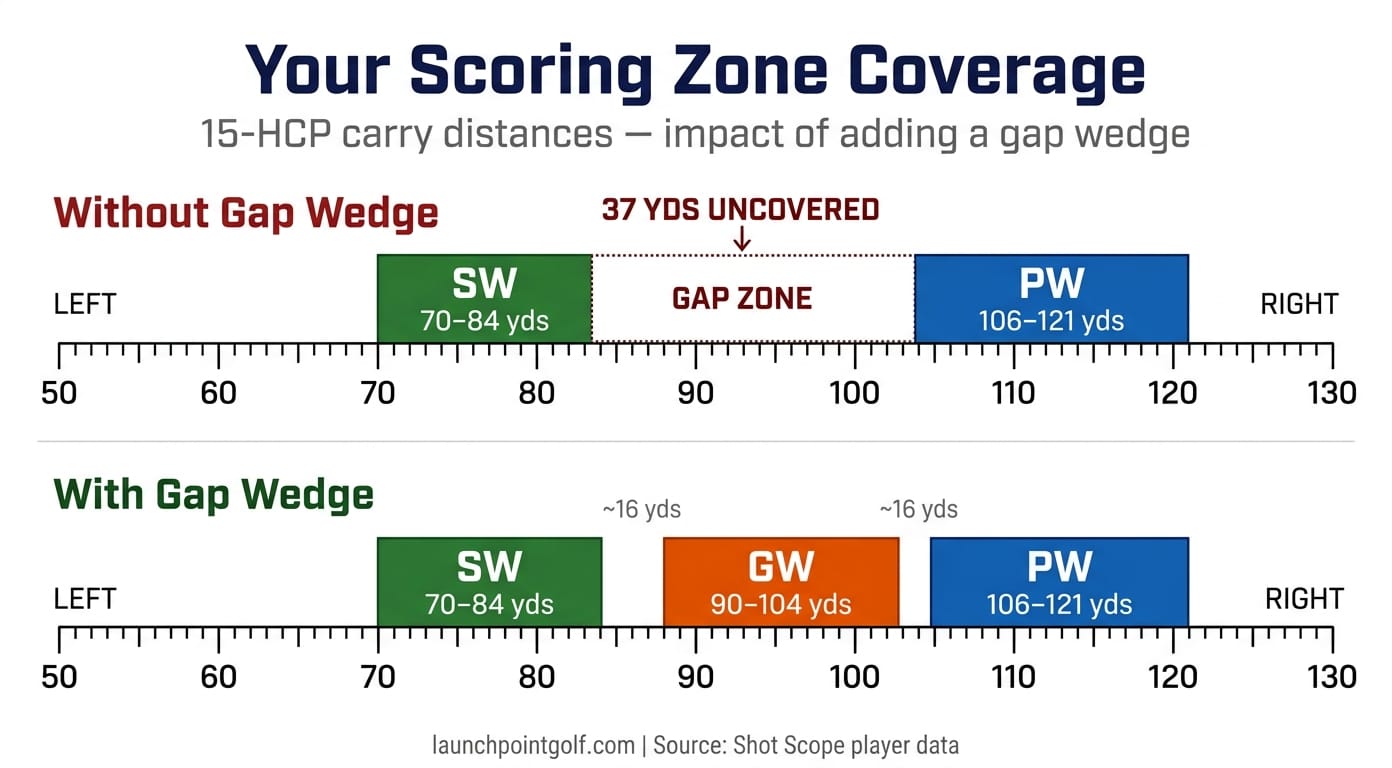
Now apply it to a real bag. Your pitching wedge is 46 degrees. Your sand wedge is 56. That's 10 degrees of loft between them, which translates to about two full clubs of carry distance. Without a gap wedge, the hole in your bag looks like this:
| Club | Without gap wedge | With gap wedge |
|---|---|---|
| Pitching Wedge (46°) | 121 yds (111m) | 121 yds (111m) |
| Gap Wedge (50°) | not in the bag | 104 yds (95m) |
| Sand Wedge (56°) | 84 yds (77m) | 84 yds (77m) |
| Gap between PW and SW | 37 yds (34m) | 17 yds (16m) max |
A 37-yard uncovered zone sounds abstract until you stand in it. The shot lives between a three-quarter PW and a full SW, neither of which lands at 100 yards. So you guess. You add cognitive load right before you try to make the swing. Dropping a 50-degree into the bag cuts that zone in half, and every approach inside 125 yards (114m) now has a stock club instead of a half-swing improvisation.
This is the single highest-value wedge purchase a mid-handicapper can make. Not the lob.
How far do mid-handicappers hit each wedge?
The numbers below come from MyGolfSpy's wedge gapping chart, sourced from Shot Scope's player database. Treat them as a reference, not a target. Your distances will vary with swing speed, ball, and turf, and individual variation inside a handicap band is wide.
| Handicap | Pitching Wedge | Gap Wedge | Sand Wedge | Lob Wedge |
|---|---|---|---|---|
| Scratch (0) | 141 yds (129m) | 126 yds (115m) | 105 yds (96m) | 86 yds (79m) |
| 5 HCP | 126 yds (115m) | 109 yds (100m) | 86 yds (79m) | 71 yds (65m) |
| 10 HCP | 127 yds (116m) | 110 yds (101m) | 98 yds (90m) | 79 yds (72m) |
| 15 HCP | 121 yds (111m) | 104 yds (95m) | 84 yds (77m) | 75 yds (69m) |
| 20 HCP | 108 yds (99m) | 94 yds (86m) | 85 yds (78m) | 78 yds (71m) |
| 25 HCP | 90 yds (82m) | 79 yds (72m) | 80 yds (73m) | 49 yds (45m) |
Quick caveat on the data. The 10 HCP sand wedge carries further than the 5 HCP one, which is a small-sample artifact in the Shot Scope numbers, not a real reversal. I'm flagging it because if I don't, someone will email me about it.
The line that matters: for a 15-handicap, the gap between sand wedge and lob wedge is nine yards. Nine. That's not a clean gap, that's noise. Two of those clubs are doing the same job, and one of them is the harder of the two to hit pure. That's the argument for thinking twice about a fourth wedge.
Should you carry a lob wedge? The honest answer
MyGolfSpy's analysis of Shot Scope data shows a 15-handicap averages 3.21 shots when using a lob versus 3.19 with other wedges. That's a difference of 0.02 strokes. In numbers, it's a wash.
Parker McLachlin, the short-game coach, puts a sharper edge on it in a Golf.com piece: golfers driving under 240 yards (219m) should stop at 58 degrees of loft. The shot, in his words, "requires better-than-average hands."
Here's where I'll plant my flag. Don't carry a 60-degree unless you clear 240 yards (219m) off the tee on a stock drive and have spent real practice time on the shot. I'm talking 50 balls a session for at least a month: flop shots, tight-lie chips, bunker shots from face-open positions, the full range of what the club is for. If that's not your practice life, the lob will cost you strokes from skulled and bladed mis-hits more often than it'll save you with a hero flop.
There is a real case for it. If you play firm courses with tight lies, face short-sided pitches over bunkers most weeks, and already have the technique grooved, a 60-degree opens up shots a 56 can't. I'm not saying the club is useless. I'm saying it's a finishing tool, not a starter tool, and the data backs that up.
3-wedge vs 4-wedge setup
The tradeoff most people miss: a fourth wedge costs you a hybrid or a fairway wood. The bag is fixed at 14 clubs. Adding a 60 means dropping something, and that something is almost always the club you'd otherwise hit from 170 to 195 yards (156 to 178m).
For a 15-handicap, losing coverage at 180 yards costs more shots per round than gaining a 60-degree option from 30 yards. Approach distance is where greens are missed. Flop shots save greens occasionally, when you nail the technique.
The framework I use:
- 3-wedge (PW + GW + SW): Correct default for HCP 10 to 25. Keeps a hybrid for mid-range approaches. Three even gaps inside 130 yards (119m).
- 4-wedge (PW + GW + SW + LW): Consider at HCP under 10, driver carry 260+ yards (238m+), dedicated short-game practice. Requires dropping a hybrid or long iron.
If you're sitting at 12 handicap, driving 230 yards, and you've never spent a Saturday morning hitting flop shots, you're a three-wedge player. That's not a downgrade, that's the bag setting up to your actual game.
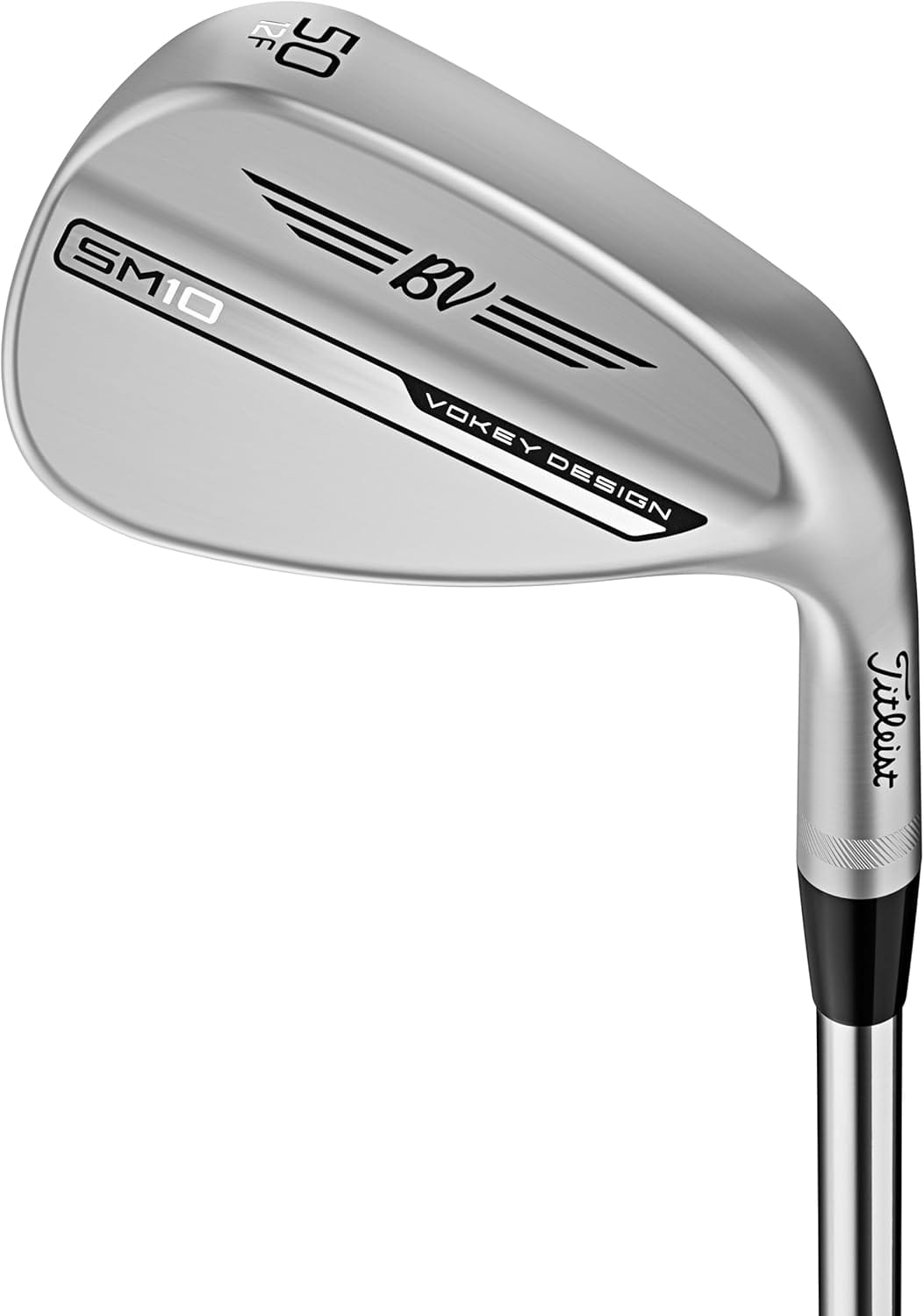
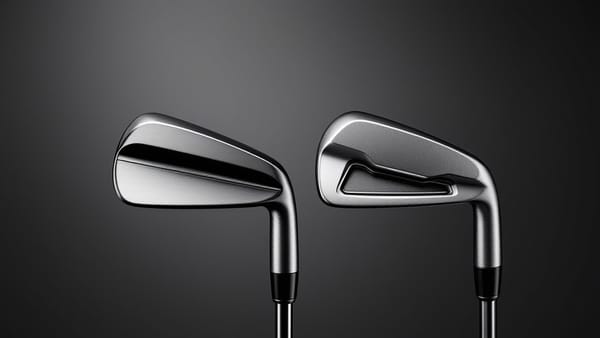
Titleist Vokey SM10 Wedge: 50° / 08° / F Grind
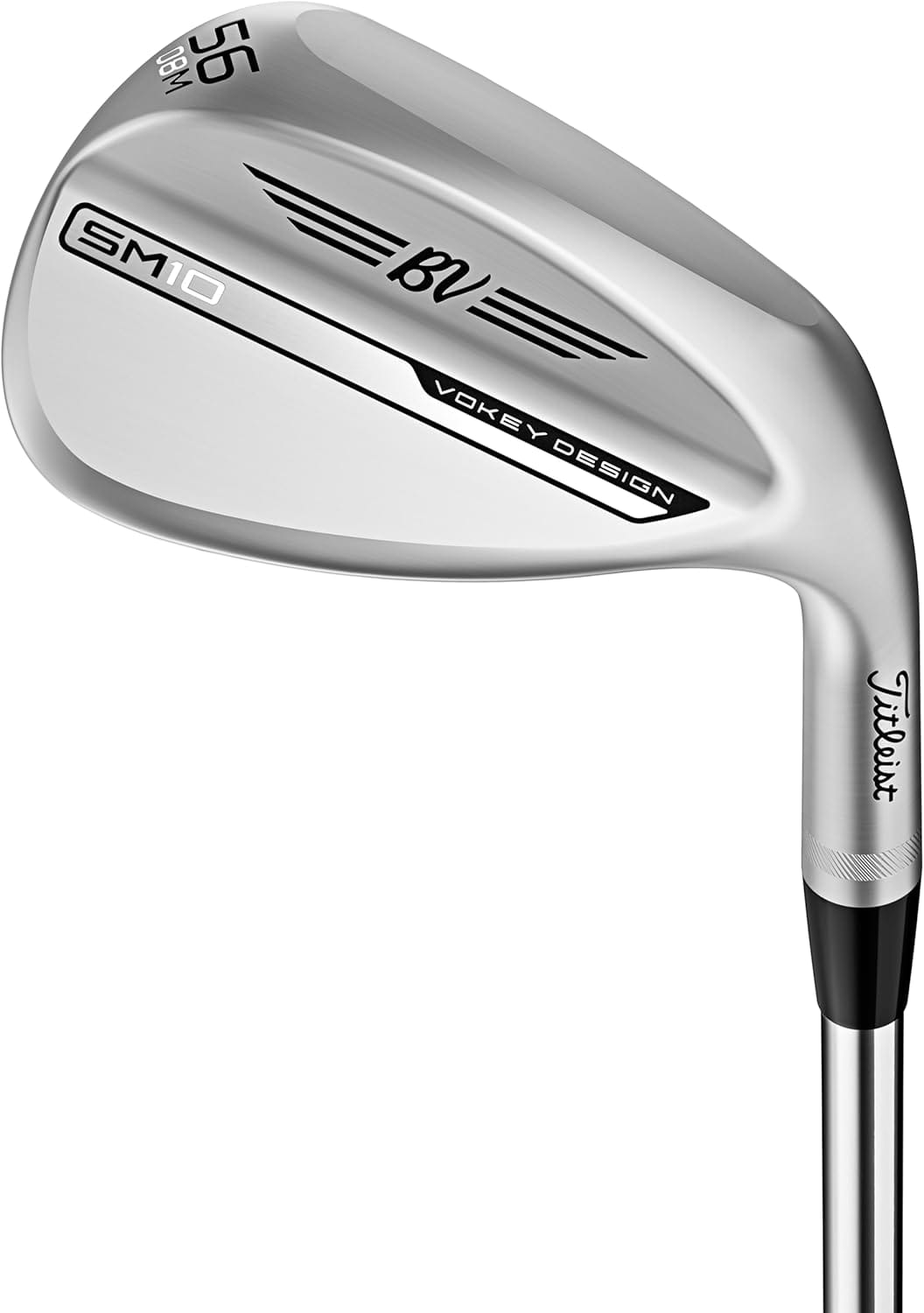
Titleist Vokey SM10 Wedge: 60° / 08° / M Grind
How to map your own distances before buying
Before any of this matters, you need your numbers. Here's the 20-minute version.
- Go to the range with each of your wedges and a pile of balls.
- Hit five full swings with each. Don't hit ten and pick the best, that's not your real distance.
- Record the average carry, not the longest. A launch monitor makes this trivial; eyeballing yardage markers is good enough for a first pass.
- Calculate the gap between each club's average. If any gap is over 15 yards (14m), that's where you need a wedge.
- If the gap between PW and SW is over 25 yards (23m), a gap wedge is your top priority.
A launch monitor removes the guesswork, and even an entry-level unit gives you carry numbers within a few yards. The same logic applies to a fitting session: if you can book a custom club fitting at sensible cost, the fitter will run this exercise on a monitor in 30 minutes and save you a year of guessing.
This single hour of work, range session plus a notebook, is the fastest scoring upgrade most golfers can make. It's also the one most people skip. If you're trying to shave shots off your handicap fast, close gapping is one of the most undervalued tools you have.
Frequently Asked Questions
What loft is a gap wedge?
A gap wedge is 48 to 52 degrees of loft, with 50 to 52 the most common modern range. The exact number depends on the loft of your pitching wedge: aim for 4 to 6 degrees of separation between the two. If your PW is 44, a 50 is right; if your PW is 46, a 52 keeps the spacing even.
How far should I hit my sand wedge?
For a 15-handicap, Shot Scope data puts the average carry at 84 yards (77m). Scratch players average 105 yards (96m), 25-handicaps around 80 yards (73m). Your number matters more than the average. Hit five full swings on a launch monitor and use the mean carry, not your best one.
Should a mid-handicapper carry a lob wedge?
Most likely not. Shot Scope data shows almost no scoring difference between 15-handicaps using a 60-degree versus other wedges. Parker McLachlin's rule is to skip the lob unless you're driving 240 yards (219m) or more and have put serious practice time into the shot. Most mid-handicappers gain more from keeping a hybrid than from adding a lob wedge.
What is the difference between a gap wedge and an approach wedge?
Nothing structural. They're the same club. "Approach wedge" is what some manufacturers (Callaway, Mizuno, Ping) call their gap wedge when it's matched to a specific iron set. The loft and use case are the same: 50 to 52 degrees, sitting between the PW and SW.
When should I open my sand wedge instead of using a lob wedge?
Most of the time. A 56-degree SW with the face opened to about 60 to 62 degrees of effective loft will produce a near-identical flop shot to a lob, with more bounce and a wider sole, which means more forgiveness on tight lies. Unless you're a low single-digit with hands you trust, the open-faced SW is the safer flop tool.
How often should I replace my wedges?
Every 60 to 80 rounds for the SW and LW, every 100 to 120 for the gap wedge. Wedge grooves wear faster than any other club because of the sand contact and the steeper angle of attack. Worn grooves lose spin, which means less stopping power on greens. I've covered the signs your clubs are due for a swap elsewhere if you want the longer answer.
The verdict
If you're inside the 10 to 25 handicap band, three wedges is the bag. Pitching, gap, sand. The gap wedge is the highest-value purchase, full stop, because it removes a 30-plus yard hole in your scoring distances and replaces it with a stock club. The lob wedge waits until your driver carry, your practice volume, and your short-game confidence all line up. Map your distances on a range session before buying anything: the gap that's costing you shots is almost never the one you think it is.
Once you know your setup, our full wedge buying guide narrows the list to specific models by loft and bounce.
Some links in this article are affiliate links. If you buy through them, I earn a small commission at no extra cost to you. This never influences what I cover or recommend. I link to gear I'd buy myself.







The golf newsletter that cuts the hype
Data-backed reviews and advice that works. No brand spin.
Recommended products