Wedge Bounce Explained: High vs Low and Which to Choose
Wedge bounce explained: what the angle does, when high or low works best, the right choice for mid-handicappers, and how to self-fit at home.
Most golfers pick a wedge based on what their pro shop happens to stock, then wonder why their short game feels patchy from one course to the next. The number stamped on the hosel matters more than people give credit for, and far less than the marketing would have you believe. Both things are true at once. Plugged In Golf ran a Trackman test with 15 amateurs and only two picked the model that performed best for their own action. That's a 13% hit rate on something every weekend player thinks they understand.
TL;DR
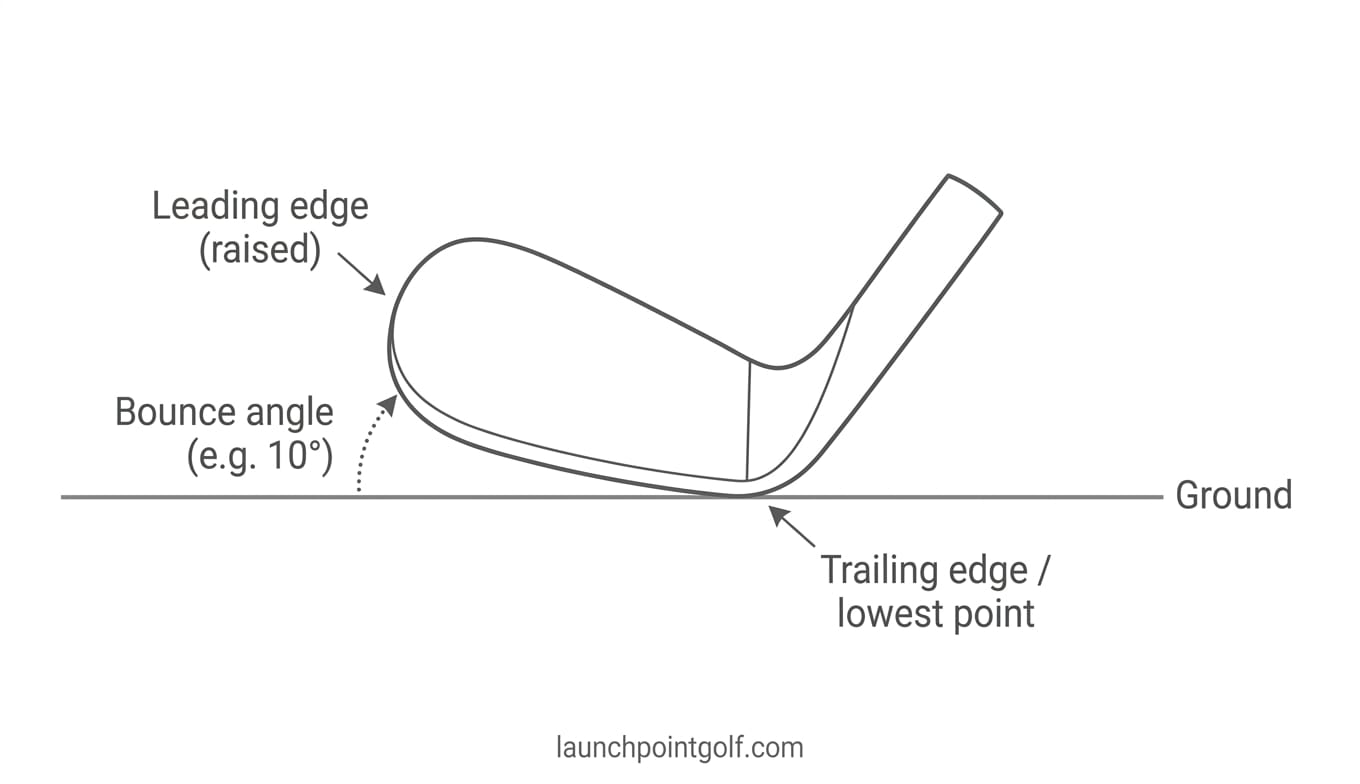
- 1Bounce is the angle between the wedge's leading edge and the lowest point of the sole. Higher angle equals more forgiveness and less digging.
- 2Low bounce (4 to 8 degrees): firm lies, shallow swing, links and Australian courses.
- 3High bounce (10 to 14 degrees): soft turf, steep swing, fluffy sand.
- 4Mid bounce (8 to 10 degrees): most mid-handicappers, most of the time.
- 5Grind matters as much as the number. It changes how the sole behaves when you open the face.
- 6Plugged In Golf Trackman test: most golfers play too little bounce and cannot self-identify the right one without data.
What wedge bounce is
The geometry is straightforward. Hold a wedge vertical with the clubface square. Look at the gap between the front of its base and the ground. That gap, measured in degrees, is what the spec describes. The rear of the base sits flush on turf. The front sits raised. The figure stamped after the loft (52/08, 56/12, 60/04) tells you that number.
This physical effect is what gives the design its name. When a club enters the dirt, its rear hits first, kicks upward, and stops the front from burying. Bob Vokey, whose surname appears on more tour wedges than any other designer's, puts it in three words: "Bounce is your friend." Too little, and the leading edge becomes a knife waiting to dig. Too much, on a tight baked lie, skips off ground and sends a skulled shot screaming across the green.
Static measurements tell part of this story. How a base behaves once you swing, tells you the rest. Open the clubface by 10 degrees for a flop and you add about 10 degrees of working angle, according to Golf Monthly's guide by Will Harvey. So a 56/10 head with its face cracked wide open behaves more like a 56/20 in terms of how it interacts with grass. Vokey's own engineering explainer backs this up. If you're a player who opens up on 30% of short-game shots, you're already adding forgiveness without knowing it. Worth holding in mind when a fitter pushes you toward a bigger static figure.
High versus low: when each setup works
Two variables decide which side of the spectrum you want: how steep your swing is, and what shot you're trying to hit.
Attack angle
Trackman's amateur dataset puts the average 14.5-handicap pitching wedge attack angle at about negative 3.9 degrees. Steeper than that, the leading edge is coming down hard and digging is the failure mode. Shallower than that, the sole is glancing across the surface and a high bounce can skip the club off the ground. The conventional rule is: steep swing equals high number, shallow swing equals low. It's a fine starting point.
The Plugged In Golf data complicates that rule. Matt Saternus ran his five-golfer Trackman test in January 2020 and found no clean correlation between attack angle and best-performing sole. One of the steeper swingers in his group preferred 8 degrees. One of the shallower hitters did better with 12. The rule of thumb is a hypothesis, not a verdict. I haven't worked out why those individual cases diverged so cleanly from the textbook, and Saternus didn't either. It's a reminder that the only data that matters in the end is yours.
Shot type
A 14-degree sand wedge that scoops out of fluffy bunker sand like a dream is the same wedge that thuds across a tight, dry chip lie and pops it 30 feet (9m) past the cup. Different shots ask different things of the sole. Most mid-handicappers carry one 56-degree and one 60-degree wedge. Build a setup where one is a higher number for full swings and bunkers, and the other is a lower number for finesse work around the green. Or pick a versatile grind in the middle and learn to manipulate it. Either approach works. Carrying two wedges with the same setup and expecting both to handle every situation is the move that doesn't.
Turf and course conditions
Where you play matters more than most golfers admit. UK parkland in March, with damp, soft ground and cushy lies, asks for a higher number. Anywhere from 10 to 14 degrees is the standard range. The wedge needs to skid through the turf rather than spear it.
Firm courses in summer-baked Australia or the desert US sit at the other extreme. The lies are tight, the sand in the bunkers is often firmer and shallower, and a 14-degree sand wedge is the wrong tool. Drop to 6 to 10 degrees and let the leading edge get under the ball. Links golf is the same story with a narrower sole on top. Vokey's F Grind and Cleveland's Low+ are built for those conditions: tight lies, firm sand, players who are sweeping rather than chopping.
Mid bounce in the 8 to 10 range is where the flexibility lives. It's a fair compromise across most courses you'll see in a season, and the effective angle reminder applies again. Open the face on a soft lie with a 10-degree wedge and you're playing high-bounce behavior without changing clubs. That's a feature of the design, not a workaround.
What the main wedge models offer (2025 to 2026)
The big four have settled into similar bounce ranges across their lineups. Here's what's available in 56-degree, the loft most golfers fit first.
| Model | Grind | Bounce | Best for |
|---|---|---|---|
| Titleist Vokey SM10 56° S | S Grind | 10° | Versatile, all conditions. Recommended starting point. |
| Titleist Vokey SM10 56° D | D Grind | 12° | Steep swing, soft turf, bunkers |
| Cleveland RTX6 ZipCore 56° Mid | Mid Grind | 10° | All-around. Cleveland's versatile option. |
| Cleveland RTX6 ZipCore 56° Low+ | Low+ Grind | 8° | Firm conditions, shallow swing |
| Ping Glide 4.0 56° S | S Grind | 12° | Stability, forgiveness |
| Ping Glide 4.0 56° E | E Grind | 10° | Bunker specialist |
| Callaway JAWS Raw 56° S | S Grind | 10° | Mid-bounce all-rounder |
A note on Titleist: the SM11 dropped in February 2026 and is the current model. SM10 specs are listed because the documentation has more reach and the wedges are still in stock at most retailers. SM11 grind options mirror SM10, so the bounce numbers translate one-for-one if you're shopping the new lineup.
The S Grind from Vokey and the Mid Grind from Cleveland are the starting points for most mid-handicappers. They're built as the versatile, all-conditions option, and that's the right starting place when you don't have launch monitor data on your own swing.
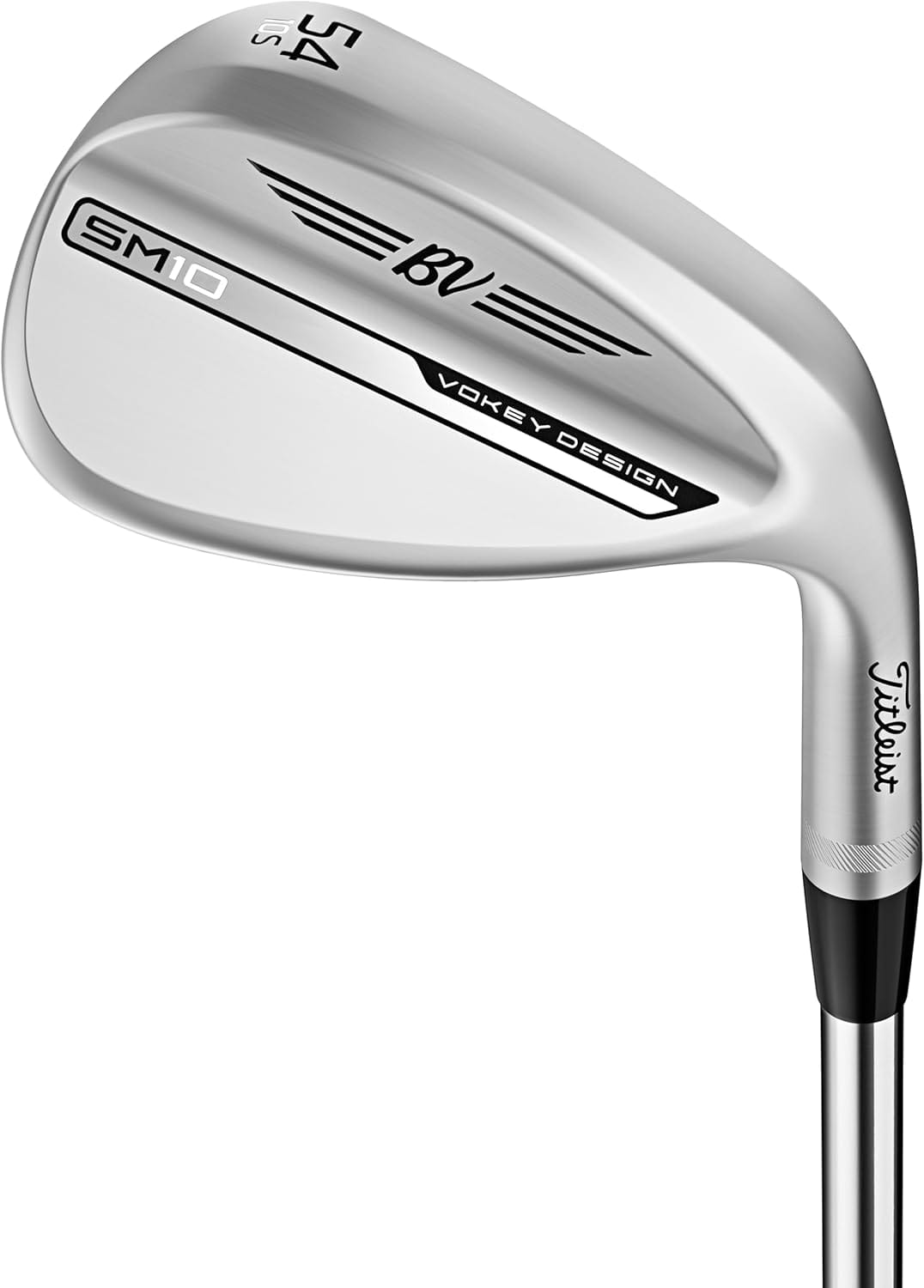
Titleist Vokey SM10 Wedge: 56° / 10° / S Grind
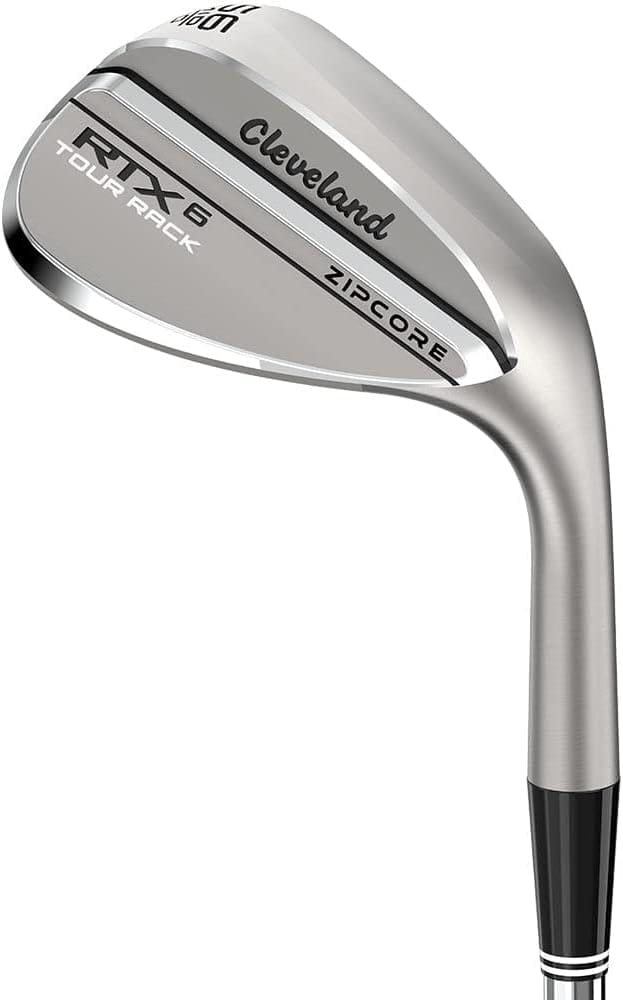
Cleveland RTX6 ZipCore Wedge: 56° / 10° Mid Grind
How to work out which bounce you need
Three steps, in order.
1. The divot depth test. Find a grass range and hit 10 stock pitching-wedge shots with a normal swing. Look at the divots, not the shots. Deep, beefy divots that take a chunk of turf out: your swing is steep and you should lean toward the higher numbers, 12 degrees and up on a sand wedge. Shallow brushes that scuff the grass without tearing it: you're neutral, and the 10-degree mid range fits. No divot at all, just a clean strike off the surface: you're a sweeper, and 6 to 8 degrees is your zone.
2. Know your home course. Soft UK parkland and damp coastal links in winter ask for different setups than firm Australian summer fairways or US desert tracks. Match the gear to where 70% of your rounds happen, not where you wish you played.
3. Confirm with a launch monitor. This is the step most golfers skip and shouldn't. Measuring your actual attack angle on a launch monitor takes the guesswork out, and a session at a club fitter is faster and cheaper than buying the wrong wedge twice. A launch monitor will tell you your attack angle in five swings. A proper fitting doesn't have to cost a fortune if you know where to look.
The reason this third step matters: Plugged In Golf's data showed only 2 of 15 golfers picked their best-performing sole when given the freedom to self-diagnose from theory alone. Theory is a starting point. Numbers from your own swing are the answer. If you're a feel player who finds launch-monitor sessions cold, fair enough, and adjust my take to fit. I'm too data-focused for some of you on this one.
The common mistakes
Five patterns that show up over and over.
- Too little bounce on soft turf. The leading edge digs, the swing decelerates through impact, and the result is fat shots, lost spin, and a wedge that feels like it's working against you.
- Too much bounce on firm lies. The sole skips off the surface, the leading edge catches the equator of the ball, and you get the dreaded skull across the green.
- One wedge for every shot type. A high-bounce SW that's a bunker monster is not the right tool for a tight chip off hard pan two paces off the green. Build a setup, don't just buy a wedge.
- Ignoring grind. Two wedges can share the same bounce number and play in different ways once you open the face. Heel and toe relief change everything. The number is the start of the conversation, not the end.
- Worn grooves. Spin performance drops off a cliff once the grooves round over, and a worn sole interacts with turf differently than a fresh one. Knowing when to retire a wedge is part of the equation that nobody talks about until it's too late.
Frequently Asked Questions
What bounce should a mid-handicapper use on a sand wedge?
Start with 10 degrees on a 56-degree sand wedge. That's the Vokey S Grind, the Cleveland Mid Grind, and the Callaway JAWS S Grind territory. It's the most versatile setup across course conditions and swing types, and it gives you room to open the face and add effective bounce on flop shots without changing clubs. Move up to 12 if your home course is soft and your swing is steep. Move down to 8 if you play firm courses and tend to sweep.
Is high or low bounce better for links golf?
Low. Links turf is firm, the sand in pot bunkers is often shallow and tight, and the lies are unforgiving for a fat sole. Vokey's F Grind, Cleveland's Low+, and any 6-to-8-degree wedge with a narrow sole are built for those conditions. A 14-degree sand wedge on a links course is the wrong club, and you'll feel it on every chip from a tight lie.
Can I use a low-bounce wedge in a bunker?
Yes, but the technique has to match the gear. Low-bounce wedges work in firm sand where you want the leading edge to get under the ball, and they're the right call in shallow, packed bunkers like those on links courses. In soft, fluffy sand, a low-bounce sole digs and the ball stays in the bunker. If the only sand wedge you own is low bounce and your home course has fluffy bunkers, open the face hard at address. That adds effective bounce and gets you closer to the right behavior.
What is the difference between wedge bounce and grind?
Bounce is one number: the angle between the leading edge and the lowest point of the sole. Grind is the shape of the sole around that bounce: heel relief, toe relief, trailing edge shaping, sole width. Two wedges with identical bounce numbers can play in opposite ways because one has a deep-ground heel that lets you open the face square, and the other has a full sole that scoops through grass but skips off tight lies. The number tells you the headline. The grind tells you how the wedge behaves in the actual shots you hit.
Does wedge bounce affect spin?
Yes, in a roundabout way. Spin is generated by the groove-and-cover interaction at impact. Bounce affects how square the face meets the ball, which affects spin in turn. A wedge with too little bounce on soft turf catches grass between the face and the ball, and spin drops. A wedge with too much bounce on a tight lie deflects up and contacts the ball higher on the face, and spin drops there too. The spin number you see on a launch monitor is the result of the whole system working, and getting the sole right is the foundation.
The honest answer on wedge bounce is that the right number for you is the one your divots and your launch monitor agree on, and most golfers haven't bothered to look at either. Get the divot test done this week. Book a fitting before you replace your next wedge. The cost of getting it wrong is a year of patchy short-game scoring on a club you paid $189 for. A lot of the easy strokes live inside 100 yards (91m), and the wedge in your hand is the tool that's supposed to take them.
Some links in this article are affiliate links. If you buy through them, I earn a small commission at no extra cost to you. This never influences what I cover or recommend. I link to gear I'd buy myself.







The golf newsletter that cuts the hype
Data-backed reviews and advice that works. No brand spin.
Recommended products