







how-to
How to Know Your Real Iron Distances (No Launch Monitor)
Most golfers don't actually know their iron distances. They know their best one. Ask a 15
5 steps to a custom golf fitting cheap, including a $175 spec-sheet trick that cuts iron costs by two-thirds without losing a single yard.
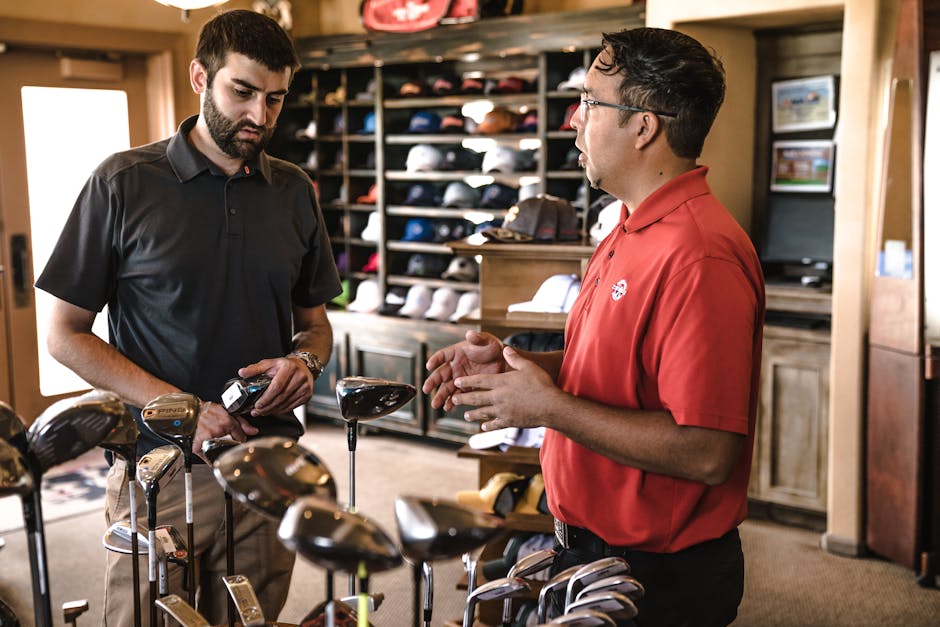
The golf industry has trained us to think fitting and buying are one transaction. They're not. A fitter measures your swing and writes a spec sheet. A retailer sells you clubs. The bundle exists because it's profitable, not because it's necessary. Once you separate the two, a custom golf fitting cheap enough to fit any budget becomes the default. The data on your swing, lie angle, shaft load, and launch profile costs almost nothing to access if you know where to look. What costs money is the build, and the build is where you get to make smart choices: new versus used, premium shaft versus stock, fitter's pro shop versus the open market. This guide walks through the five steps I'd take if I were starting today.
Custom club fitting is the process of measuring your swing inputs (club head speed, attack angle, face-to-path, dynamic loft) and your physical inputs (height, wrist-to-floor, hand size) to produce a written list of club specifications matched to your action. A spec sheet (or build sheet) is the document the fitter hands you at the end. It lists club head model, loft, lie angle, shaft model, shaft flex, shaft weight, swing weight, length, and grip size for every club in the bag.
That sheet is the product. The clubs are downstream of it.
Here's the tier ladder for what you'll pay and what you get:
| Tier | Example | Standalone cost (US) | What you get | Best for |
|---|---|---|---|---|
| Free | PGA Tour Superstore Fit & Go | Free | Driver fitting + same-day build, one-brand | Buying from them anyway |
| Budget | Golf Galaxy, Dick's | $79 to $99 driver / $99 irons | TrackMan data, brand-specific | Casual mid-handicapper |
| Mid | Club Champion, True Spec | $175 driver or irons | Brand-agnostic, expert fitter, spec sheet | Spec-sheet strategy |
| Premium | Club Champion full bag, True Spec full bag | $375 to $475 | Full bag optimization | Serious upgrader |
The case for spending the $175 is straightforward. PING's nFlight system, which has logged hundreds of thousands of fittings since 2003, found in February 2023 (data published by Erik Henrikson, PING Director of Engineering, via MyGolfSpy Labs) that the average driver fitting produces an 11-yard distance gain and a 25% reduction in shot dispersion. That's a population-level result across all swing speeds and skill levels, not marketing copy.
Golf Datatech's 2023 consumer survey (cited in Golf Digest, March 2024) reported that 94% of fitted golfers rated the experience "at least satisfied," with the largest satisfaction driver being dispersion improvement, not distance. Fitting works. The question is how to pay for the fitting without paying full retail for the clubs that follow.
Before you book, run a free self-audit. It costs a tape measure and a range session.
Wrist-to-floor measurement. Stand straight, arms relaxed, shoes off. Measure from the crease of your wrist to the floor. A 35-inch (89cm) reading at 6 feet (1.83m) of height puts you in the standard length range for most OEM iron sets. Above 37 inches (94cm), you're looking at half-inch over and a 1-degree upright lie. Below 33 inches (84cm), you're shopping half-inch under. A starting point, not the answer.
Club head speed. A session at TopGolf or any Toptracer-equipped range gives you a free club-speed reading. Most mid-handicappers sit between 88 and 100 mph (142 and 161km/h) with a driver. Below 90 mph (145km/h), a regular flex may be too stiff. Above 105 mph (169km/h), you should be looking at stiff or X-stiff with a heavier shaft.
Shot shape pattern. Persistent left-to-right misses with a square stance often point to an open face at impact, which can mean the wrong shaft profile loading too late. A low 7-iron flight suggests a shaft too heavy or too stiff, or an iron with too little loft for your speed. None of this diagnoses your fitting on its own. It tells the fitter where to start.
DIY with a consumer launch monitor. If you own a Garmin Approach R10 or a Rapsodo MLM2Pro, you can pull club head speed, smash factor, and carry distances across the bag. That gives you a gap analysis, which is one of the most useful inputs to bring to a fitting: "I carry my 7-iron 165 yards (151m), my 6-iron 167 (153m), my 5-iron 170 (155m)" tells the fitter your gapping is broken before they swing a club.
Two caveats. Consumer launch monitors cannot measure lie angle: that requires sole tape on a lie board and a real impact test. And spin numbers are calculated, not radar-measured. Use them for relative gapping, not absolute prescription.
Buy: Garmin Approach R10
Before you spend a dollar on a fitting, exhaust the free tier.
PGA Tour Superstore Fit & Go. Walk-in driver fittings, no appointment, no charge. They use Foresight or TrackMan units in-store and will build the club same-day if you buy. Catch: you're limited to whatever brands they stock. Worth doing if you were going to buy from PGA Tour Superstore anyway.
Golf Galaxy and Dick's Sporting Goods. Free fitting with purchase, $79 to $99 standalone. Good enough for a budget driver or single-iron decision. Don't expect a written spec sheet you can take elsewhere.
OEM demo days. Callaway, TaylorMade, PING, and Titleist run free demo events at courses and ranges through the spring and summer. Factory-trained fitters, outdoor ball flight, brand-locked recommendation. Search PGA.com's demo day calendar or check the manufacturers' sites directly. If you've already narrowed to one OEM, this is the cleanest free fitting you can get.
American Golf (UK). Most stores have TrackMan-equipped fitting bays. Pricing is bundled with the build in most cases, presented as low-cost or free with purchase, with competent shaft profiling within their stock range. UK readers can treat this as the rough equivalent of PGA Tour Superstore Fit & Go.
What the free tier gives you: real launch data, real fitter input, a defensible recommendation within one brand's range. What it misses: cross-brand comparison, premium aftermarket shafts, a portable spec sheet. If your priority is "buy a driver this weekend without overspending," the free tier is enough.
This is the move that turns custom fitting from a luxury into a value play.
Club Champion and True Spec Golf both run brand-agnostic fitting studios with shaft libraries from every major OEM and aftermarket builder (Fujikura, Mitsubishi, Project X, KBS, Aerotech, UST Mamiya). A standalone driver or iron fitting at either runs $175 (approx. £140/AU$270). You walk out with a written spec sheet listing head model, shaft model, shaft flex and weight, length, lie, swing weight, and grip.
That spec sheet is yours. Ask for it in writing before you sit down. Non-negotiable.
Once you have it, you have options:
The math: a Club Champion iron fitting costs $175. A used Callaway Apex set in your spec'd shaft on GlobalGolf runs around $400. Total: $575. The same fitting plus a new build through Club Champion's pro shop with the recommended premium shaft at retail: $175 fitting plus $1,400 build, total $1,575. Same data, same playable specs, one-third the cost. The fitter still gets paid for the work that mattered.
A note on integrity: most independent fitters know this strategy exists and don't object as long as you pay for the session. The ones who push back hard are the ones whose business model depends on build margin, not fitting expertise. Useful filter.
If you're paying $175 a session, fit in priority order.
Irons first. The PING fitting database shows mid-handicappers are most often in the wrong iron model and the wrong lie angle, and the two errors compound. A 2-degree upright or flat lie change shifts impact on a 7-iron by enough to move a stock shot 3 to 6 yards (2.7 to 5.5m) sideways. Across a round, that's the difference between hitting the green and missing short-side. Irons are also the hardest to self-assess because lie angle requires the impact-tape test. If you only do one fitting in your life, do this one. While rebuilding the iron set, look at how the rest of your game is shaped: my piece on how to lower your golf handicap fast covers the practice patterns that compound with new equipment.
Driver second. Most mid-handicappers carry too little loft. A golfer at 92 mph (148km/h) club speed playing a 9-degree driver because that's what the marketing showed is leaving 8 to 12 yards (7.3 to 11m) and a chunk of dispersion on the table. Modern drivers at 10.5 to 12 degrees with the right shaft profile launch higher with less spin and more carry. Shaft is the second variable, often more impactful than head model at this level. If you're fixing a slice at the same time, my slice-fix guide is a useful companion: a fitter can hand you the right shaft, but a wrong path is still a wrong path.
Wedges and putter, separately, later. Wedge fitting matters, but only after your short game has stabilized. A wedge built around a changing swing is wasted money. Putter fitting is its own discipline (length, lie, loft, head shape, grip). Don't bundle it.
If you've been playing the same set for years, my piece on when to replace your golf clubs walks through how to tell whether the issue is the gear or the swing.
Once the new clubs land, take them to a launch monitor. Most golfers skip this step. It's the cheapest insurance you can buy.
Smash factor. With irons, you should see 1.30 to 1.40 on a 7-iron. With a driver, 1.45 to 1.50. If smash factor drops with the new build, something in the swing weight or shaft loading is off and the fitter needs to know.
Shot dispersion. Hit 10 balls with a 7-iron. Measure left-to-right and short-to-long spread. The new build should produce a tighter cluster than the old one. If it doesn't, ask for a follow-up. Reputable fitters include a 30-day adjustment window.
Carry distances. Gaps should be even (10 to 15 yards / 9 to 14m between irons). If your new 6-iron carries the same as your 7-iron, the loft and lie weren't right.
If the data is worse, check whether the fitting used a different ball or surface than your verification session. Range mats and premium balls flatter every metric. A range-mat 7-iron carry of 168 yards (154m) often becomes 158 yards (144m) on grass with a tour ball. Match conditions before you panic.
If you're new to the game and not sure whether to invest in fitting yet, my golf equipment for beginners piece is a better starting point. Get the basics dialed in first, then come back here.
Yes. PING's nFlight data (Feb 2023) shows mid-handicappers gain the most from fitting because they're often in the wrong iron lie angle and wrong shaft flex at the same time. The average driver fitting produces an 11-yard distance gain and 25% dispersion reduction. A 15-handicapper has more correctable error than a 5-handicapper, so the upside is bigger.
Yes, within a single brand. PGA Tour Superstore's Fit & Go is free walk-in. Golf Galaxy and Dick's offer free fittings with purchase. OEM demo days from Callaway, TaylorMade, PING, and Titleist are free and outdoors. The trade-off is brand-locked recommendations and no portable spec sheet. For cross-brand comparison and a written sheet you can take elsewhere, you'll need a paid session at Club Champion or True Spec ($175 / approx. £140/AU$270).
Yes. A $175 spec-sheet fitting at Club Champion or True Spec plus a used set built to spec on GlobalGolf or 2nd Swing Golf runs around $575 total. The same fitting plus a new build through the fitter's pro shop runs $1,500-plus. You're paying for the data and the fitter's expertise either way. The build margin is what changes.
Club head speed (sets shaft flex range), ball speed and smash factor (flag center-face contact), and carry distances across the bag (gap analysis). It cannot measure lie angle, which requires a physical impact test on a lie board, and its spin numbers are calculated, not radar-measured. Use it to walk into a fitting prepared, not to replace the fitting.
Every 4 to 6 years, or sooner if your club head speed shifts by more than 5 mph (8km/h), your handicap drops by 5 strokes, or you've made a significant swing change with a teaching pro. If your speed and pattern are stable, the spec sheet you got at age 38 still applies at age 42.
Irons. PING data shows mid-handicappers are most often in the wrong iron model and wrong lie angle at the same time, and the two errors compound. Iron fitting affects every approach shot, and lie angle is impossible to self-assess. Driver fitting produces bigger headline numbers (11-yard gain on average) but you hit far fewer drivers per round. If you can only fit one set, fit the irons.
The trick is decoupling the fitting from the build. Pay for the data once, own the spec sheet, then shop the build like any other purchase: used market, custom order at standard pricing, manufacturer direct. A $175 session and a $400 used iron set built to your spec will outplay a $1,500 off-the-shelf set every round. Start with the irons. Get the lie angle and shaft right. Verify on a launch monitor.
Some links in this article are affiliate links. If you buy through them, I earn a small commission at no extra cost to you. This never influences what I cover or recommend. I link to gear I'd buy myself.
Data-backed reviews and advice that works. No brand spin.