Golf Equipment for Beginners: What to Buy First
Beginner golf equipment guide: the five things to buy first, including sets, balls, gloves, shoes. 3.3M new golfers start every year: here's the smart kit.
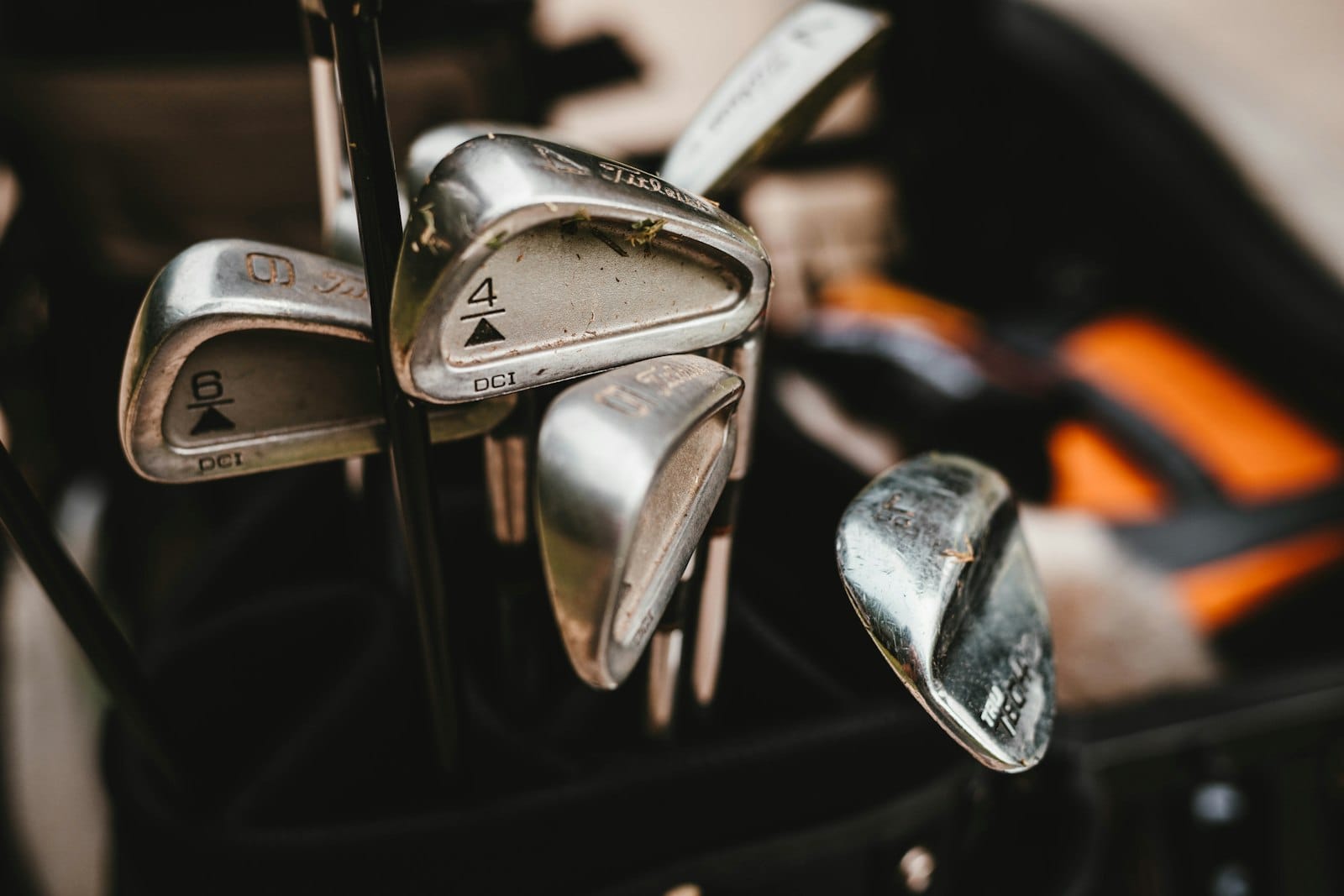
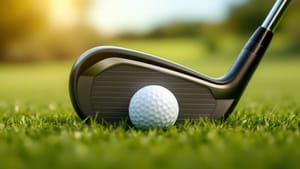
Photo by Will Porada on Unsplash
You need five pieces of golf equipment to start playing: a set of clubs, a bag, a sleeve of balls, a glove, and a pair of shoes. Everything else can wait until you've actually played a round.
The National Golf Foundation's 2025 participation report puts the number of new US golfers at around 3.3 million a year. Most of them spend the first few months overbuying gear they don't need, then quitting when the game gets hard. I'd rather you spend less, play more, and figure out what you actually want once you've broken 100. That's what this guide is for: the short list, the right order, and the honest reasons behind each pick.
I'll point you to specific products with current pricing, but the bigger lesson is what to skip. A rangefinder isn't going to fix a slice. Premium balls don't help if you can't keep them in play. Custom-fit irons are wasted on a swing that's still changing every week. Buy the basics, get on the course, and let your game tell you what comes next.
The five-item starter list
- Clubs. A complete set with bag included. Callaway Strata 12-piece at around $499.99 is the sensible default.
- Bag. A stand bag, almost always included with the set above.
- Balls. Low compression. Callaway Supersoft at $25 to $27 a dozen, or Srixon Soft Feel at about $25.97.
- Glove. One glove, lead hand. FootJoy WeatherSof 2-pack at around $22.99 covers you for months.
- Shoes. Spikeless to start. Nike Roshe G at $80 to $115, or a budget spiked option for wet courses.
Total: Around $560 budget, $640 mid, $885 starter premium. All in.
1. Clubs: Buy a Complete Set, Not Individual Clubs
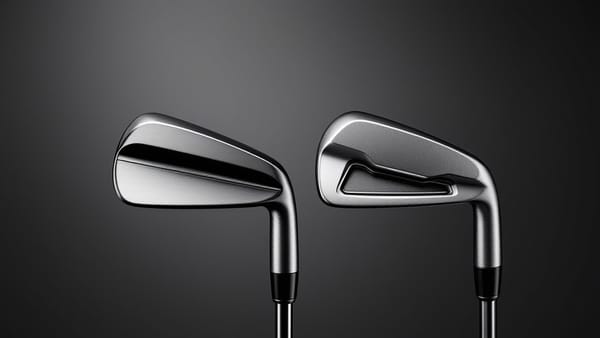
A complete set is the right answer for almost every new golfer. You get matched gapping, a bag that fits the clubs, and someone else has already made the loft and shaft decisions for you. Buying clubs one at a time means picking a 7-iron without knowing what your 6-iron looks like, and that's a problem you don't have the swing data to solve yet.
The USGA Rules of Golf, Rule 4.1b, caps you at 14 clubs in the bag. Beginners don't need 14. Most starter sets ship with nine to twelve clubs, and that's plenty. Golf Monthly's January 2026 buyer's guide put it bluntly: "Starting with fewer clubs can actually be beneficial." Fewer clubs means fewer decisions on the course and more reps per club at the range.
One physics point worth knowing. Long irons (the 2-iron, 3-iron, 4-iron) need a fast ball speed to launch the ball high enough to land soft. Most beginners swing the driver in the 75 to 90 mph (121 to 145km/h) range, which a 3-iron just turns into a low, ugly runner. Hybrids fix this. Hybrids are clubs with a larger clubhead and lower center of gravity, built to get the ball airborne at slower swing speeds than long irons require. Every modern starter set replaces the long irons with hybrids by default, and that's one of the reasons buying off-the-shelf is the smart play right now.
A note on when to replace these. A starter set has a working life of two to three years for most beginners. When that day comes, the guide on knowing when to replace your golf clubs walks through the signs.
2. Bag: Stand Bag, Usually Included
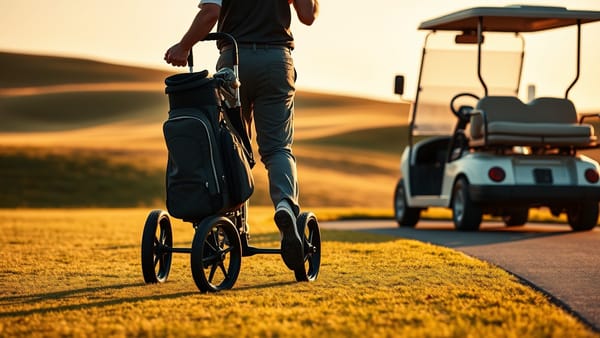
Stand bag, every time. The little legs that pop out when you set the bag down let you grab a club without bending all the way to the grass, and the dual shoulder strap distributes the weight when you walk. Cart bags are heavier (7 to 10 lbs / 3.2 to 4.5kg, against 3 to 6 lbs / 1.4 to 2.7kg for stand bags), built to ride on a cart full-time, and they're the wrong choice for a beginner who'll spend most of their first season on a public course where walking is normal.
Both the Callaway Strata 12-piece and the Wilson SGI ship with a stand bag included. If you're buying clubs from a friend or building a set piecemeal off Facebook Marketplace, then a separate bag makes sense. Look for a 5-way to 7-way top divider, four or more pockets, and a magnetic ball pocket if possible. The IZZO Ultra Lite at around $99.99 is a sensible standalone if you need one.
For 95% of beginners, this whole section is a non-issue. Buy the set, the bag comes with it.
3. Golf Balls: Low Compression. That's It.
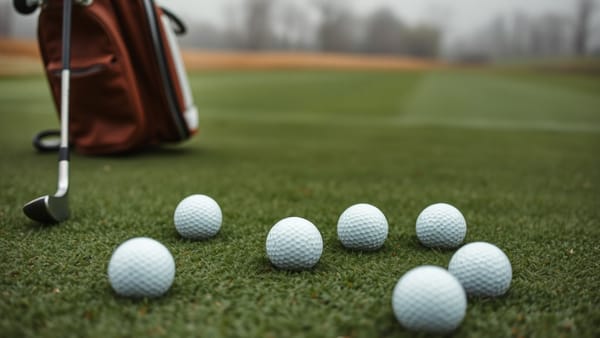
Compression is the one ball spec that matters for a beginner. Compression measures how much the ball deforms when you hit it. Slower swings need a lower compression ball to compress fully, transfer energy, and fly. A high-compression ball off a slow swing feels like hitting a rock and goes nowhere.
| Driver swing speed | Compression range | Recommended ball |
|---|---|---|
| Under 85 mph (137km/h) | 30 to 70 | Callaway Supersoft, Srixon Soft Feel, Wilson Duo Soft |
| 85 to 100 mph (137 to 161km/h) | 70 to 90 | Bridgestone e6, Titleist Tour Soft |
| Over 100 mph (161km/h) | 90+ | Titleist Pro V1, TaylorMade TP5 |
Buy: TaylorMade TP5 · Bridgestone e6
Most beginners live in the under-85 bracket. So why do beginners keep buying tour balls? The marketing implies they're "better," but the only thing they're better at is responding to fast swings with high spin around the greens. If your swing isn't producing the ball speed to compress them, you're paying $55 a dozen to lose distance.
The other reason to skip premium balls: you're going to lose them. A new golfer commonly loses three to six balls per round in their first year. Three lost Pro V1s costs around $14. Three lost Supersofts costs around $7. Multiply that across a season and the difference funds your range balls.
4. Glove: One Glove, Lead Hand
Right-handed golfers wear a glove on the left hand. Left-handed golfers wear a glove on the right hand. The glove goes on the lead hand because that's the hand doing most of the gripping work and taking most of the friction during the swing. Without a glove, you'll get blisters in the first few rounds and your grip pressure will fluctuate as your hand sweats.
Sizing matters more than brand. A glove should fit like a second skin. Tight enough that the leather is taut across the back of your hand, with no loose material at the fingertips, but not so tight that you can't close your fist comfortably. If there's space at the end of the fingers, the glove is too big and it'll twist in your grip on the downswing.
Stick with synthetic for now. Cabretta leather gloves feel beautiful, last about half as long, and cost twice as much. They're a reward you give yourself once you're playing well enough to care about the marginal feedback advantage. Buy synthetic in pairs, rotate them between rounds so they dry out, and you'll get a full season from a two-pack.
5. Shoes: Spikeless First, Spiked Later
Most courses require golf shoes. A proper golf shoe gives you a stable base through the swing so you're not slipping when the lower body fires. Trainers won't cut it on wet grass, and they wear out fast on cart paths.
Does that gap matter on a typical beginner round? MyGolfSpy's May 2025 traction test put the latest spikeless models against full-spike alternatives across dry and wet conditions. The headline finding: in dry conditions, modern spikeless shoes match spiked traction inside the margin of error. In wet conditions, on slopes, or on courses with side-hill lies, spikes still win.
For most beginners playing summer rounds on flat-ish municipal courses, spikeless is the right call. They're more comfortable to walk in, they double as casual shoes off the course, and the traction is fine. If you're playing courses with hills, expect British weather, or play through autumn into winter, lean spiked.
Nike Roshe G (spikeless)
The original modern spikeless shoe. Lightweight, casual look, traction holds up on flat courses.
Adidas Tech Response 3 (spiked), around $70. Breaking Eighty's 2026 budget shoe roundup called this the best spiked shoe under $100. Replaceable cleats, waterproof upper. Ideal if your home course leans hilly or you play through shoulder season.
The Right Order to Buy
Don't try to buy everything at once. The smart order, by priority:
- Clubs and bag. This is your single biggest purchase and you can't play without them. Buy the set first.
- Balls and tees. A dozen balls and a pack of tees gets you on the course. Buy a second dozen after your first round, once you know the loss rate.
- Glove. Pick one up at the same time as the balls if you can.
- Shoes. You can play your first few rounds in trainers, especially in dry summer conditions, while you save for proper golf shoes.
- Everything else. Wait. See what your game asks for after a dozen rounds.
| Tier | Clubs | Bag | Balls | Glove | Shoes | Total |
|---|---|---|---|---|---|---|
| Budget | Wilson SGI ($449) | Included | Srixon Soft Feel ($26) | WeatherSof ($14) | Adidas Tech Response 3 ($70) | ~$560 |
| Mid | Callaway Strata 12pc ($499) | Included | Callaway Supersoft ($27) | WeatherSof ($15) | Nike Roshe G ($80 to $100) | ~$640 |
| Starter premium | Callaway Strata 16pc ($699) | Included | Callaway Supersoft ($27) | FootJoy StaSof ($29) | Adidas Tour360 or FootJoy spiked ($130 to $150) | ~$885 |
What Should a Beginner Skip in Year One?
- Rangefinder. Knowing the pin is 162 yards (148m) away does nothing for you when your shot dispersion is plus or minus 30 yards (27m) wide. At beginner level, "somewhere on the green" is the goal. Buy one in year three when your dispersion tightens up.
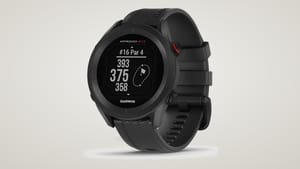
- GPS watch. Same logic as the rangefinder, plus a free app on your phone (18Birdies, Golfshot) gives you front-middle-back yardages for $0.
- Launch monitor. A launch monitor is a measurement tool. If your swing changes weekly, the data is noise. Build a repeatable swing first.
- Premium balls. Pro V1 compression is wrong for slower swings, and the cost-per-lost-ball math is brutal in year one.
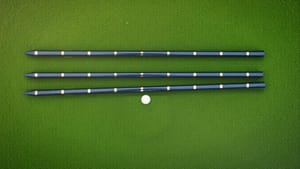
- Training aids beyond alignment sticks. A pair of alignment sticks at $15 is useful. Everything else is a distraction. A structured home practice routine beats any gadget.
- Custom fitting. Your swing is going to change so much in the first year that any fitting numbers will be obsolete in three months. Wait until you're breaking 100, then get fit for irons.
Quick picks
- Best complete set: Callaway Strata 12-piece
- Best budget set: Wilson Profile SGI
- Best beginner ball: Callaway Supersoft
- Best beginner glove: FootJoy WeatherSof
- Best beginner shoe: Nike Roshe G
Frequently Asked Questions
How many clubs does a beginner golfer need?
A beginner needs about nine to twelve clubs, well below the USGA Rule 4.1b limit of 14. A typical starter set ships with a driver, a fairway wood, one or two hybrids, irons from the 6 or 7 down to the pitching wedge, and a putter. That covers every shot you'll need to hit while you're learning. Adding a sand wedge in your second season is the most useful upgrade.
Do beginners need expensive golf balls?
No. Beginners should play low-compression balls in the 30 to 70 compression range, like the Callaway Supersoft or Srixon Soft Feel at around $25 to $27 a dozen. Tour balls like the Pro V1 are built for swing speeds over 100 mph (161km/h) and produce shorter, harder-feeling shots off slower beginner swings. You'll also lose three to six balls per round early on, which makes the cost-per-shot of premium balls hard to justify.
Should I buy a complete set or individual clubs as a beginner?
Buy a complete set. You get matched gapping, modern hybrids in place of long irons, and a bag included, all for $350 to $700. Building a set piecemeal means making loft and shaft decisions before you have the swing data to make them well, and it usually costs more. Once you've played for a year and your game has progressed, then it's worth replacing individual clubs as needed.
Is a rangefinder worth it for a beginner golfer?
No, not in your first year or two. A rangefinder gives you yardages accurate to within a yard, but a beginner's shot dispersion is around 30 yards (27m) wide on full-swing shots. At that scale, knowing the pin is 162 yards (148m) versus 158 yards (144m) makes no practical difference. Free GPS apps like 18Birdies give you front-middle-back yardages, which is all the precision your swing can use. Revisit rangefinders when your dispersion tightens, around the time you're breaking 90.
What's the difference between spiked and spikeless golf shoes for a beginner?
Spiked shoes have replaceable plastic cleats and grip best on wet grass, hills, and side-hill lies. Spikeless shoes have molded rubber lugs and look more like trainers. MyGolfSpy's May 2025 traction test found modern spikeless shoes match spiked traction in dry conditions but lose ground on wet or hilly courses. For most beginners on flat summer courses, spikeless is the more comfortable and versatile choice. Pick spiked if you play through autumn and winter or your home course has serious slope.
What does a complete beginner golf setup cost?
A full beginner setup costs around $560 at the budget tier, $640 at the mid tier, and around $885 at a starter-premium tier. The breakdown: a complete set with bag at $449 to $699, a dozen balls at $25 to $27, a glove pack at $15 to $29, and shoes at $70 to $150. That's everything you need to walk onto a course and play.
Play your first ten rounds with the cheapest setup that lets you on the course, and keep a note on your phone of the three things that frustrated you most each time. After ten rounds, that list is your shopping list. It's a better shortlist than anything I could write for you, because it's built from your swing, your courses, and the way you actually play.
Some links in this article are affiliate links. If you buy through them, I earn a small commission at no extra cost to you. This never influences what I cover or recommend. I link to gear I'd buy myself.




The golf newsletter that cuts the hype
Data-backed reviews and advice that works. No brand spin.
Recommended products