Swing Speed to Golf Ball Chart: Compression Match Guide
Match your swing speed to the right compression ball. A no-fluff chart with Trackman benchmarks and value picks for every bracket.

Photo by Mick Haupt on Unsplash
Match your swing speed to the right compression ball. A no-fluff chart with Trackman benchmarks and value picks for every bracket.
The Pro V1 sits at 87 compression. That's a mid-firm core, not a tour-only hard ball, and that figure puts it inside the fitting window for an average male amateur swinging the driver at 93.4 mph (150km/h). Plenty of golfers who skip the Pro V1 because they think they're "not fast enough" mis-fit themselves at the other end of the range, then blame their equipment.
A chart fixes this faster than a paragraph. Below is the matchup of clubhead speed, carry distance, and core firmness I'd point a clubhouse mate at if they had thirty seconds and a wallet open. The matchups draw on lab-tested figures from independent rigs, Trackman combine averages, and on-course data, not box-back marketing. For the physics of why any of this matters at all, here's the deeper dive on golf ball compression. Otherwise, keep reading.
Two quick context notes before we go any further. Brand pricing here uses American retail, since most readers shop through US retailers, but the products listed sell across the UK, Australia, Canada, and most of Europe under the same SKUs. Conversions are imperial-first with metric beside them, the standard format on this site. Skill labels (beginner, mid-handicap, single-digit) are loose proxies for clubhead-delivery speed, and the chart trusts the figure on the launch monitor over the patch on your golf bag.
TL;DR
- 1Average male amateur driver speed is 93.4 mph (150km/h) per Trackman. Most amateurs play a ball compressed for someone faster.
- 2The Pro V1 is 87 compression. That's a fit for an 85 to 100 mph (137 to 161km/h) swing, not a tour-only ball.
- 3If you don't know your speed, divide your driver carry by 2.3. A 200-yard (183m) carry maps to about 87 mph (140km/h).
- 4Three brackets, three picks per bracket: under 85 mph (137km/h), 85 to 100 mph, and 100+ mph (161+km/h).
- 5Cut Grey at $24.95 a dozen is the value play for the bracket most amateurs sit in.
- 6The bracket above shows where your swing speed lands today. Structured overspeed training delivers 3 to 10 mph in 6 weeks per independent testing. Move the speed, move the bracket.
How to find your swing speed in 30 seconds
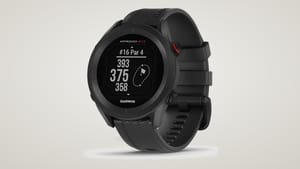
A launch monitor gives you the real number. The cheap option, a SkyTrak or PRGR personal radar, costs around $200 and reads within plus-or-minus 2 mph of a Trackman. Big-box retail stores will swing you on theirs free if you ask, and indoor sims have become standard at municipal driving ranges across the US, UK, and Australia. Without any of that gear, the field shortcut is carry distance divided by 2.3. A 200-yard (183m) driver carry equals roughly 87 mph (140km/h) of clubhead movement. A 230-yard (210m) drive lands you near triple-digit territory, close to 100 mph (161km/h). It's not Trackman-accurate, but it puts you in the correct tier for fitting purposes, which is all you need here.
If you'd rather use handicap as a proxy, Trackman's combine data lines up. The average male amateur swings the driver at 93.4 mph (150km/h). A 10-handicap sits around 95 mph (153km/h), while a 15-handicap lives in the 88 to 93 mph (142 to 150km/h) window. Tour average is 114 mph (183km/h), which is why pros and amateurs were never in the same fitting tier to begin with.
The chart below treats your current speed as the input. That speed, though, isn't fixed. Most golfers treat swing speed the way they treat height: a characteristic you were issued, not a variable you can change. The research consistently disagrees. Independent testing of structured overspeed protocols puts the gain at 3 to 10 mph over a 6-week program for most players who complete it. A golfer who moves from 93 mph (150km/h) to 100 mph (161km/h) doesn't just add distance. They graduate into the next compression bracket, and the fitting logic changes with them. The practical implication is that the chart above is a snapshot, not a sentence: the right ball for where you are today may not be the right ball in two months. Our SuperSpeed Golf review covers what the data actually shows on sustainable speed gains, and our driver fitness guide covers the conditioning side of the same question.
One caveat on every figure that follows. Compression is the measure of how much force is needed to deform a golf ball's core at impact, and the lower the rating, the easier the core collapses under load. Compression rating is the value assigned by independent labs to indicate that firmness on a 0 to 200 scale, with the bulk of playable models sitting between 40 and 110. The catch: each reading is gauge-dependent. An 87 on a 60kg rig isn't the same as 87 on a 100kg rig, and figures can drift two to eight points between testing setups. Treat the bracket as the signal. Don't chase a number to the decimal.
The chart
Three brackets. Each row gives the swing speed range, the carry that goes with it, the compression sweet spot, and three balls at three price tiers: a value play, a mid-tier, and a premium pick. Lab figures come from Golf Insider UK's 43-ball dataset (Feb 2026), with the gauge caveat noted above.
| Swing speed | Carry | Compression | Ball picks (value / mid / premium) | Price (per dozen) |
|---|---|---|---|---|
| Under 85 mph (137km/h) | Under 200 yards (183m) | Under 75 | Cut Red (~55) / Srixon Soft Feel (60) / Callaway Chrome Soft (75) | $16 to $46 |
| 85 to 100 mph (137 to 161km/h) | 200 to 250 yards (183 to 229m) | 75 to 90 | Cut Grey (~78) / Srixon Z-Star (88) / Titleist Pro V1 (87) | $24.95 to $55 |
| 100+ mph (161+km/h) | Over 250 yards (229m) | 90+ | Cut Blue (~88) / Srixon Z-Star XV (92) / TaylorMade TP5x (97) | $24.95 to $55 |
Compression figures from Golf Insider UK's Feb 2026 dataset. Values may shift 2 to 8 points between gauges, so treat the bracket, not the absolute number.
Bracket 1: Under 85 mph (under 200 yards / 183m carry)
A slow swing doesn't generate enough impact force to compress a tour-spec model, which means a chunk of the energy your club delivers gets wasted bouncing off a cover that won't deform. Lower-compression cores (under 75) yield under less load, transfer more energy into launch velocity, and feel softer at address.
That's the whole physics story.
Three picks for this tier. Cut Red at about 55 compression for $16 a dozen, the Srixon Soft Feel at 60, and the Callaway Chrome Soft at 75 if you want urethane-cover greenside spin. Cut Red is the steal of the category. It's tour-style construction at a third of the premium price, and you'll lose enough sleeves in this range that paying $55 a dozen is a tax on optimism.
Callaway Chrome Soft
~$46 | 75 compression urethane ball that feels soft and stops on the green.
Bracket 2: 85 to 100 mph (200 to 250 yards / 183 to 229m carry)
This is where most amateurs live, and where the ball market is fattest. So why does the Pro V1 still carry a tour-only reputation? Because the marketing has lagged the product by twenty years. You've got enough speed to compress a mid-firm core, but not so much that you need a tour model built for 115 mph (185km/h) delivery. A wide fitting window is why the Pro V1 sells the way it does. At 87 on the gauge, it sits dead-center in this tier.
Anyone telling you it's "too hard" for a 90 mph (145km/h) swing is reading the marketing, not the lab data.
For the value play, Cut Grey at about 78 compression and $24.95 a dozen is the one I'd hand a 12-handicap mate. Tour-quality cast urethane cover, four-piece construction, sits in the middle of the range. At 88 on the gauge, the Srixon Z-Star is the half-step up if you want a touch more firmness. Pro V1 is the premium default. None of these is a wrong answer here. The wrong answer is paying $55 for a TP5x because someone on YouTube said it was the best of 2026.
Cut Grey
Best value pick for the 85 to 100 mph (137 to 161km/h) bracket. Tour-quality cast urethane at $24.95 per dozen. Four-piece construction, mid-firm core, soft greenside feel.
Srixon Z-Star
~$40 | 88 compression urethane ball. Half-step firmer than Cut Grey, a touch lower spin off the driver.
Titleist Pro V1
~$55 | 87 compression. Mid-compression by the numbers, despite the tour ball reputation. Sits dead-center of this bracket.
Bracket 3: 100+ mph (over 250 yards / 229m carry)
Above 100 mph (161km/h), the right ball carries a 90+ compression rating, and the reason is straightforward physics: softer cores compress past their useful deformation window at this delivery speed, costing ball speed, ballooning the spin number, and reading mushy at impact. Firmer cores hold their shape under higher impact forces, return energy without bleed-off, and keep driver spin in the 2,200 to 2,600 rpm window where distance lives. The TaylorMade TP5x sits at 97 on the gauge, the Srixon Z-Star XV at 92, and Cut Blue at roughly 88 anchors the bottom of this tier as the budget play, still firm enough for most 100 to 105 mph (161 to 169km/h) swings. Anyone above 110 mph (177km/h) should default to TP5x or a Pro V1x (97) and stop browsing. Below that line, Z-Star XV is the half-step softer alternative if TP5x reads too clicky off the putter.
TaylorMade TP5x
~$55 | 97 compression. Firmest of the picks. Built for 105+ mph (169+km/h) deliveries.
Where the bracket recommendation breaks down
Three places. Knowing them stops you over-correcting on a chart that gets the headline right but skips edge cases.
Cold weather. Below 50°F (10°C), every urethane cover stiffens and every core loses some elastic rebound. Two studies from Titleist's R&D group have shown ball-speed losses of 3 to 5 mph on a 95 mph (153km/h) swing once the air drops near freezing. That's a full club of distance. If you live in a winter golf market like the UK Midlands, Scotland, Toronto, Melbourne in July, or anywhere in northern Europe from October through March, drop a single bracket on temperature alone. A 92 mph (148km/h) swinger who'd normally pair with a Pro V1 should consider the Cut Grey or a Soft Feel during the cold months, then revert in spring.
Altitude. Above 3,000 feet (914m), the air is thinner and the ball flies further with less spin retention. Denver, Albuquerque, and similar mile-high markets see roughly 8 to 10 percent extra carry, which means a 95 mph (153km/h) swinger plays effectively closer to 102 mph (164km/h) from a fitting standpoint. Bump up one tier in those conditions, especially on driver. The premium-end models with firmer cores keep spin lower and stop ballooning when the atmosphere is already doing half the work for you.
Wedge spin priorities. Some golfers near a fitting boundary (say, an 86 mph / 138km/h swinger sitting at the bottom of Bracket 2) will gain more from the urethane cover's wedge bite than they lose from a slight core mismatch. If you score most of your strokes from inside 100 yards (91m), pick the firmer side of your fitting window. If you score most of your strokes off the tee, pick the softer side and let the cover do less work.
The chart is a starting point. These three modifiers are why two golfers with identical clubhead speed sometimes land on different optimal models, and why a fitting session at a real launch monitor will always beat a chart for the marginal cases.
A two-ball on-course test that works
Lab data narrows the field. Feel is still personal, and the only honest tiebreaker is a same-hole comparison. Pick a par 4 you know cold. Hit two drives, two approach shots, and two putts with each ball you're considering. Repeat across three holes minimum. What are you actually listening for? Two things: ball speed off the driver (you can hear and feel it) and the sound off the putter face.
A correct match should feel responsive but not clicky. Too firm reads as a tinny "click" off the putter and a harsh sting on mishits. Too soft reads as a dull "thud" off the driver and a loss of pop on full irons. If a ball passes the audio test on driver and putter at the same time, it's a fit. That's the whole science of feel, expressed without a $25,000 launch monitor.
One caveat on the method: don't run this test in cold weather. Core firmness performance shifts in temperatures below 50°F (10°C). Run it on a normal-weather round, then trust the result.
Frequently Asked Questions
Does swing speed affect which ball I should buy?
Yes, and this is the entire premise. A ball's compression rating tells you the impact force needed to deform the core. Below your fitting window, you waste energy on a cover that won't move. Above it, you lose ball speed and gain spin. The chart above maps speed to compression because the relationship is real and measurable.
Is the Pro V1 too hard for a 90 mph (145km/h) swing?
No. The Pro V1 is 87 compression, which sits in the middle of the 75 to 90 compression bracket, the window for 85 to 100 mph (137 to 161km/h) swings. A 90 mph (145km/h) driver swing is right in the fitting zone. The "Pro V1 is for tour pros" line is marketing residue from the early 2000s, when the original Pro V1 was 100+ compression. The current model is mid-compression.
What if I don't know my swing speed?
Divide your driver carry distance by 2.3. A 200-yard (183m) carry is about 87 mph (140km/h). A 250-yard (229m) carry is about 109 mph (175km/h). It's a rough proxy, not a launch monitor reading, but it puts you in the right bracket for ball selection. If you want the real number, most fitters and big-box stores will run you on a Trackman for free.
Does compression affect spin?
Yes, but less than most golfers assume. Higher compression balls produce a touch less driver spin, which helps fast swingers who fight ballooning trajectories. The spin difference between a 75-compression and a 95-compression ball runs 200 to 400 rpm off the driver, per Golf Digest's 2024 ball lab data. That's meaningful for a 110 mph (177km/h) swing. It's a rounding error for a 90 mph (145km/h) swing.
What's the cheapest ball that fits my swing speed?
For under 85 mph (137km/h), Cut Red at $16 a dozen. For 85 to 100 mph (137 to 161km/h), Cut Grey at $24.95 a dozen. For 100+ mph (161+km/h), Cut Blue at $24.95 a dozen. All three are urethane-cover, multi-piece balls built to tour spec. The pricing gap to a Pro V1 or TP5x exists because of marketing budget and tour seeding, not because the construction is two leagues apart.
Can I increase my swing speed, or is the chart bracket I'm in now permanent?
No bracket is permanent. Structured overspeed training programs show consistent gains of 3 to 10 mph over 6-week protocols in independent testing. A player who adds 7 mph (11km/h) to their swing speed doesn't just carry the ball further. They move into a different compression bracket entirely, and the fitting recommendation changes with them. Our SuperSpeed Golf review covers what the data shows on achieving and sustaining those gains.
The takeaway
Compression isn't a status symbol. It's a fit. Most amateurs play a ball compressed for someone faster than they swing, then wonder why the ball feels dead off the face. Find your bracket, pick the value play. If you want to move up a bracket, the speed training data is here. If you want the physics behind compression itself, the deep-dive is here.
Some links in this article are affiliate links. If you buy through them, I earn a small commission at no extra cost to you. This never influences what I cover or recommend. I link to gear I'd buy myself.







The golf newsletter that cuts the hype
Data-backed reviews and advice that works. No brand spin.
Recommended products