Steel vs Graphite Shafts for Irons: Which Is Right for You?
The graphite-is-for-beginners stigma is 20 years out of date. Here's the data, the myth-busting, and the verdict for your swing.
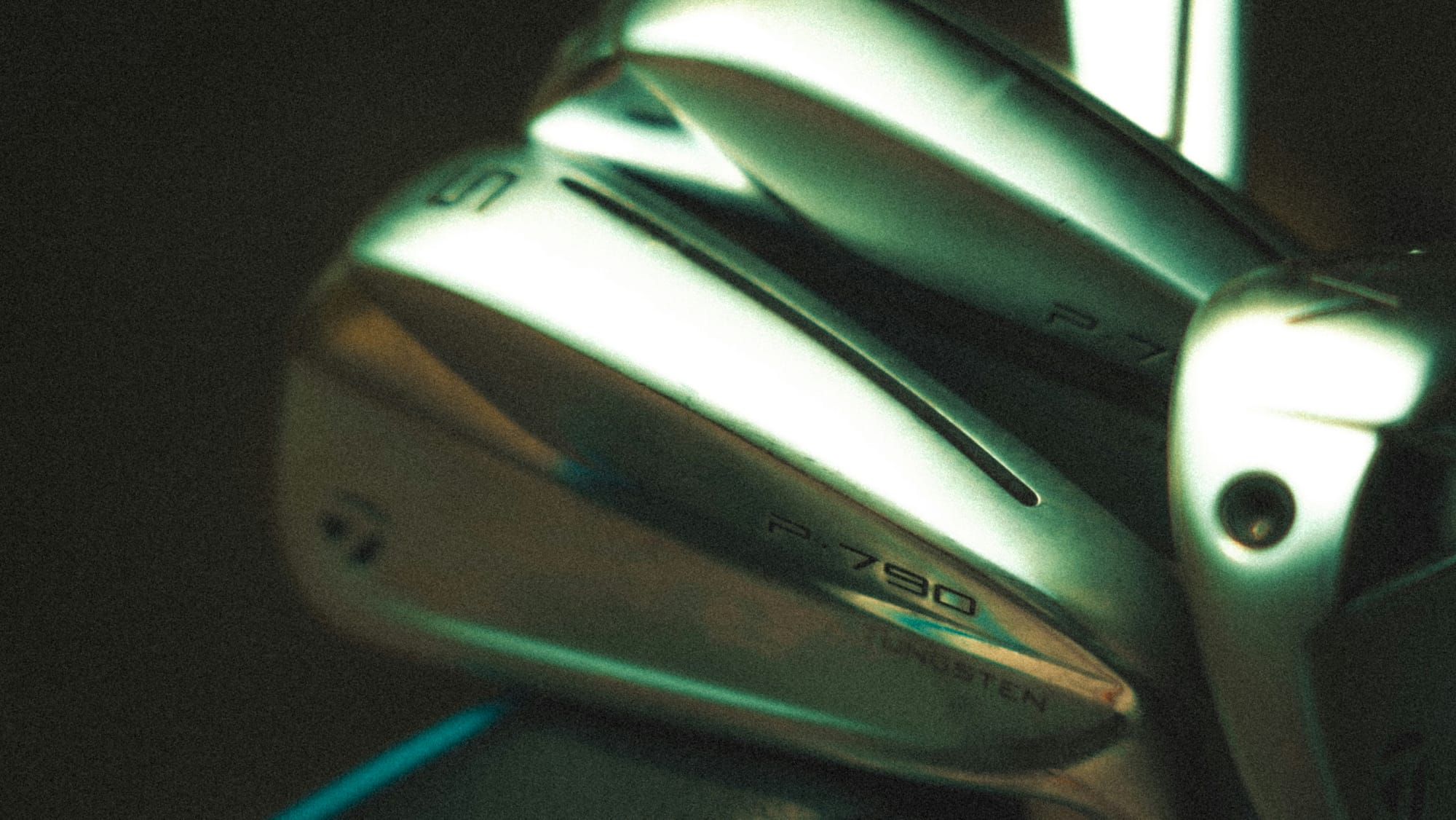
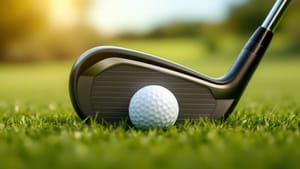
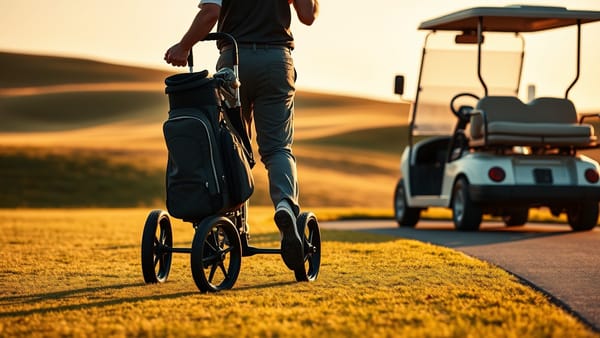
Photo by Matthew Stephenson on Unsplash
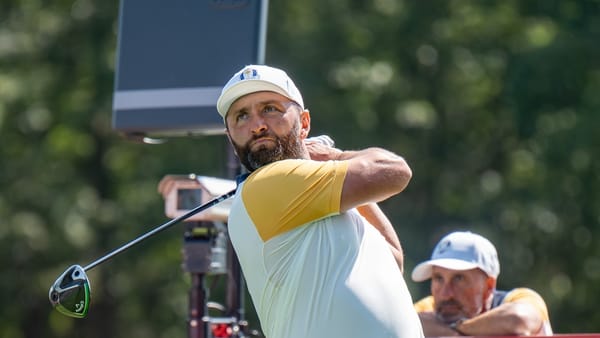
Graphite iron shafts have spent thirty years stuck with a senior-or-beginner reputation, and that reputation is two decades out of date. C.T. Pan switched to graphite irons in August 2024 and posted a season-best T2 at the John Deere Classic the same week. Bryson DeChambeau plays graphite in all 14 clubs. Tony Finau, Abraham Ancer and Matt Kuchar are all in graphite irons too, and none of them are doing it to nurse a bad back.
Steel vs graphite isn't a handicap question or an age question. It's a swing-speed-and-tempo question with a few honest exceptions. Below: the test data, the myth-busting, and a verdict by player profile. No "it depends" cop-out at the end.
TL;DR
- 1Steel sits at 110 to 130g, gives more feedback, and suits faster tempos and a 6-iron speed of 80 mph (129km/h) or higher.
- 2Graphite ranges from 50 to 125g, damps vibration, and suits 6-iron speeds under 80 mph (129km/h), joint issues, or a deliberate weight-reduction goal.
- 3Modern graphite at 105 to 125g is viable for better players. C.T. Pan and Bryson DeChambeau are the proof, not the exception.
- 4The Nippon NS Pro 950GH neo (94 to 104g) is lightweight steel, not graphite. Easy thing to get wrong, important thing to get right.
- 5Verdict by player profile is below. Whatever you decide, get fitted before you spend $500 to $900 USD reshafting a set.
What's Actually Different Between the Two
A steel iron shaft is a stepped or rifle-pattern hollow steel tube weighing 90 to 130g (3.2 to 4.6 oz). A graphite iron shaft is a layered carbon-fiber composite weighing 50 to 125g (1.8 to 4.4 oz). That weight gap is the biggest single difference, and it drives almost everything else: feel, launch tendency, vibration character, total club weight, and how the head moves through impact.
The most common mistake when shopping iron shafts: assuming any sub-100g shaft is graphite. The Nippon NS Pro 950GH neo runs 94 to 104g (3.3 to 3.7 oz) and is steel. It was the first consistently sub-100g steel shaft on the market and is still one of the most-played options in OEM Japanese-spec sets. If your set lists something like "Nippon 950" on the spec sheet, you're playing lightweight steel, not graphite.
On feel, the industry consensus is that graphite damps shock more than steel because the composite layup absorbs vibration the steel tube transmits. There is no single agreed percentage figure for how much, so I'm not going to invent one. On launch, graphite trends a touch higher with a touch more spin because of the softer tip section and lower mass, but the size of that effect depends on the specific shaft and your delivery. Don't assume swapping materials will give you a clean +2 degrees of launch.
What the Test Data Shows
Today's Golfer ran a 34-shaft Foresight GC Quad test on January 8, 2026 using a Callaway Apex 24 CB 7-iron at the Callaway Chessington performance center, with 12 validated shots per shaft. Two of the standout numbers were both graphite shafts beating the heavyweight steel average.
The Fujikura Axiom 125 produced ball speeds 1.5 mph (2.4km/h) faster and 7-iron carry distances 2.8 yards (2.6m) longer than the average heavyweight steel. The lighter KBS TGI 80 went 4.5 yards (4.1m) further than the test average. Those aren't seismic gaps, but they are gaps in the wrong direction for the steel-is-always-faster narrative.
A 7-iron carry difference of 2.8 yards isn't an upgrade you'd notice on a single shot. Across a round it's the difference between holding a green and short-siding yourself once or twice. These are averages on a tour-pattern head with a single tester, not your numbers, so a fitting still matters. If anyone tells you graphite costs distance versus steel as a rule, the data doesn't back them up.
Vibration damping is the other consistent finding across published shaft testing: graphite reduces felt impact shock relative to steel of comparable weight. That's industry consensus rather than a single cited figure. It's the single biggest reason a player with elbow or wrist issues should give modern graphite a serious look.
Who Should Play Steel
Steel suits players with 6-iron clubhead speeds of 80 mph (129km/h) or higher, faster transitions, and a preference for the sharper, more direct feedback that a heavier shaft delivers. If you can feel where you struck the face on a thinned 7-iron and you want to keep that information, steel earns its place.
The benchmark is True Temper Dynamic Gold S300 at 130g (4.6 oz). It's been the most-played iron shaft on the PGA Tour since 1980 because it gives strong, consistent players a heavy, stable platform that doesn't move around in transition. KBS Tour at 110 to 130g (3.9 to 4.6 oz) is the modern alternative most fitters reach for when DG feels too stiff in the tip.
If you're sold on steel feel but the standard 130g feels heavy by the seventh hole, KBS Tour Lite at 95 to 105g (3.4 to 3.7 oz) is a real option. So is the Nippon 950GH neo. You get steel character, dial back the total club weight, and don't have to leave the material altogether. Worth knowing about before you assume the only way down from 130g of steel is into graphite.
Cost is the other reason steel still wins for a lot of players. A standard reshaft to True Temper Dynamic Gold or a comparable steel costs less than the same job in premium graphite, and the resale value of a steel-shafted set holds up better in second-hand markets.
Who Should Play Graphite
Graphite suits players with 6-iron speeds under 80 mph (129km/h), or anyone with elbow, wrist, or shoulder issues that get aggravated by the impact shock of heavier steel. It also suits players who want to reduce overall club weight on purpose to find more clubhead speed without changing their swing mechanics.
Graphite damping joint stress is reported across coaching forums, club-fitter case notes, and player accounts on Reddit r/golf and GolfWRX. I'm framing it as reported rather than as a clinical conclusion because there's no single peer-reviewed study I can point you to. If you've had golfer's elbow flare up on a steel-shafted set, the anecdotal weight of evidence is strong enough that a graphite test session at a fitter is worth your time.
The distance loss penalty for switching to graphite is a myth at the lighter-swinger end of the curve. If your 6-iron speed sits in the low 70s, a fitted 75 to 95g graphite shaft will carry the ball further than the heavy steel you're fighting. The Today's Golfer test backs this up: the lightest graphite in the set posted the longest carry.
For graphite shopping, the UST Mamiya Recoil 460 at around 65g (2.3 oz) is the entry-level Amazon option. The premium fitting-room shafts (KBS Tour PGI at 90g, the shaft C.T. Pan plays; Fujikura Axiom in 75g, 105g and 125g; and Mitsubishi MMT) aren't stocked on Amazon and need to come through a club fitter or the OEM direct.
UST Mamiya Recoil 460
The Myth: Graphite Is for Beginners Only
The stigma traces back to early 1990s graphite, which suffered from high torque and inconsistent flex profiles, and was sold into the senior and beginner market. That kit deserved its reputation. The shafts in production today don't, and the proof is on the PGA Tour leaderboard.
C.T. Pan switched from Project X 6.0 steel (around 130g / 4.6 oz) to a 90g (3.2 oz) KBS Tour PGI graphite shaft in his Titleist T150 irons in mid-2024. In a PGA Tour interview on August 7, 2024, Pan said: "I feel like it's lighter and it's easier to hit. I was able to hit the ball higher." He posted a season-best T2 at the John Deere Classic in the same window.
Bryson DeChambeau went further. In March 2024 he became the first PGA Tour player to win on tour with graphite in all 14 clubs, using LA Golf "Rebar" graphite shafts at around 120g (4.2 oz) across his irons. GolfWRX has tracked his shaft history in detail. He didn't switch because he needed a lighter shaft to keep playing. He switched because the data said graphite was the better tool for what he wanted the club to do.
Beyond Pan and DeChambeau, a May 15, 2025 Golf.com piece by Kris McCormack listed Tony Finau, Abraham Ancer, Matt Kuchar, Brandt Snedeker, Lydia Ko and Brooke Henderson as tour-level players using graphite in irons. The stigma is twenty years out of date. If your buddy at the clubhouse still tells you graphite irons are for old men, you're getting equipment advice from someone who hasn't read a fitting bay report since flip phones.
Steel vs Graphite vs Lightweight Steel: Side by Side
| Attribute | Steel (standard) | Graphite (standard) | Lightweight Steel (NS Pro 950GH neo) |
|---|---|---|---|
| Weight range | 110 to 130g (3.9 to 4.6 oz) | 50 to 125g (1.8 to 4.4 oz) | 94 to 104g (3.3 to 3.7 oz) |
| Vibration feel | Sharp, direct feedback | Damped, softer at impact | Slightly softer than 130g steel, still steel character |
| Launch tendency | Penetrating, mid launch | Slightly higher launch and spin | Mid to mid-high launch |
| Best 6-iron speed | 80 mph (129km/h) and up | Any speed, especially under 80 mph | 75 to 90 mph (121 to 145km/h) |
| Cost (full set reshaft) | $500 to $700 USD | $700 to $900+ USD | $500 to $700 USD |
| Joint stress | Higher impact transmission | Lower impact transmission | Lower than 130g steel, higher than graphite |
What a Fitting Will Tell You
A fitting answers the question that matters: what does your delivery do with each shaft material at your real-world swing speed and tempo? Self-selecting by handicap or age skips this. A 12-handicap with a slow tempo and 75 mph (121km/h) 6-iron speed has a different shaft profile from a 12-handicap with a fast transition and 88 mph (142km/h) 6-iron speed. Same handicap, different shaft.
A typical iron fitting measures clubhead speed, ball speed, smash factor, launch angle, spin rate, and dispersion across multiple shafts in the same head. The fitter sees where each shaft groups, where it loses speed, and where the dispersion tightens up. That's the data you can't get by guessing or by listening to your foursome.
A single-session iron fitting at $49 to $175 USD answers this in 30 minutes. That's a fraction of what a wrong reshaft costs you in regret. If you're at all close to the line between steel and graphite, get fitted before you commit. If you're already wondering whether the smarter move is a new set rather than a reshaft, I went deep on that decision in a separate piece.
How Much Does It Cost to Switch
A full seven-iron reshaft runs $500 to $900 USD all-in, including shafts, labor, and grips. Per club, you're looking at $15 to $100+ USD for the shaft itself, $20 to $40 USD for labor, and $6 to $15 USD for the grip.
Premium graphite (Fujikura Axiom, Mitsubishi MMT, KBS Tour PGI) sits at the top of that range, $100 to $150+ USD per shaft installed. That's a real number if you're reshafting seven clubs. The cheaper option is to spec graphite at the OEM stage when you buy a new set. Most major manufacturers offer UST Recoil or a similar mid-tier graphite as a no-upcharge or modest-upcharge option compared to standard steel.
If you're holding onto a set you like and just want to test the material change, get a fitter to build you a single 7-iron in graphite first. About $80 to $130 USD as a one-off, and you find out whether the difference shows up in your numbers before committing to a full reshaft.
The Verdict
No "it depends." Here's the player-profile map.
8 to 12 HCP, 80+ mph (129+km/h) 6-iron, no joint issues: Stay with standard steel, or test KBS Tour Lite if you want to take 25g (0.9 oz) off your build without changing material. You don't need to switch.
12 to 20 HCP, 75 to 80 mph (121 to 129km/h) 6-iron, occasional aches after a long range session: Get fitted. The Fujikura Axiom 75 or UST Mamiya Recoil 460 are both worth a session. You're the player profile where modern graphite is the most likely path to added carry distance and less post-round soreness at the same time.
15 to 20+ HCP, under 75 mph (121km/h) 6-iron, OR joint issues at any handicap: Graphite is the clearer call. A fitted graphite shaft in the 75 to 95g range will carry further than the steel you're fighting, and your wrists and elbows will thank you in year three.
If that's your profile and you're shopping a full new set rather than a reshaft, our game-improvement iron picks are built around exactly this kind of forgiveness-first setup.
Any handicap considering a reshaft: Don't reshaft without a fitting first. The $49 to $175 USD fitting fee is the cheapest insurance you can buy on a $500 to $900 USD job. I'm too data-focused for some of you on this point, but the fitting bay catches mistakes that no amount of clubhouse advice will.
The stigma around graphite isn't supported by the evidence anymore. Pan, DeChambeau, Finau and Ancer are betting their tour cards on the material. You can at least bet a fitting session on it.
Frequently Asked Questions
Are graphite iron shafts only for seniors?
No. Tour pros C.T. Pan, Bryson DeChambeau, Tony Finau, Abraham Ancer, Matt Kuchar, Brandt Snedeker, Lydia Ko and Brooke Henderson all play graphite iron shafts (Golf.com, May 15, 2025). DeChambeau is the first PGA Tour winner with graphite in all 14 clubs. The senior and beginner reputation traces back to early 1990s high-torque graphite that no longer represents the modern category. Today's premium graphite shafts (Fujikura Axiom, KBS Tour PGI, Mitsubishi MMT) are built for tour-level swing speeds and fitted by handicap-blind data, not age.
Do graphite shafts add distance?
Sometimes. In the Today's Golfer 34-shaft Foresight GC Quad test (January 8, 2026), the Fujikura Axiom 125 graphite produced 1.5 mph (2.4km/h) more ball speed and 2.8 yards (2.6m) more 7-iron carry than the heavyweight steel average, and the KBS TGI 80 added 4.5 yards (4.1m). For players with 6-iron speeds under 80 mph (129km/h), a fitted graphite shaft is the more dependable carry-distance gainer than steel. For players above 90 mph (145km/h) 6-iron, distance gains from a material switch alone are inconsistent.
Can I use graphite shafts with a fast swing speed?
Yes. C.T. Pan switched to a 90g (3.2 oz) KBS Tour PGI graphite shaft in his Titleist T150 irons in 2024 and posted a T2 at the John Deere Classic. Bryson DeChambeau plays around 120g (4.2 oz) LA Golf graphite across his iron set. Modern heavyweight graphite (105 to 125g) gives faster swingers most of the stability of steel with the damping and slightly higher launch of graphite. Get fitted to confirm the specific weight and flex profile that matches your delivery.
How much does it cost to reshaft irons with graphite?
A full seven-iron reshaft with graphite costs $500 to $900 USD all-in (shafts, labor, grips). Per-club, premium graphite shafts (Axiom, MMT, KBS Tour PGI) run $100 to $150+ USD installed. Mid-tier graphite (UST Mamiya Recoil 460) runs closer to $50 to $80 USD per shaft installed. Building a single 7-iron in graphite first as a test costs $80 to $130 USD and tells you whether the material change shows up in your numbers before you commit to the full set.
What is the Nippon NS Pro 950GH neo, and is it steel or graphite?
The Nippon NS Pro 950GH neo is a steel iron shaft, not graphite, weighing 94 to 104g (3.3 to 3.7 oz). It was the first widely played sub-100g steel shaft and remains one of the most-fitted lightweight steel options on the market, especially in OEM Japanese-spec sets. The confusion is common because most sub-100g shafts are graphite. If your iron set's spec sheet lists a Nippon 950, you're playing lightweight steel with steel feel and feedback, not a graphite shaft.
Book the Fitting Before You Spend the Money
Your shaft material decision should follow your swing data, not your ego or the loudest opinion in your foursome. If you're 80+ mph 6-iron and like sharp feedback, stay with steel and look at KBS Tour Lite if total weight is the question. If you're under 80 mph, fighting joint pain, or genuinely curious whether graphite would carry the ball further for you, book a fitting and find out. The $49 to $175 USD fitting fee is the cheapest insurance on a $500 to $900 USD reshaft. If your set is the bigger question, I wrote a separate piece on when it makes sense to replace clubs versus reshaft them.
Some links in this article are affiliate links. If you buy through them, I earn a small commission at no extra cost to you. This never influences what I cover or recommend. I link to gear I'd buy myself.




The golf newsletter that cuts the hype
Data-backed reviews and advice that works. No brand spin.
Recommended products