







how-to
How to Know Your Real Iron Distances (No Launch Monitor)
Most golfers don't actually know their iron distances. They know their best one. Ask a 15
Fix a golf slice for good with the correct sequence: grip, setup, face, path, then launch monitor data. No gimmicks, just five steps that work.

Most slice advice gets the order wrong. It tells you to swing more from the inside before your clubface knows how to close, and you end up with a worse slice in a different shape. If you want to know how to fix a golf slice for good, sequence beats any single drill, and the sequence starts with the face, not the path.
A slice is a face-to-path relationship. The clubface is open relative to where the club is moving at impact, so the ball curves away from your target side. TrackMan's face-to-path data is unambiguous on this: the gap between face angle and club path is the curve. Fix the gap, fix the slice. Skip the gap and you'll keep buying draw-bias drivers that turn your banana ball into a smaller banana ball.
This guide walks the five steps in the order that works, with the drills and tools that hold up when you stop using them.
Every amateur thinks their slice is a swing path problem. It isn't, or at least not in the way you've been told. The ball's starting direction is set by the clubface. The curve comes from the face's relationship to the path.
TrackMan's face-to-path research (September 2024) shows that face angle controls 75 to 85 percent of initial ball starting direction on full shots. Brendon Elliott (PGA), writing for MyGolfSpy in December 2025, puts it bluntly: the ball starts where the face points at impact and curves based on the relationship between face angle and path.
That relationship has a name. Face Angle is where the clubface points at the moment of impact, measured against the target line. Club Path is the direction the clubhead is moving through impact, also measured against the target line. Face-to-Path is the difference between the two: the number that determines how much the ball curves and in which direction. A face that points 5 degrees right of a path that's moving 2 degrees right is +3 face-to-path, and the ball will fade. A face 8 degrees right of a path moving 4 degrees left is +12, which is your classic banana slice.
Here's the part most golfers miss. If your face is 5 degrees open and your path is neutral, the ball slices. If your face is 5 degrees open and you swing more from the inside (further left to right), the slice gets worse, not better. Path without face control just adds curve to an already-open face. That's why "swing from the inside" advice on YouTube creates pull-slicers and shanks at the range.
| Face-to-Path (degrees) | Shot shape | What it means |
|---|---|---|
| -3 or less | Draw / hook | Face closed to path |
| -3 to 0 | Straight draw | Ideal draw window |
| 0 to +3 | Straight / power fade | Neutral to slight fade |
| +3 to +5 | Controlled fade | Still playable |
| +5 to +8 | Visible slice | Face well open to path |
| +8 or more | Severe slice | Fix face angle first |
If you've ever wondered why one tip makes things worse before it makes them better, this table is why. The fix has to address face first, then path, in that order.
Before any drill, watch ten balls and note where each one starts and where it finishes. There are two slice patterns and they need different emphasis on the same five steps.
Type 1: ball starts left of target, curves right. This is the over-the-top slice. Your path is out-to-in (negative club path numbers on a launch monitor), and your face is open relative to that path. The ball starts on the path direction (left) and the open face curves it back across to the right. Steps 2 (setup) and 4 (over-the-top) are your priorities, but the face still has to come along for the ride.
Type 2: ball starts right of target, curves further right. Your face is wide open at impact, often 5 degrees or more. Path may be neutral or even a touch in-to-out, but the face is open enough that the ball both starts right and curves right. Step 1 (grip) and Step 3 (face closure) do the heavy lifting here. Trying to fix this with a path drill alone will pull-hook the rare ball you square up and slice every other one harder.
GOLFTEC's OptiMotion data from 14 million swings (April 2026) found mid-handicap slicers average -3 to -6 degrees out-to-in path, while tour average sits at +1 to +3 in-to-out. The same dataset noted that many golfers present the clubface 3 to 5 degrees open at impact. Most amateurs are running both problems at once. The order below addresses the face first because it's faster to change and it makes every subsequent step easier.
Ball flight observation gets you to the two types above. These two tools confirm which variable is the primary driver before you commit to a fix sequence.
The relevant metrics are face angle at impact and club path. Face angle: a positive number (anything consistently above +3 degrees relative to the club path, per TrackMan’s face-to-path data) means the face is contributing directly to the slice. Club path: a negative number means out-to-in. A path between 0 and −3 degrees is close to neutral; −6 degrees and below is a meaningful out-to-in delivery that adds significant curve to whatever the face is doing.
The gap between both numbers (face-to-path) determines how much the ball curves. A golfer with a face at +4 degrees and a path at −6 degrees has a 10-degree differential, producing strong right curvature. Getting that gap below four to five degrees eliminates the slice shape per TrackMan’s face-to-path data, regardless of which variable moved to close it.
Two proxies. Ball flight: watch where the ball starts within the first 10 to 15 yards (9 to 14m) of flight. This window is primarily face-driven. If the ball starts left of target and curves right, the face is open relative to an out-to-in path and both problems are present. If it starts near target and curves right, the face is closer to square and path is the primary issue.
Impact tape placed on the clubface shows contact location. Consistent toe strikes often hint at an out-to-in path cutting across the ball from the outside. This is supporting evidence rather than a definitive diagnosis, but it adds context to the ball flight picture.
Identify which of the two types applies before starting the steps. The grip and face work in Step 1 through Step 3 is the priority for Type 2. The setup and path work in Step 2 and Step 4 gets more emphasis for Type 1. The sequence covers both. The diagnosis tells you where the work is.
The grip is the only direct connection to the clubface. A weak grip, where the lead hand is rotated too far under the club and the trail hand sits too far on top, locks the face open through impact regardless of what the rest of the body does. You can have a perfect path and still slice if the grip won't let the face close.
What you're looking for at address:
Chris O'Connell (PGA), writing for Practical Golf in October 2023, called the slice "the most common swing problem that players face." The grip is where most of those slices are born, often years before any swing fault was added on top.
The fix takes three to five rounds of feeling weird. A new grip will feel like you're going to hook everything for the first bucket. You won't. Hit a few half swings, accept that the ball might go left for ten minutes, and let your hands recalibrate. This is the cheapest, fastest part of the whole sequence.

Most slicers aim left because they know the ball's going right. Then they swing along their shoulders, which now point left of target, which produces an out-to-in path, which slices the ball more. Aiming further left makes it worse. The setup is feeding the swing fault.
Drop two alignment sticks. Lay one on the ground along your toe line, parallel to the target line. Lay the second one a few inches outside the ball, also pointing at the target. Now check three things:
Shoulders open by even 5 degrees will produce a path 4 to 6 degrees out-to-in, before you've made any move at all. You can't out-swing a setup that's pre-loaded for a slice. The alignment stick drill is boring, and that's why it works. You're not learning a new move, you're removing a hidden one.
Hit ten balls a session with sticks down. Take them away for ten more and see if the feel holds. If you drift open within five swings, your eyes are lying to you about what square looks like. Trust the sticks.
With grip and setup squared, the next gap is what your hands do through the ball. A slicer's lead forearm tends to stay flat or rotate late, leaving the face open at separation. Tour players show measurable forearm rotation through the hitting zone, and the lead wrist moves from a small cup at the top to flat or bowed at impact.
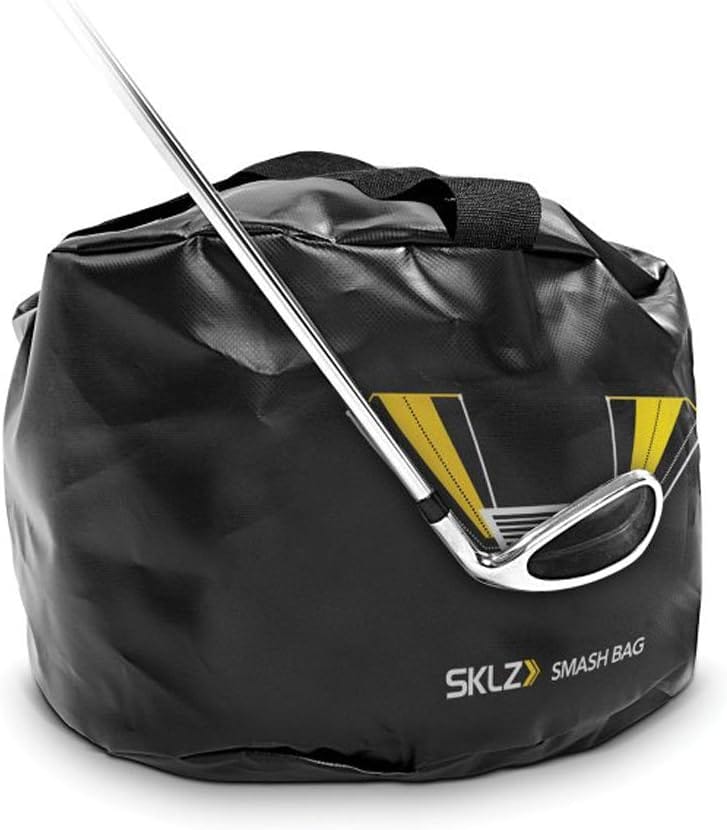
Buy a smash bag. The drill is simple. Hit the bag at three-quarter speed, focus on the lead forearm rotating over the trail forearm right after impact, and check the imprint on the bag. A square imprint with no scuff means a square face. A diagonal scuff running heel-to-toe means the face is still open. You can't argue with the imprint.
A second feel that helps: at the finish, the trail palm should face the ground, not the sky. If your palm is up at the finish, the face stayed open. If it's down, the rotation happened.
This is not a "flip the hands" cue. The forearms rotate as part of body rotation. If your lower body has stopped and your hands are firing on their own, you'll hook one and slice the next. The bag tells you in two swings whether the rotation is happening with the body or against it.
Now the path. With face closure happening, you can move on to the fault every slicer has to address sooner or later. Over-the-top is a sequencing problem, not an arm problem. The upper body starts the downswing before the lower body, the right shoulder fires out toward the ball, and the club tracks across the line from out to in.
The fix is bottom-up. Lower body starts the downswing, hips clear toward the target, and the arms drop into the slot the lower body has cleared. Cues that help:
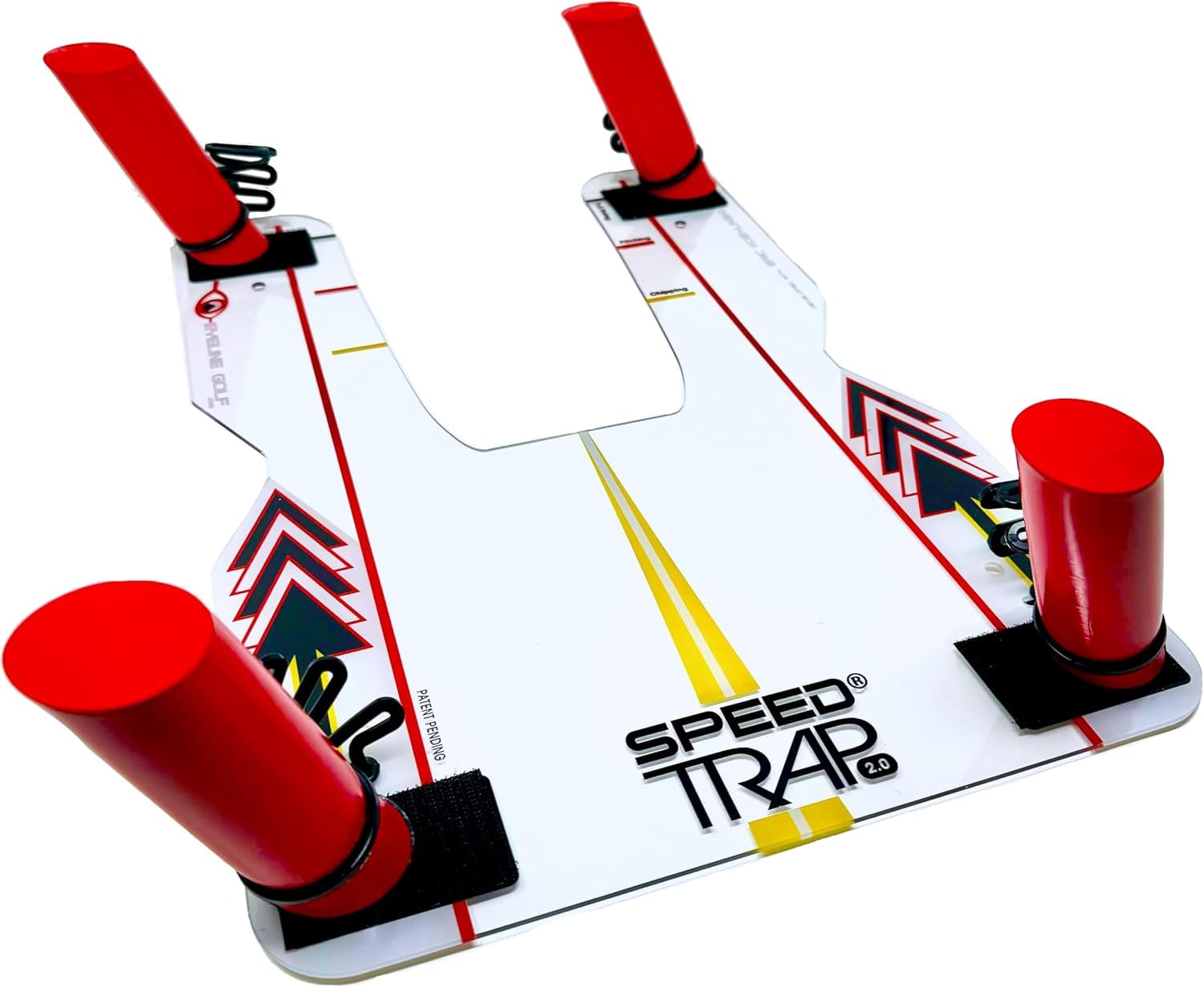
Two drills. The path gate uses two alignment sticks angled out from the ball, forming a narrow corridor the clubhead has to travel through. If you swing out-to-in, you'll clip the outside stick. If you swing too far in-to-out, you'll clip the inside one. The Eyeline Speed Trap 2.0 does the same job with foam pylons that don't break when you catch one. Either tool gives instant feedback without a coach.
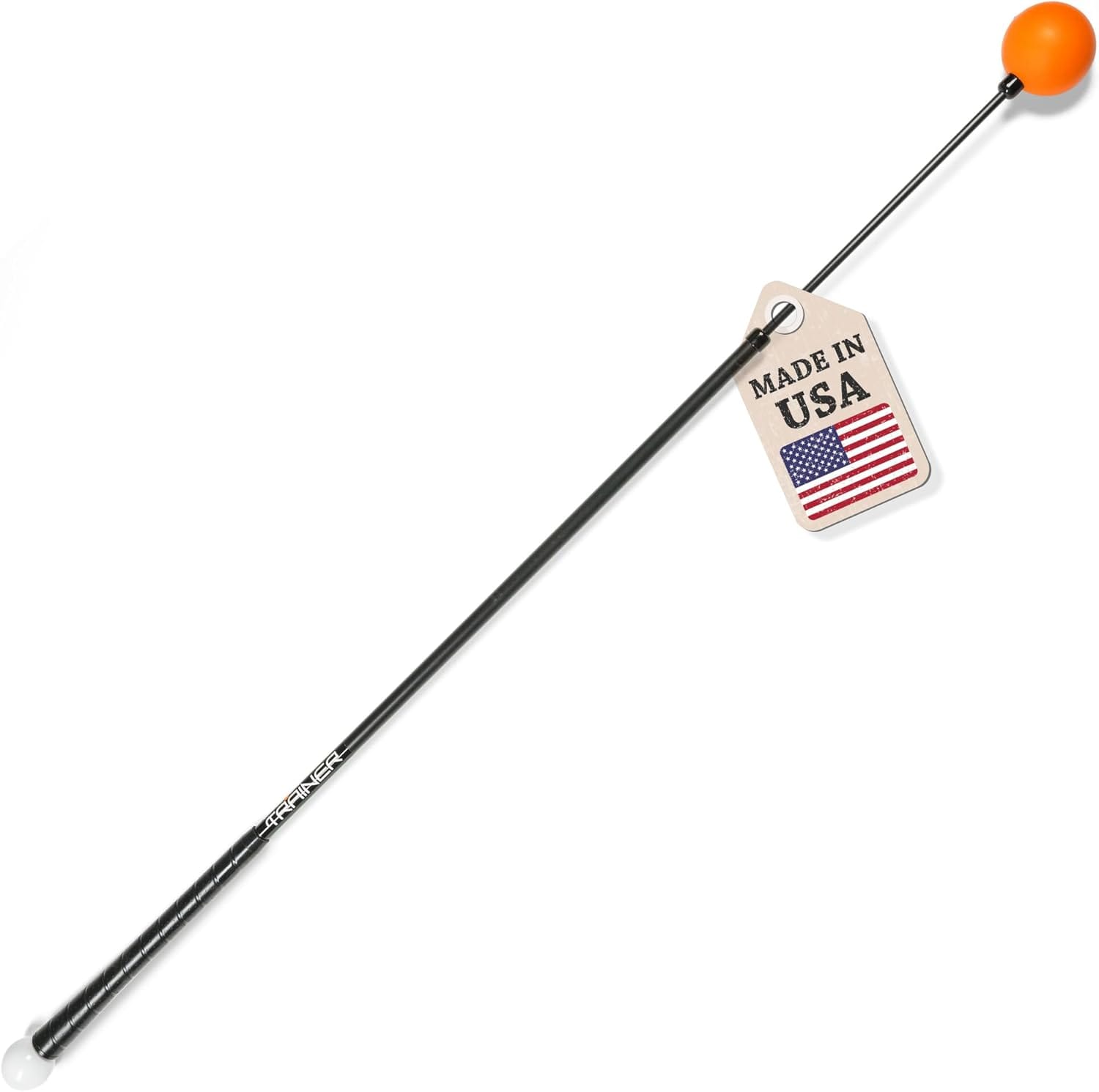
The Orange Whip is the sequencing tool. The weighted head and flexible shaft punish anything fast or out of sequence. If you start the downswing with your shoulders, the head whips off-plane and you feel it. Ten swings a day with the Whip retrains the order without you thinking about positions.
How long does this step take? Longer than the others. Path is a motor pattern, and motor patterns need reps. Plan on three to four weeks of steady work, not three to four range sessions. If you're trying to lock this in over winter, a home practice routine with the Whip and a hitting net will get you further than the odd range trip with no structure.
This is the step most slice tutorials skip, and it's the one that turns the work into a permanent fix. Without numbers, you're guessing. With numbers, you know whether the gap closed.
A launch monitor with face angle and club path readouts will tell you three things in five swings: where the face points at impact, where the path is moving, and the face-to-path number that produces the curve. Garmin R10 is the budget option that has these metrics for under $600 (under £500). Bushnell Launch Pro and Mevo+ sit a tier above. Any of them will do the job for a slice diagnostic.
What "fixed" looks like in numbers:
If you're hitting +3 to +5 face-to-path on most swings, you don't have a slice anymore. You have a fade, and a fade is a shot, not a fault. Most amateurs would take that trade tomorrow. Trying to push from a +5 fade to a -2 draw is a separate project, not a slice fix.
Hit ten drives, write the averages down, and check again two weeks later. If the numbers held under range conditions, take them to the course. If they drift back up to +8 face-to-path, one of the earlier steps has come undone (the grip nine times out of ten, setup the other one) and needs ten minutes of attention before you keep grinding on path.
Modern drivers have settings that make a slice less brutal while you're putting the swing work in. They are a band-aid, not a cure. Use them as scaffolding, take them off once the swing is fixed.
These will pull a +8 face-to-path slice to maybe +5. They will not turn a slice into a draw, no matter what the marketing copy says. If you're still slicing with all four levers maxed out, the swing is the problem, not the driver. A draw-bias driver bought before you've done the grip and face work is a fade you paid $599 to soften, not a fix. You'd be better off saving the cash, sorting the grip, and putting the difference toward lowering your handicap through structured practice.
If you notice you only slice the driver — your irons come out straight — the cause is usually a different mechanical gap than the one this guide walks through. See why your driver slices when your irons don't for the driver-specific diagnosis.
A short list of things sold to slicers that don't fix slices.
Instant draw clubs and "anti-slice" drivers. They mask the gap by adding face closure at the price of left dispersion. The slice becomes a fade or a pull, the underlying face-to-path gap stays put, and the moment you hit one square the ball goes 30 yards (27m) left.
Aim further right. Aiming right of where you want the ball to start changes nothing about the swing. The ball still starts where the face points (75 to 85 percent of starting direction, per TrackMan) and curves on the same axis. You'll just have a wider miss in both directions.
The "swing more from the inside" cue applied to a face you haven't fixed. This is the trap. A more in-to-out path with a still-open face produces a push-slice that starts right and goes further right. You need the face squared first, then the path can come in.
Wrist hinge gimmicks and grip-pressure trainers without face feedback. They train the hands in isolation. With no impact feedback, you build a feel that may or may not produce a square face. The smash bag costs less and tells you the truth in one swing.
Lessons from someone who films your swing without a launch monitor. Without face angle and club path numbers, the diagnosis is guesswork dressed up in slow-motion video. Find a coach with TrackMan, GCQuad, or Foresight. The good ones charge the same as the video-only coaches.
A slice is caused by an open clubface relative to the swing path at impact. The face angle sets where the ball starts (TrackMan data shows 75 to 85 percent of starting direction comes from the face), and the gap between face and path determines how much the ball curves. Most amateurs have two faults stacked: an open face caused by a weak grip, and an out-to-in path caused by upper-body-first sequencing. Either alone produces a slice. Together they produce the classic banana ball. The fix is sequenced: face first (grip and impact rotation), then path (lower-body sequencing), then confirmed with launch monitor numbers.
Grip first, every time. The grip controls the clubface, and the clubface controls 75 to 85 percent of starting direction. If you fix your path while your grip is still leaving the face open, you make the slice worse: the ball now starts on a more in-to-out path and curves harder right. A weak grip locks the face open through impact regardless of any path work you do. Spend three to five sessions getting the grip strong (2 to 3 knuckles on the lead hand, trail V at the right shoulder), let the hands recalibrate, then move on to setup and path. Grip work is cheap and fast. Path work takes weeks. Do the cheap fast thing first.
Face-to-path above +5 degrees is a visible slice. Above +8 is a severe slice that needs face-angle work first, before anything else. Between +3 and +5 is a controlled fade that's playable on most courses. Under +3 is a straight ball or a power fade. Negative numbers mean the face is closed to the path, which produces a draw or a hook. The target for a fixed slice is face-to-path under +3 with the face within 2 degrees of the target line at impact. GOLFTEC's 14-million-swing dataset shows mid-handicap slicers average -3 to -6 degrees club path with the face 3 to 5 degrees open. That combination produces face-to-path numbers in the +6 to +11 range, which is where most amateur slices live.
No, but they reduce the symptom. A draw-bias driver shifts internal weighting toward the heel, which encourages toe-side rotation and closes the face about 1 to 2 degrees through impact. That moves a +8 face-to-path slice to a +5 or +6, which is a controlled fade instead of a banana ball. The underlying problem (open face plus out-to-in path) is unchanged. The moment your swing produces a square face, the draw-bias closes it past square and you pull-hook one left. Use a draw-bias driver as scaffolding while you work on grip, setup, and sequencing. Once the swing is fixed, switch to a neutral head or you'll fight the closure on every well-struck ball.
Three to four weeks of structured work for the swing changes to hold under pressure. The grip can change in three to five sessions of feeling weird. Setup squareness locks in over a week of alignment-stick reps. Face closure through impact takes one to two weeks of smash bag work. The over-the-top move is the longest piece, three to four weeks minimum, because it's a sequencing change and motor patterns need reps. Plan on six weeks total to take a slice from +8 face-to-path to under +3, with a launch monitor to confirm. Permanent means it survives a bad round. If your numbers drift after a month of competitive rounds, it's the grip slipping, not a new fault. Reset and you're back.
Yes, if you have access to a launch monitor and the discipline to follow the sequence. The face-then-path order is the same whether a coach is watching or not. The risk of self-coaching a slice fix is misdiagnosis: building a feel that addresses the wrong fault. A launch monitor with face angle and club path readouts removes that risk. You can see whether the face squared up and whether the path moved. If you don't have a launch monitor, find a coach with one for a single diagnostic session, get the numbers, then do the work yourself. A one-hour fitting-quality session beats six lessons with no data. The drills in this guide are the same ones a competent coach would prescribe.
---
The order is the whole game. Grip, setup, face, path, numbers. Skip a step and you'll be back here in six months reading a different slice article wondering why nothing held. Do them in order, with feedback at each step, and the slice doesn't come back. The next time you peg it on a tight tee shot with water right, you won't be hoping the ball stays in play. You'll know what the face is doing, you'll know what the path is doing, and you'll trust the swing because the numbers told you to.
Some links in this article are affiliate links. If you buy through them, I earn a small commission at no extra cost to you. This never influences what I cover or recommend. I link to gear I'd buy myself.
Data-backed reviews and advice that works. No brand spin.