 Buy now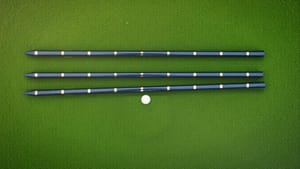








how-to
How to Know Your Real Iron Distances (No Launch Monitor)
Most golfers don't actually know their iron distances. They know their best one. Ask a 15
Arccos and Shot Scope data shows where mid-handicappers lose strokes. Build a home golf practice routine that targets those gaps in 30 minutes a day.
Most golfers practice the wrong things. A solid home golf practice routine doesn't mean hitting 100 balls at the range. It means targeting the specific shots that are costing you strokes, and the data tells you exactly where to look. Spend 45 minutes beating the same 7-iron over and over and your handicap won't move in three years. The problem isn't lack of effort. It's that the practice doesn't match where strokes are being lost.
According to 2023 data from Arccos Golf, a 10-handicap golfer averages 3 or more penalty shots per round. Not three-putts. Not missed greens. Penalty shots. That's 3 strokes wiped before you've even had a bad round. Fix that one number and you're looking at a meaningful handicap drop before you touch another swing mechanic.
This guide is built around the data: what Arccos, Shot Scope, and published motor learning research show about where mid-handicappers (10-22 HCP) lose shots, and how to structure a home routine that targets those gaps.
Before building any practice plan, you need an honest look at where your shots go. Most mid-handicappers assume putting is the problem. The data tells a different story.
How strokes gained breaks down across handicap categories shows the gap well. A 2023 analysis by strokes gained researcher Lou Stagner, published by Golf.com, found that a 5-index golfer gains 2.1 strokes on the greens compared to a 13-handicapper. That sounds significant until you realize those players are separated by 8 strokes total, meaning over 70% of the gap is tee-to-green, not on the putting surface.
The putting gap is real. But it's not as big as most people think.
The bigger issue is penalties. Arccos data from 2023 puts the average 10-handicapper at 3+ penalty shots per round. Penalty strokes are the worst kind of bad shot: they don't just cost you a stroke, they disrupt momentum and often lead to blow-up holes. Getting that number from 3 down to 2 or fewer is worth more than any swing lesson.
Here's what Shot Scope's 2024 data shows on putting by distance, which changes how you should think about time on a putting mat:
| Distance | 0 HCP Make % | 10 HCP Make % | 20 HCP Make % |
|---|---|---|---|
| 0-3 ft (0-0.9m) | 96% | 93% | 88% |
| 3-6 ft (0.9-1.8m) | 67% | 59% | 48% |
| 6-9 ft (1.8-2.7m) | 44% | 36% | 30% |
The 3-6 ft (0.9-1.8m) range is where mid-handicappers bleed strokes. A 20-HCP player makes under half of those. A 10-HCP makes about 59%. Close that gap and you've picked up shots without touching your swing.
There's a well-documented problem with the way most golfers practice: blocked repetition is the habit of hitting the same shot, at the same distance, to the same target, 20 balls in a row. It feels productive because you get better at it within the session. The gains evaporate by the next round.
Random practice means varying the shot on every rep, different distances, different clubs, different targets. A 2017 study published in Perceptual and Motor Skills (PMID: 28449601) demonstrated that this approach creates better mental representations and produces stronger long-term retention than blocked practice.
The reason is the Challenge Point Framework, introduced by Guadagnoli and Lee in 2004 in Research Quarterly for Exercise and Sport. Learning is maximized when practice difficulty is matched to the learner's skill level, not too easy and not overwhelming. Blocked repetition is almost always too easy once you've hit a dozen balls at the same target. It stops being a challenge.
What this means in practice: home putting mat sessions should not look like 20 balls from 4 ft (1.2m) in a row. They should look like one putt from 3 ft (0.9m), one from 5 ft (1.5m), one from 4 ft (1.2m), one lag putt, and back again. Randomise it. Your score will drop over time in a way that blocked practice doesn't produce.
You don't need a full simulator setup to practice at home. But the wrong gear trains the wrong things with no feedback, which is worse than no gear at all.
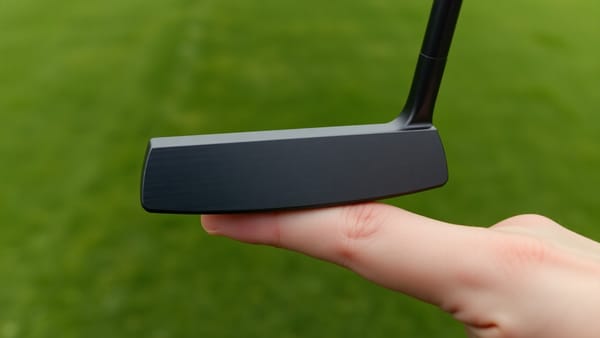
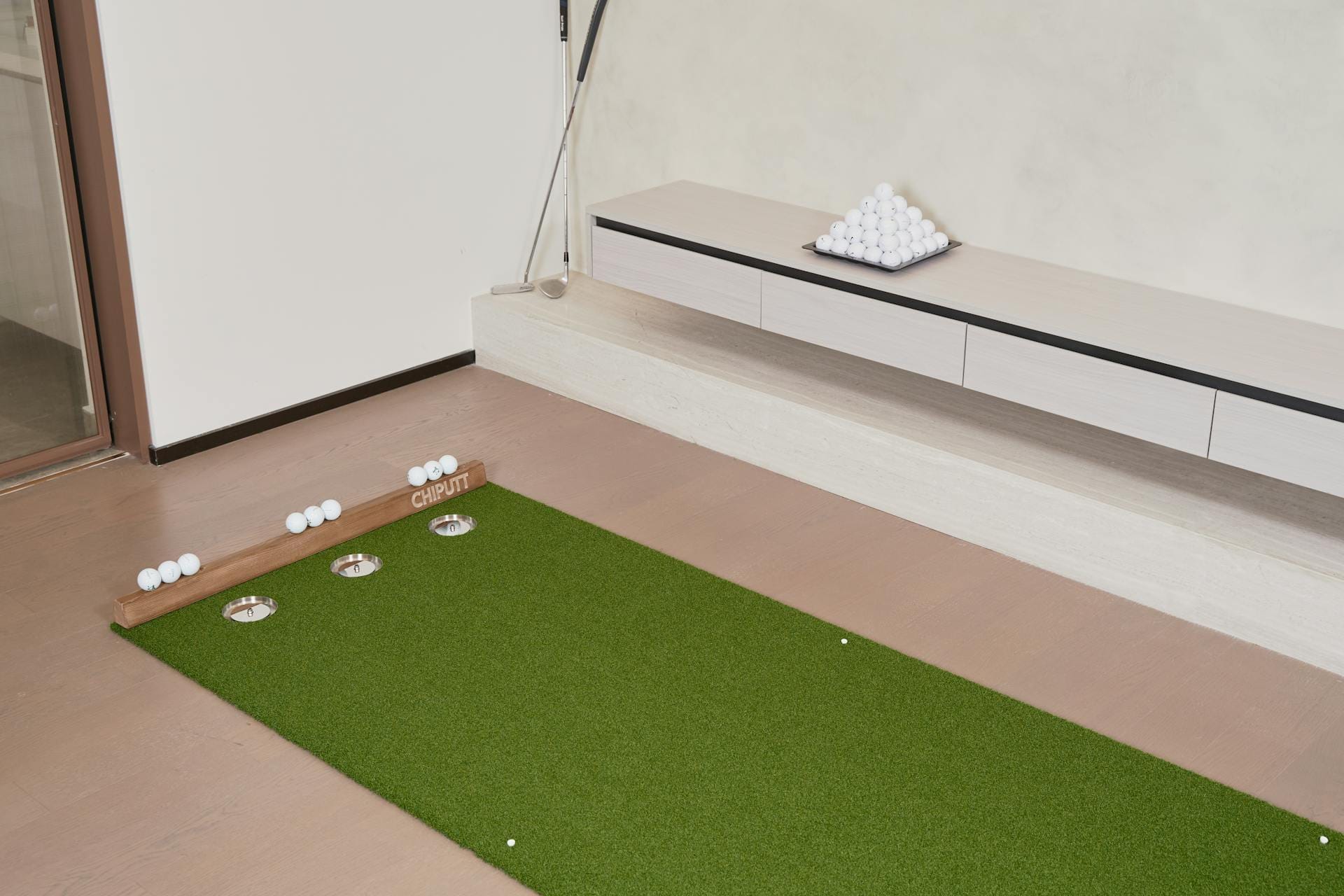
Putting mat with distance markings. The only piece of equipment that targets the single highest-value skill a mid-handicapper can work on at home. Get one long enough to practice lag putts (at least 8 ft / 2.4m) with alignment markings at the 3 ft and 6 ft (0.9m and 1.8m) marks. Amazon carries the SKLZ Accelerator Pro and Wellputt mats, both with markings and rollback returns (check current prices here).
Alignment sticks. A two-pack costs under $20 and gives you a start-line gate for putting, a swing path guide for chips, and a setup check for your tee shot drill. The Reddit r/golf community consensus is consistent: alignment sticks are the highest-ROI practice tool at any level.
Chipping net. Useful for strike quality. You can tell whether you've caught it clean. The limitation is no rollout feedback, so you can't practice trajectory or landing zone with any realism. Still worth having for wet days. EyeLine Golf and GoSports make solid options on Amazon (check prices).
Home launch monitor. If you're serious about closing the tee-to-green gap, a launch monitor for honest feedback on your swing is the biggest step up from basic gear. The Garmin R10, Rapsodo MLM2PRO, and FlightScope Mevo+ all give you face angle, club path, and ball speed when hitting into a net at home. Those are the data points that tell you whether your start-line drills are working. The Garmin R10 is the entry-level pick (check Amazon price); the Mevo+ gives you more data at a higher budget.
Orange Whip 47" Swing Trainer
A counterbalanced training aid for tempo, rhythm, and sequencing, the piece this equipment list is missing next to the strike- and read-focused gear above. A few slow-motion reps before or after a session groove swing sequence without adding club-path or face-angle data to think about.
You don't need three hours a week to move the needle. You need focused, randomised sessions in the areas where you're leaking shots. Here's what a 30-minute daily session looks like, broken down by target area.
Minutes 1-15: Putting (Short Putts + Lag)
Set up your mat with marks at 3, 4, 5, and 6 ft (0.9, 1.2, 1.5, and 1.8m). For the first 8 minutes, hit one putt from each distance in random order. Don't settle in at a single distance. Your goal is to match the 10-HCP make rate of 59% in the 3-6 ft (0.9-1.8m) range. Track your make percentage each session.
For the remaining 7 minutes, practice lag putts. On most home mats you'll be hitting to a backstop. The target: 80% of your lag putts should stop within a 3 ft (0.9m) radius of the hole. Shot Scope data shows all handicaps convert 93%+ from inside 3 ft (0.9m), so getting there from 20-40 ft (6.0-12.2m) is the whole point of lag putting work.
Minutes 15-25: Wedge Strikes
If you have a chipping net, use it. If not, a folded towel on a firm mat works fine. The focus here is strike, not distance. Use your 52-degree or pitching wedge. Set up an alignment stick 3-4 inches (7.5-10cm) behind the ball. The drill: make contact before the stick. That's a clean strike. Hit 10 balls with your sand wedge, 10 with your pitching wedge, alternating for randomisation.
Good contact in the wedge game translates to how to chip properly and is one of the fastest ways to tighten up your scoring from inside 50 yards (45m).
Minutes 25-30: Start-Line Control
Place two alignment sticks on the floor 5-6 ft (1.5-1.8m) in front of your hitting mat, forming a gate about 8 inches (20cm) wide. Take your 6-iron or a mid-iron. The goal: hit through the gate. Not for distance, not for shape, but for starting the ball on line. This drill addresses the penalty shot problem head-on, because most penalties come from severe pull-hooks or push-slices that begin offline. Five minutes, 10 reps. Count how many start through the gate.
For golfers who can put in 3x 60-minute sessions per week rather than 30 minutes a day, here's how to restructure:
Session 1 (60 minutes): 45 minutes putting (30 short-putt randomisation + 15 lag), 15 minutes wedge strikes.
Session 2 (60 minutes): 45 minutes wedge-to-mid-iron strike work with alignment stick gate drill, 15 minutes start-line control.
Session 3 (60 minutes): 30 minutes putting review (focus on whichever distance range gave you trouble this week), 30 minutes full random session across all three areas.
The Shot Scope improvement data, 4.1 strokes saved after 30 tracked rounds, is based on golfers who tracked their on-course stats and adjusted their practice to match. Use a GPS watch or the Shot Scope or Arccos app to track your on-course make rates, penalty counts, and GIR percentage. Your home practice targets should shift to whatever the on-course data says is costing you the most.
If you're sitting at a 15 handicap and want to reach a 12 or better over the next month, here are three data-backed targets. These come from the Shot Scope and Arccos benchmarks for 10-HCP players:
Track all three for four weeks. If your home sessions are targeting the right things, you'll see all three move.
One caveat: some of this depends on how much on-course time you get. If you're playing once a fortnight, the home practice gain will be slower to appear in your scores. But the putting mat data doesn't lie. If you're converting 65% from 4 ft (1.2m) in your living room, you're building the right motor patterns. It shows up on the course in time.
30 minutes a day is enough if the time is focused. Based on recommendations from Golf.com's Top 100 teacher roundtable, splitting practice into 30-minute blocks by category, putting, short game, full swing, produces better results than one long undifferentiated session. The research on random practice also shows that shorter, varied sessions outperform longer blocked ones in terms of skill retention. If you only have 30 minutes, put 15 on short putts and lag work, 10 on wedge strikes, and 5 on start-line control.
A putting mat with distance markings and a set of alignment sticks cover 80% of what you can get done at home. A chipping net adds short-game strike work. If you want to bridge the gap to full-swing practice, a home launch monitor like the Garmin R10 gives you face angle and club path data when hitting into a net. Start with the mat and sticks. Both are under $100 total and target the areas where mid-handicappers lose the most shots.
Yes, but only if the home practice is matched to real on-course weaknesses. Shot Scope data from 2024 shows users who track their rounds and adjust their practice save an average of 4.1 shots after 30 recorded rounds. The key is using on-course tracking data to identify your actual leaks, penalties, specific putt lengths, wedge misses, and then targeting those in home sessions. Practicing without knowing your on-course gaps is less effective.
For most mid-handicappers, putting deserves more home practice time than chipping. The Shot Scope data on make percentages shows the biggest conversion gap is in the 3-6 ft (0.9-1.8m) range, where a 20-handicap makes under half and a 10-handicap makes 59%. That gap is trainable on a home mat. Chipping is worth practicing for strike quality, but without realistic rollout conditions, you can't replicate on-course chips well. A 70/30 split toward putting is reasonable for most home setups.
Random practice means varying the shot on every repetition, different distances, clubs, or targets each time, rather than hitting the same shot in a block. A 2017 study (PMID: 28449601, published in Perceptual and Motor Skills) found that random practice produces better long-term skill retention than blocked repetition for golf. The reason is that your brain has to reconstruct the motor plan for each new shot, which builds a more durable mental representation. Blocked practice feels better in the moment but the gains don't transfer to the course as well.
Track three on-course metrics before starting your home routine, then recheck after four weeks: penalty shots per round, make percentage on 3-6 ft (0.9-1.8m) putts, and three-putt percentage. Use Shot Scope, Arccos, or even a basic scorecard note to capture these. If your home sessions are targeting the right things, you should see penalty count drop first (within two to three rounds), then the putting metrics follow. If nothing moves after four weeks, either the on-course data doesn't match your practice targets, or you're not playing enough rounds for the improvements to show up in your scores.
Some links in this article are affiliate links. If you buy through them, I earn a small commission at no extra cost to you. This never influences what I recommend. I link to gear I'd buy myself.
Data-backed reviews and advice that works. No brand spin.