Five Course Management Mistakes That Cost Mid-Handicap Golfers Three Shots a Round
Three shots a round is 12 shots over four rounds. That’s the difference between a 15-handicap and an 8. Almost none of it is about your swing.
Three shots a round is 12 shots over four rounds. That’s the difference between a 15-handicap and an 8. Almost none of it is about your swing.
TL;DR
Course management accounts for around 40% of scoring potential for amateur golfers.
The five biggest mid-handicap mistakes are: under-clubbing on approaches, defaulting to driver, short-side misses, hero shots from trouble, and ignoring wind and elevation.
Fixing these decisions costs nothing and changes nothing about how you hit the ball.
PGA teaching professionals put decision-making on the course at around 40% of scoring potential for amateurs. That’s a consensus figure drawn from coaching literature rather than a single controlled study, but it holds up consistently enough to act on. Your choices between tee and green matter at least as much as ball-striking ability, and a credible case exists that they matter more.
Shot Scope’s dataset of over 100,000 amateur rounds puts numbers to it. For a typical 15-handicapper, the biggest losses don’t come off the tee or on the putting surface. They pile up on approach play and around the green, where poor targeting compounds bad execution into doubles and worse.
Here are the five patterns that keep appearing in the numbers, and what to do about each one without changing how you hit the ball.
Quick Picks
You’re under-clubbing on approaches. Around 80% of amateur mid-iron shots land short. Add one club, swing at 90%. Simple maths.
Driver isn’t always the right play. Pick the club you can keep in play 80% of the time. That’s often a 3-wood or hybrid.
Short-side misses are double-bogey factories. Miss the green on the side with room to work. The extra five metres of grass between you and the pin changes everything.
Hero shots from trouble don’t pay off. One bad shot plus one bad decision equals a blow-up hole. Take your medicine, chip out sideways, and limit the damage to bogey.
Wind and elevation adjustments are free shots. A 10 mph headwind or an uphill approach can add a full club. Amateurs rarely account for either.
You’re Under-Clubbing on Every Approach Shot
Around 80% of mid-iron efforts by amateur golfers finish short of the target. That figure shows up across multiple instruction sources, including Hackmotion, Chiputt Golf, and several PGA coaching sites, all citing comparable numbers. There’s no single peer-reviewed study behind it, but the pattern is consistent enough to treat as settled.
Why does it keep happening? Most players in the 12–20 handicap range pick a club based on their career-best carry with that particular stick, not what they average across fifty swings. You flushed a 7-iron 160 yards that one time, so you reach for it every time the yardage reads 160. Your real 7-iron average is closer to 148. Maybe 145 on a normal contact day.
Boring fix, but it works. Add one club to whatever your gut tells you. Swing at 85-90% instead of trying to stripe it. A smooth 6-iron from 155 finds the green more often than a maxed-out 7. When you do miss, you’ll miss pin-high or a touch long rather than in the bunker 15 yards short.
Shot Scope’s data makes this concrete. Approaches and around-the-green play are where 15-handicappers bleed the most strokes against lower-handicap benchmarks. Not off the tee, not on the putting surface. Getting the ball onto the green closes that gap faster than any other single adjustment. If you’ve got a launch monitor or can pull strokes-gained figures from your simulator, check your carry numbers against your actual averages for each club in the bag. The gap between what you believe your 7-iron does and what it does across a full round is 10–15 yards. Most golfers don’t know this figure until they measure it. Once you do, the selection becomes straightforward. And if you want to understand what all those launch monitor numbers actually mean, this breakdown of how to read launch monitor data is worth ten minutes.
💡 Tip: Add one club to your selection and swing at 85-90% effort. A smooth 6-iron from 155 yards (142m) finds the green more often than a maxed-out 7-iron.
Driver When the Hole Doesn’t Call for It
PGA professionals repeat the same principle: pick the club you can keep in play 80% of the time. For most mid-handicappers, that’s not driver on every hole.
Driver isn’t the problem. Defaulting to it on every tee box is. A 280-yard drive in the right rough is worse than a 240-yard 3-wood in the fairway on most holes. Far worse, because the right rough means an obstructed angle, a worse lie, and a longer club into the green from a bad position.
Go hole by hole. Wide par 5 where you can’t reach in two anyway? Driver is fine, even if it leaks a bit. Tight par 4 where OB runs down the left side and a fairway bunker sits at 260? A 3-wood to 230 in the fairway sets up a comfortable approach. The hole is giving you the answer. Most golfers never ask the question.
Before you pull the headcover off the driver, ask yourself one thing. “What’s the worst miss with this club, and can I still make par from there?” If the answer is no, drop down a club. Your ego will hate it. Your scorecard won’t.
Playing Driver
Maximum distance when it comes off. Sets up shorter approach shots on reachable holes
Right play on wide, open holes where the rough off the tee is no real punishment
Necessary when you genuinely cannot reach the green in regulation without it
Laying Up / Dropping Down
Bad misses with driver find rough, trees, or OB, turning bogeys into doubles
Right rough means an obstructed angle, a worse lie, and a longer club into the green
Ego-driven club selection, not hole-driven: most tight par 4s are asking for a 3-wood
Short-Side Misses Are Costing You Doubles
A short-side miss is when you’ve missed the green on the same side as the pin, leaving almost no putting surface to land on. It’s one of the most consistently documented sources of double bogeys for players in the mid-handicap range.
Miss the green on the pin side with the flag five paces from the edge and you’ve got zero room to work with. You need to get the ball up fast, land it soft, and stop it within a few metres. That’s a tour-level shot. From the other side, you’ve got the entire green to land on and let the ball release toward the hole. A mediocre chip from the long side is a tap-in par or a simple two-putt bogey. That same chip from the short side? Still 20 feet past or chunked into the bunker.
Aim away from the pin when it’s near an edge. Pin right, favour the left-centre of the green. Your miss will either be on the green (good) or on the long side (fine). It feels conservative. It also turns potential doubles into routine bogeys, and that’s where mid-handicappers save the most shots.
No new skill required. A better target.
⚠️ Warning: Before selecting your target, check which side of the green has more room. Missing the green on the opposite side from the pin gives you a full putting surface to work with.
When Is the Hero Shot Worth It?
You hit a tee shot into the trees. You can see the green through a gap. The gap is maybe 10 feet wide, 40 yards away, with branches at head height. You pull out a 5-iron and try to thread it.
It doesn’t work. Now you’re in worse trouble, lying three instead of two.
Double bogeys almost always follow the same sequence: one bad shot, then one bad decision. The bad shot puts you in trouble. The bad decision keeps you there. If you’d taken your medicine, chipped out sideways to the fairway, and played a wedge onto the green, you’re looking at bogey. Maybe par if you sink a putt.
“Lateral and one-shot-behind” beats “gamble and two-shots-behind” every single round. The maths never favours the hero shot for a 15-handicapper. You’re not going to thread that gap 80% of the time. Not 20% either.
In trouble, the only goal is to get back to a position where your next shot is a normal one. Sideways. Back to the fairway. Wedge on. Two-putt for bogey. Move on.
ℹ️ Note: Taking the safe route from trouble is not playing conservatively — it's eliminating the double bogey. One dropped shot is recoverable. Doubles accumulate.
You’re Not Adjusting for Wind and Elevation
A 10 mph headwind adds one club of distance. An uphill approach to a raised green can add another half-club to a full club depending on the slope. Put both together (and it happens more than you’d think) and you’re looking at a two-club difference between the number on your rangefinder and the distance you need to cover.
Most mid-handicappers don’t adjust at all. They see 150 on the rangefinder, pull their 150 club, and wonder why they’re short. Again.
This compounds the under-clubbing problem. Golfers who habitually pick for their best-distance club rather than their average, adding wind and elevation on top, are sometimes two or three clubs short. That’s the difference between a GIR and a plugged bunker shot from 30 yards out.
Get a rough system in place and use it every single round. One club for every 10 mph of headwind. Half a club for a moderately uphill approach, a full club when the target sits on a steep rise above you. Reverse both numbers for downwind and downhill shots. You don’t need a yardage spreadsheet or a precise elevation reading on every hole. You just need a consistent rule applied every time conditions call for it. Right now, for most golfers in the 12-20 handicap range, no such rule exists. They feel the wind, shrug, and pull their yardage club anyway. The players who score to their handicap consistently aren’t always striking it better on those days. They’re adjusting and their playing partners aren’t.
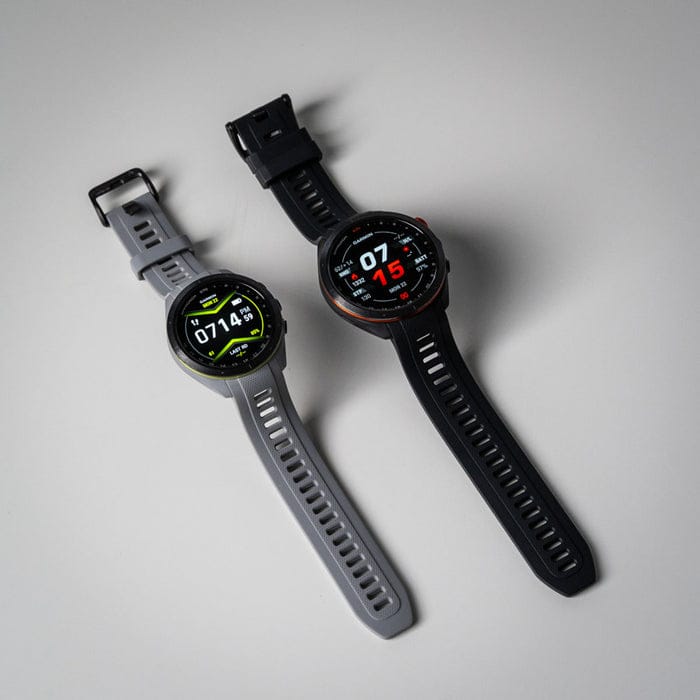
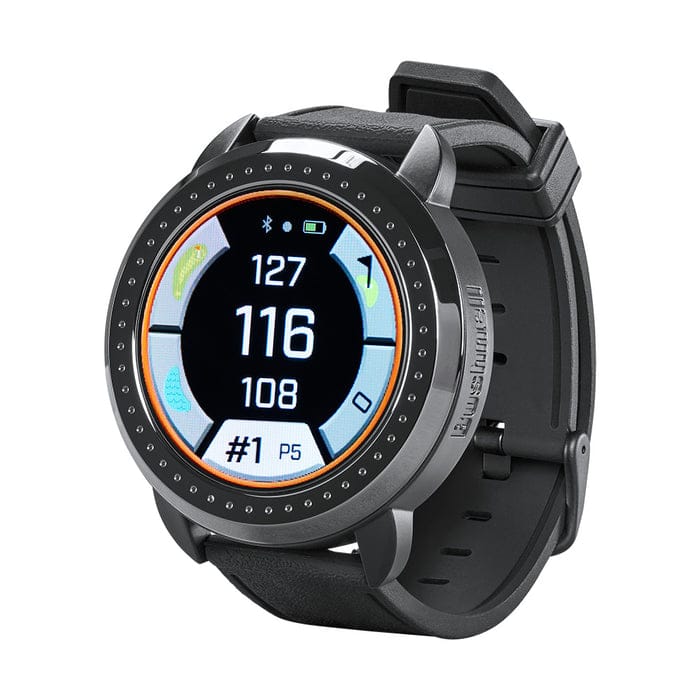
If you use a GPS watch, some models from Garmin and Bushnell give you adjusted “plays like” distances that account for elevation changes automatically. That’s a measurable scoring edge you’re walking past if you’re not using one.
If you’ve got a home simulator setup, you’ve got the best course management training tool available. Simulated rounds on courses you play in real life let you practise decision-making without the pressure of a real scorecard or the pace-of-play guilt of taking too long.
Play a round on GSPro or E6 and pay attention to your decisions, not your ball-striking alone. Where are you losing shots? Approach club selection? Tee shot choices on tight holes? Short-side misses?
Strokes gained is the metric that measures where you’re losing shots against a benchmark for your handicap level. It shows whether the damage is coming off the tee, on approach, around the green, or on the putting surface. Pull those numbers from a sim session and the leaks become specific. I’ve written up how strokes gained works in practice if you want to go deeper on the numbers. And if you’re heading into your first sim season, your pre-round warm-up applies to simulator sessions too.
The real advantage is repetition without consequence. Play the same hole 10 times, trying driver versus 3-wood, aiming at the pin versus centre-green. You’ll see the scoring difference. It’s larger than you expect.
Frequently Asked Questions
What is course management in golf?
Course management is the decision-making layer of golf: which club to hit, where to aim, when to play aggressively, and when to play safe. It covers tee shot selection, approach targets, miss management, and risk assessment on every hole. For mid-handicappers, improving course management saves more shots per round than swing changes, because the decisions you make with the skills you have determine whether a bad shot turns into a bogey or a double.
How many shots can course management save per round?
For a golfer in the 12-20 handicap range, fixing the five most common course management mistakes can save 2-4 shots per round. PGA teaching professionals estimate that course management accounts for around 40% of scoring potential for amateurs. That means a 15-handicapper who makes better decisions without improving their swing could play closer to a 12, based on decision quality alone. The biggest single gain comes from correct club selection on approach shots.
Should mid-handicappers always lay up instead of going for it?
No. Smart course management isn’t about always playing safe. It’s about matching the risk to the reward and your actual skill level. On a wide-open par 5 with no trouble, going for it in two is fine, even if you don’t make it. The mistake is taking high-risk shots when the penalty for failure is severe, like trying to carry water from 220 yards when laying up to 80 yards gives you a wedge in. The question to ask: “If this doesn’t come off, what’s my likely score?” If the answer is double or worse, lay up.
How do I practise course management without playing a full round?
Home golf simulators are the most efficient way. Running simulated rounds on GSPro or E6 Connect lets you practise decision-making on real course layouts without the four-hour time commitment. You can replay holes, test different strategies, and review strokes gained data to identify patterns. Without a simulator, mental course management works too: walk through your home course hole by hole in your head and decide, for each shot, what club you’d hit and where you’d aim. Write it down. It sounds basic, but having a plan before you get to the first tee changes how you play.
Does a GPS watch help with course management?
Yes, for the two biggest mid-handicap leaks: under-clubbing and ignoring elevation. GPS watches that show “plays like” distances (adjusted for elevation change) remove guesswork from club selection. They also provide front/middle/back yardages to the green, which helps you pick smarter targets. They won’t fix your decision-making on their own, but they give you better information to make decisions with. That’s the foundation of good course management: knowing what you’re dealing with before you swing.
Your Biggest Leak Is in Your Data
All five of these are decision problems, not skill problems. You don’t need a better swing to fix them. You need a better process.
If you’ve got strokes gained data from a launch monitor or simulator, start there. The numbers will tell you which of these five is your biggest leak. For most mid-handicappers, it’s under-clubbing on approaches. For some, it’s the hero shots from trouble. Either way, the data points you to the fix that saves the most shots the fastest.
If you’re still three-putting too often, fix that too. But fixing your decisions between tee and green is where the big numbers live. Trust the data. Play the percentages. Stop trying to thread it through the trees.
Some links in this article are affiliate links. If you buy through them, I earn a small commission at no extra cost to you. This never influences what I recommend. I link to gear I’d buy myself.
The golf newsletter that cuts the hype
Data-backed reviews and advice that works. No brand spin.
James WhitfieldGolf writer
James Whitfield plays off a 7 handicap in the Pacific Northwest. A former tech pro, he reads what independent tests show, cross-references owner reports, and turns the evidence into buying advice. He's happier with a spec sheet than a putt.
Wind punishes high, spinny shots, not bad swings. Lower your ball flight with a setup change and a knockdown swing, and you take most of wind's power away before it ever touches the ball.
Lauren Coughlin and Jenny Shin share the Round 1 lead at 6-under at the women's Scottish Open, with A Lim Kim and Linn Grant close behind at Dundonald Links.
A bad hole becomes a wrecked round because of tilt, the compounding emotional drift that turns one mistake into three. Here's the repeatable reset system that stops it before the next tee shot.