How to Read Greens Like a Tour Pro
Tour pros read 76.5% of putts correctly vs 57% for amateurs. Learn the 5-step green reading process, AimPoint Express, stimp speed, and grain reading.

- 1.Green reading is a process skill, not a feel skill. Tour pros read correctly on 76.5% of putts vs 57.1% for amateurs (Campbell & Moran, 2014).
- 2.Green reading accounts for 60% of putting distance variability; your stroke accounts for just 34% (Frontiers in Psychology, 2021).
- 3.AimPoint Express gives you a repeatable method used by 200+ tour pros. Felt slope percentage and a finger-aim line replace guesswork.
- 4.Faster greens amplify break: the same slope breaks more on a stimp 12 surface than a stimp 9. Speed and line are not independent variables.
- 5.Find the fall line first. Every putt on the green becomes easier to read once you’ve located the low point.
Green reading is the single biggest factor in putting performance, and most amateurs get it wrong more often than they get it right. A 2014 study published in Cognitive Processing by Campbell and Moran found that amateur golfers read only 57.1% of putts correctly. Tour professionals? 76.5%. That's a 19-percentage-point gap, and it isn't explained by talent or practice hours alone. It's a process gap.
A separate study in Frontiers in Psychology (2021) broke down putting distance variability into its components: green reading accounted for 60% of the total. Stroke technique contributed just 34%. If you've been spending all your practice time on your putting stroke and none on your reads, you've got the ratio backwards.
Why Amateurs Miss Low (And What the Research Shows)
The most common amateur putting miss is below the hole. This isn't a coincidence or a technique flaw. It's a perceptual bias: the human brain underestimates slope.
GolfWRX analysis of tour putting data found that even professionals under-read left-to-right breaking putts by 30% and right-to-left putts by 15%. If tour players with world-class green reading skills still under-read break, the gap for a 15-handicapper is almost certain to be wider.
The late short-game researcher Dave Pelz studied this pattern for decades. Pelz found that most recreational golfers should aim to triple the break they read. That sounds extreme, but it's consistent with the peer-reviewed data: the ball curves from the moment it leaves the putter face, not just at the end of its roll, and your eyes trick you into seeing a straighter line than the physics produce.
Missing low is also the worst miss from an information standpoint. When you miss below the hole, you can't tell whether your read was wrong or your stroke was wrong. A putt that starts on the high side and misses above the hole tells you your line was good and your speed was off. A low-side miss tells you nothing. It's dead data.
How Tour Pros Read Greens: The 5-Step Process
Tour professionals don't glance at the green and go with their gut. They follow a repeatable sequence, and Campbell and Moran (2014) found that pros used fewer visual fixations of longer duration than amateurs. Fewer looks, better information. Here's the process broken into five steps you can use on your next round.
1. Start from behind the ball, 20 feet (6.1m) back.
Step well behind your ball and take in the macro view. You're looking for the high and low points of the entire green, not just the line between your ball and the hole. Where is the water? Where would a marble roll if you set it on the center of the green? Those two questions give you the overall tilt.
2. Find the fall line.
The fall line is the imaginary path straight downhill through the hole. Think of a clock face: 12 o'clock is the point above the hole (straight downhill), 6 o'clock is below (straight uphill), and 3 and 9 o'clock are the positions of maximum side break. Every putt on the green references this line. If your ball sits at 2 o'clock relative to the fall line, you've got a right-to-left breaking putt with a downhill component. At 8 o'clock, it's left-to-right and uphill. Find the fall line first, and the break direction becomes obvious.
3. Read from the low side.
Walk to the low side of the putt (below the hole, looking uphill). Campbell and Moran's research showed that reading from specific low-side positions produced superior accuracy for professionals. Get low. One eye closed, crouch down, and look along the ground. From the low side, slope is visible. From the high side, it flattens out and deceives you.
4. Feel the slope with your feet.
Walk the midpoint between your ball and the hole. Pay attention to where gravity pulls your weight. Does your left foot feel lower? Your right? This is the foundation of the AimPoint Express system: translating what your feet feel into a slope percentage. You don't need a certified AimPoint class to start here. Just walk the line and feel the tilt.
5. Commit to a specific aim point, not a general area.
Professionals aim at a point. Amateurs aim at a zone. Pick a spot on the green where you want the ball to cross: a blade of grass, a discoloured patch, a specific distance outside the edge of the cup. Vague reads produce tentative strokes, and tentative strokes decelerate through impact.

Speed or Line: What the Data Actually Shows
Instruction has leaned on Dave Pelz's speed-first framing for decades: hit a putt firm enough to hold its line, and a putt that's dying at the hole is exposed to gravity longer and breaks more than one rolling with pace. That physics is sound, but it isn't the whole picture. A GolfWRX analysis, run on Shot-by-Shot strokes-gained software, found that line, not speed, is the bigger factor on putts inside about 20 feet (6.1m), with the effect strongest between 6 and 10 feet (1.8m to 3m), which happens to be where most amateur three-putts actually start. The two findings aren't really in conflict: a read is only correct for one specific pace, so a putt hit at the wrong speed breaks along the wrong line no matter how well it was read, and a putt started on the wrong line misses even at the right pace. Inside 10 feet (3m), where the margin for error shrinks fastest, getting the start line right does more work than most golfers assume, and I'll admit that's the miss that still stings most on my own scorecard, a putt I'd read correctly but couldn't commit the line to, second-guessing the start direction halfway through the stroke.
AimPoint Express: What It Is and Whether It's Worth Learning
AimPoint Express is a green-reading system built on slope physics, not visual intuition. Developed by Mark Sweeney, it replaces the guess-and-check approach with a process: feel the slope with your feet, convert it to a percentage, then use your fingers held at arm's length to dial in the aim point.
The finger method works like this: stand behind the ball, face the hole, and hold up fingers at arm's length. One finger width outside the hole edge corresponds to about 1% slope. Two fingers for 2%. Three for 3%. The system uses four variables: slope percentage, stimp speed, distance to the hole, and slope direction relative to the fall line.
Over 200 tour pros use AimPoint Express, according to AimPoint Golf. The list includes Viktor Hovland, Adam Scott, Justin Rose, Stacy Lewis, Max Homa, Rickie Fowler, and Sam Burns. AimPoint claims that half of PGA Tour winners use the system, though that figure is harder to verify from public data.
Here's the honest assessment: AimPoint works. The methodology is sound and grounded in physics. But it takes practice to calibrate your feet to feel slope percentages with precision, and most golfers need a digital level and 10 to 15 practice sessions before they're reliable. The full clinic runs about $200 to $250 for 90 minutes with a certified instructor and is limited to 6 to 8 golfers. That's the proper way to learn it.
For mid-handicappers who want a starting point without the clinic investment, the AimPoint DVD covers the fundamentals.

AimPoint Express Green Reading Fundamentals (DVD)
AimPoint's adoption numbers don't settle whether the method belongs in every green-reading toolkit. PGA Tour pro Lucas Glover has been one of the more vocal critics of AimPoint's place in tournament golf, telling reporters that "AimPoint, statistically, hasn't helped anybody make more putts since its inception on the PGA Tour. Statistics have beared that out," and adding that "it's also kinda rude to be up near the hole, stomping around, figuring out where the break is in your feet... It takes forever." Those comments, first reported by Golf Digest and picked up by Yahoo Sports, NBC Sports, Golf.com, and Sports Illustrated, sit at the center of a broader pace-of-play argument that's followed AimPoint onto tour broadcasts. AimPoint's defenders push back with their own numbers: a properly executed AimPoint Express read is supposed to take about 5 seconds on a 6-foot putt (1.8m) and 10 seconds on a 20-foot putt (6.1m), and outlets like Golfshake and Golf Monthly argue the slow-play complaints trace back to golfers misapplying the system, not the system itself.
A simplified version works for most amateur rounds: categorize slope into three buckets (flat, moderate, steep) rather than nailing a precise percentage. That gets you 80% of the benefit without the full learning curve. The other thing to know: AimPoint takes time in your pre-putt routine, and there's a reason some fans find it slow to watch. On a busy Saturday morning, a streamlined version is more practical than the full tour process.
Stimp Speed and Break: Why the Same Putt Plays Different Every Week
Faster greens amplify break. A putt on a stimp 12 green will break more than the same putt on the same slope at stimp 9, because the ball rolls further before friction slows it. According to the USGA's green speed physics research, slower greens create more friction and decelerate the ball sooner, so the slope has less time to push the ball sideways. Faster greens do the opposite: the ball maintains speed longer, and gravity has more time to work.
| Green Speed | Stimp Reading | Where You'll See It |
|---|---|---|
| Slow | 7 to 9 | Municipal courses, winter greens |
| Moderate | 9 to 11 | Well-maintained private clubs |
| Fast | 11 to 13 | Tournament conditions, top-tier clubs |
| Tour / Augusta | 13 to 15 | Major championships, Augusta National |
Ask the pro shop or starter for the day's stimp reading before your round. Many courses post it near the practice green. If the greens are running at 11 or above, you need to add break to your reads. If you've been playing a stimp 9 course all winter and step onto a stimp 12 surface in spring, your old reads will leave every breaking putt on the low side.

MyGolfSpy Labs testing found that downhill putts break 3 to 4 times more than uphill putts at the same slope. The ball decelerates more on a downhill putt, spending more time under the influence of the side slope. This is why leaving the ball below the hole on approach shots matters: an uphill 10-footer (3.0m) is a far simpler read than a downhill one.
Reading Grain: The Variable Most Amateurs Ignore
Grain is the direction grass blades grow, and on bermuda greens, it changes everything. On bentgrass greens (Pacific Northwest, UK links, most Canadian courses), grain is minimal because the blades grow near-vertically. Focus on slope and speed.
Bermuda is a different story. Bermuda grass grows laterally, toward the setting sun and toward water sources. A putt rolling with the grain (in the direction the grass grows) will be faster and break less. A putt into the grain will be slower and may not break as much as the slope suggests, because the friction overrides the side slope. A putt across the grain picks up additional break in the direction the grass leans.
Reading bermuda grain is straightforward. Look at the green surface between your ball and the hole. If it looks shiny, you're looking with the grain, and the putt will be faster. If it looks dark or matte, you're looking into the grain, and it'll be slower. Around the cup, check which side has a clean, sharp edge (that's into the grain) and which side looks ragged or overgrown (that's with the grain, because the grass is growing over the lip).
Bermuda dominates courses in the US Southeast, Florida, Texas, Arizona, and many Australian courses. Bentgrass is standard in the Pacific Northwest, UK, Ireland, and most of Canada. If you're traveling to play and switching between grass types, your green reads need to adjust. On bermuda, a putt breaking left-to-right across the grain direction can break more than the slope alone would suggest. Add a half-finger width to your aim on those reads.
The Most Common Green Reading Mistakes (And How to Fix Them)
Reading from the high side. This is the most frequent positional mistake. From above the hole, slopes look flat and you'll under-read the break. Walk to the low side first.
Under-reading the break on every putt. If you miss low round after round, you're not doing something wrong with your stroke. You're reading too little break. Start by doubling your initial read for a few rounds and track the results. The data says you're closer to tripling it than you think.
Ignoring slope on approach shots. Green reading starts before you reach the green. Leaving the ball above the hole on your approach gives you a downhill, fast-breaking putt. Leaving it below gives you an uphill putt that breaks less and is easier to control. Course management and green reading are connected: I've broken down how strokes gained separates approach play from putting, and the numbers are stark.
Reading break but ignoring speed. A correct read with the wrong speed still misses. A putt aimed at the right line but hit 3 feet (0.9m) too hard will blow through the break. The late Dave Pelz's research placed the optimal putt speed at rolling 17 inches (43cm) past the hole if it misses. Any harder, and you're fighting your own read.
Trusting plumb-bobbing on complex greens. Plumb-bobbing looks authoritative, but research (PubMed, 2005) confirms it's unreliable when the slope beneath your feet differs from the slope between the ball and hole. On a green with multiple tiers or undulations, plumb-bobbing gives you the slope where you're standing, not the slope your ball will roll over. Use it as a rough sanity check on simple putts. For anything with more than one break, feel the slope with your feet instead.
Not committing to the read. A vague read produces a tentative stroke. Tentative strokes decelerate, and deceleration changes the break. Pick your spot, trust it, and roll the ball with conviction. You'll miss some, but you'll learn from every miss.
Frequently Asked Questions
What is AimPoint Express and how does it work?
AimPoint Express is a green-reading system created by Mark Sweeney that uses felt slope percentages to determine aim points. You stand behind the ball, feel the slope beneath your feet, assign it a percentage (1% to 5%), then hold up the corresponding number of fingers at arm's length to find your aim point outside the hole edge. Over 200 tour pros use it, including Viktor Hovland and Adam Scott. The system accounts for four variables: slope percentage, stimp speed, distance to hole, and direction relative to the fall line. It's taught through in-person clinics (~$200 to $250 for 90 minutes) with certified instructors, and there's also a DVD introduction available on Amazon. The methodology is physics-based and effective, but most golfers need practice with a digital level to calibrate their feet before the reads become reliable.
Why do most amateur golfers miss putts on the low side?
The brain underestimates slope. Campbell and Moran (2014) found amateurs read only 57.1% of putts correctly, and the dominant miss pattern is below the hole. GolfWRX data shows even tour pros under-read left-to-right breaking putts by 30%. The ball curves from the moment it leaves the putter face, not just at the end of its roll, but your visual system perceives a straighter path than the physics produce. Dave Pelz's research found most recreational golfers need to triple their break read. A practical fix: for your next five rounds, double your initial read on every breaking putt and track how many more you make.
How does green speed affect how much a putt breaks?
Faster greens amplify break. On a high-stimp green (11+), the ball maintains speed longer before friction slows it, giving gravity more time to push the ball sideways. According to USGA green speed physics research, a putt on a stimp 12 surface will break more than the same putt on the same slope at stimp 9. MyGolfSpy Labs testing also found that downhill putts break 3 to 4 times more than uphill putts at the same slope, because the ball decelerates more on the downhill roll. Ask the pro shop for the day's stimp reading and adjust your reads.
What's the difference between reading grain on bermuda vs bentgrass?
Bermuda grass grows laterally (toward the setting sun and water sources), creating grain that affects both speed and break. Putting with the grain is faster; into the grain is slower; across the grain adds break in the direction the grass leans. Bentgrass blades grow near-vertically, so grain is minimal and you can focus on slope alone. To read bermuda grain, look at the surface: a shiny appearance means you're looking with the grain (faster putt), while a dark, matte look means into the grain (slower putt). Bermuda dominates courses in the US Southeast, Florida, Texas, Arizona, and many Australian courses. Bentgrass is standard in the Pacific Northwest, UK, and Canada.
Is plumb-bobbing accurate for green reading?
Not on complex greens. A 2005 study published in PubMed confirmed that plumb-bobbing is unreliable when the slope beneath the golfer differs from the slope between the ball and the hole. On a green with multiple tiers or undulations, the putter shaft shows you the slope where you're standing, not the slope your ball will traverse. It can serve as a rough directional check on simple, single-plane slopes, but for putts with compound breaks, feeling the slope with your feet (the AimPoint foundation) or reading from the low side produces better results. Most tour pros have moved away from plumb-bobbing in favor of systems like AimPoint Express.
Your Next Round
Green reading isn't a gift. It's a learnable skill with a documented process, and the data says it matters more than your putting stroke. Before your next round, try three things: read every putt from the low side first, double the amount of break you'd play by instinct, and commit to a specific aim point rather than a general area. Track your results over five rounds. If your low-side misses drop and your two-putt percentage improves, you've found the 60% of your putting game that most golfers never train.
If you want to go further, pick up a putting mirror to work on your eye position and alignment at home.
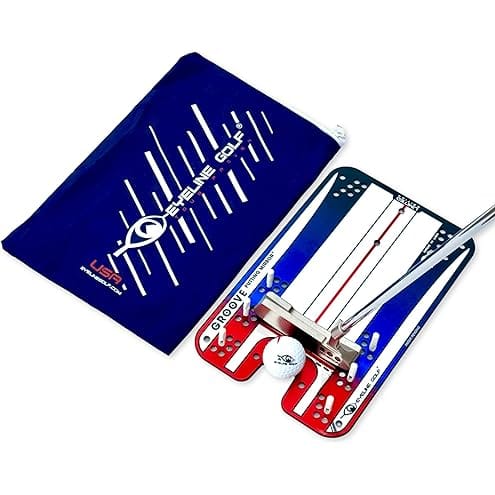
EyeLine Golf Groove Putting Mirror
Some links in this article are affiliate links. If you buy through them, I earn a small commission at no extra cost to you. This never influences what I cover or recommend. I link to gear I'd buy myself.









The golf newsletter that cuts the hype
Data-backed reviews and advice that works. No brand spin.
Recommended products

Rukket SPDR Golf Net Review: 10x7 Bundle for Home Practice.
The Rukket 10x7 SPDR golf net bundle reviewed: what's actually in the box, what MyGolfSpy and PluggedInGolf found, and who it fits best.
Read review