







reviews
Torrey Pines South Course Review
Torrey Pines South is a municipal golf course that any golfer can book, and it has still hosted
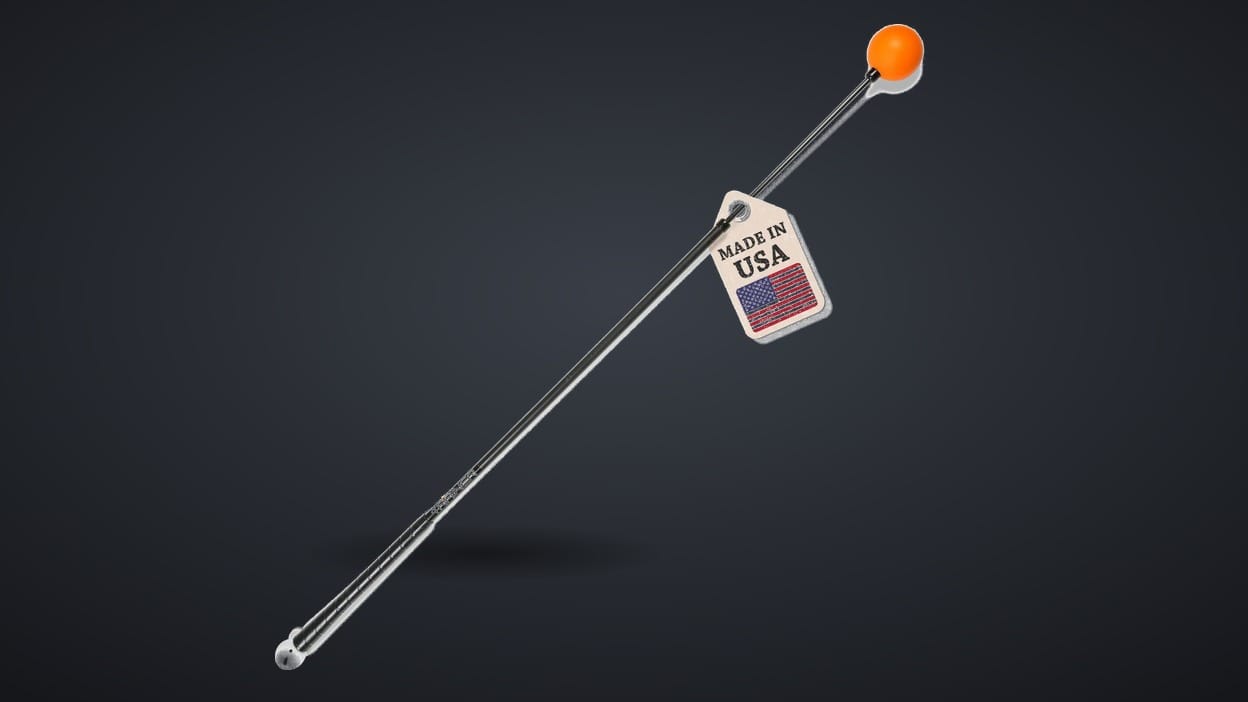
A tempo and balance trainer built around a wobble, not a distance-training tool
Most swing aids promise to fix something mechanical: your plane, your path, your face angle at impact. The Orange Whip Full-Size 47" doesn't measure any of that. It gives you a wobble instead, and the wobble is the point.
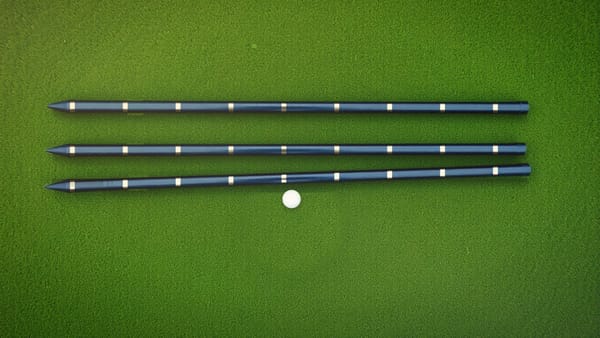
The trainer is a weighted, counterbalanced shaft with a flexible midsection and a ball on the end. Swing it smoothly and it moves with you. Rush it, or get your sequencing wrong, and it fights back, an off-plane or poorly timed swing produces a felt kickback that's hard to ignore. That single feedback loop is why Orange Whip has spent years marketing itself as an instructor-favorite tempo trainer, and why it shows up repeatedly in golf instruction's "best training aids" coverage.
This is a rhythm and balance trainer, not a speed or distance tool. Orange Whip positions it for warm-up routines and tempo work: golfers swing it before a round to groove sequencing, or use it as a standing drill to feel what a connected, on-plane swing actually feels like without a launch monitor screen to check.
That's a deliberate contrast with Orange Whip's own Lightspeed model (45 inches, a different mechanism built for swing-speed training). The Full-Size 47" isn't trying to add clubhead speed. It's trying to make the swing you already have more repeatable, which is a different job and worth knowing before you buy.
The shaft is patented and flexible, with a counterweight built into the design so the whole thing behaves like a pendulum rather than a rigid rod. Golf instruction writers who cover training aids consistently point to the same mechanic: a smooth, sequenced swing lets the flex and the counterweight move together, while a rushed or steep swing creates a wobble you feel through the grip.
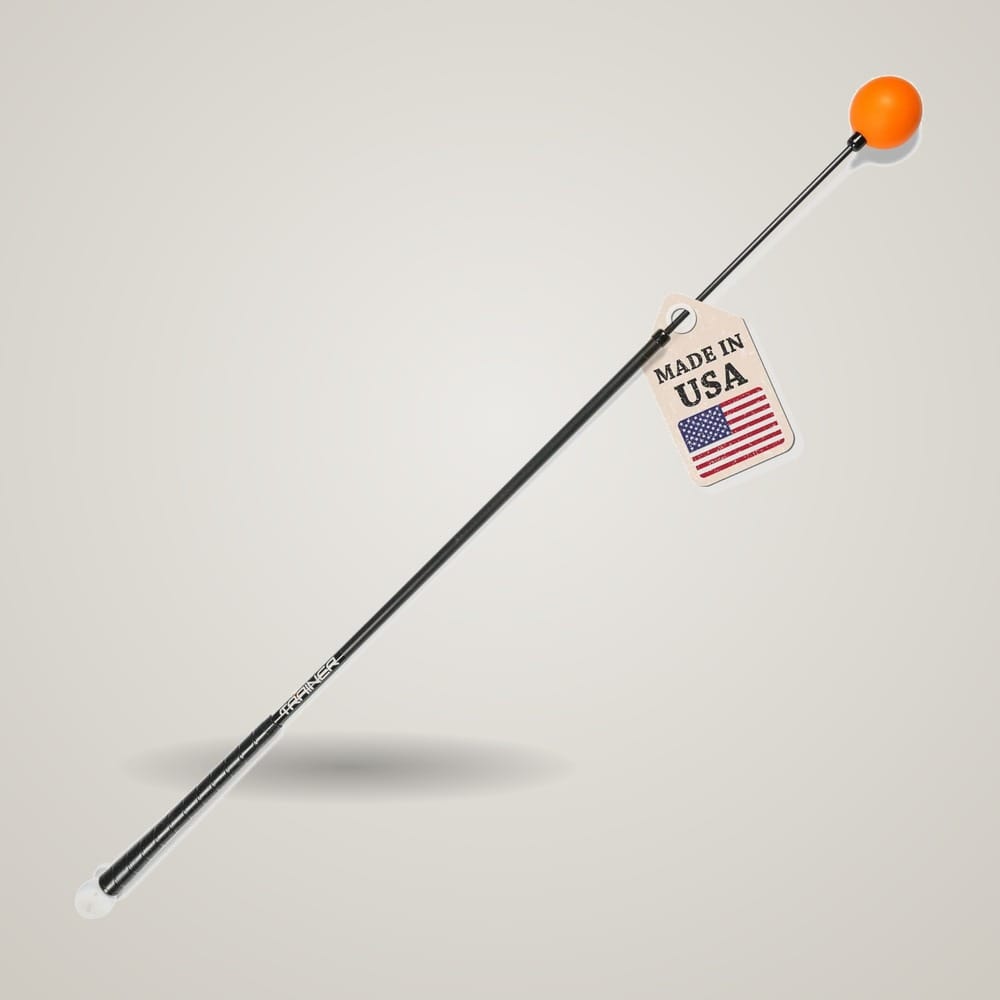
That wobble is effectively the product's only feedback signal, and it's an analog one. There's no app, no number, no swing-plane overlay. You either felt it wobble or you didn't, which is either a feature or a limitation depending on what you're used to training with.
Orange Whip sells five versions, and mixing them up is the easiest way to end up with the wrong trainer:
If a page, listing, or gift guide just says "Orange Whip" without a size, confirm the variant before buying. The Full-Size 47" (ASIN B07HXTFD8D) is the one covered here.
Across 3,717 ratings on the Full-Size 47" listing, the aggregate sits at 4.7 out of 5, with 80% five-star and 15% four-star, call it 95% landing at four stars or better. The recurring positive theme in that volume of feedback is warm-up and rhythm work rather than mechanical correction: buyers use it standing in the garage or on the range before a round, not as a swing-plane diagnostic tool.
The recurring caveat, concentrated in the roughly 5% of reviews at three stars or below, is that the feel takes a few sessions to click. It's also easy to swing the trainer loosely, fast and short, without ever engaging the tempo work it's designed around. The fix, per that feedback, is straightforward: slow, full-motion swings rather than quick flicks, at least for the first several sessions, a learning curve I feel more acutely than most given how much I lean on launch-monitor numbers over a trainer with no screen at all.
Pros
Cons
Orange Whip Golf Swing Trainer Aid, Full-Size 47": View on Amazon
It's a tempo, rhythm, and balance trainer. Golfers use it mainly as a pre-round warm-up tool and to groove a smoother, better-sequenced swing, not as a distance or clubhead-speed trainer.
They're the same mechanism at different lengths: Full-Size is 47 inches (119cm) for adult full-swing use, Midsize is 43.5 inches (110cm), Compact is 35.5 inches (90cm) and travel-friendly, and Junior is 38 inches (97cm) for younger golfers.
No. The Lightspeed is a separate 45-inch (114cm) model built specifically for swing-speed training, with a different mechanism. The Full-Size 47" is built for tempo and balance, not speed.
Manufacturer guidance and the aggregate review feedback both point to short, frequent sessions, a few minutes before a round as a warm-up, plus standalone practice swings, done slowly and deliberately rather than fast.
Some links in this article are affiliate links. If you buy through them, I earn a small commission at no extra cost to you. This never influences what I cover or recommend. I link to gear I'd buy myself.
Data-backed reviews and advice that works. No brand spin.