







reviews
Torrey Pines South Course Review
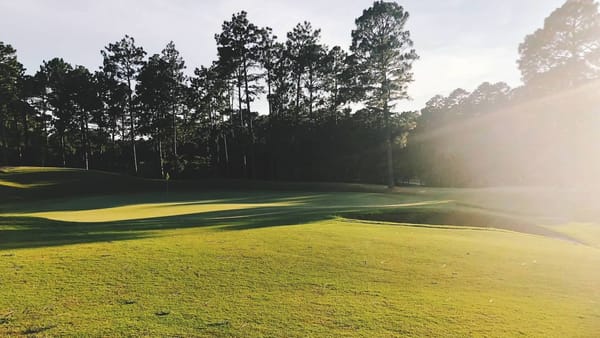
Torrey Pines South is a municipal golf course that any golfer can book, and it has still hosted
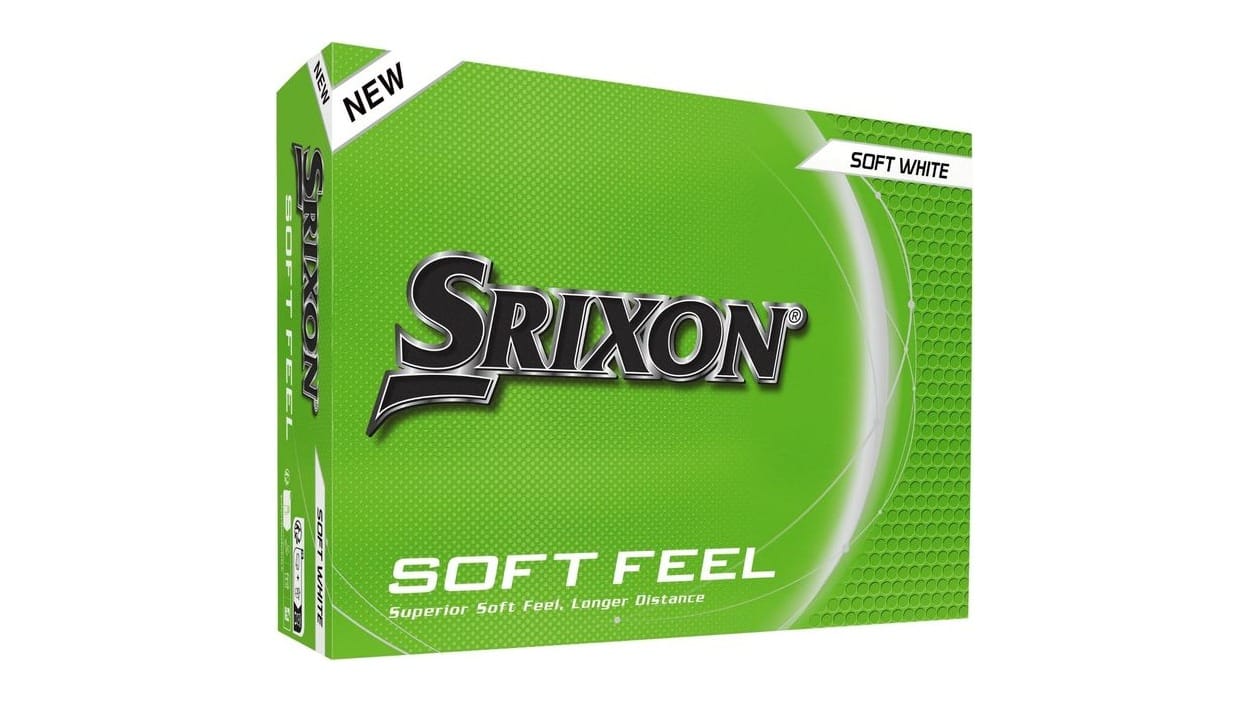
The Srixon Soft Feel is the right ball for a large share of recreational golfers: compression 60, a two-piece FastLayer core designed to maximize distance for moderate swing speeds, and an ionomer cover that produces workable greenside feel at around $27 a dozen. For golfers with swing speeds under 90 mph (145km/h), it's the most efficient ball at its price point. Players chasing maximum driver distance and spin separation above that speed threshold belong on a different ball.
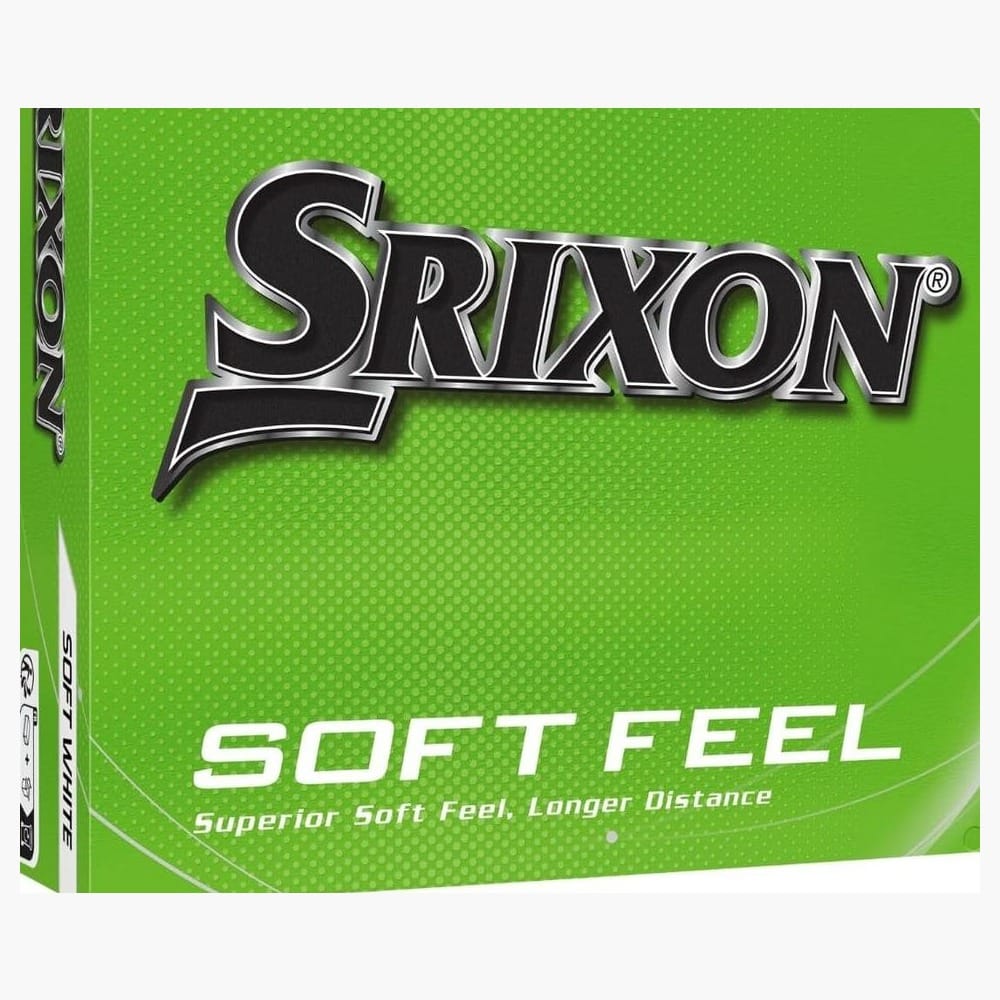
| Spec | Srixon Soft Feel |
|---|---|
| Compression | 60 |
| Construction | 2-piece |
| Core | FastLayer (soft center, firms toward cover) |
| Cover | 1.6mm ionomer |
| Dimples | 338 Speed Dimple Pattern |
| Price (Amazon) | ~$27/dozen |
The 2023 update sharpened the FastLayer Core relative to the previous generation, with Srixon citing improvements to ball speed off the driver face. Published review data from Golf Monthly and Golf Insider UK both confirm comparable carry distances to the prior model, with the ball sitting competitively against others in the sub-$30 category for moderate swing speeds.
The 338 Speed Dimple Pattern produces a penetrating flight with reduced drag through the air. Published review findings note lower driver spin rates versus premium tour balls, typically in the range of 300 to 500 RPM less than urethane-covered alternatives. For a golfer at 80 to 85 mph (129 to 137km/h), that characteristic is an advantage: less sidespin means tighter dispersion on off-center drives, and the lower total spin supports carry distance at speeds where a high-compression ball would cost yards.
Above 90 mph (145km/h), the equation reverses. Players at that speed and above tend to generate enough clubhead speed to compress a firmer ball efficiently, and the Soft Feel's lower spin ceiling starts to limit flight-shaping capability and wedge shot separation.
Published review data from Golf Insider UK notes that the Soft Feel performs reliably on iron shots, including slight mishits, which is consistent with the design priority: a ball with a softer compression and wider flight window for players whose contact consistency is still developing. Iron approach shots produce workable ball flight without the feedback precision of a urethane cover.
The ionomer cover doesn't deliver the audible snap of a firmer ball. Impact feel with long irons is described consistently across reviews as soft to slightly muted. For golfers who prioritize soft over firm in their impact preferences, this is the intended behavior. For those who prefer feedback from contact, the cover choice is a tradeoff worth knowing in advance.
The 1.6mm ionomer cover produces more greenside feedback than a pure distance ball but less spin control than a urethane-covered option. Published testing from Golf Insider UK recorded chip shots stopping and occasionally backing up on firm greens, which is above-category performance for a two-piece ionomer ball at this price. Golf Monthly's testing described short-game control as "pretty decent" with reasonable stopping distance on chips.
The ceiling is still ionomer. Consistent high-spin wedge shots that stop short and spin back on approach require a urethane cover. Golfers whose short-game control depends on that level of spin separation will hit a ceiling with the Soft Feel that no compression adjustment can overcome. The Titleist Pro V1 review covers that tier in full.
For the golfer whose primary short-game priority is soft contact feel and predictable stop rather than high-RPM spin control, the Soft Feel delivers well above what the price suggests.
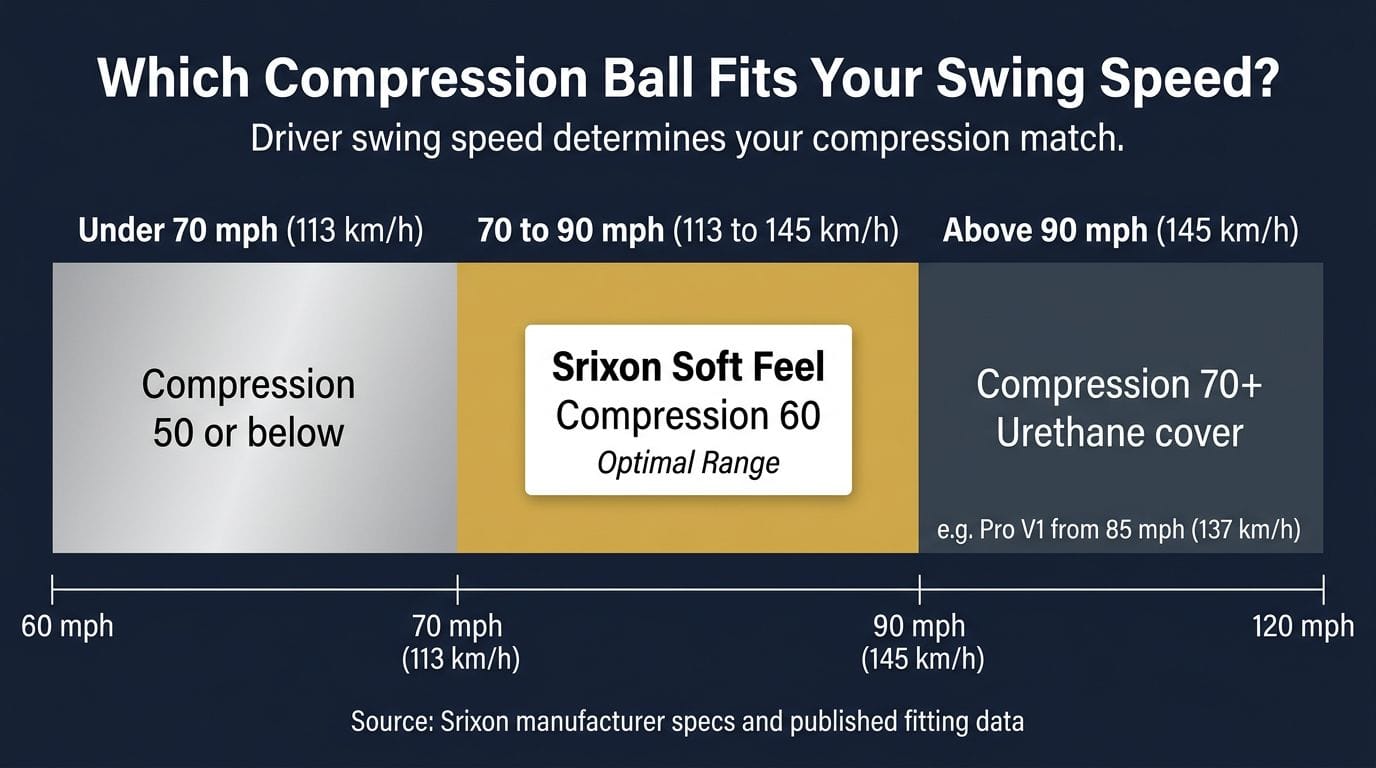
Play it if: your driver swing speed runs under 90 mph (145km/h), you prioritize feel and distance over spin separation, and you lose enough balls per round that the $27 price point matters. Published fitting literature consistently identifies swing speeds in the 70 to 90 mph (113 to 145km/h) range as the natural home for 60-compression ionomer balls, and that data suggests most recreational golfers buying tour-level urethane balls are paying for a ball their swing speed can't fully exploit.
Skip it if: your driver swing speed is above 90 mph (145km/h) and you want maximum spin separation between driver and wedge, or if consistent urethane feel on chip shots is a meaningful part of your short-game practice. At 95 mph (153km/h) and above, a firmer ball with a urethane cover returns more shot-shaping control than any soft ionomer design at any price.
The right ball is part of the equation. Course management is the larger one.
Published scoring research on 90-to-110 handicappers consistently shows that ball choice affects individual shots; course management, lag putting, and short-game decisions affect the scorecard. The Soft Feel removes one source of compounding error at the price point most recreational golfers are actually at.
How to Break 100 With the Swing You Already Have covers the scoring framework that sits around the equipment choices.
The Srixon Soft Feel has a compression rating of 60. That places it in the low-compression category, suited to golfers whose driver swing speeds run under approximately 90 mph (145km/h). Lower compression means the core deforms more easily at impact, which translates to better energy transfer and distance for players who can't fully compress a higher-compression ball. Golfers with faster swing speeds typically see better results from balls in the 70 to 90 compression range.
It's well suited to most high handicappers. The combination of a 60-compression core, 338-dimple ionomer cover, and two-piece construction produces maximum distance and workable feel for the moderate swing speeds typical of golfers still developing their ball-striking. The lower driver spin the ball generates also helps reduce sidespin on off-center tee shots, which is a practical benefit for players who struggle with driver accuracy. The caveat: a high handicapper with an unusually fast swing speed (above 90 mph (145km/h)) will see better results from a mid-compression ball. See Best Golf Balls by Handicap for the full breakdown.
The two balls are built for different players and different priorities. The Pro V1 is a three-piece urethane-covered ball at ~$55/dozen, designed for swing speeds of 85 mph (137km/h) and above that can efficiently compress a firmer core and benefit from urethane's superior spin separation. The Soft Feel is a two-piece ionomer ball at ~$27/dozen, optimized for swing speeds under 90 mph (145km/h) where the softer core returns more distance and the ionomer cover delivers above-category greenside feedback. The Titleist Pro V1 review covers the case for that ball in full.
Published manufacturer specs and independent review data both identify the optimal range as approximately 70 to 90 mph (113 to 145km/h) with the driver. At those speeds, the 60-compression FastLayer core deforms efficiently at impact, producing strong energy transfer and carry distance. Below 70 mph (113km/h), an even softer ball (compression 50 or below) may return better results. Above 90 mph (145km/h), a firmer core and urethane cover typically produce better distance separation and shot-shaping control.
For most senior golfers, yes. Swing speed typically decreases with age, and the 60-compression Soft Feel is designed to maximize distance at the moderate speeds common in the senior bracket. The soft ionomer cover also produces a feel profile that tends to suit golfers who prefer a quieter impact sensation. Seniors who have retained a swing speed above 90 mph (145km/h) may find a mid-compression ball returns slightly better results, but for the majority of senior recreational golfers, the Soft Feel is a well-fitting and well-priced option.
Some links in this article are affiliate links. If you buy through them, I earn a small commission at no extra cost to you. This never influences what I cover or recommend. I link to gear I'd buy myself.
Data-backed reviews and advice that works. No brand spin.