 Buy now







reviews
Torrey Pines South Course Review
Torrey Pines South is a municipal golf course that any golfer can book, and it has still hosted
Callaway's Chrome Soft (2026) promises a tour-ball step up from value balls. Here's what the data says about feel, spin, and whether it earns the price.
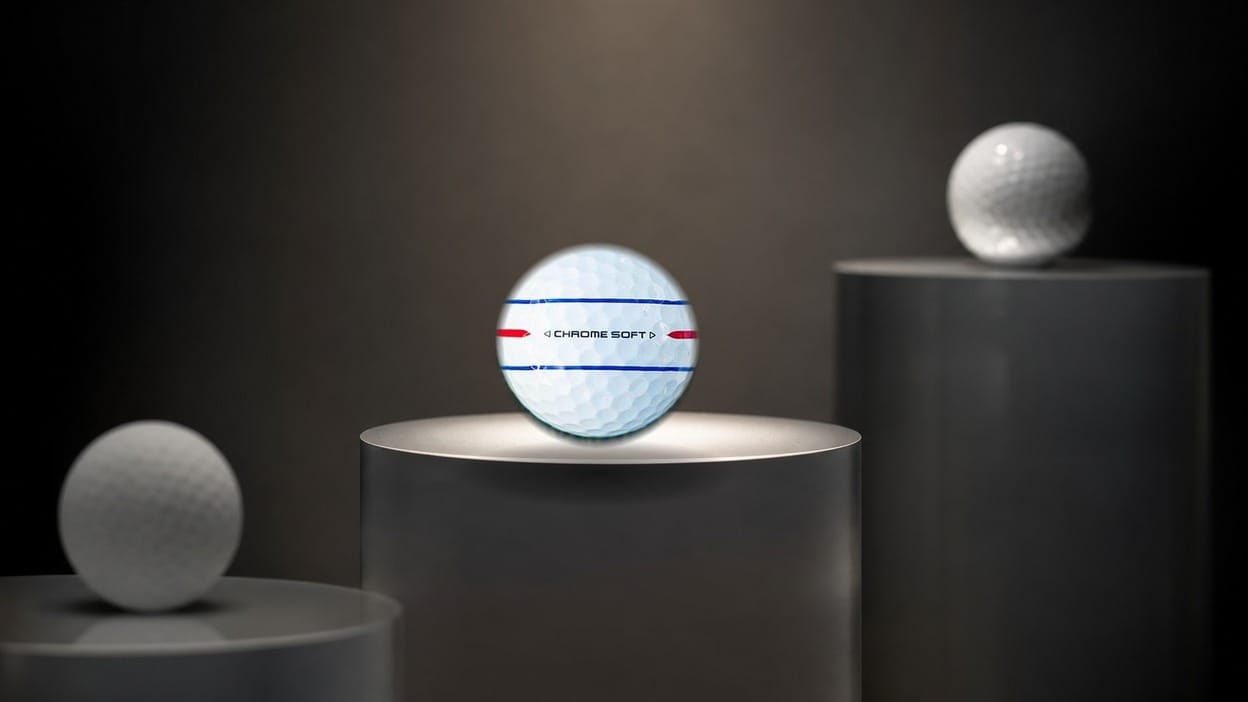
The Chrome Soft is a genuine structural step up from a value 2-piece ball, a 3-piece urethane construction built for wedge spin that a $25-a-dozen ball simply isn't. It earns that upgrade in feel and iron play. It doesn't fully earn it around the green, where the data shows it trailing both a cheaper rival and its own firmer sibling.
The 2026 Chrome Soft is a 3-piece ball with a urethane cover, confirmed by Callaway's own R&D data as reported by GOLF.com, and corroborated independently by PGA Tour, Golf Monthly, and Today's Golfer. One outlier source described it as a 4-piece build; every other named source agrees on 3-piece, so that's the figure used here. Callaway's construction pairs what it calls a "Tour Fast Mantle" layer with an "Advanced Seamless Tour Aero" cover design, manufacturer-named tech meant to combine ball speed off the driver with a feel softer than the firmer Chrome Tour, which sits above it in the family. Callaway lists it at around $58 a dozen, though the live buy link on this page carries whatever the current price actually is, list prices move.
One number that isn't here on purpose: compression. Published estimates vary by several points depending on who measured it, so treat any compression number attached to this ball as a rough guide, not a verified figure.
The performance consensus across independent reviewers is fairly consistent. It's the softest-feeling ball in the current Chrome family, and iron distance is a genuine strength, with reviewers noting lower spin and more carry. Greenside spin is the recurring weak point: reviewers across multiple outlets flag it as trailing where a 3-piece urethane ball is supposed to be strongest, not by a small margin. Today's Golfer rates durability at 3 out of 5, a real mark against a ball at this price, and faster swingers see driver spin run higher than they'd want, which can cost distance and control off the tee for anyone already generating plenty of speed.
This is the question the improver angle actually turns on, and the honest answer is yes, with a caveat. The Srixon Soft Feel, a 2-piece ionomer ball at around $25 a dozen, isn't built to control spin around the greens the way a urethane cover is. That's not a marketing distinction, it's a construction one: ionomer covers are harder and grip the grooves less on a wedge shot, so a player relying on one for scoring shots is working with a genuine limitation, not just a cheaper label. The Chrome Soft's urethane cover is built specifically to close that gap. On feel and short-game control against a value 2-piece ball, it does.
The caveat is durability and price positioning. At $58 a dozen, it sits level with Callaway's own firmer Chrome Tour and above the TaylorMade Tour Response, despite the greenside spin data putting it behind both. A player upgrading purely for scoring-shot control is paying tour-ball money for a ball that a cheaper rival out-spins on the shots that matter most for scoring.
Against the TaylorMade Tour Response, around $42 a dozen, the comparison isn't flattering. Golf Monthly's direct testing had the Tour Response out-spinning the Chrome Soft around the greens, at a meaningfully lower price. That's the sharpest honest knock against Chrome Soft in this review: a cheaper competitor beating it on the exact attribute a 3-piece urethane ball is supposed to win on.
The Bridgestone Tour B RX, around $55 a dozen, sits in a similar tier and price band, a reasonable cross-shop rather than a clear win either direction based on the available data. Above all three sits the Titleist Pro V1, the full tour-level standard this piece isn't trying to replace; see our Titleist Pro V1 review for that comparison in full. The Titleist Tour Speed is worth knowing about as another category peer, though its current price wasn't confirmed enough to print here.
This ball makes the most sense for a mid-to-low handicap player who has outgrown a value 2-piece ball and wants real short-game spin control without committing to a full tour ball's price and feel, though it's worth being honest that a player who hasn't yet built the strike consistency to control face angle and speed at impact may not fully access the greenside spin this ball is built to deliver. It makes less sense for a fast swinger already fighting high spin off the tee, or for a player who won't play enough rounds to justify a ball that Today's Golfer rates as a durability weak point at this price.
That's a swing-development question, not something the ball itself can answer. For the broader question of which tier actually fits a given handicap, the golf balls by handicap guide breaks that down beyond just this one ball, and for the value end of the comparison, see our Srixon Soft Feel review.
For a mid-to-low handicap golfer stepping up from a value 2-piece ball who wants real greenside spin control, the Chrome Soft's construction is a well-supported buy.
Buy nowSome links in this article are affiliate links, if you buy through them, I earn a small commission at no extra cost to you. This never influences what I cover or recommend. I link to gear I'd buy myself.
Data-backed reviews and advice that works. No brand spin.