Callaway's 2026 fairway wood promises an easy launch and forgiveness across the face. Here's what the published reviews and Callaway's own specs show, and who should actually buy it.
- The verdict: Today's Golfer rates the Quantum Max 4.5 out of 5 and calls it one of the most user friendly fairway woods of 2026 for amateur golfers.
- Price: about $400 (Callaway lists $399.99 direct in the US) at the time of writing.
- Best fit: improvers and mid-handicappers who want one fairway wood they can trust off the turf.
- Where it sits: the balanced model in a four-wood Quantum lineup, between the draw-biased Max D and the low-spin Triple Diamond.
- One split: MyGolfSpy's 2026 testing rates the Max 8.5 overall but ranks it near the bottom of its field for accuracy and forgiveness; golfers chasing accuracy first should look at the Max D (MyGolfSpy score: 8.9) instead.
- Who should look elsewhere: slicers, slower swingers, and anyone already carrying a fitted 2025 Elyte or Ai Smoke wood.
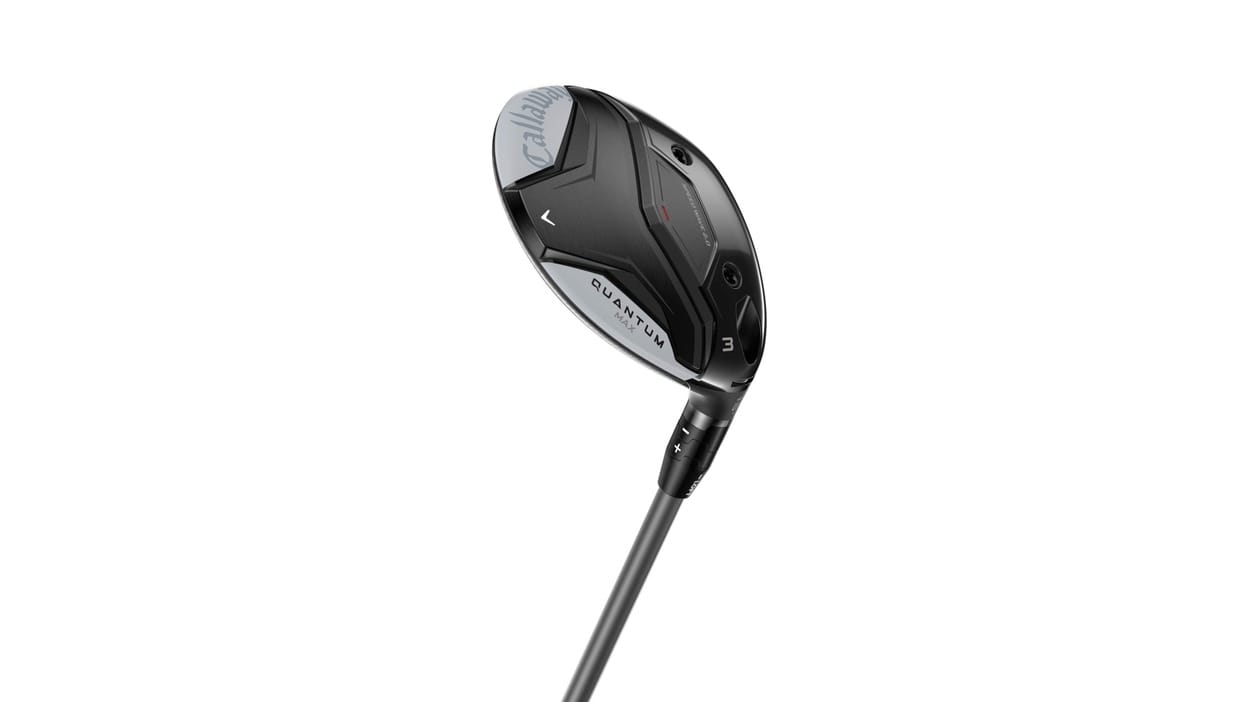
The Quantum Max is Callaway's attempt to make a fairway wood that a wide range of golfers can hit off the deck without fear, and the early published reviews back that claim up more than most new-release coverage does.
Where the Quantum Max Sits in Callaway's Lineup
Callaway's 2026 Quantum fairway wood family has four members, and Today's Golfer's review lays them out clearly: the Quantum Triple Diamond is the low-spin model built for faster, better players; the Quantum Max is the balanced, all-round option; the Quantum Max D adds a draw bias for golfers fighting a slice; and the Quantum Max Fast, sold in the US only, is the lightest build for slower swing speeds.
In Today's Golfer's own testing, the Max carried further than its two lineup-mates hit from the same 15-degree loft: 260 yards (238m), against 256 yards (234m) for the Triple Diamond and 251 yards (229m) for the Max D. That ordering matches what the lineup is built to do. The Triple Diamond trades some distance for workability, and the Max D trades some distance for the extra spin and shot-correction that come with its draw bias, while the Max is tuned to split the difference.
Who the Quantum Max Suits
Improvers and mid-handicap golfers who want a single fairway wood they can hit off the turf without a second thought are the main buyer here. Today's Golfer's pros and cons list leads with exactly that: easy to hit for all amateur golfers, with an easy launch and forgiveness across the face, and consistent front-to-back dispersion. MyGolfSpy's own 2026 testing complicates that a little: it rates the Max 8.5 overall but places it toward the bottom of its field for accuracy and forgiveness, so golfers who want accuracy above everything else are better served by the draw-biased Max D, which MyGolfSpy rates 8.9 overall and ranks first for accuracy.
Weekend golfers are a closer call. A forgiving head genuinely helps, but at about $400 a higher-lofted wood, like a 5-wood or 7-wood, or a hybrid can be the better first buy. There's a no-device way to check which problem you actually have: if you top or thin your current 3-wood off the turf more often than not, loft is the issue before the model is. Launch Point Golf's guide to hitting a fairway wood off the ground makes the same point: a fairway wood wants a near-level to shallow strike, and from a poor lie or thick rough, a hybrid is simply easier to control.
Serious players with real speed should look past the Max entirely. Today's Golfer and the Quantum family's own positioning point faster swingers toward the Triple Diamond, which trades some of the Max's forgiveness for lower spin and more shot-shaping control.
Who should skip the Quantum Max: slicers are better served by the draw-biased Max D, slower swingers should look at the lighter Max Fast, and anyone already playing a properly fitted 2025 Elyte or Ai Smoke fairway wood has little reason to switch for a one-year update. Golfers who are deciding between a fairway wood and a hybrid altogether should start with Launch Point Golf's guide to the best hybrids for high and mid handicappers, which lays out when the shorter, more controllable hybrid wins that argument.
What the Published Reviews Found
Today's Golfer's review, by contributing editor Alex Lodge, points to two specific pieces of technology behind the Max's turf performance. The first is a refined Step Sole design, carried over from 2018 and reworked for 2026 by removing sole material that can cause unwanted bounce into the ball at impact, aimed at cleaner turf contact and a more consistent strike location. The second is Speed Wave 2.0, which Today's Golfer describes as thinning and extending the internal face structure to increase face deflection, particularly on strikes low on the face, the most common miss with a fairway wood.
Today's Golfer scored the Max 5 out of 5 for both technology and performance, 4 out of 5 for looks, and 4.5 out of 5 overall, with cons limited to shelf appeal and an adjustment period off the tee for golfers used to teeing a fairway wood too high. I'll admit to a personal bias worth naming here: a busy, digitally textured crown and bold alignment lines tend to earn a club more credit than they've strictly earned in photos or on a rack, so the turf-interaction and strike-consistency findings above carry more weight with me than first impressions do.
MyGolfSpy's 2026 Most Wanted testing, published by Phillip Bishop on July 31, 2026, backs up the distance claim and complicates the forgiveness one. It rates the Max 8.5 overall, with a second-place finish for total distance in its field and ball speed among the strongest it tested, but places the Max toward the bottom of the same field for accuracy and forgiveness. Callaway's own Quantum Max D, by contrast, carries MyGolfSpy's top accuracy ranking and an 8.9 overall score, the number worth pointing toward if accuracy matters more to a buyer than outright distance.
Fitting Note
Loft and shaft matter more than which head you choose. Launch Point Golf's driver-vs-3-wood guide makes this same case for fairway woods off the tee: a 3-wood's results are sensitive to shaft and loft choice in a way a driver's aren't, and the fix is getting fitted rather than chasing a specific head model. The same logic applies to the Quantum Max off the turf. Callaway's own spec chart lists the 3W, 3HL and 5W heads as adjustable, which gives a fitter room to dial in loft and lie without changing shafts. The head model decides less than most marketing copy suggests; the fitting session decides more.
Pros:
- Easy to hit for a wide range of amateur golfers, per Today's Golfer's testing
- Extremely fast across all turf conditions, per Today's Golfer
- Consistent front-to-back dispersion, per Today's Golfer
- Adjustable loft and lie on the 3W, 3HL and 5W heads, per Callaway's own spec chart
- Confidence-boosting alignment aids at address, per Today's Golfer
Cons:
- Shelf appeal falls flat next to some rivals, per Today's Golfer
- Takes an adjustment period off the tee for golfers used to teeing a fairway wood too high
- At about $400, a real investment if a higher-lofted wood or hybrid would solve the same miss more cheaply
Specs
The table above matches Callaway's own Quantum Max product page spec for spec. That page also lists the stock shaft as a Project X Denali Frost Silver 60 Graphite shaft in regular flex, with a Golf Pride Tour Velvet 360 Black Cap CHEV grip, and prices the Quantum Max at $399.99 direct in the US.
Verdict
About $400 buys a fairway wood that the published reviews rate well, though they don't fully agree on why. Today's Golfer's 4.5 out of 5 score, with full marks for technology and performance, backs up the Max's positioning as a forgiving, easy-launching all-rounder. MyGolfSpy's 8.5 overall score agrees on distance and ball speed but ranks the Max near the bottom of its field for accuracy and forgiveness, so golfers chasing accuracy above everything else should look at the Max D, which MyGolfSpy rates 8.9 overall, instead. The catch isn't the club, it's matching it to the right golfer. Someone fighting a slice is better served by the Max D, someone with a slower swing by the Max Fast, and someone who tops their current 3-wood off the turf more often than not should try a higher loft or a hybrid before spending $400 on a new head.
For golfers who've already matched the Quantum Max to their miss, see it on Amazon.
Frequently Asked Questions
What is the difference between the Callaway Quantum Max and Max D fairway woods?
The Max is Callaway's balanced, all-round model in the 2026 Quantum lineup. The Max D adds a draw bias aimed at golfers who fight a slice, trading some of the Max's neutral flight for built-in shot-shape correction. Today's Golfer's own testing had the Max D launching lower, at 11.8 degrees against the Max's 12.5, and spinning more, at 2,678 rpm against 2,595 rpm, numbers consistent with a head built to hold a line against a slice rather than to add overall forgiveness.
Is the Callaway Quantum Max fairway wood good for high handicappers?
Today's Golfer's review calls it easy to hit for all amateur golfers, citing an easy launch and forgiveness across the face as the club's strongest traits, and rates it 4.5 out of 5 overall. MyGolfSpy's own testing is more mixed, rating the Max 8.5 overall for its distance and ball speed while placing it toward the bottom of its field for accuracy and forgiveness. A high handicapper who wants accuracy above everything else may get more from the draw-biased Max D, which MyGolfSpy rates 8.9 overall. Golfers who consistently top or thin a 3-wood are usually fighting a loft problem first, and a higher-lofted wood or a hybrid is worth trying before this one.
Should I buy a 3-wood or a 5-wood?
It depends on the strike you're bringing to it, not just the yardage gap. A 3-wood wants a near-level to shallow angle of attack, and golfers who struggle to get it airborne from the turf usually do better with the higher-lofted 5-wood, which launches easier from the same swing. Get the lie and loft checked at a fitting rather than guessing from the number on the sole.
Does the Callaway Quantum Max fairway wood have an adjustable hosel?
Callaway's own spec chart marks the 3W, 3HL and 5W heads in the Quantum Max line as adjustable, which lets a fitter alter loft and lie without swapping shafts. The 7W, 9W and 11W heads in the same family are listed as fixed.
Some links in this article are affiliate links. If you buy through them, I earn a small commission at no extra cost to you. This never influences what I cover or recommend. I link to gear I'd buy myself.