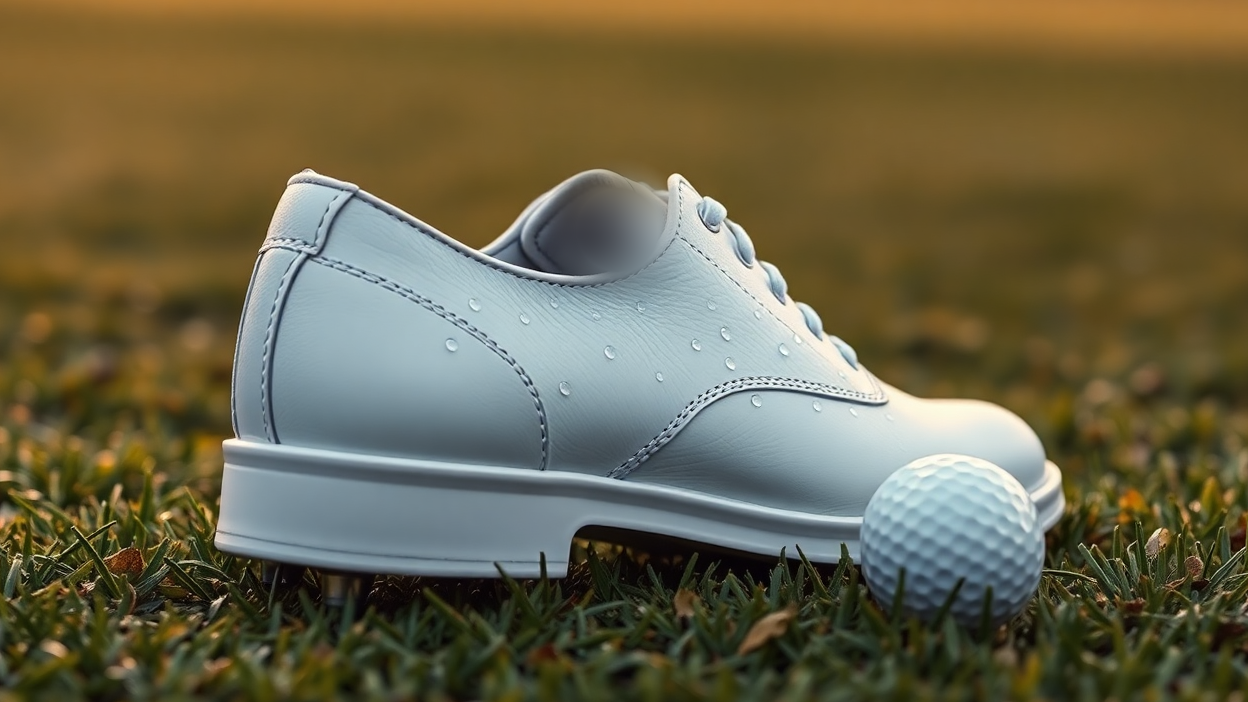
The case for it: FootJoy backs the 2026 Premiere Series Packard as 100% waterproof for two years under normal use, with a full-grain leather upper built for wet, cold-season golf.
Traction tradeoff: Spikes hold better than spikeless soles in wet grass, on slopes, and for faster swings, but give up some of the walk-everywhere versatility spikeless shoes offer.
The ride: Golfalot, Plugged In Golf, and Golfmagic all describe a firm, structured feel with less cushioning than a modern spikeless shoe.
The cost: About $250 at full price, plus occasional leather conditioning to keep it in shape.
Who should skip it: Golfers who want soft cushioning, play mostly dry summer rounds, or won't condition leather.
Wet, late-season golf is where a leather spiked shoe earns its keep, and FootJoy's 2026 relaunch of the Premiere Series Packard, which the brand calls "a reintroduction of the iconic model with all-new construction," is built specifically for that stretch of the calendar. Our best golf shoes guide names the Packard as its pick for golfers who play in wet conditions and want full leather, and this review goes deeper on that same shoe.
What FootJoy changed for 2026
The Packard keeps its full-grain waterproof leather upper but moves to FootJoy's ARCTrax outsole, paired with replaceable Pulsar LP cleats from SoftSpikes. A Premiere EVA midsole sits underneath an OrthoLite TruFit tongue system and an OrthoLite EcoPlush FitBed, and the shoe ships in medium, wide, and extra-wide widths. FootJoy backs the shoe with a two-year waterproof warranty in the US.
FootJoy claims the new generation delivers 29% more traction and 10% less weight than the previous model, a claim reported by Plugged In Golf's review (Mar 2026) rather than independently measured. Plugged In Golf's own account of wearing the shoe matches the direction of that claim: the outsole was "among the best at biting into the turf" during hard swings, and the weight put the shoe in line with other tour-style models without calling it featherweight.
How the independent reviews line up
Three published reviews agree on the shape of this shoe, even where they land differently on value.
Golfalot scored it 4.5 out of 5, calling it "a very good golf shoe that knows what it is." The review flags the flex as more restrictive than modern designs, which some golfers will prefer and others won't.
Plugged In Golf describes a firm, structured ride, with the sole feeling like one piece rather than something that bends through a stride. The midfoot felt locked in, with no pressure points reported.
Golfmagic, in a review by Brad Nash, is the most direct on who it suits: "worth it for players who prioritise stability and classic style." The drawback, in Nash's account, is the same firm ride and lighter cushioning, and he recommends a proper fitting before buying.
Taken together, the consensus is stability, wet-ground traction, and classic looks as the strengths, against a firm ride with less cushioning, a stiff feel for some golfers, the price, and the leather upkeep.
Who it suits
- Frequent and serious players who walk wet or hilly courses. This is the main buyer: the leather upper and ARCTrax outsole are built for exactly these conditions, and the two-year waterproof warranty backs that use case directly.
- Improvers. The stability the reviews describe supports a repeatable lower body through the swing, though a spiked leather shoe on its own isn't a swing fix.
- Weekend golfers and anyone who wants one shoe for the course and the car park. The Packard isn't built for that. Our best golf shoes guide covers spikeless options for that use case, and the Skechers GO GOLF Elite 5 is the comfort-first contrast: softer underfoot, less traction in wet grass, and a shoe you can wear off the course without a second thought.
- Who should skip it: golfers who want soft cushioning underfoot, play mostly dry summer golf where traction matters less, or won't keep up with conditioning a leather upper.
Wet and cold-season care
A leather shoe built for wet rounds still needs looking after. Let the Packard air-dry away from direct heat (no radiators, no car heating vents) rather than forcing the leather to dry fast, since fast heat-drying is what cracks leather over a season. Condition the upper periodically to keep it supple, and swap the Pulsar LP cleats as they wear rather than waiting until traction drops off noticeably. I'll admit this is the part of shoe ownership I'm worst at myself, conditioning leather only once it's already gone stiff. That's why I count the upkeep as a real, recurring cost rather than a one-time price tag.
For the cold-weather side of the equation, our guide to playing golf in the rain and our cold-weather golf apparel guide cover the rest of the kit that pairs with a wet-weather shoe like this one.
Sizing and fit
The Packard comes in medium, wide, and extra-wide widths, which covers more ground than most golf shoes manage. Even so, Golfmagic's review recommends a proper fitting rather than buying blind, and pairs that advice with the same firm-ride consensus noted above. Comfort-first buyers in particular should try the shoe on before committing, since the firmness that stability-focused golfers like is the same quality that comfort-first golfers tend to notice first.
Pros and cons
Pros:
- Waterproof leather upper backed by a 2-year warranty
- ARCTrax outsole with replaceable Pulsar LP cleats
- Stable, locked-in feel reported across three independent reviews
- Three widths, including wide and extra-wide
Cons:
- Firm ride with less cushioning than a modern spikeless alternative
- Flex feels restrictive to some golfers, per Golfalot
- About $250 at full price
- Leather needs occasional conditioning to stay in shape
Verdict
The Premiere Series Packard is a wet-weather, leather-first golf shoe for golfers who already know they want that combination. The ARCTrax outsole and two-year waterproof warranty make the case for frequent, serious players on wet or hilly courses, and the traction accounts in the independent reviews point the same way as FootJoy's claim, though no one has measured that claim independently. Golfalot's 4.5 out of 5 is their own score, not ours, but it lines up with the broader consensus here.
It costs about $250 at full price (FootJoy lists $250 direct), with some retailers running lower at the time of writing, and that price buys a shoe that needs conditioning to last rather than one you can ignore between rounds. Golfers who want soft cushioning, play mostly dry summer golf, or don't want to maintain leather are better served by a spikeless alternative like the Skechers GO GOLF Elite 5 covered elsewhere on the site.
See the FootJoy Premiere Series Packard on Amazon
Frequently Asked Questions
Is the FootJoy Premiere Series Packard waterproof?
Yes. FootJoy's US warranty covers the 2026 Premiere Series Packard as 100% waterproof for two years under normal use.
Are spiked or spikeless golf shoes better in wet conditions?
Spiked shoes like the Packard generally hold traction better in wet grass, on slopes, and through faster, more aggressive swings. Spikeless shoes give up some of that wet-ground grip in exchange for everyday versatility, which is why our best golf shoes guide recommends spikes specifically for golfers who play often in wet conditions.
Is the Packard comfortable for walking 18 holes?
It depends on what you're used to. Golfalot, Plugged In Golf, and Golfmagic all describe a firm, structured ride with less cushioning than a modern spikeless shoe, and Golfmagic specifically recommends a proper fitting before buying for that reason. Golfers who prioritize stability over plush cushioning tend to get along with it better than golfers used to a softer shoe.
Some links in this article are affiliate links. If you buy through them, I earn a small commission at no extra cost to you. This never influences what I cover or recommend. I link to gear I'd buy myself.