







how-to
How to Set Ball Position for Every Club
Ball position isn't a single spot you set once and reuse for every club in the

Photo: Mikhail Nilov, Pexels (Pexels License)
You can smash a 3-wood off a tee. Put the same club on the turf and the ball comes out low and hot, or skims off the top of the face entirely. That gap is common, and it isn't a swing-speed problem. A tee lifts the ball above the clubhead's low point and removes the ground from the equation. Off the turf, the ground is back, and a fairway wood's shallow sole and long shaft punish any ball position or strike that would go unnoticed off a peg.
This piece covers the turf strike itself: ball position, strike shape, ground interaction, and the setup adjustments a lie demands. If the question on your mind is whether to hit 3-wood or driver off the tee in the first place, that decision lives in Driver vs. 3-Wood Off the Tee. Here, the club is already out of the bag and on the ground.
TL;DR: Fix a thin or topped fairway wood in four moves
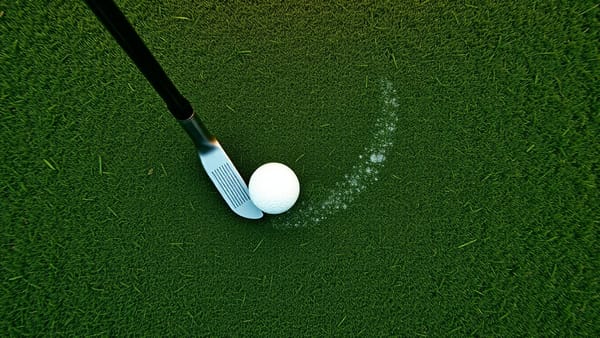
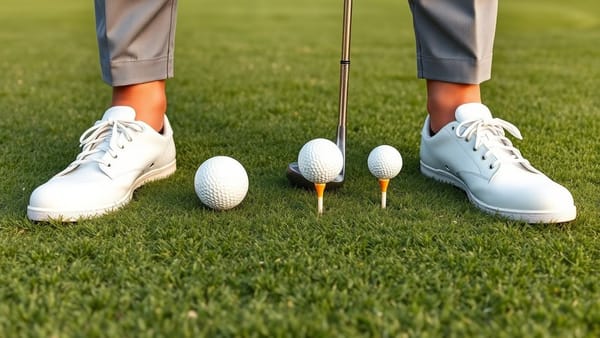
Ball position is the first place a tee-shot swing and a turf swing diverge, and it has to match across every club in the bag or the rest of the setup drifts with it. For driver, the ball sits just inside the lead heel, the widest stance in the bag, because the swing is still ascending at contact. For a fairway wood off the turf, pull the ball back about a ball-width, to roughly 1 inch (2.5cm) behind the driver spot, and narrow the stance slightly. That small shift moves the swing's low point forward just enough for a near-level to shallow descending strike instead of the ascending hit a tee shot wants.
Golfers who top the ball almost always have the ball too far forward, which asks the club to still be rising when it should already be arriving. Golfers who hit it thin usually have it drifted back toward center, flattening the shoulder tilt and encouraging the club to bottom out before it reaches the ball. Check the position every few shots. It drifts without you noticing, especially under pressure.
A fairway wood has a longer shaft than any iron in the bag, and the instinct it creates is to stand farther away and reach for the ball. Resist it. Set up with the same posture you would use for a long iron, spine tilted from the hips rather than the waist, arms hanging under the shoulders rather than stretched out. Width in the swing comes from the shoulders turning around a stable spine angle, not from the arms reaching toward the ball at address.
Overreaching flattens the swing plane and drags the low point behind the ball, which is the single biggest cause of a thin strike with a long club. A simpler cue: let your arms hang, then grip the club. If you have to lean or stretch to reach it, the ball is too far away. The club is the right length.
The fairway wood's strike should sit close to level, with a shallow descending angle at most. That rules out two opposite mistakes. The first is trying to scoop or lift the ball, which flattens the attack angle too much and produces the top or thin strike this piece exists to fix. The second is trying to hit down on it the way you would with an iron, which digs the leading edge into the turf before the clubface reaches the ball.
Treat it the way a hybrid swing treats the ball, only shallower again. Golf.com has pointed out that trying to sweep a hybrid, or barely brushing the turf, is a common cause of thin and topped shots, and that the swing should still reach the ground after the ball. A fairway wood sits one step further toward the sweep than a hybrid does, but the same principle holds: ball first, then a shallow pass through the turf, never a flat scrape that catches grass before it catches the ball.
Every clean strike, with any club, needs the swing arc's lowest point to fall in front of where the ball was sitting. With an iron, that forward gap runs 2 to 4 inches (5 to 10cm) past the ball, visible in the divot. A fairway wood's shallower path narrows that gap considerably, but it doesn't erase it. The low point still needs to sit slightly ahead of the ball, or the leading edge arrives while the club is still descending into the turf instead of already past its lowest point, and that is what produces a fat or thin strike rather than a clean one.
Weight and body position control where that low point falls, not the hands. A body that hangs back on the trail side at impact drags the low point backward with it; shifting weight toward the lead side through impact pulls the low point forward to where it belongs.
You don't need a launch monitor to fix a fairway wood strike, though the numbers are useful context once you have the basics down. Two low-cost, no-device checks will tell you exactly what is going wrong.
Face impact tape, applied directly to the clubface, marks precisely where the ball made contact on every swing. A mark toward the top of the face confirms a thin or topped strike and usually traces back to ball position or an early release. A mark low on the face, sometimes with a mark on the sole itself, points to a fat strike and a low point still sitting behind the ball.
Maxfli Impact Tape is inexpensive and covers an entire practice session before it needs replacing. A can of foot spray, such as Dr. Scholl's Odor-X, works as a cheaper no-tape alternative: spray a light coat on the face, and the strike mark shows up the same way tape does.
For the low point itself, lay a towel on the ground 2 to 3 inches (5 to 7.5cm) behind the ball, or push a tee into the turf just behind it. Swing normally. If the club clips the towel or tee before it reaches the ball, the low point is behind the ball and the strike will read fat or thin depending on how far behind. A clean swing brushes the towel or tee only after the ball is already gone. If you do have access to a launch monitor, attack angle and low-point data confirm what the towel drill already told you; treat the numbers as a check on the drill, not the other way around.
Not every lie supports a fairway wood swing, and recognizing that before you commit is as much a part of this skill as the swing itself. A tight, firm fairway with the ball sitting up is the fairway wood's best friend. A few lies should send it straight back into the bag in favor of a hybrid or long iron instead:
How to Hit Consistent Iron Shots from Uneven Lies covers the stance, aim, and club adjustments for exactly these situations, and the same rules apply whether the club in your hand ends up being an iron or a hybrid once you have decided the fairway wood is the wrong tool for the lie.
For a weekend player working on contact, every miss is a swing to learn from. For a scoring-focused player standing over a shot that matters, the calculation changes. A hybrid gives up some distance compared to a fairway wood but is meaningfully easier to control from an imperfect lie, which is exactly the trade a tournament situation rewards. Best Hybrids for High and Mid-Handicappers in 2026 runs through current options built for that forgiveness, though it's worth saying plainly that a hybrid doesn't fix a swing fault on its own. It makes a marginal lie more forgiving. It won't rescue a low point that is still sitting behind the ball, which is a technique problem no club substitution solves.
The practical call: if you are consistently topping or thinning fairway wood shots despite working through the drills above, or if the lie takes the shallow strike this club needs off the table, lay up with a hybrid or iron. Save the fairway wood for the lies and the scorecards that can absorb the occasional miss. I'll admit my own instinct still leans toward trusting a confident number over what a lie actually looks like, which is exactly why reading the lie has to happen before deciding whether to swing at all.
A driver sits on a tee, which raises the ball above the ground and suits an ascending strike. A fairway wood on the turf needs a ball position set back and a low point moved slightly forward, and if that adjustment doesn't happen, the swing that worked for driver arrives at the ball on the upswing and catches only the top half of it.
About a ball-width inside your lead heel, roughly 1 inch (2.5cm) behind where you would tee up a driver. That shift moves the swing's low point forward enough to support a near-level to shallow descending strike.
No. A fairway wood wants a near-level to shallow descending strike, shallower than an iron and shallower than a hybrid. Trying to hit down on it the way you would with an iron drives the leading edge into the turf before the clubface reaches the ball.
Lay a towel on the ground 2 to 3 inches (5 to 7.5cm) behind the ball, or push a tee into the turf just behind it, then swing normally. If the club clips the towel or tee before reaching the ball, your low point is behind the ball. A clean swing brushes it only after the ball is already gone.
When the ball is sitting down in thick rough, sitting below your feet, resting on a severe slope, or the shot needs height and control more than raw distance. A hybrid is more forgiving from an imperfect lie, though it won't fix a swing fault on its own.
Data-backed reviews and advice that works. No brand spin.