








how-to
How to Stop Swaying in Your Golf Swing
If a coach ever told you to "shift your weight" and you responded by sliding your
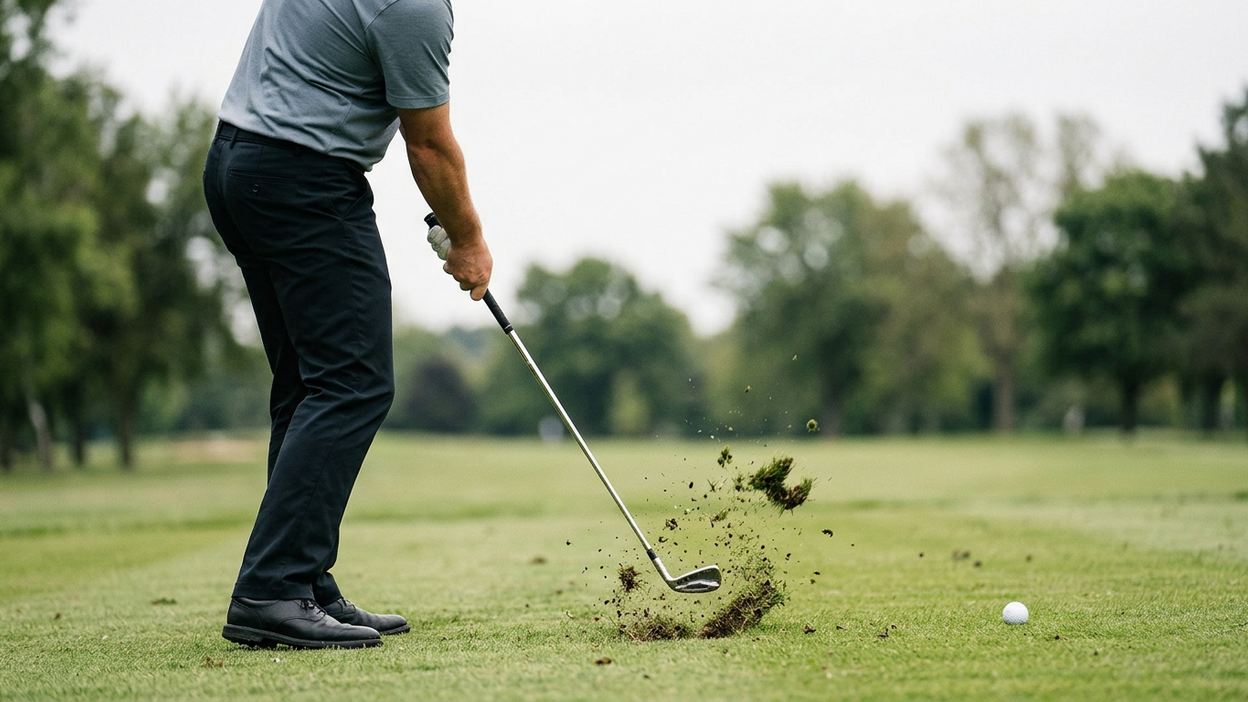
A fat iron shot happens for one reason: the club reaches the bottom of its swing arc before it reaches the ball. Everything else (weight, ball position, hip slide) is just a way of explaining why the low point got there early. Fix the low point and the fat shots stop. Here's how to find it, and how to move it.
A fat shot, also called a chunk or a heavy shot, is contact where the clubhead hits the turf before it hits the ball. The low point of the swing arc, the spot where the club is closest to the ground, lands behind the ball instead of in front of it. The ball comes out short, dead, and usually low. Every fix in this guide is aimed at moving that one point.
Fat and thin contact come from the same fault, not opposite ones. Our topping guide ties topping to hanging back and early extension. Hanging back is the pattern that also pulls the low point behind the ball on a fat shot. From there, the club either catches turf first (fat) or bottoms out early and catches the ball on the way back up (thin or topped), which is why golfers who hit both on alternate swings struggle to tell which one they're fixing, and why the fixes for both overlap. Reading the divot, the next step here, is the fastest way to tell how far back the low point has drifted. None of it requires a range session or a launch monitor: a patch of grass and a tee or a coin is enough to run every check in this guide.
Before changing anything, look at where your divot starts. Our guide to compressing the golf ball with irons puts it plainly: divot starts behind the line, low point is too far back. A divot that begins at or just in front of where the ball sat means the low point is roughly where it should be.
That guide's target window is specific: the swing arc's lowest point should land 2 to 4 inches (5 to 10cm) in front of where the ball was, with roughly 70 to 80 percent of the golfer's weight on the lead foot at impact. Those two numbers, low point location and weight distribution, are the two things worth checking before anything else.
On the course, the divot is the only record left once the ball is gone, so it pays to glance back before walking off and compare where it started to where the ball was sitting.
This is the cheapest fix available, because it costs nothing and takes one practice swing to test. Ball position that's too far forward moves the low point back relative to the ball before the club even starts down. MyGolfSpy puts it directly: "If the ball is too far forward, your swing arc bottoms out before your golf club gets to the ball." National Club Golfer's instruction reaches the same place from the physics side, explaining that "ball forward in the stance means that my centre of gravity is behind the ball and my swing bottoms out before the ball."
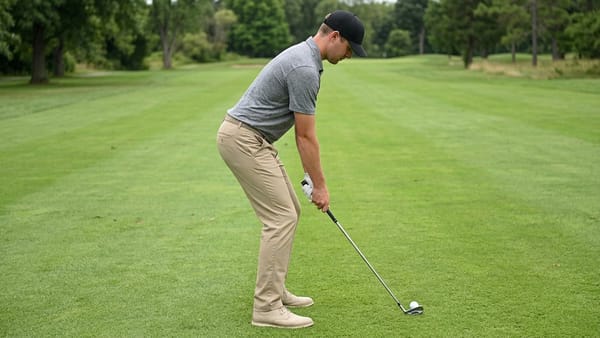
For a mid iron, the target is 1 to 2 inches (2.5 to 5cm) forward of center. Our ball position guide carries the full set of numbers by club. I'll admit a bias here: I reach for ball position before touching anything else in the swing, mostly because it's the cheapest variable to rule out, and the sources that cover fat contact rarely say so up front.
Weight that stays on the back foot through impact drags the low point back with it. Golf Monthly describes the pattern this way: "there is a desire to lean back through impact... [this] will cause you to strike the ground before the ball." The fix isn't a bigger weight shift at the top of the swing. It's where the weight sits at the moment the club reaches the ball, which the compress guide puts at 70 to 80 percent on the lead foot.
If a ball is sitting in a divot or on hardpan, our tight lies guide agrees with the same principle: it recommends favoring the lead side at address and keeping it there through impact, with PGA Coach Joanna Coe's exception that a ball resting at the back of a divot calls for moving the ball back in the stance instead. That exception is a situational adjustment for an unusual lie, not a contradiction of the general rule above.
GOLF.com's Eric Cogorno worked through this with one student, a New York City firefighter whose weight at impact, Cogorno found, "was just 50/50 like it was at setup." His target for that golfer was "more forward, say 70/30 or so on the lead side," a split that lands inside the compress guide's 70 to 80 percent window. Cogorno's fix was getting him shifted more forward on the downswing, which he said would "clean up almost all of his fat shots." That's one golfer's case, not a general rule, but it puts the same weight-forward target in a second coach's words.
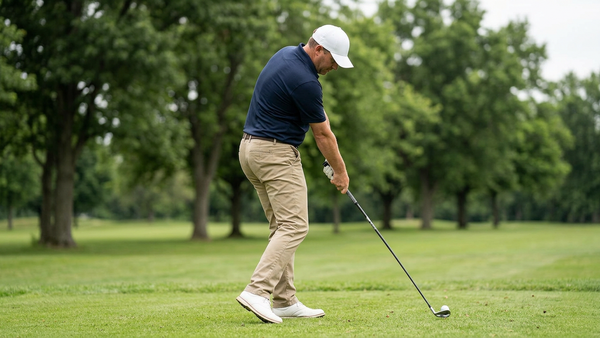
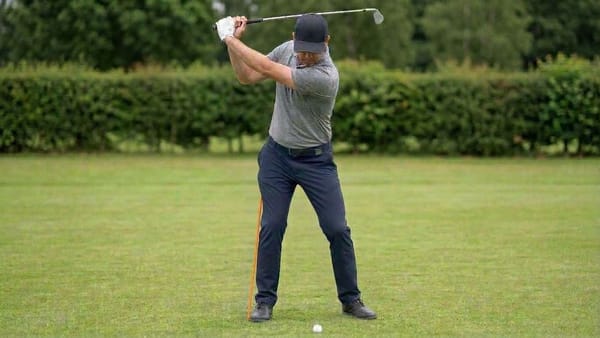
A hip and head slide away from the target during the backswing moves the low point out of position before the downswing starts. HackMotion states the result directly: "Swaying the golf swing causes inconsistency at impact. This leads to fat or thin shots." GOLFTEC's instruction describes the mechanism: the slide "shifts the swing's low point out of position before the club ever starts down."
The fixes for sway, keeping the trail knee flexed, rotating around the trail leg instead of sliding off it, and GOLFTEC's own slide drill, are covered in full on our guide to stopping a sway. If an iron shot comes up fat on a swing that also looks like it's drifting off the ball on video, that page is the next stop.
A related downswing fault, early extension, gets linked here for completeness rather than blamed. Our early extension guide covers the move itself, but the evidence tying it specifically to fat contact is thinner than the three causes above, so it isn't treated as a cause in this guide.
Sway is the hardest of the three causes to feel from the inside, which is why it tends to get ruled out last rather than first. Weight hanging back and ball position both show up directly in a divot. A sway can produce the same divot pattern while feeling, from the golfer's side, like a normal rotation. The simplest check is the one the sway guide itself uses: "any amateur can identify this fault by recording their swing face on," then comparing how far the upper body has drifted from where it started.
None of these need a mat, a launch monitor, or a trip to a hitting bay.
The impact board the compress guide points to is a reasonable way to see exactly where contact is happening without digging up a practice green; no quality or price claim is made here. For more structured feedback tools built around this same kind of practice, our golf training aids guide covers the options. And if contact is one of several things standing between current scores and breaking 100, the Break 100 guide builds a fuller practice plan around fixes like this one.
Some links in this article are affiliate links. If you buy through them, I earn a small commission at no extra cost to you. This never influences what I cover or recommend. I link to gear I'd buy myself.
Data-backed reviews and advice that works. No brand spin.