







reviews
Callaway Chrome Tour X Golf Ball Review (2026)
Callaway's 2026 Chrome Tour lineup has three balls, and the Tour X sits at the firm,
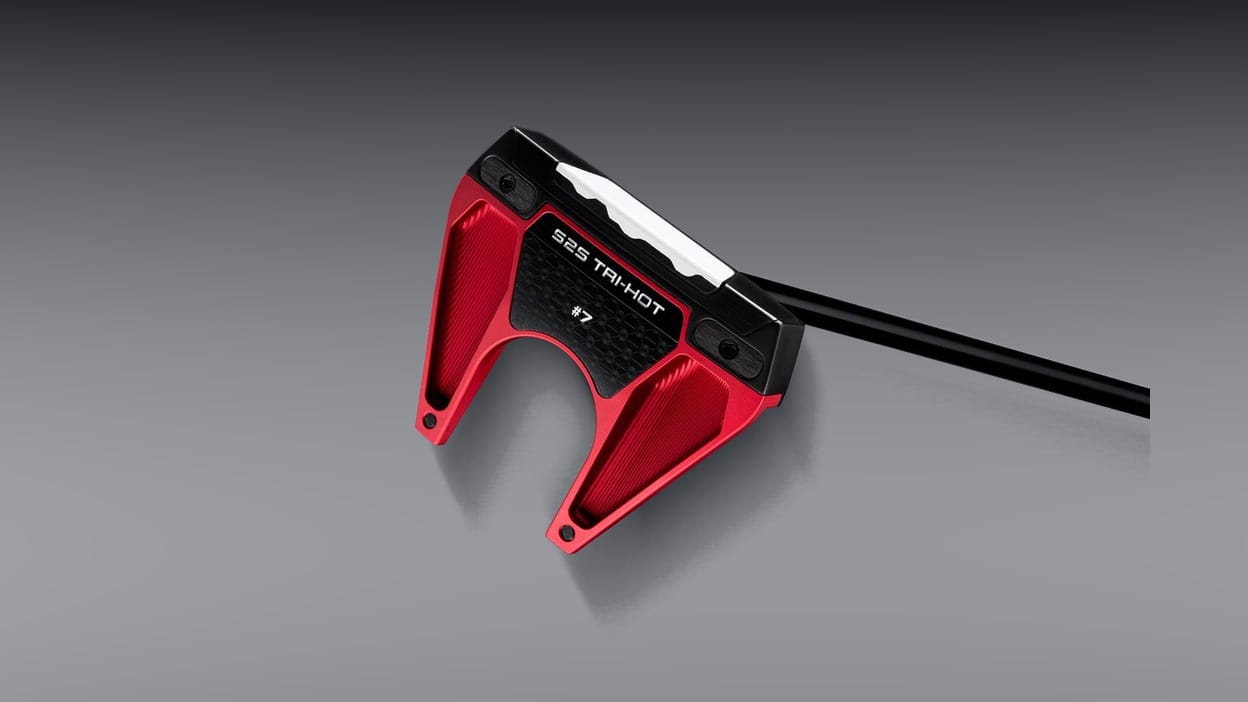
Image © Callaway Golf Company. Used by permission.
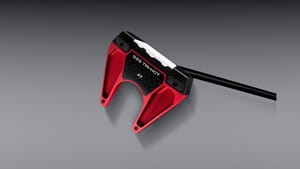
Odyssey built its reputation on face-balanced mallets and toe-hang blades that match a specific stroke shape. The S2S Tri-Hot #7 is something else: a center-shafted putter designed, Odyssey says, to resist face rotation no matter what the stroke looks like. Three independent reviews have now played the exact model, and their findings are the backbone of this review.
Odyssey's pitch for the Tri-Hot #7 centers on where the shaft meets the head. Most conventional putters mount the shaft with some lean built in, which the player's hands have to manage through the stroke. Odyssey says the Tri-Hot design eliminates that shaft lean and moves the shaft closer to the face than a typical putter in its class, which it describes as a "zero-torque" or lie-angle balanced setup meant to resist the face twisting open or closed as the putter swings. That is Odyssey's own framing of the mechanism, not an independently tested claim about how much face rotation it actually removes.
That ties into how Launch Point Golf already talks about putter fit: the site's existing advice is that a face-balanced putter tends to suit a straight-back-straight-through stroke, while a putter with more toe hang, like the roughly 30-degree hang on a Spider Tour Small Slant, tends to suit an arcing one. Zero-torque is a third design, not a replacement for that logic: Odyssey is arguing the center-shaft, no-lean setup resists face rotation regardless of which stroke shape the player already has. None of the three reviews cited in this piece specifically measured which stroke type the #7 suits best, so that part of the claim stays with Odyssey. What the reviews did measure is how the putter actually performed, which is the more useful data here. I'll admit my own default reaction to any new category sold as a fix for a stroke fault is skepticism, and the only thing that moves that reaction is reading what independent testers actually found rather than what the marketing promises.
That lines up with Launch Point Golf's own stroke guidance: neither an arc nor a straight-back-straight-through stroke is categorically better, and what actually matters is a repeatable path and a square face at impact. A center-shaft design that claims to help with the second part doesn't change that first principle.
Feel and insert. Golf Monthly's review of the exact #7 described the putter's insert as "noticeably softer and more responsive than the previous generation," a comment about the Tri-Hot insert across the line rather than the #7 specifically. National Club Golfer, reviewing the #7 itself, reported it "feels solid through impact but without being harsh." Plugged In Golf tested the Seven specifically and wrote that despite not usually favoring inserts, "I think this putter feels fantastic," a #7-specific finding about an insert design shared across the Tri-Hot family.
Roll and speed. National Club Golfer's #7-specific testing found that "putts stay on line, hug the ground, and maintain pace beautifully." Golf Monthly, describing the Tri-Hot groove design generally, said it "gets the ball turning end-over-end immediately." Plugged In Golf, again testing the Seven directly, reported not needing "to add any extra pop to my stroke to get the ball to the cup" from 50 to 60 feet.
Stability and forgiveness, where the reviews disagree. This is the one trait the three outlets don't agree on, so both sides are worth printing. National Club Golfer, testing the #7 directly, gave it 5 out of 5 and counted stability and forgiveness among its strengths. Plugged In Golf, also testing the Seven, reached a different conclusion, tying the result to the putter's forward center of gravity design, which it said is shared across the Tri-Hot family: "the Odyssey S2S Tri-Hot putter does the latter but not the former, so it is not as stable on mishits." Readers weighing a purchase should treat this as a genuinely open question rather than a settled one.
Alignment. Golf Monthly reported that, generally, the Tri-Hot putters "sit perfectly square and flush to the ground with no manipulation," and added that the look "makes alignment effortless, particularly in the #7 shape that I tested," its one #7-specific alignment comment. National Club Golfer, testing the #7 directly, said its reviewer "felt as though the Tri-Hot #7 S2S was incredibly easy to point, start on line, and control the distances."
Looks and colorway. The #7's red and black finish drew mixed reactions. National Club Golfer's reviewer liked how "the dark, premium red contrasts sharply with the black top line," but the outlet's only listed con was the color itself: "the red design might not suit everyone's eye." Golf Monthly, also describing the #7, called the "red and black color scheme" clean "thanks to the matte finish," though noted the colorway may run across the wider lineup rather than being unique to this head.
Price. Golf Monthly put Tri-Hot pricing at "a fairly premium price point ($549/£499)" and Plugged In Golf, describing the family generally, wrote that "these putters are $550 to $600." Both figures sit close to Odyssey's own $549.99 MSRP, the figure used throughout this piece since a live retail price couldn't be confirmed this session.
Pros:
Cons:
Odyssey also sells the Ai-DUAL S2S #7, a cheaper putter in the same zero-torque family at an MSRP of $399.99, built with 2-degree shaft lean rather than the Tri-Hot's fully eliminated lean, per Odyssey's own specs. It's a lower-cost way into the same design idea, though with a less complete version of the zero-torque mechanism the Tri-Hot is built around.
| Putter | Design | MSRP |
|---|---|---|
| Odyssey S2S Tri-Hot #7 | Zero-torque, shaft lean fully eliminated | $549.99 |
| Odyssey Ai-DUAL S2S #7 | Zero-torque, 2-degree shaft lean | $399.99 |
| Scotty Cameron Phantom 9 | Conventional premium face-balanced mallet | Premium, fitting-driven per our review |
The other premium route on Launch Point Golf right now is the Scotty Cameron Phantom 9 review, a conventional face-balanced mallet. That review's conclusion applies just as well here: a premium putter is easiest to justify once you have fitting data behind it, and a beginner is usually better served by a fitted mid-range mallet than by either of these.
| Spec | Detail |
|---|---|
| Head type | Center-shaft mallet |
| Loft | 3 degrees |
| Lie | 72 degrees |
| Standard lengths | 33 inches (84cm), 34 inches (86cm) and 35 inches (89cm) |
| Head weight | 12.9 oz (365g) |
| Face | Multi-material head with a two-layer urethane face insert, per Odyssey |
| Grip | Pistol Plus grip |
| Released | November 7, 2025 |
| MSRP | $549.99 |
The Tri-Hot #7 isn't a verdict on face-balanced or toe-hang putting, it's a third option, and the three reviews that have actually played it back up Odyssey's feel and roll claims more consistently than its forgiveness claims. National Club Golfer's five-star review and Golf Monthly's alignment praise make a real case for this exact model; Plugged In Golf's mishit-stability concern, found testing the same Seven model but tied to a design shared across the Tri-Hot family, is the one open question worth weighing before paying a premium price for it. For a serious amateur with fitting data already in hand, that's a reasonable trade to make. For most weekend golfers and many improvers, the better first step is confirming what's actually wrong with the stroke before spending $550 fixing something that might not be the problem.
The putter reviewed here is the right-handed, 34 inches (86cm) center shaft configuration with a pistol grip, as listed on Amazon; other lengths or configurations aren't covered by that listing.
Some links in this article are affiliate links. If you buy through them, I earn a small commission at no extra cost to you. This never influences what I cover or recommend. I link to gear I'd buy myself.
Data-backed reviews and advice that works. No brand spin.