The Best Budget Putters: Four Picks Without a Fitting
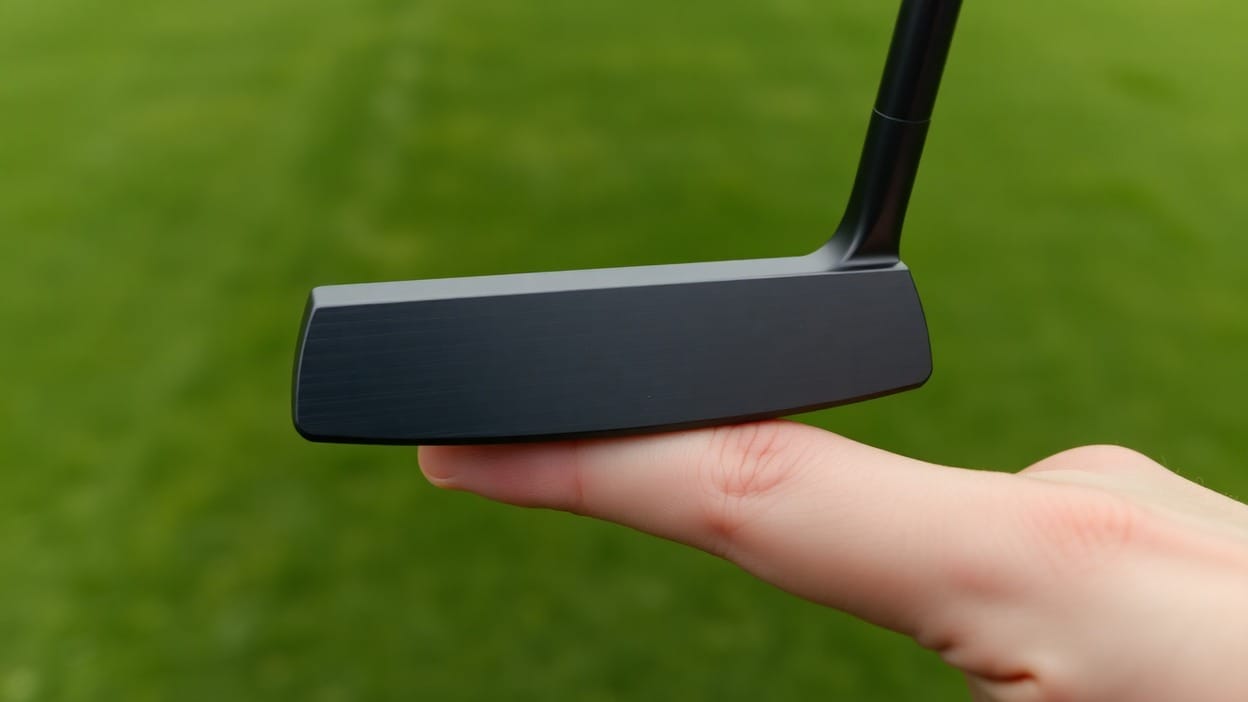
A ten-second balance check on a putter tells you more about fit than its price tag does.
Most putter advice assumes a launch monitor and an hour with a fitter. This guide doesn't. It's built for golfers who want a putter that matches their stroke and their budget, using two checks anyone can run at home, then four picks that cover the shapes those checks turn up.
- There's no single best budget putter, only a correctly matched one. Run the two free checks below, then pick from the four options that fits the result.
- A shaft balanced across one finger tells you face-balanced from toe-hang in about ten seconds, no launch monitor required.
- Cleveland's HB Soft 2 11S and Odyssey's White Hot OG #7 Nano Flow are both face-balanced mallets built for a minimal-arc stroke; the Wilson Harmonized lineup spans blade and mallet shapes in one budget line.
- The Pinemeadow PGX is the cheapest real entry point if you just want a putter that won't embarrass you, not a feature list.
- Fit beats price tag. A correctly matched budget putter can outperform a mismatched premium one, a point our Scotty Cameron Phantom 9 review makes in detail.
How to fit your own putter without a launch monitor
Two checks cover most of what a formal fitting would tell you, and both take under a minute.
The first is length. Our putter length guide walks through the wrist-to-floor method: stand in your normal putting posture, in golf shoes, on a hard surface, and measure from the crease at the base of your palm straight down to the floor. That number, not your height, is the better starting point, since posture alone shifts the right length by half an inch (1.3cm) to a full inch (2.5cm) in either direction. For reference, the PGA Tour average sits at 33 to 33.5 inches (84 to 85cm), well short of the 35-inch (89cm) length most putters ship with off the rack.
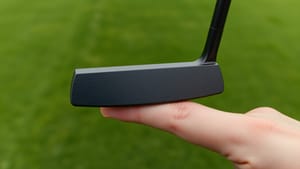
The second check needs nothing but the putter itself. Balance the shaft across one finger, horizontally, and watch what the head does. If the face stays pointed at the sky, the putter is face-balanced. If the toe drops toward the ground, it's toe-hang. That one detail tells you more about which of the four picks below will suit your stroke than any spec sheet will.
Face-balanced vs toe-hang: a starting point, not a rule
Face-balanced heads are generally paired with a straight-back-straight-through stroke, and toe-hang heads with a stroke that arcs open on the backswing and closes back through impact. It's a useful shorthand, not a law of physics. Our guide to building a consistent putting stroke cites SAM PuttLab data showing that a genuinely straight putter path, square to the line on both the backswing and the through-stroke, essentially doesn't occur naturally. The shoulders and arms rotate around a fixed pivot point, and that rotation produces some arc by default, even in players who look dead straight to the eye.
So treat the balance check as a sorting tool, not a verdict. It narrows four options down to the one or two worth a closer look, and from there, feel and setup matter more than winning an argument about geometry. I'd rather a golfer walk away from this guide holding a putter that matches a five-minute check than spend another week agonizing over which format is theoretically correct. None of the four picks below need a fitting appointment to be a reasonable choice. They need the two checks above and an honest look at what you can spend.
That's also where this guide differs from a full product review. Our Scotty Cameron Phantom 9 review makes the case that equipment is the last variable to change when a stroke path error or poor distance control is the real problem, and that a correctly fitted putter at a modest price can beat an off-the-shelf premium one for a player whose stroke doesn't match its geometry. This guide is for the golfer who doesn't have that fitting data yet and wants a confident, budget-appropriate place to start, not a replacement for getting fitted once the budget allows it.
Pinemeadow PGX: the cheapest real entry point
Pinemeadow PGX
The PGX is a no-frills mallet with a top-line alignment aid and standard off-the-rack lengths, nothing more. There's no premium face insert and no adjustable weighting, and that's the point. It's the putter for a golfer who wants something that rolls the ball predictably without paying for technology they haven't decided they need yet. If the balance check and the length check are the first things you've ever run on a putter, this is a reasonable place to stop spending and start practicing.
Wilson Harmonized: blade and mallet in one budget lineup
Wilson Harmonized
The Harmonized line is less a single putter than a small range, running from a classic blade silhouette through a semi-mallet to a full mallet shape, all built around a microinjected polymer face insert for a soft, consistent feel. That spread is the appeal here: whichever way your balance check comes out, there's a head shape in this lineup built for it, without having to shop across brands to get it. The blade is the one worth a look if your check showed toe-hang, since that head shape is the one most often paired with an arced stroke.
Cleveland HB Soft 2 11S: a face-balanced mallet with real face technology
Cleveland HB Soft 2 11S
The 11S is the standard-grip, slant-neck version of the #11 head, a face-balanced winged mallet with triple alignment lines, built for a straight-back-straight-through stroke. (There's also a 11 OS variant with an oversize grip; the 11S is the one covered here.) What sets it apart at this price point is the face itself: a milled groove pattern that's more aggressive in the center, where the sweet spot is, and tapers off toward the edges, aimed at keeping ball speed consistent even on putts that don't catch the center of the face. For a golfer whose balance check came back face-balanced, it's the pick that brings genuine face technology into a budget putter rather than just a lighter price tag.
Odyssey White Hot OG #7 Nano Flow: the mallet already in our fitting guide
This is the same #7 head referenced in our putter length guide, at the same $219 figure, so the two pages agree: a winged mallet with two parallel alignment lines, face-balanced, suited to a minimal-arc stroke. It carries the White Hot insert, which has one of the longer competitive track records of any putter face on the market, in a lighter shaft build aimed at golfers sensitive to head feel. Odyssey has discontinued the model, but it's an established build that's still widely stocked, not a current-season release. Against the HB Soft 2, the two are closer in concept than price, both face-balanced mallets for a straight-back-straight-through stroke, with the Odyssey leaning on insert pedigree and the Cleveland leaning on milled face technology at a lower price.
Picks by use case
Frequently Asked Questions
How do I know if I need a face-balanced or toe-hang putter?
Balance the shaft across one finger, horizontally. If the face stays pointed at the sky, it's face-balanced, generally the better match for a straight-back-straight-through stroke. If the toe drops toward the ground, it's toe-hang, generally the better match for a stroke with some natural arc.
Do I need a professional fitting to buy a budget putter?
No. The wrist-to-floor length check and the one-finger balance check cover the two biggest fit variables without an appointment. A formal fitting adds precision, particularly around lie angle and stroke path, but it isn't a requirement for choosing a reasonable budget putter to start with.
What's the difference between the Cleveland HB Soft 2 and the Odyssey White Hot OG #7 Nano Flow?
Both are face-balanced winged mallets built for a minimal-arc stroke, so the choice comes down to what each is built around and what you're willing to spend. The Cleveland is $159.99 and leans on a milled face pattern for consistent ball speed. The Odyssey is $219 and leans on the White Hot insert's longer competitive track record. The price gap is real, so the decision usually comes down to whether that insert pedigree is worth about $60 more to you.
Can a budget putter really compete with a premium model?
Yes, when it's correctly matched to the golfer's stroke. Our Scotty Cameron Phantom 9 review makes this case directly: a correctly fitted putter at a fraction of a premium model's price can outperform that premium putter for a player whose stroke doesn't match its geometry. Fit is the variable that decides the outcome, not the price tag.
Some links in this article are affiliate links. If you buy through them, I earn a small commission at no extra cost to you. This never influences what I cover or recommend. I link to gear I'd buy myself.








The golf newsletter that cuts the hype
Data-backed reviews and advice that works. No brand spin.
Recommended products