
 Buy now







reviews
Callaway Quantum Max Fairway Wood Review
Callaway's 2026 fairway wood promises an easy launch and forgiveness across the face. Here's
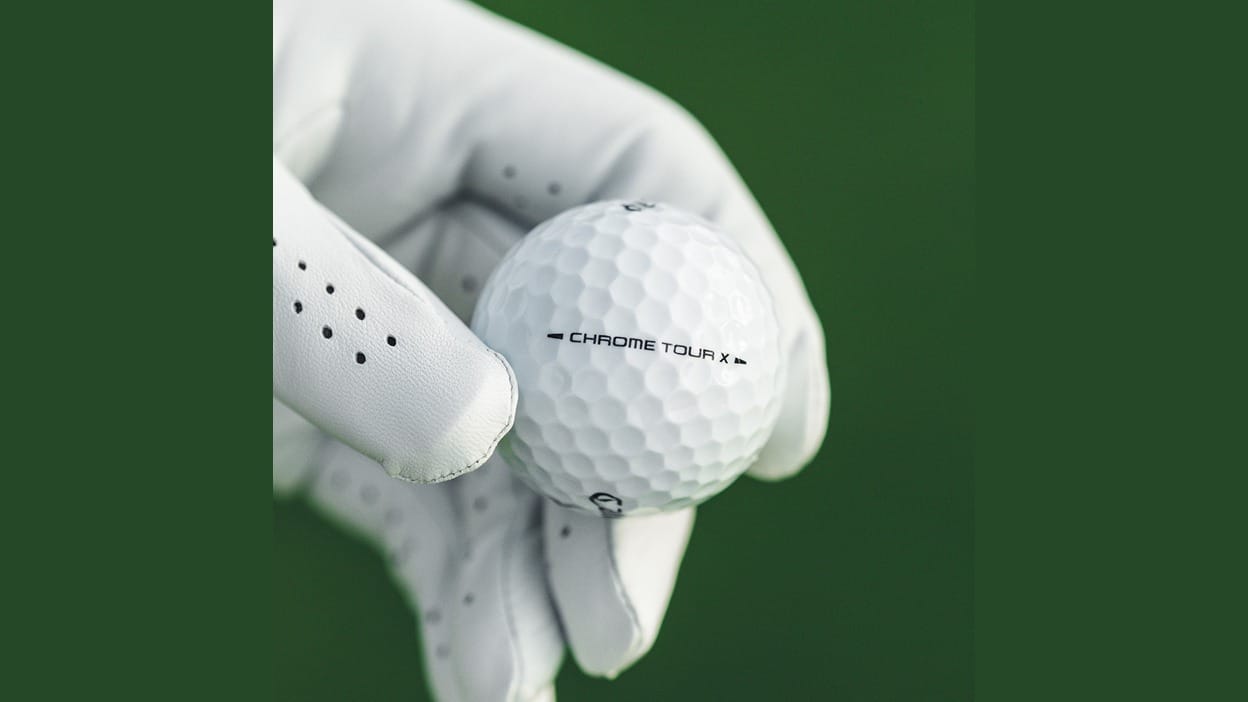
Callaway Chrome Tour X. Image © Callaway Golf Company. Used by permission.
Callaway's 2026 Chrome Tour lineup has three balls, and the Tour X sits at the firm, high spin end of it. The site's Chrome Soft 2026 review already covers the softer, more forgiving sibling and calls the Tour X "the firmer Chrome Tour, which sits above it in the family." This review stays on the Tour X specifically: what changed for 2026, what independent testing actually found, and who it's built for.
Callaway's pitch for the 2026 Tour X centers on a new layer it calls the Tour Fast Mantle. Reporting on the launch, Callaway framed the goal as speed without a compression jump: "what we didn't want to do is use compression jacking to get to that ball speed." The Tour X keeps its four-piece construction and Seamless Tour Aero cover, and Callaway's own comparison chart for the 2026 lineup rates it firm on feel, mid on long game spin, maximum on short game spin, and high on workability.
Independent testing backs up the short game claim more clearly than the speed one. National Club Golfer recorded an average of 8,300 RPM on 50-yard wedge shots (46m), the highest number its reviewer has measured on any ball, and called the Tour X Callaway's best to date. Plugged In Golf found the Tour X spinning roughly 300 RPM more than the standard Chrome Tour through the short and mid irons, with a smaller gap off the driver. Asked by a reader whether that extra spin costs distance, the reviewer answered that for their own swing, "the difference was not enough to see a meaningful distance difference."
On launch direction, the only independent measurement comes from National Club Golfer, whose own numbers had the Tour X flying slightly higher off the driver than both the Chrome Soft and the standard Chrome Tour. Plugged In Golf doesn't report its own driver launch numbers for the Tour X; it notes only that Callaway's stated design goal was a flatter, stronger flight for wind stability. A design goal and what one tester actually measured aren't necessarily in tension, but it's worth being clear that only one of these is a measured result.
GolfLink's lab testing is the clearest look at where the speed claim does and doesn't pay off. The Tour X posted a top five ball speed (139.0 mph (224km/h)) off the driver but still finished 23rd of 43 balls in GolfLink's overall distance test, because its launch angle (12.4 degrees) ran low. Around the green it was a different story: 9.2 out of 10 for wedge control (3rd of 43) and 9.3 out of 10 for stopping power (2nd of 43), with a 50-yard shot (46m) rolling out just 1.8 yards (1.6m). GolfLink's own summary: "around the green, Chrome Tour X is one of the best balls we've tested, period." None of the independent tests used for this review ran a dedicated durability check, so no claim is made on that point either way.
Golf Australia's hands on test agrees with the firm feel description and adds that the Tour X held up well in wind and felt controllable through the bag. Its verdict: "if you like a harder ball with a bit more workability, this one delivers."
The Tour X is built for faster swingers, roughly 105 mph (169km/h) of clubhead speed and up, who want the lowest driver spin and firmest feel Callaway's 2026 lineup offers and are willing to trade some forgiveness for wedge control. This matches the site's own ball-choice logic: lower compression balls give up ball speed, and the gap widens the faster a golfer swings, so a firm, high compression ball like the Tour X only pays off once swing speed is actually in that range.
Golfers without a launch monitor can estimate where they stand using the site's own carry-to-speed shortcut: divide driver carry distance by 2.3. A 250-yard (229m) carry works out to roughly 109 mph (175km/h), comfortably inside Tour X territory, while a 200-yard (183m) carry works out to about 87 mph (140km/h), well below it.
Improvers and weekend golfers who carry the driver well under 230 yards (210m) are the group this ball isn't built for. The extra wedge spin is real, but it comes from a ball that is harder to compress at impact, so a slower swing just gets a firmer feeling shot without the ball speed to go with it. I'll admit my own bias here: given a free choice, I'm drawn to whatever ball carries the firmest, highest-spin reputation in a lineup, and I have to talk myself out of recommending the Tour X to swing speeds where the data says a softer ball will simply carry further. Golfers in that range are better served by the softer feeling Chrome Soft, reviewed on this site, which trades some of that wedge spin for a ball that's easier to compress at a slower swing speed.
Golfers chasing extra driver distance above all else should skip the Tour X regardless of swing speed. GolfLink's testing put it in the bottom half of the field for overall distance despite a fast ball speed, because the low launch angle caps how far that speed translates into yards.
Against the standard 2026 Chrome Tour, the Tour X is the firmer, higher spinning option. Plugged In Golf's side by side found the X spinning more through the irons and feeling closer to an average tour ball off the wedge, while the standard Chrome Tour stays a step softer and a step lower spinning. Against the 2026 Chrome Soft, the gap is larger still. The Chrome Soft review on this site describes that ball as "the softest feeling ball in the current Chrome family," priced about the same as the Tour X despite trailing it on greenside spin. Against a rival at the same end of the market, the TaylorMade TP5x, the two balls sit close together on paper: MyGolfSpy's lab measured the 2026 TP5x at a compression around 98, against Plugged In Golf's 97.9 average for the Tour X, and both are five-piece or four-piece urethane covered tour balls built for faster swingers. The difference buyers are more likely to feel is Callaway's heavier lean toward wedge spin versus TP5x's five-piece construction aimed at a more even spin profile through the bag.
A 2025 MyGolfSpy test cited in this site's Pro V1 review found the previous generation Chrome Tour X out spinning the Pro V1 around the green, alongside the TaylorMade TP5 and Bridgestone Tour B XS. That test predates the 2026 redesign covered here, so it speaks to the Tour X name's reputation rather than to this specific ball.
| Spec | Callaway Chrome Tour X (2026) |
|---|---|
| Construction | Four-piece, Tour Fast Mantle layer, Seamless Tour Aero urethane cover |
| Compression | Not published by Callaway; Plugged In Golf measured an average of 97.9 (96 to 101 range, 12 balls tested) |
| Feel | Firm, per Callaway's own comparison chart |
| Short game spin | Maximum, per Callaway; confirmed as the highest National Club Golfer has tested |
| Colors | White, Triple Track alignment, 360 striped |
| List price | About $57 a dozen at the time of writing, per GolfLink |
The Tour X does what Callaway built it to do: it is the firmest, highest short game spin ball in the 2026 Chrome family, and independent wedge and stopping power numbers back that up. It's not a distance ball, and GolfLink's own testing shows that plainly. The buyer this suits is a faster swinger, roughly 105 mph (169km/h) and up, who scores by controlling spin into greens rather than by chasing extra carry.
For a faster swinger who scores by controlling spin into greens rather than chasing extra carry, the Tour X's wedge and stopping numbers back up Callaway's pitch.
Buy nowSome links in this article are affiliate links. If you buy through them, I earn a small commission at no extra cost to you. This never influences what I cover or recommend. I link to gear I'd buy myself.
Data-backed reviews and advice that works. No brand spin.