









how-to
How to Hit a Fairway Wood Off the Ground
You can smash a 3-wood off a tee. Put the same club on the turf and the
Wind punishes high, spinny shots, not bad swings. Lower your ball flight with a setup change and a knockdown swing, and you take most of wind's power away before it ever touches the ball.
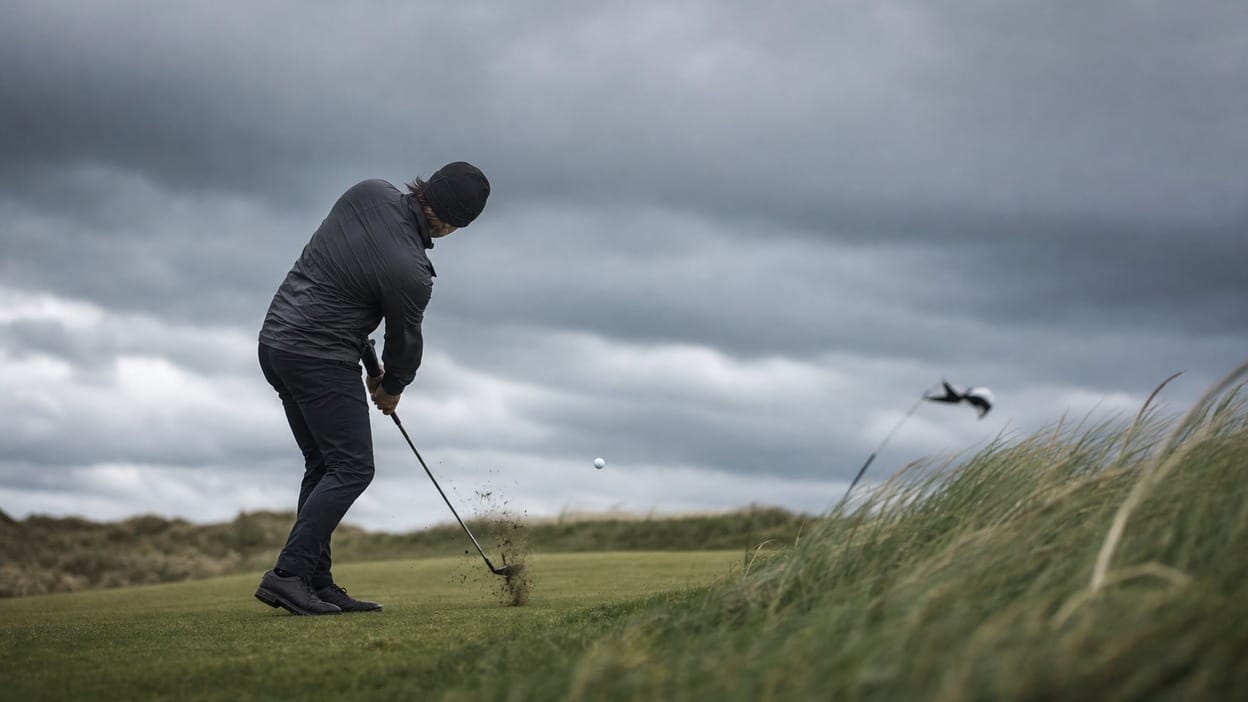
Wind doesn't punish bad swings. It punishes high, spinny shots, the kind most golfers make without meaning to. Lower your ball flight and you take most of wind's power away before it ever touches your ball.
Before you touch your swing, change three things at address: widen your stance for stability, move the ball slightly back of its normal position, and shift a little more weight, roughly 60 percent, onto your front foot. Choke down an inch (2.5cm) on the grip too, which shortens the effective length of the club and gives you more feel and control in exchange for a little clubhead speed you don't need for this shot. All four adjustments do the same job: they lower your center of gravity and shorten your swing arc, which makes it easier to control what happens at impact when the wind is trying to add extra movement you didn't ask for.
This setup does most of its work before you ever start the takeaway. A wider base resists the kind of sway that a gust can exaggerate, and the forward weight bias helps you strike the ball with a descending blow, which sets up everything in Step 2. None of these adjustments requires a swing change on its own; they simply put you in a position where the swing you already have is harder to knock off line.
How far is "slightly back" in practice? For most full shots, moving the ball from its usual spot, roughly off the inside of your lead heel for a mid-iron, back another 2 inches (5cm) toward the center of your stance is enough to feel the difference without turning the shot into a different swing altogether. Widen your feet by about the same amount on each side, 2 to 3 inches (5 to 8cm) more than your normal stance width, so the base feels noticeably steadier without going as wide as a bunker setup. These are starting points, not fixed numbers; a few range balls with each position will tell you quickly whether you've moved enough to flatten the flight or so far that contact starts to suffer.
Ball position back of normal is the single biggest lever you have over trajectory. Moving the ball even an inch or two (2.5 to 5cm) back in your stance reduces dynamic loft at impact, the effective loft the clubface presents to the ball, and lower dynamic loft means lower spin. Those two things, loft and spin, are exactly what wind grabs onto. A ball that launches low and spins less punches through wind that would balloon a normally struck shot 10 or 15 yards (9 to 14m) off its intended line.
You don't need a different clubface angle or a steeper swing to get this effect. Think of it this way: the further forward the ball sits at impact, the more time the clubhead has had to release and add loft to the face, and the further back it sits, the less that release has happened yet, so the face meets the ball more square to the ground and sends it out lower and quieter. The ball-position change alone delivers most of the flight reduction, which is why it's the first technical adjustment worth learning, ahead of anything involving swing speed or effort.
The knockdown, or punch shot, is a three-quarter swing with an abbreviated finish and your hands staying ahead of the clubhead through impact. Take the club back a little shorter than normal, keep the tempo unhurried, and stop your finish early instead of releasing all the way to a full follow-through. The core teaching line here is simple and worth repeating to yourself mid-round: take more club and swing easier, not swing harder.
That instruction fights instinct. Every part of you wants to attack a shot into the wind, and every part of that instinct makes the shot worse: more effort adds clubhead speed, more clubhead speed adds spin, and more spin is exactly what a headwind will grab and throw skyward. Trusting a slower, three-quarter swing when the wind is howling and every instinct says to swing harder is the real skill in this shot, more than any technical position, and it's the same trade I'd make every time even when the bigger swing looks tempting.
If you don't have a launch monitor to check your numbers, you can still train this shot with what's already in your bag or your pocket. Watch the ball's peak height against the skyline or a tree line behind the green rather than watching a number on a screen; a knockdown that's working will visibly flatten out well below your normal shot height. Check your divot too. A shallow, forward divot points to the ball-back, hands-ahead position doing its job, while a deep divot behind where the ball sat usually means the ball crept forward again before you swung. A phone propped up for a slow-motion replay will also show you, in a few seconds, whether your hands are actually ahead of the clubhead at impact or only felt that way. Listen for the strike too: a knockdown that's compressing the ball correctly makes a slightly lower, more compact sound than the higher, airier contact of a full-flight shot, and with enough reps that sound becomes as reliable a feedback signal as any launch monitor number.
Into the wind, take at least one more club than the yardage calls for and make the easier, three-quarter swing from Step 3 with that extra club, rather than a full swing with your normal club. Downwind, drop down a club and expect extra roll once the ball lands, since a following wind flattens your landing angle as much as it extends the carry. Crosswind is its own decision: rather than trying to shape a shot to fight the wind, most golfers do better picking a starting line that lets the wind carry the ball back toward the target and aiming for that drift instead of against it.
Club selection is the strategy layer of playing in wind, deciding how many clubs to add or subtract and where to start your aim. For the fuller math on how club selection and elevation changes stack up together, see Course Management: How to Score Lower Without Hitting Better; this piece focuses on the technique that makes any club selection actually work once you commit to the shot.
The technique side has its own rough bands worth knowing, separate from club math. In a light wind, up to about 10 mph (16km/h), a normal knockdown with one extra club is usually enough, and dispersion barely changes from a calm day. In a moderate wind, 10 to 20 mph (16 to 32km/h), the knockdown stops being optional; skip it and a full-flight shot can balloon several yards further off line than the same shot hit low. In a strong wind above 20 mph (32km/h), even a well-struck knockdown moves around more than you're used to, and the technique's job shifts from eliminating the wind's effect to simply keeping it manageable.
Even a well-executed knockdown won't behave like a calm-day shot. Expect more run-out once the ball lands, since a lower, less spinny flight releases further than a normal approach, and expect a wider miss pattern than you're used to. A shot that normally disperses 10 yards (9m) left to right in calm conditions can easily disperse 20 yards (18m) or more in a strong crosswind, even when you execute the technique correctly. That's not a swing flaw; it's what wind does to any ball in flight, and planning for it changes where you aim and which side of trouble you accept.
The players who score well in wind aren't the ones who fight it into submission. They're the ones who accept the wider miss ahead of time, aim at the fat part of the green instead of the flag, and let the knockdown do the work of keeping the ball out of the worst of the gusts. A firm green with trouble on both sides calls for a more conservative line than the flag alone would suggest, and giving up a few feet of proximity to the hole is a fair trade for staying out of a bunker or a hazard you'd otherwise have brought into play. Precision gives way to management once the wind picks up, and making peace with that trade before you swing is worth more than any single technical adjustment.
That decision belongs in your pre-shot routine, not mid-swing. Settle on the target and the size of miss you're willing to accept while you're still standing behind the ball, then commit to the easier three-quarter swing from Step 3 without renegotiating the plan once you've taken your stance. Golfers who second-guess the club or the target after they've already set up are the ones who decelerate through impact or steer the shot, and both mistakes undo everything the setup and ball position were doing for you in the first place.
Everything above changes what happens inside a single swing, lowering the ceiling on how much any one gust can do to a shot you've already committed to. Deciding how many clubs to add, where to start your aim, and when a hole calls for extra caution is a separate layer that sits on top of the technique. For that fuller strategic picture, see Course Management: How to Score Lower Without Hitting Better; the two pieces together cover both what to change in the swing and how to plan around the wind before you ever pull a club.
Gear built for wind: a low-spin, low-flight tour ball resists the wind's effect on its own, and a light wind or rain layer keeps grip and swing feel intact when conditions turn.
Wind doesn't create curve on its own; it amplifies whatever spin is already on the ball. A shot with normal or high spin gets pushed further off line because the wind has more spin axis to grab onto, while a lower-spin knockdown shot is affected less by the same gust.
No. Swinging harder increases clubhead speed, and more clubhead speed usually adds spin, which is the opposite of what a shot into the wind needs. The better approach is more club and an easier, three-quarter swing.
It depends on wind speed, shot trajectory, and spin rate, so there is no single number that fits every shot. A well-struck knockdown loses noticeably less distance and holds its line better than a full-flight shot hit into the same wind, which is the main reason to learn the technique rather than just adding clubs to a normal swing.
A knockdown, or punch shot, is a three-quarter swing with an abbreviated finish and the hands staying ahead of the clubhead through impact. It produces a lower, lower-spin ball flight that holds up better in wind than a full, high-flight shot.
Some links in this article are affiliate links. If you buy through them, I earn a small commission at no extra cost to you. This never influences what I cover or recommend. I link to gear I'd buy myself.
Data-backed reviews and advice that works. No brand spin.