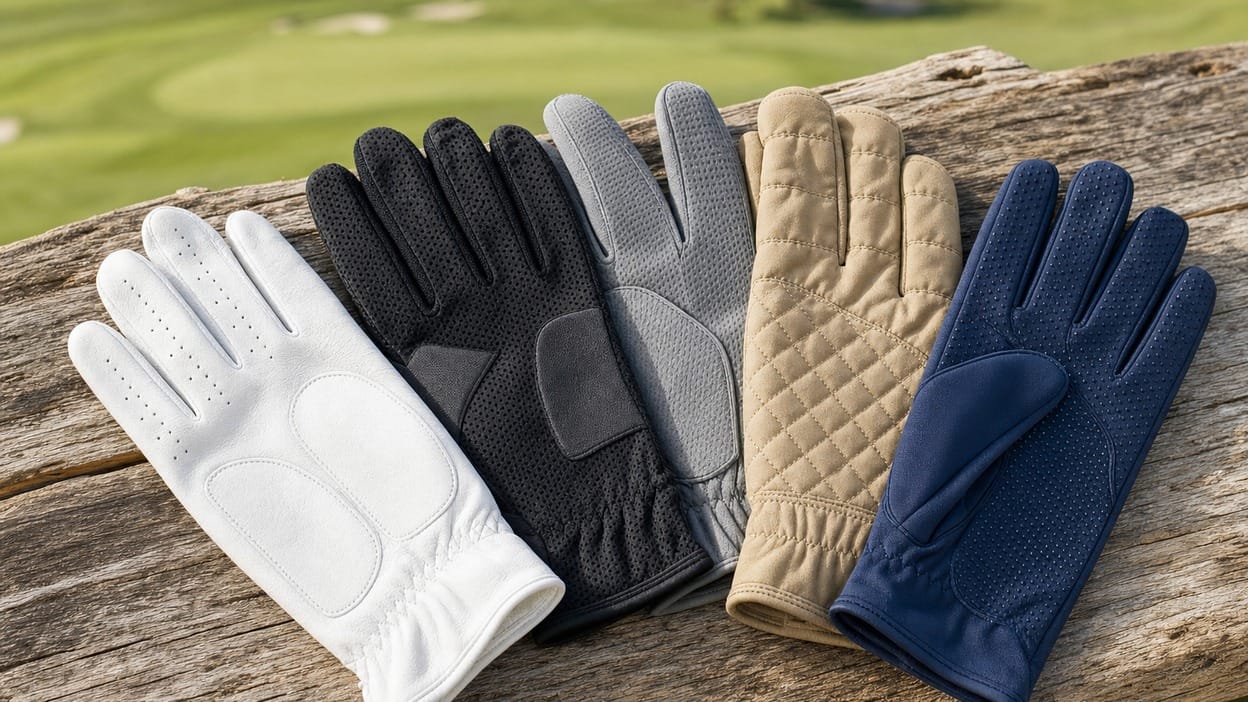
If you only need one answer: the FootJoy WeatherSof (B0CCK7L2FK) is the safest all-around buy for most golfers, handling everything from a dry Saturday to a sweaty back nine without falling apart. If you want the best feel money can buy and don't mind replacing it more often, the Titleist Players Flex is the pick. Budget-conscious golfers do well with the Wilson Staff Grip Plus, golfers who play in mixed wet and dry conditions should look at the TaylorMade Tour Preferred, and anyone tired of buying a new glove every few weeks, including golfers managing arthritic hands, should look at the Bionic StableGrip Natural Fit.
Quick picks: the best golf glove for every golfer
Before the details, here's the short version. If your rounds see a mix of weather and you don't want to think about it, the FootJoy WeatherSof (B0CCK7L2FK) is the glove most golfers should default to. If feel is what you care about most and you're willing to retire a glove a little sooner, the Titleist Players Flex (B07Z9ZMT73) is worth the premium. Golfers watching their budget get real value from the Wilson Staff Grip Plus (B07CGZV7SW). Golfers who play in both wet and dry conditions and want a glove that won't stiffen up after a rainy round should look at the TaylorMade Tour Preferred (B0F23SC8NZ). And golfers who are tired of replacing a glove every month, including anyone dealing with arthritic hands who wants a grip that stays consistent longer, should look at the Bionic StableGrip Natural Fit (B0CRVLJ31L).
FootJoy WeatherSof: the best all-conditions golf glove
The WeatherSof uses FootJoy's synthetic "FiberSof" material rather than full cabretta leather, and it's engineered specifically to resist the breakdown that leather gloves show once they get wet or sweaty. Independent reviews from Golfalot and Golf Monthly both converge on the same point: it holds up in light rain and hot, humid rounds without the stretch and sag a leather glove develops. That combination of durability and consistent grip is why it's the pick for golfers who don't want to think about the weather before they leave the house.
It's also the most flexible glove here on sizing. This exact listing offers a full run of standard sizes plus Cadet Small through Cadet X-Large, so it's a safer bet for golfers who've had trouble finding a cadet fit elsewhere. Typical pricing runs in the $16 to $20 range for a single glove, with 2-packs commonly landing between $23 and $30 depending on which generation of the WeatherSof is in stock. If I'm restocking my own bag and I don't know what the back nine of a Saturday round is going to look like, weather-wise, this is the glove I reach for, not the most exciting pick on this list, but the one I trust not to let me down.
We've reviewed this glove in full: FootJoy WeatherSof Golf Glove Review.
Buy: FootJoy WeatherSof on Amazon
Titleist Players Flex: the best premium-feel golf glove
The Players Flex is cut from thin cabretta leather, and reviewers consistently rank it among the best-feeling gloves on the market. That's the whole case for it: golfers who prioritize feedback at impact and don't mind babying a glove a little will notice the difference over a synthetic or hybrid option.
The tradeoff is durability. Coverage from Golf Insider and MyGolfSpy both flag the same pattern: the thinness that makes it feel so good is also what makes it wear out faster, especially in sweaty conditions, and both outlets suggest saving it for rounds rather than range sessions. It's priced accordingly, typically $23 to $30 per glove. Cadet sizing exists within the Players Flex line, though it isn't listed as a variant on this specific Amazon listing, so cadet buyers should check the size selector carefully before ordering.
Buy: Titleist Players Flex on Amazon
Wilson Staff Grip Plus: the best value golf glove
The Grip Plus pairs a synthetic body with a cabretta leather patch at the thumb and palm, the two spots that see the most wear. Golf Monthly's hands-on coverage describes it as a "basic" glove in the best sense: it does the job on grip, shows only minor cosmetic wear after a couple of rounds, and doesn't pretend to be a premium product. That combination makes it the easiest recommendation here for anyone buying gloves by the three-pack rather than one at a time.
Pricing sits well below the rest of this list, commonly under $15 per glove and sometimes closer to $8 to $10 when bought in a multi-pack. We couldn't confirm cadet sizing for this specific model; searches kept surfacing Wilson's separate Grip Soft line instead, so cadet buyers should check the listing directly rather than assume it carries over.
Buy: Wilson Staff Grip Plus on Amazon
Heads up: this listing only comes in right hand, white, size Medium/Large, so double-check that matches before you buy.
TaylorMade Tour Preferred: the best glove for mixed conditions
The Tour Preferred uses AAA-grade cabretta leather with TaylorMade's own tanning process, plus a 3M Scotchgard treatment that sets it apart from other premium leather gloves on this list. That treatment is the reason it's the pick for golfers who play in both wet and dry conditions rather than one or the other; a Players Flex or a standard cabretta glove will stiffen up faster once it gets soaked, while the Scotchgard coating keeps the Tour Preferred usable across a wider range of weather.
Durability reviews land in the middle of the pack: Golf Monthly and Golf Info Guide both describe strong short-term wear resistance with average long-term durability for a high-end cabretta glove, not a clear standout either way. Pricing runs approximately $20 to $25 per glove, with multi-packs bringing the per-glove cost down further. We couldn't confirm a cadet option for this specific model.
Buy: TaylorMade Tour Preferred on Amazon
This listing is locked to Gray in size Medium; hand isn't specified, so check the product page before ordering.
Bionic StableGrip Natural Fit: the best golf glove for durability
The StableGrip Natural Fit is built around Bionic's patented 3D finger-pad structure, genuine cabretta leather, and a design goal that's different from anything else on this list: last longer than a standard glove rather than feel the thinnest or cost the least. Bionic markets this line as lasting two to three times longer than a traditional leather glove. That figure is Bionic's own claim rather than an independently tested number, and it's worth noting Bionic's own listings aren't fully consistent, some describe "2X," others "2 to 3X." Independent reviews of the related StableGrip 2.0 model back the general direction: reviewers at Golf Monthly and Golfers Authority both describe it holding up well past the point where a standard glove would need replacing, without running a controlled test that pins down an exact multiplier.
The tapered finger-pad design is also worth calling out for golfers managing arthritic hands or reduced grip strength, since it's built to reduce the pinching and bunching that a standard glove can cause at the knuckles. Pricing runs approximately $20 to $28 per glove based on comparable listings in the StableGrip family.
Buy: Bionic StableGrip Natural Fit on Amazon
This listing is right hand only, in size 3XL, no other options.
How these 5 golf gloves compare
Glove fit and sizing: how to get it right
A golf glove is worn on your lead hand, the hand closer to the target: the left hand for a right-handed golfer, the right hand for a left-handed golfer. That's the opposite of what a lot of first-time buyers expect, so it's worth double-checking before you order.
Sizing typically runs Small, Medium, Medium/Large, Large, and Extra Large, with cadet versions of most of those sizes for golfers with shorter, wider fingers relative to their palm size. To find your size, wrap a tape measure around your lead hand at the widest part, just below the knuckles, excluding the thumb, and measure your hand's length from the crease of your wrist to the tip of your middle finger. Most glove brands publish a size chart that converts those two measurements (in inches, with a centimeter conversion) into a size; if your hand is on the wider, shorter side of a size range, a cadet cut will usually fit better than sizing up.
Caring for your golf glove, and when to replace it
A golf glove lasts longer if you treat it like a piece of equipment rather than an accessory. Take it off between shots when you're not swinging, especially on hot days, and let it air out fully after a round rather than leaving it balled up in a bag pocket. If it gets soaked, let it dry naturally away from direct heat; a vent or a dashboard will shrink and stiffen the leather.
Replace a glove once you see thinning at the palm or fingers, a loose fit that used to feel snug, or visible tears at the seams, whichever comes first. For most cabretta leather gloves, that point arrives somewhere between 10 and 20 rounds of regular play, though it varies with how much you sweat and how often you rotate gloves. Synthetic and hybrid gloves, like the WeatherSof and Grip Plus, typically last longer before showing the same signs.
How do I care for a golf glove?
Take it off between shots when you're not swinging, let it air dry fully after a round instead of leaving it balled up, and avoid direct heat sources like a car dashboard, which will stiffen and shrink the leather.
When should I replace my golf glove?
Replace it once you notice thinning at the palm or fingers, a fit that's gone loose, or seam tears, whichever comes first. Most cabretta leather gloves reach that point somewhere between 10 and 20 rounds; synthetic and hybrid gloves tend to last longer.
What's the difference between cadet and regular golf glove sizes?
Both describe the same hand length and width in inches, but a cadet size is cut for a hand that's shorter and wider relative to its palm size, while a regular size assumes a proportionally longer hand for the same width. If a regular size fits snugly around your palm but leaves extra material at the fingers, a cadet size is usually the fix.
Should I buy a leather or synthetic golf glove?
Leather, usually cabretta, gives the closest feel to a bare hand but wears faster, especially in heat and humidity. Synthetic and hybrid gloves trade a little feel for consistent grip in a wider range of weather and generally last longer before needing replacement.
Some links in this article are affiliate links. If you buy through them, I earn a small commission at no extra cost to you. This never influences what I cover or recommend. I link to gear I'd buy myself.