






how-to
How to Play Golf in Cold Weather
1. Layer and club up: layer with a moisture-wicking base and a stretch mid-layer, keep two
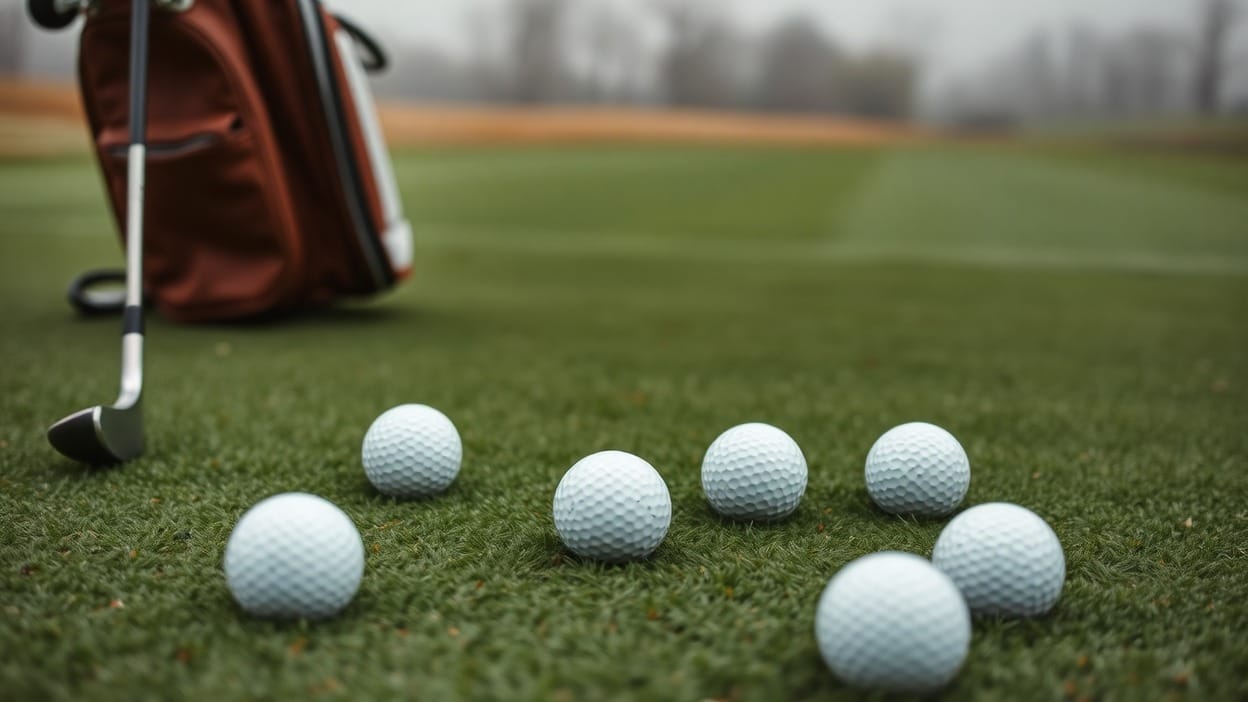
No launch monitor? A handful of balls and one club is all the data you need.
Most golfers don't actually know their iron distances. They know their best one. Ask a 15 handicapper how far their 7-iron goes and you'll get the number from the one flush shot they remember from three summers ago, not the number they'd actually trust standing over a real 150-yard (137.2m) approach. A launch monitor clears this up in ten swings. Without one, you need a method that does the same job with patience and a tape measure instead of a sensor.
This isn't a shortcut version of the launch monitor method. It borrows the exact same logic: hit enough shots to kill the outlier, measure the number that matters for approach play, and write down a figure you can trust under pressure instead of the one you remember fondly.
PGA professional Kelvin Kelley, writing for GOLF.com, lays out the fix for the one-great-shot problem directly: practice with five balls per club, from a flat lie, aimed at an actual target. Don't warm up with the club first. The point is testing the shot you'd really hit on the course, mishits included.
Five is the minimum, not a suggestion. Three shots doesn't leave you enough data to throw out an outlier and still have a real sample. Ten is better if you've got the range time, but five is the number the method is built around, so start there. If three or four of your five come off thin or off the toe, your limiting factor is contact, not measurement, and that's a separate fix covered in how to compress the golf ball with your irons.
Start with a club you strike consistently, not your hardest one. A 7-iron or 8-iron is usually the easiest to get a clean read on, and once that number feels solid, work the same method up and down the rest of the bag one club at a time. Hit your own ball if you can, not range balls, since the construction varies and it rarely flies quite the same as what you play on Saturday.
Carry distance, not total distance, is the number that actually matters for approach play, as Launch Point's guide to mapping your bag with a launch monitor puts it. Total distance includes however far the ball rolls or bounces after it lands, and that number shifts with turf firmness, slope, and plain luck in a way carry distance doesn't. Carry is what tells you whether you clear the bunker, carry the hazard, or stop a shot near the flag.
You can't measure carry with total precision off a fairway with no sensor, but you can get close. Pick the spot where the ball first touches down, mark it before it rolls any further, and pace to that mark rather than to wherever it finally stops. It's one extra step, and it's the step that keeps your number honest.
Without a rangefinder, pacing is the next best option, and it comes with a hidden flaw. By convention, golfers treat one pace as one yard (0.9m), but that convention assumes a stride most golfers don't actually take. According to GolfCompendium's breakdown of the pace-as-distance convention, a natural walking stride runs about 29 to 30 inches (73.7cm to 76.2cm) for men and about 26 inches (66cm) for women, both shorter than a full yard. Pace normally and you'll undercount every distance you measure.
The fix is to lengthen your stride on purpose when you're pacing off a shot, not to walk normally and hope the math works out. Practice a few paces against a tape measure or a known 100-yard (91.4m) stretch until a full yard-length step feels natural, then use that same stride every time.
Do this check on flat ground only. Pacing up or down a slope throws off your count even with a perfect stride, since your steps naturally shorten going uphill and lengthen going down. If the range or the hole you're testing on has any real elevation change, find a flatter stretch to calibrate your stride first, then carry that same stride over to the sloped shot when you measure it.
One more wrinkle: sprinkler heads marked with the yardage to the center of the green show up on a lot of American courses, but the convention isn't universal, and whether it measures to the center, front, or pin varies by course. Check how your course marks its heads before you trust a number off one, or your pacing will be accurate and your reference point wrong.
This is the heart of the method. Once you've got five carry distances for a club, don't average them. Take the median: sort the five numbers and use the middle one. Kelley is specific about this for a reason: "practice with five balls... take the median result of the five balls." An average gets pulled around by your one pured shot and your one shank. The median ignores both.
How much that matters shows up in the on-course swing data Arccos tracks. Arccos's 7-iron "Smart Distance" data, tracked across its user base in 2020, put the 10-handicap group's mean 7-iron distance at 165 yards (150.9m) and the median at 148 yards (135.3m), a real gap between two numbers describing the exact same group of golfers. Scratch players showed a smaller but still real gap: 170 yards (155.4m) mean versus 159 yards (145.4m) median. Bogey golfers showed the widest gap of all: 162 yards (148.1m) mean versus 140 yards (128.0m) median. That's on-course data, not pure carry, and it's a few years old now, but the pattern holds regardless: the gap between your best-shot number and your real number gets wider, not narrower, the less consistent your contact is. I'll admit my own instinct still reaches for the bigger, more flattering number when I'm guessing a club's range from memory, which is exactly the bias the median method is built to cancel out.
Once every club in the bag has a median carry number, the bag-mapping guide sets the standard for what usable spacing looks like: 10 to 15 yards (9.1m to 13.7m) between clubs is ideal, anything over 20 yards (18.3m) is a real gap in your set, and anything under 5 yards (4.6m) is an overlap you don't need. Line your new median numbers up from wedge to long iron and look for both problems at once.
A gap usually means you need a hybrid or a different loft in between two clubs. An overlap means one of the two clubs is redundant for your swing, whatever the manufacturer printed on the sole. Either way, this is the step that turns a few rounds of pacing into an actual decision about your bag.
It's worth being honest about what this method can't do: it can't give you a single number that repeats perfectly, because no iron shot does, not even one hit by a machine. Golf Digest's 2026 robotic testing of game-improvement irons, using a Golf Laboratories robot swinging at a controlled 82 mph (132km/h) with a Pro V1 ball, found the average shot dispersion across the tested game-improvement irons was 226.6 square feet (21.1m²). That's a robot hitting the same club at the same speed every single time, and it still scattered.
The robot number isn't a handicap claim; it's a controlled-swing-speed average across different models, not evidence about any particular skill level. The point is simpler: your five-shot median is a solid working number, not a guarantee. Treat it as the center of a spread, not a laser-precise figure, and recheck it every season or two as your swing changes.
If pacing every shot on every range session sounds like more patience than you've got, a decent rangefinder measures the number for you instead. It's worth knowing that most GPS units on course don't hand you one tidy figure either. They give you front, middle, and back yardages to the green, so you're still doing a bit of interpretation, just with a device instead of your feet. Launch Point's rangefinder guide runs through the current options if you'd rather stop pacing altogether.
None of this is a one-time chore. Your swing changes with the seasons, with equipment changes, and honestly with how much golf you've played in the last month, so a median carry number from last spring is a guess by midsummer. Run the five-ball test again whenever a club starts feeling off, after any swing change that sticks, and at least once a season even if nothing feels different. The method takes fifteen minutes per club. Guessing costs you a shot on every approach until you redo it.
Five, minimum. PGA professional Kelvin Kelley's method, published on GOLF.com, calls for five balls per club from a flat lie, with the median result as your working number. Three balls doesn't leave enough data to discard an outlier and still have a real sample; ten is fine if you have the time, but five is the baseline the method is built around.
Carry distance is how far the ball travels through the air before it first touches the ground. Total distance adds on whatever roll or bounce happens after that, which changes with turf firmness and slope. Carry is the number that matters for clearing a hazard or stopping a shot near the flag, which is why it's the number this method, and Launch Point's launch monitor bag-mapping guide, both build around.
The median. Sort your five carry distances and take the middle one, not the mathematical average. An average gets dragged around by a single pured strike or a single shank in a way the median doesn't, and on-course tracking data from Arccos shows that gap between a golfer's mean and median distance only gets wider as consistency drops.
You can, and it's faster, but a GPS app still won't give you one single number. Most GPS apps report front, middle, and back yardages to the green rather than a single distance, so you're still interpreting a range rather than reading off an exact figure. A laser rangefinder is different: it gives you one number to whatever you aim at, usually the flag. GPS does remove the pacing step and its stride-length guesswork entirely, which is worth it if pacing off every shot on the range isn't realistic for you.
At least once a season, and sooner if a club starts feeling off or you make a swing change that sticks. Your median carry number isn't permanent. It reflects the swing you had the day you tested, and that swing drifts with practice, fatigue, and the time of year, so a number from six months ago is a starting guess, not a current fact.
Data-backed reviews and advice that works. No brand spin.