The green fee is $695 per player, up from $675 before April 2026, plus a $60 cart or a caddie at $155 single bag, $210 double.
Access runs on a three-tier booking window: Lodge and Inn at Spanish Bay guests book 18 months out, Casa Palmero guests 12 months out, everyone else gets a 24-hour window with thin odds.
The back nine's three signature holes, the par-3 7th, the blind-approach 8th, and the clifftop 18th, are the reason the course photographs like nowhere else in golf.
It's hosted six US Opens and will host a seventh in 2027, distinct from the annual AT&T Pebble Beach Pro-Am the course is better known for on television.
The fee gates who can afford one round, not who gets to enjoy it; the value case differs for a once-a-decade bucket-list trip versus a golfer who could play it every year.
What $695 actually buys
The green fee is $695 per player, up from $675 through March 2026. That covers the walk from the clubhouse to the first tee and nothing else. A cart adds $60 per player; most golfers who've made the trip walk instead and hire a caddie, $155 single bag or $210 double.
A foursome walking with caddies is pushing $3,400 before a sleeve of balls goes in the Pacific, and that ends the conversation for a lot of golfers, reasonably so. But the real question isn't whether the price is steep. It's whether the course delivers on it. That depends on what a golfer is comparing it against.
Getting a tee time is its own project
The fee is only half the barrier. Which booking tier a golfer falls into decides whether this trip takes a phone call or a year of planning.
Guests of The Lodge or The Inn at Spanish Bay can book up to 18 months out. Casa Palmero guests get 12 months. Everyone else can only try 24 hours ahead, for whatever's left, and in practice that's a lottery most golfers lose. Pebble Beach isn't really selling a tee time to non-resort guests; it's selling a resort stay that comes with one.
The holes that make the course famous
Three holes do most of the postcard work, and each one earns it for a different reason.
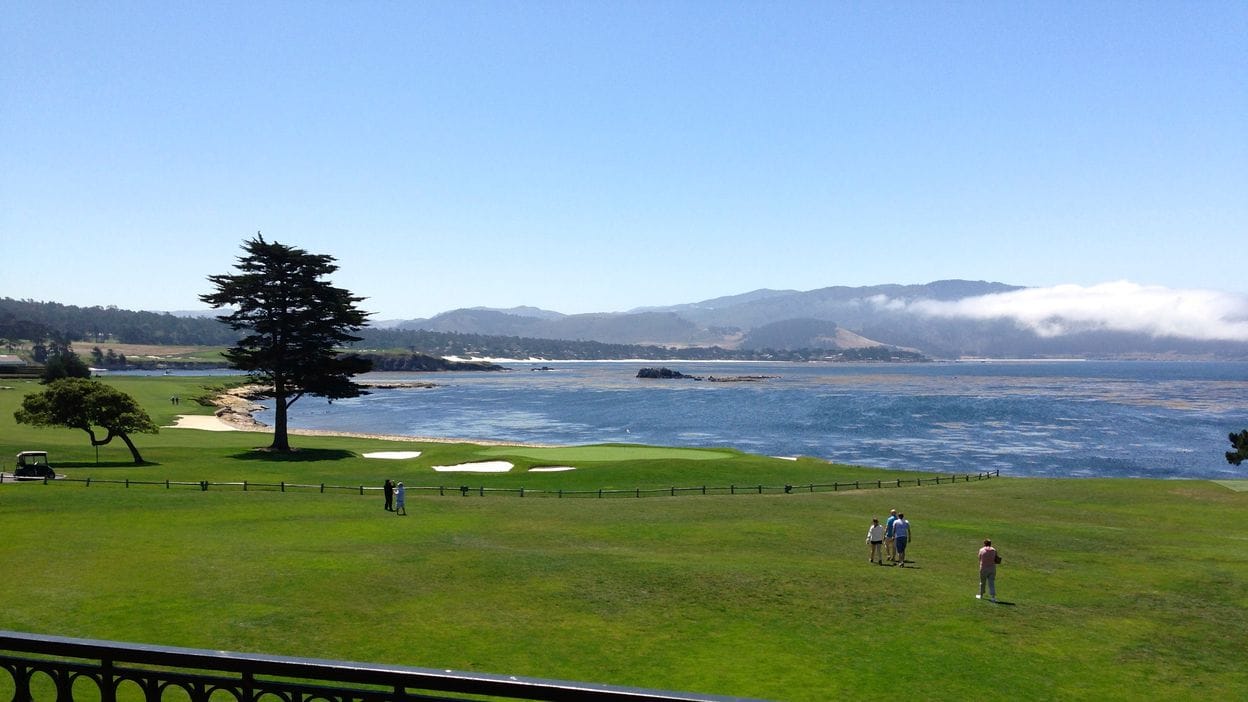
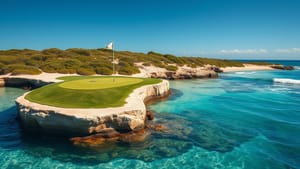
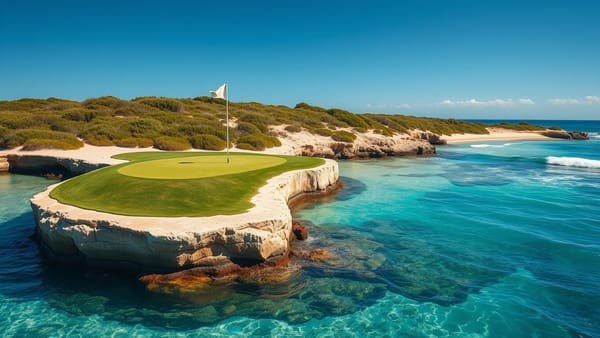
The par-3 7th plays just 106 yards (97m), the shortest hole on the course by a wide margin, straight down to a green perched above the rocks with the Pacific behind it. It's the hole people who've never set foot on the property still recognize from a photo. The 8th is the opposite kind of famous: a 428-yard (391m) par 4 with a blind second shot that has to carry a chasm cut into the cliffline, a shot that punishes hesitation more than a bad swing. And the 18th closes the round with a 543-yard (497m) par 5 that tracks the edge of Carmel Bay for the entire hole, playing as much like a scenic drive as a golf hole.
The rest of the card is a 6,828-yard (6,244m), par-72 layout, and plenty of holes never see the water. The ocean holes make every highlight reel; they're also a minority of the round.
Major championship pedigree, and one distinction worth making
Pebble Beach has hosted the US Open six times: Jack Nicklaus in 1972, Tom Watson's chip-in on the 17th in 1982, Tom Kite in 1992, Tiger Woods' record 15-stroke win in 2000, Graeme McDowell in 2010, and Gary Woodland in 2019. A seventh Open is confirmed for 2027.
That's different from the AT&T Pebble Beach Pro-Am, the annual PGA Tour stop played every February that most fans actually watch. The Pro-Am is a fixture; the US Open is a rarer visit tied to the USGA's rotation, and conflating the two overstates how often the best players are teeing it up here.
Pros:
- Three of the most recognizable holes in golf, all within a six-hole stretch on the back nine
- Genuine US Open pedigree with a seventh confirmed for 2027, not just a marketing claim
- Walkable routing with caddies available, which most golfers who've done it say is the better way to play it
Cons:
- A $695 green fee before cart or caddie fees, one of the highest in American golf
- Non-resort guests are effectively locked out of advance booking, with only a 24-hour window and thin odds
- A meaningful share of the round has no ocean view, which the photography doesn't prepare golfers for
Who this trip actually makes sense for
The fee doesn't care whether the golfer on the first tee has a 6 handicap or shoots 105. It gatekeeps who feels entitled to enjoy the round, and it shouldn't: a weekend golfer saving two years to play Pebble Beach once gets the same 18 holes, the same 7th, the same 18th, as a scratch player who plays it every spring.
The calculation splits between a once-in-a-lifetime trip and a repeatable habit. As a single bucket-list round, the value case is straightforward: nowhere else stacks three holes like the 7th, 8th, and 18th into one round, and that's a claim about routing, not tribalism. Weighed against a week of golf elsewhere, it's a genuine tradeoff between one expensive round and several good ones, with no universally correct answer. My own read, watching how consistently golfers who saved for years describe the round as worth it regardless of score, is that the fee behaves more like an experience price than a golf-course price, though I'll admit that's an easier position to hold when someone else is the one signing the check.
Pebble Beach sits on the Monterey Peninsula inside the Del Monte Forest, along the same coastline as 17-Mile Drive, with Carmel Bay forming the shoreline for the closing holes. That setting justifies a lot of the fee, named or not.
Planning around the cost, not just the golf
Booking a trip like this is as much a budgeting exercise as a golf decision, the kind of planning Plan a Golf Trip Worth the Money (see it on Amazon) walks through: which bucket-list rounds are worth the fee, how timing changes the cost, and how to build a budget that survives a $695 green fee. It's the same companion we point to for Bethpage Black, where the barrier is a 5-day booking window instead of a resort tier system, and the question is identical: is this trip worth the money.
Anyone building a bucket-list itinerary around Pebble Beach should also look at our St Andrews Old Course review. St Andrews gates access with a daily ballot instead of a price tag; Pebble Beach does the reverse. Most golfers can only justify one big trip a decade, and the honest question is which barrier is easier to clear.
Frequently Asked Questions
How much does it cost to play Pebble Beach Golf Links?
The green fee is $695 per player, up from $675 before April 2026. A cart adds $60 per player, or golfers can hire a caddie for $155 (single bag) or $210 (double bag). None of those figures include lodging, which most golfers need to book in order to get a tee time at all.
How far in advance do I need to book a tee time?
It depends entirely on where you're staying. Guests of The Lodge at Pebble Beach or The Inn at Spanish Bay can book up to 18 months out. Casa Palmero guests get a 12-month window. Golfers not staying at one of the resort's own properties can only attempt to book 24 hours ahead, with thin odds of getting a spot.
Is Pebble Beach really worth $695 for one round?
That depends on what it's being weighed against. As a once-in-a-lifetime bucket-list round, the case is strong: no other course routes three holes as recognizable as the 7th, 8th, and 18th into one round. As a repeatable habit measured against a week of golf elsewhere, it's a genuine tradeoff without one right answer.
What's the difference between the US Open at Pebble Beach and the AT&T Pebble Beach Pro-Am?
The AT&T Pebble Beach Pro-Am is an annual PGA Tour event played every February, the one most golf fans see on television. The US Open is a far rarer visit that only happens when the USGA rotates back to the course, six times so far with a seventh confirmed for 2027. They're separate events with different fields and different stakes.
Which holes make Pebble Beach famous?
Three back-nine holes do most of the work: the par-3 7th at just 106 yards (97m) with the green perched above the rocks, the par-4 8th at 428 yards (391m) with its blind approach over a cliffside chasm, and the par-5 18th at 543 yards (497m), which tracks the edge of Carmel Bay for the entire hole.
Some links in this article are affiliate links. If you buy through them, I earn a small commission at no extra cost to you. This never influences what I cover or recommend. I link to gear I'd buy myself.