









reviews
Callaway Supersoft (2025) Review
A budget-friendly pick for slower swings and higher handicaps, with MyGolfSpy's consistency caveat attached.
The Old Course is ranked among the best in the world by every major list. That's not the part that decides whether you play it: the ballot, the season, and the price are.
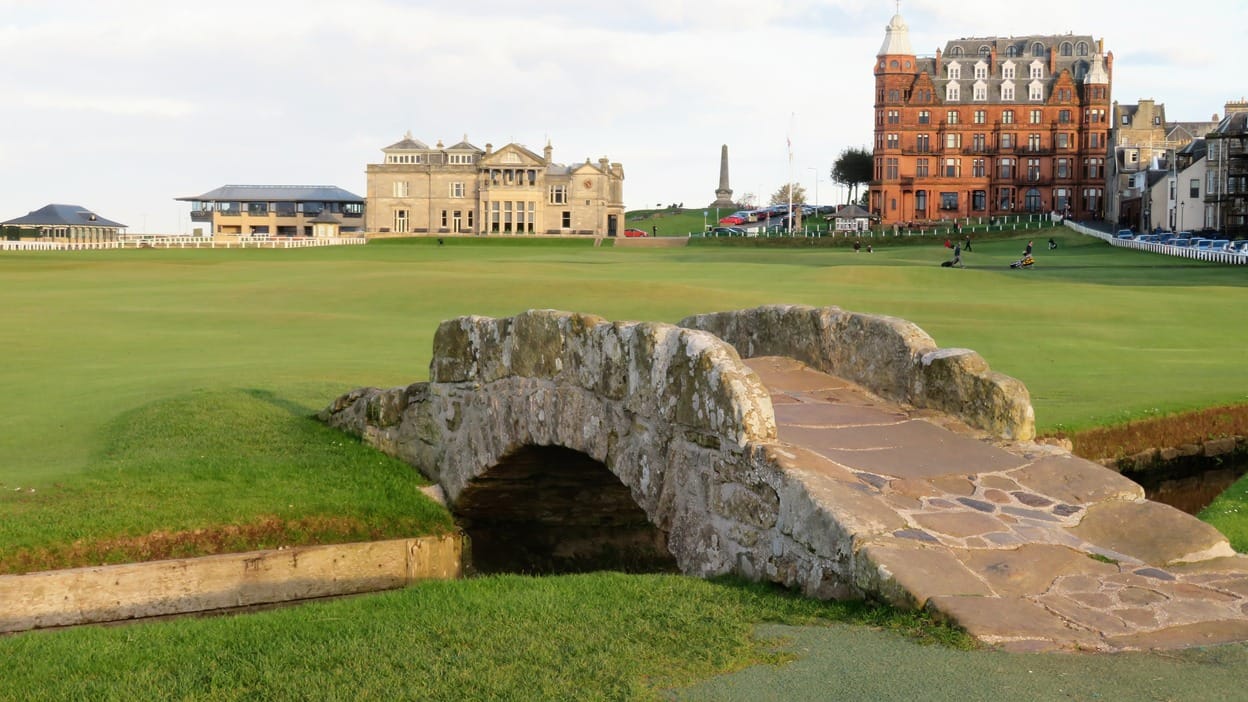
Swilken Bridge, Old Course by Gordon Hatton, CC BY-SA 2.0, via Wikimedia Commons
Golf Digest ranks the Old Course second in the world for 2026-2027. Top100GolfCourses.com has it seventh globally, second in Britain and Ireland, first in Scotland. GOLF Magazine's Top 100 places it in the same company. None of those rankings tell you the part that actually decides whether you get to play it: a same-day ballot with odds that tighten every peak season, and a course that doesn't open at all on Sundays.
That's the gap this review closes. Whether the golf itself is good isn't really in question, the rankings above have settled that argument for a long time. What's worth being precise about is what getting on it actually demands: how the ballot works, what it costs across the calendar, what's changing before the course hosts its 30th Open in 2027, and whether the guaranteed-access route is worth its premium for a golfer who isn't building a whole trip around one round.
The Old Course has no credited architect. It's the product of roughly 600 years of play and incremental adjustment, later shaped in the 19th century by Old Tom Morris, whose changes still define how the course plays today. The championship layout runs to a par 72 across 7,305 yards (6,680m).
Several of its greens are shared by two holes, a design quirk that goes back to when the course was widened for two-way play in the 1800s and remains one of its most recognizable features. The other signature hazard is Hell Bunker, sitting in the middle of the 14th fairway and ranking among the sport's most famous bunkers by name alone.
Pros: The course's reputation is backed by consensus, not a single panel's opinion. Three independent ranking bodies (Golf Digest, Top100GolfCourses.com, and GOLF Magazine) all place it at or near the top of the world list, and the shared double greens and Hell Bunker give it a character no modern build replicates.
Cons: None of that consensus makes the course easier to get to. The rest of this review is mostly about that gap.
Three holes carry most of the course's identity. The 1st opens over the Swilcan Burn, a narrow but famous crossing that sets the tone before the round has really started. The 17th, the Road Hole, is a 495-yard (453m) par 4 with a blind tee shot played over the Old Course Hotel, then a green defended by a road, a stone wall, and a bunker tight against the putting surface. It's widely called the hardest par-4 in championship golf, and the description holds up hole by hole against the rest of the rota. The 18th closes with the Valley of Sin, a deep hollow short of the green that turns a routine approach into a genuine short-game test, followed by the walk across the Swilcan Bridge that's become one of golf's most photographed moments.
This is the part most bucket-list planning skips past. The Old Course doesn't take advance bookings from the public. Access runs through a daily ballot: entries open at 8am and close at 2pm the day before the round, submitted through standrews.com, with results announced around 4pm. Roughly 120 tee times are available each day, Monday through Saturday, drawn from a pool that can exceed 2,000 entries during peak season. The course doesn't open at all on Sundays.
That leaves one guaranteed route: an Approved Operator stay-and-play package, booked well in advance at a real premium over the ballot's standard green fee. It's the only way to lock in a date rather than gamble on one, and it's worth knowing that trade-off exists before a trip gets built around a single round that the ballot might not grant.
Green fees follow the Links Trust's published seasonal structure for 2026:
| Season | Dates | Green fee |
|---|---|---|
| High | 21 Apr to 18 Oct | £355 |
| Shoulder | Apr | £250 |
| Shoulder | Oct | £240 |
| Low | Nov to Mar | £180 (fairway mats in use) |
A caddie isn't required but is recommended, and runs around £50 for a qualified caddie or £30 for a trainee. Pull carts are banned before noon. On timing, May or late August into September tends to offer the best balance of weather, crowds, and ballot odds. July and August are the wettest and busiest months of the year, while winter is the cheapest window but comes with fairway mats in play.
The Old Course has hosted the Open Championship 30 times, more than any other course, and the next one returns in 2027 for the 155th Open. Ahead of that, a Mackenzie & Ebert renovation begins in November 2026, adding 148 yards (135m) across six holes along with bunker changes.
What isn't clearly published anywhere is whether the public ballot continues uninterrupted while that work is underway. That's worth flagging plainly rather than guessing at: anyone planning a visit during the renovation window should check the current booking status directly with St Andrews Links before relying on the ballot process described above.
None of the rankings or the hole-by-hole detail answer the question a lot of readers actually have, which is whether it's worth planning a trip around a course you might not get onto. Weighing the ballot odds against what a guaranteed stay-and-play package costs, I'd only pay that premium if the whole trip depended on playing this one course on a fixed date; a golfer with a flexible schedule and a realistic view of the odds can roll the dice on the ballot and still build a strong week around it either way.
That's the same tension the site's guide to planning a golf trip that's actually worth the money works through in more general terms, including whether a famous, bucket-list course is always worth chasing on a trip at all. It's worth reading alongside this one before locking in a St Andrews plan specifically.
P.S. For readers mapping out a full trip rather than a single round, Lifers Publishing's Plan a Golf Trip Worth the Money goes deeper into the budgeting and scheduling side than a single course review can.
Some links in this article are affiliate links. If you buy through them, I earn a small commission at no extra cost to you. This never influences what I cover or recommend. I link to gear I'd buy myself.
Data-backed reviews and advice that works. No brand spin.