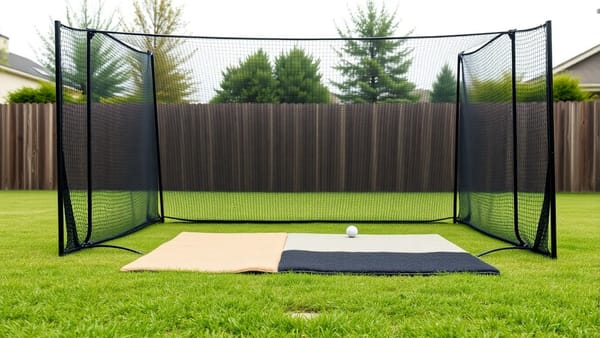
The PuttOut Pressure Putt Trainer earns its reputation as one of golf's most-recommended budget putting aids, and for one specific job: teaching speed control through fast, frictionless reps. It's not an alignment tool, and its micro-target humbles most players, but for pace training on a budget, independent reviewers keep landing on the same verdict: worth it.
Best for pace and speed control, not alignment or stroke mechanics, which is the one job independent reviewers agree it does well.
The ball-return mechanism removes retrieve friction, so practice sessions turn into more putts per minute instead of more walking.
The micro-target is genuinely difficult. Expect it to humble you before it starts improving your speed control.
It needs a flat, low-pile surface. Thick carpet blunts the roll and the feedback along with it.
Single Stone colorway, priced around $30 to $40 as a standalone unit. Pairs naturally with a distance-control drill, not a swing-path or face-angle trainer.
Who it's for
This trainer is built for golfers whose miss is distance, not direction: three-putting from outside 30 feet (9.1m), leaving lags short or racing them 6 feet (1.8m) past, or generally struggling to translate range-mat feel into on-course speed. It rewards anyone willing to put in short, repeated sessions, since the ball-return mechanism is specifically designed to remove the walking-and-retrieving friction that kills practice volume at home. It's a poor match for golfers chasing alignment or stroke-path feedback instead; that's a different problem, and products like Eyeline Golf's alignment mirrors are built to solve it rather than compete with it.
What it is, and how the ball-return and micro-target work
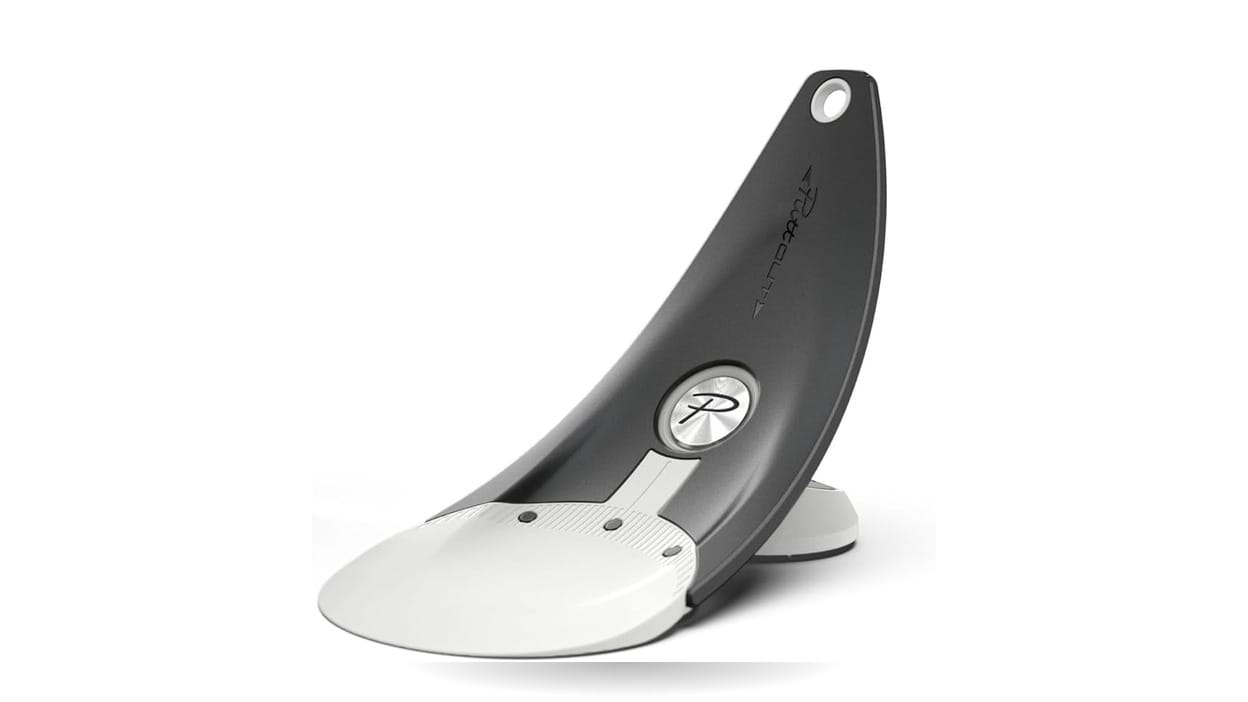
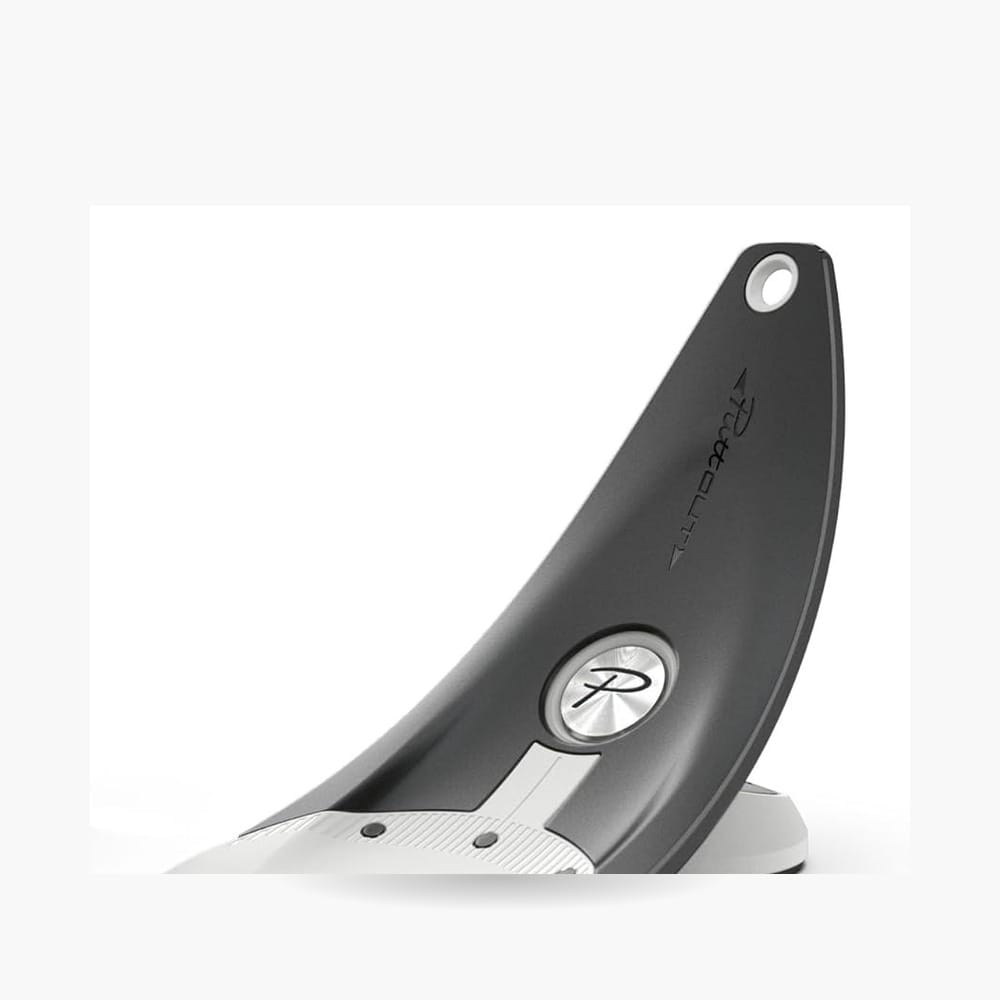
PuttOut Pressure Putt Trainer, Stone colorway, ball-return pace trainer.
The PuttOut Pressure Putt Trainer is a compact putting aid built around two features working together. The first is a curved ramp that catches a well-paced putt and returns the ball to you, so a made putt sends the ball straight back instead of leaving you to walk it down or reach for the next one. The second is a micro-target: a narrow gate at the mouth of the ramp that only accepts putts hit at the right speed, not just the right line. A putt that's too firm rattles out or skips past the gate instead of dropping, which is the mechanism that actually trains pace rather than just rewarding a good read.
Independent testing and aggregated user reviews across Golf Monthly, GOLF.com, Practical Golf, Plugged In Golf, and MyGolfSpy consistently place it as a top budget-to-mid-tier putting aid, specifically for pace and speed control rather than alignment or stroke mechanics. Golf Monthly has gone further, calling it the best putting trainer they've used, a framing that lines up with how often "addictive" shows up as the most-repeated word across owner reviews. A companion mat is sold separately for golfers who want a longer, truer surface to putt on; it's a different product from the trainer itself, and it's worth knowing that up front before you shop.
Strengths
Fast reps, less friction. The ball-return mechanism is the single most-cited strength across independent reviews, since it turns a five-minute practice window into meaningfully more putts than a trainer you have to retrieve by hand.
No setup or calibration. Unlike launch-monitor-based practice tools, it works straight out of the box on any flat surface, which keeps it genuinely usable for a quick session before work rather than something that gets left in a closet.
Durability that holds up over years, not months. Owner reports cited across the aggregated reviews describe the mechanism itself lasting years of regular use, which matters for a product in this price range.
Portable enough to travel with. It's small enough to pack for a hotel room or an office floor, which keeps practice consistent between range trips.
Honest limitations
The micro-target can frustrate as easily as it motivates. It's calibrated to be genuinely hard, and some players find that discouraging rather than engaging, especially early on before their pace control improves enough to see progress. I'll admit there's something respectable about a gadget built to embarrass a golfer's confidence in their own speed control, mostly because it refuses to flatter you the way a forgiving mat does.
Feedback is pace and line only. It won't tell you anything about your stroke path or face angle at impact, so golfers chasing that kind of mechanical feedback need a different tool entirely, not this one.
Surface matters more than the marketing suggests. It's designed for a flat, low-pile surface, and thick or plush carpet noticeably blunts both the roll and the feedback the micro-target is supposed to give you.
The companion mat, not the trainer, has the recurring durability complaint. Some owners report the separately sold mat developing ripples or grooves over time. That's a mat-specific issue in the aggregated reviews, not a fault in the trainer unit reviewed here, and the two shouldn't be confused when weighing a purchase.
PuttOut Pressure Putt Trainer vs the alternatives
The PuttOut Pressure Putt Trainer isn't competing with alignment tools like Eyeline Golf's putting aids; the two solve different problems and pair naturally in the same practice routine, one for start-line accuracy and one for pace. Its real head-to-head competitor is the Perfect Practice Putting Mat, priced around $149, which offers a longer, truer rolling surface for golfers who want to work on stroke consistency over real distance. The PuttOut trades that longer surface for portability and a lower price, and stays narrowly focused on speed control rather than trying to be a complete putting station. Golfers choosing between the two are really choosing between surface quality and roll length on one side, and portability, price, and pace-specific training on the other.
Verdict
For golfers whose putting problem is speed, not alignment, the PuttOut Pressure Putt Trainer is difficult to fault at its price point. The ball-return mechanism keeps practice volume high, the micro-target genuinely trains the skill it claims to, and the aggregated review consensus across five independent outlets agrees on both points. It won't fix a broken stroke path or a bad start line, and the micro-target's difficulty is a feature some golfers will need to push through rather than enjoy immediately. For distance control specifically, pairing it with the lag-putting fixes in How to Stop Three-Putting: A Data-First Fix covers both the practice tool and the on-course habit. Worth noting: this is a different PuttOut product from the PuttOut Pro Putting Gates recommended in How to Convert Short Putts Under Pressure, which focuses on start-line training for pressure putts rather than pace, so don't assume the two reviews are pointing at the same purchase.
Frequently Asked Questions
What is the PuttOut Pressure Putt Trainer used for?
It's a putting aid built to train speed and pace control, not alignment or stroke mechanics. A ball-return ramp and a speed-sensitive micro-target only let a well-paced putt drop, which is what teaches the skill.
Does the PuttOut Pressure Putt Trainer come in different colors?
No. It's sold in a single Stone colorway, so there's no color decision to make when you buy it.
Is the PuttOut Pressure Putt Trainer good for beginners?
It can be, but the micro-target is intentionally difficult, so beginners should expect an adjustment period before it starts feeling rewarding rather than frustrating. It's better suited to golfers who already have a repeatable stroke and want to sharpen their distance control specifically.
What's the difference between the PuttOut Pressure Putt Trainer and the PuttOut Pro Putting Gates?
They're different products from the same brand. The Pressure Putt Trainer reviewed here focuses on pace and speed control through its ball-return micro-target, while the Pro Putting Gates, covered in a separate how-to on converting short putts under pressure, focuses on start-line accuracy.
Some links in this article are affiliate links. If you buy through them, I earn a small commission at no extra cost to you. This never influences what I cover or recommend. I link to gear I'd buy myself.
The golf newsletter that cuts the hype
Data-backed reviews and advice that works. No brand spin.
Recommended products
James WhitfieldGolf writer
James Whitfield plays off a 7 handicap in the Pacific Northwest. A former tech pro, he reads what independent tests show, cross-references owner reports, and turns the evidence into buying advice. He's happier with a spec sheet than a putt.
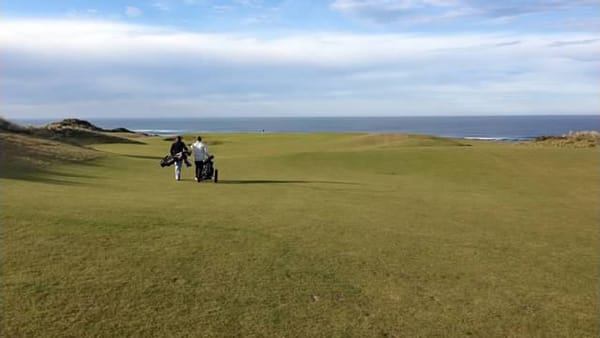
Bandon Dunes earns its reputation as a top-10 US public course and a genuine links test on the Oregon coast, but it's a walking-only, 7,212-yard (6,595m) course with no published green fee, so it suits golfers who can handle a long walk and a lottery booking process more than a quick or budget trip.
A $60-80 laser that nails straight-line distance in independent testing, but skips the physical slope switch and tournament-grade weatherproofing of pricier units.
Bandon Dunes earns its reputation as a top-10 US public course and a genuine links test on the Oregon coast, but it's a walking-only, 7,212-yard (6,595m) course with no published green fee, so it suits golfers who can handle a long walk and a lottery booking process more than a quick or budget trip.
Chandler Blanchet, a PGA Tour rookie, leads the Bermuda Championship solo at 9 under (62) after the first round, one shot clear of a group of four at Port Royal.