Launch Monitor Total Cost: A 5-Year Guide
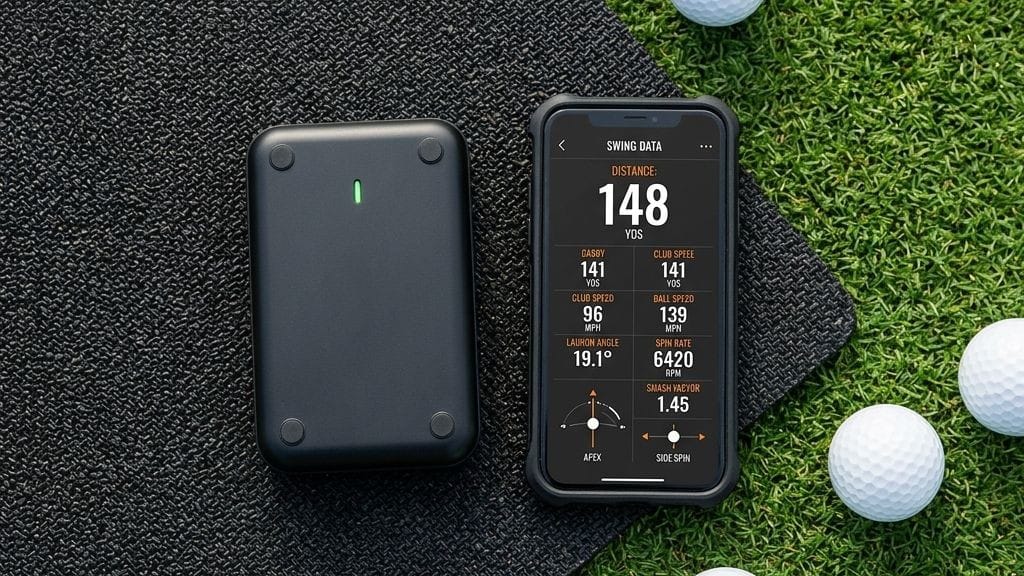
The price you see on the product page isn't the price you'll pay over five years. For most launch monitors in this comparison, hardware accounts for 80% or more of the total five-year cost. The remaining 20% arrives in layers: annual platform subscriptions, sim software licenses bought separately, and a handful of requirements that manufacturer product pages rarely surface prominently.
The pattern is predictable enough to be a category design choice rather than an accident. A golfer researches hardware prices, buys the device that fits the day-one budget, then discovers that the data they actually want sits behind a subscription tier. Or that indoor simulation requires additional third-party software. Or that their device generates better spin data with a specific ball that costs $70 a dozen. None of this is hidden, exactly; it's scattered across subscription pages, software storefronts, and Reddit threads rather than presented in one place.
This guide brings it together. The table below covers nine devices across the price range, from the entry-level Garmin Approach R10 to the commercial-grade Trackman 4, with hardware costs, subscription requirements, and a five-year total cost estimate for each. The sections that follow cover the upgrade trap, the hidden costs that don't appear on any comparison chart, and a framework for figuring out where to spend before you commit.
- 1Hardware dominates. 80% or more of your five-year total for most devices. Entry-level radar is the exception. Subscriptions can push hardware's share below 60%.
- 2Entry-level real cost. Can double or triple over five years once simulation software and annual platform fees are added.
- 3Ball costs. Devices requiring proprietary balls add $1,680 to $2,520 per year for regular practitioners, a cost that appears on no comparison chart.
- 4Upgrade trap. Buying entry-level, hitting its limits, and buying up typically costs $150 to $250 in resale depreciation per cycle.
- 5Right question. Not your day-one budget, but your five-year budget.
- 6Three questions before buying. Do you want indoor simulation? Do you need club data? What is your five-year spend ceiling?
Why the sticker price is only the start
The launch monitor category developed in two directions simultaneously. Devices like the Garmin Approach R10 and Rapsodo MLM2PRO entered the market at accessible hardware prices (under $700) by moving value into their software platforms, where access is priced as an annual subscription. At the premium end, devices like the Foresight GC3 and Trackman 4 came from a professional fitting and coaching market where hardware prices were already high and software was a secondary cost; as those devices moved toward consumer audiences, subscription layers followed in some cases and not others.
The result is a category where sticker price tells you less than it once did. A $699 device with a $99-per-year hardware subscription and $250-per-year sim software is a $1,694 five-year commitment before you've bought a net, a mat, or a projector. A $2,995 device with minimal subscription requirements and bundled software can land at a lower five-year total for a golfer who uses it heavily.
Three structural factors drive the ongoing costs:
Platform lock-in. Most manufacturers run proprietary software ecosystems and price data access, course libraries, or advanced metrics through those platforms. Switching devices often means switching platforms and losing historical session data stored in the old system.
Tiered data access. Several manufacturers gate their most analytically useful metrics (spin axis, face angle, club path) behind higher subscription tiers. The hardware is often capable of capturing the data; the platform controls whether you see it.
Software fragmentation. Full-featured indoor simulation typically requires third-party software (GSPro, E6 Connect) that runs independently of the manufacturer's platform. This is a separate annual cost that most buying guides treat as optional. For golfers who bought the device specifically to play courses indoors, it isn't optional. It's the whole point.
The 80% figure comes from running device-by-device math across the comparison below, using published pricing from manufacturer websites as of May 2026. For seven of the nine devices compared, hardware constitutes 75% or more of the five-year total under a standard usage assumption: one active subscription tier and basic indoor simulation software where applicable. The Garmin R10 is the sharpest exception. Under a full sim-use scenario with GSPro added, hardware drops to roughly 25% of the five-year total, because the $599 hardware cost is small relative to the ongoing software stack.
Cost breakdown by device
Prices below are drawn from manufacturer websites and Amazon listings, verified in May 2026. All figures are in USD. The five-year TCO column includes hardware and the primary annual subscription only; it excludes simulation software and accessories, which are covered in the hidden costs section. Notes below the table expand on each device's pricing structure.
Prices accurate as of May 2026.
| Device | Hardware cost | Required subscription (yr) | Optional/higher tier (yr) | Proprietary balls required | 5-year TCO (hardware + primary subscription) |
|---|---|---|---|---|---|
| Garmin Approach R10 | $599 | $99.99 (Garmin Golf Premium) | None | No | $1,099 |
| Rapsodo MLM2PRO | $699 | $99 (Golf Performance) | None | No | $1,194 |
| SkyTrak+ | $2,995 | $99.99 (Play+) | $599.99 (Elite) | No | $3,495 (Play+) |
| Bushnell Launch Pro | $2,995 | None (Basic is free) | $199 (Silver); $499 (Gold) | No | $2,995 (basic); $3,990 (Silver) |
| Garmin Approach R50 | $4,999 | $99.99 (Garmin Golf Premium) | None | No | $5,499 |
| Full Swing KIT | $4,995 | None | $100 (cloud storage) | No | $4,995 |
| Uneekor QED | ~$6,000 | None (Player package free; all ball + club data included) | Pro tier for third-party software connector (price TBC) | Yes (for Club Optix) | ~$6,000 |
| Foresight GC3 | ~$7,500 | None (FSX Play included with purchase) | None required | No | ~$7,500 |
| Trackman 4 | $21,495 | $1,100 (TPS, years 2-5) | None additional | No | ~$25,895 |
Garmin Approach R10. The R10 requires the Garmin Golf Premium subscription ($99.99/year) for course play, home sim integration, and the full shot data set. It isn't designed for indoor use as a primary sim setup without additional sim software (GSPro or E6 Connect), which adds approximately $300 to $600 per year and brings the real five-year total for an indoor sim user to roughly $2,600 to $3,995.
Rapsodo MLM2PRO. Requires outdoor use with GPS satellite lock to generate full carry and spin data; indoor use with full metrics isn't supported. The $99/year Golf Performance subscription enables spin rate and video replay. For outdoor range sessions, it's the lowest five-year cost in the category for a device with spin data. It doesn't belong in a home sim context.
SkyTrak+. The Play+ subscription ($99.99/year) enables sim play through SkyTrak's built-in course library. The Elite tier ($599.99/year) adds advanced fitting data and custom club profiles. SkyTrak+ integrates with GSPro, E6 Connect, and other third-party sim platforms without an additional hardware or API fee; sim software is a separate purchase. At $3,495 over five years (hardware plus Play+), it's the lowest five-year TCO among devices that fully support indoor sim with club data.
Bushnell Launch Pro. The Basic tier is free and covers core ball metrics (ball speed, carry, launch angle). Club-level data (spin axis, face angle, club path) requires the Silver tier ($199/year) or Gold tier ($499/year). The hardware cost is identical to SkyTrak+, making the subscription structure the primary differentiator for a golfer choosing between the two. No proprietary ball requirement.
Garmin Approach R50. An all-in-one device with a built-in 10-inch touchscreen, released in 2024 at $4,999. The Garmin Golf Premium subscription structure is identical to the R10 ($99.99/year), but the higher hardware cost means subscriptions represent a smaller share of the five-year total (under 10%). For golfers who want a self-contained setup with an integrated display, the R50 eliminates the need for a separate tablet or screen in the sim setup.
Full Swing KIT. No mandatory subscription. Optional cloud storage is $100/year; E6 Connect sim software is a separate purchase (see the simulation software section below). Compatible with third-party software as an alternative or addition to Full Swing's proprietary platform. The five-year TCO of $4,995 reflects hardware only, with no required ongoing fees.
Uneekor QED. Uneekor has replaced its previous Zone + Club Optix subscription model with a free Player package that includes all ball and club data, including Club Optix (club path, face angle, angle of attack). No mandatory subscription for data access; the five-year TCO is hardware only at approximately $6,000. Golfers who want to connect the QED to third-party sim software (GSPro, E6 Connect) will need the Pro tier; pricing for the Pro tier is not confirmed at time of writing. The ball requirement remains: Club Optix optical tracking requires either Uneekor-marked balls or Titleist RCT certified balls ($70/dozen at official retail; $65 to $85 across third-party retailers). At two to three dozen per month, ball costs add $1,680 to $2,520 per year, a figure that doesn't appear in any launch monitor comparison table.
Foresight GC3. FSX Play simulation software is included with the hardware purchase, with no mandatory annual fee for the GC3. The GC3 is the hardware base for the Bushnell Launch Pro: same optical sensor specification, different retail packaging and software bundling. No proprietary ball requirement. The five-year TCO reflects hardware cost only.
Trackman 4. Included for range completeness. Hardware starts at $21,495. The hardware purchase includes the first year of TPS. From year 2 onward, TPS runs $1,100/year. At approximately $25,895 over five years, it's in a different financial category from the consumer devices above.
The upgrade trap
The r/golfsimulator community on Reddit documents a consistent pattern, reported often enough to be reliable signal rather than anecdote: a golfer buys an entry-level device, uses it for range sessions, decides they want indoor simulation, and then discovers that the device's accuracy or feature set doesn't match their actual use case. They sell the unit at a $150 to $250 loss and buy up.
The trap has a predictable shape. Entry-level radar devices like the Garmin R10 are accurate enough for ball speed and estimated carry, but spin figures are calculated rather than directly measured, which introduces variance that compounds in indoor sim conditions. For golfers using data to validate face-to-path relationships or analyze fitting changes, calculated spin is often sufficient for general feedback. For golfers who need the precision to confirm a shot shape they're actively programming (the kind of session covered in this site's draw and fade guide), measured spin axis matters more.
Impact efficiency is a related precision ceiling: smash factor (ball speed divided by club head speed) requires accurate club head speed data, and the same estimation variance that affects spin figures on entry-level radar devices carries through to smash factor readings too.
The decision point usually comes when the golfer wants to take the device indoors. At that point, several limitations surface at once: outdoor-only devices (Rapsodo MLM2PRO) don't support indoor use; devices with limited software ecosystems need additional third-party software; and the accuracy threshold for indoor simulation, where the ball travels only 10 to 15 feet (3 to 4.6m) before hitting the screen, is more demanding than outdoor range use where ball flight provides additional validation.
A framework for buying right the first time:
Answer these three questions before committing to a device:
Do you want indoor simulation? If yes, the device needs to support close-range measurement indoors. That eliminates the Rapsodo MLM2PRO immediately and raises the question of which sim software you'll need on top of the hardware.
Do you need club data? Club path, face angle, and spin axis are the metrics that make shot-shape work and equipment fitting analysis meaningful. Check whether your target device provides that data on the free or base subscription tier, or whether it's behind a paid tier; factor that subscription into your day-one budget calculation, not as a discovery six months later. (Worth noting: this is the question I tend to over-index on. For a casual range user who mainly wants carry distances, the first question matters more.)
What's your five-year budget, not your day-one budget? Take your hardware target, add the annual subscription cost multiplied by five, add sim software if you plan to use it indoors. That's your real number. If it's above your actual ceiling, either the device or your usage expectations needs to change.
The golfer who works through these three questions before buying almost never ends up in the upgrade cycle. The golfer who filters on hardware price alone usually does.
Hidden costs most guides miss
The table above covers hardware and subscriptions. Four additional cost categories appear after you've already made the purchase.
Indoor setup hardware
Using a launch monitor indoors requires at minimum a net. A basic golf net runs $200 to $400 at current retail. A full enclosure with side barriers runs $800 to $2,500 or more. An impact screen for projection-based simulation runs $600 to $3,000 depending on size and material. A projector runs $500 to $3,000. A hitting mat with a realistic turf surface runs $150 to $700.
The practical floor for an indoor setup without projection (just a net and mat) is approximately $500 to $800 on top of the device cost. A full sim setup with projection runs $2,500 to $7,000 or more. Neither of these costs appears on any launch monitor product page.
Simulation software
Most launch monitors include a proprietary app with a basic course or driving range environment. Most serious sim users eventually move to one of two active third-party platforms, each priced separately from the manufacturer's subscription:
GSPro: $250 per year (subscription). Widely regarded as the best graphics and course library in the consumer sim category, with an active community and regular course uploads. Compatible with most launch monitors via API or direct integration.
E6 Connect: Basic tier at $300 per year; Expanded tier at $600 per year. The longest-established consumer sim platform with broad device compatibility.
The Golf Club 2019: no longer available on Steam (delisted). Available from third-party key resellers at nominal cost (typically $1 to $2 per key); there's no official storefront or ongoing support. Compatible with several launch monitor brands via direct API, but with no active distribution channel, treat it as a legacy option rather than a recommended path.
If indoor simulation is part of your plan, treat the sim software subscription as part of your hardware budget from day one.
Proprietary ball requirements
Most devices in the comparison work with any standard golf ball. The main exception:
Uneekor QED (Club Optix): Full club data on the QED requires Club Optix, which tracks marks on the ball using the device's optical sensors. Uneekor-certified balls and Titleist RCT balls ($70/dozen at official retail) are the two main options. Titleist RCT balls are otherwise identical to standard Pro V1 or Pro V1x construction with an internal marking pattern the optical sensor reads. At two to three dozen per month for a regular practice schedule, this adds $140 to $210 per month to the ongoing cost ($1,680 to $2,520 per year), a figure that doesn't appear in any launch monitor comparison table.
Other devices in the comparison (Garmin, SkyTrak+, Bushnell Launch Pro, Foresight GC3, Full Swing KIT) work with standard balls.
Subscription stacking for sim users
Golfers using SkyTrak+ or Bushnell Launch Pro with GSPro will pay both the manufacturer's subscription (for hardware-level data access) and the GSPro subscription (for the simulation environment). These are separate payments to separate companies, both required simultaneously for the full experience. A SkyTrak+ user running GSPro pays $99.99/year to SkyTrak and $250/year to GSPro: roughly $350 per year in software costs on top of the $2,995 hardware. Over five years, that's approximately $4,745 total. It's more than the SkyTrak+ product page implies, but still the lowest five-year cost for a fully-featured indoor sim setup with club data in the current market.
Building or buying a home golf simulator? I put the research most buyers do the hard way into one place. The Home Golf Simulator Handbook walks through picking the right launch monitor, fitting the setup to your actual space, and building a practice plan that pays off, without the brand loyalties or affiliate pressure that shape most buying advice.
Frequently Asked Questions
Do all launch monitors require a subscription?
No. Several premium devices require no mandatory subscription. The Foresight GC3 includes FSX Play simulation software with the hardware purchase at no additional annual fee. The Full Swing KIT has no required subscription, with optional cloud storage at $100/year. The Bushnell Launch Pro has a free Basic tier covering core ball metrics (ball speed, carry, launch angle), but club data (face angle, club path, spin axis) requires a paid Silver or Gold subscription. Entry-level devices like the Garmin R10 and Rapsodo MLM2PRO require annual subscriptions for full data access and course play features.
Which launch monitor has the lowest five-year cost for indoor simulation?
For indoor simulation with full ball and club data, the SkyTrak+ with the Play+ subscription ($99.99/year) has the lowest five-year total among devices that fully support indoor use. Hardware plus five years of Play+ runs $3,495. Add GSPro at $250/year and the five-year total reaches approximately $4,745. The Bushnell Launch Pro is close in hardware price; adding the Silver subscription ($199/year) brings the five-year hardware-plus-subscription total to $3,990, and adding GSPro on top brings the five-year total to a similar range. The difference comes down to which software ecosystem you prefer and whether SkyTrak's or Foresight's ball and club data methodology fits your use case better.
Do I need special golf balls for my launch monitor?
Most launch monitors work with any standard golf ball. The main current exception is the Uneekor QED, which requires Uneekor-certified balls or Titleist RCT balls for Club Optix (the feature that tracks club path, face angle, and angle of attack). Titleist RCT balls retail at $70/dozen at official retail and are otherwise identical to standard Titleist balls. Garmin, SkyTrak+, Bushnell Launch Pro, Foresight GC3, and Full Swing KIT all work with standard balls. If you're buying a Uneekor QED and plan to use Club Optix, factor the ball cost into your annual budget before committing.
What to do before you buy
The five-year numbers above won't all age perfectly. Subscription prices change, software tiers get restructured, and manufacturers bundle costs differently as the category matures. The pattern, though, is stable: hardware is the predictable cost, and the subscription and software stack is where the surprises live.
Before committing to any device, calculate your five-year total: hardware plus primary subscription times five, plus sim software if you plan to use it indoors. If that number is above your real budget, something has to change. It's better to know that before the box arrives than after.
Two devices that represent strong starting points for different use cases:
- Garmin Approach R50: All-in-one device with a built-in 10-inch touchscreen at $4,999. For golfers who want accurate ball and club data in a self-contained package, without a separate display or tablet in the setup.
- SkyTrak+: Best value for golfers whose primary use case is indoor simulation with full club data, based on five-year TCO.
For a full device comparison including models under $1,000, see the complete consumer launch monitor guide.
For golfers whose primary use is outdoor practice and distance mapping, see the bag mapping guide.
Two retailers worth knowing beyond Amazon: Rain or Shine Golf and Indoor Golf Shop carry a wider range of launch monitor hardware and often have demo or refurbished units at reduced cost. Neither is a site affiliate; they're included because golfers on r/golfsimulator consistently cite them for pre-purchase advice and price matching.
Some links in this article are affiliate links. If you buy through them, I earn a small commission at no extra cost to you. This never influences what I cover or recommend. I link to gear I'd buy myself.









The golf newsletter that cuts the hype
Data-backed reviews and advice that works. No brand spin.
Recommended products