The Best Launch Monitor Under $1,000 in 2026: Four Options, One Clear Answer
MyGolfSpy's best-under-$1K launch monitor for 2025 is the MLM2PRO. James Whitfield breaks down four options and the real 12-month cost.
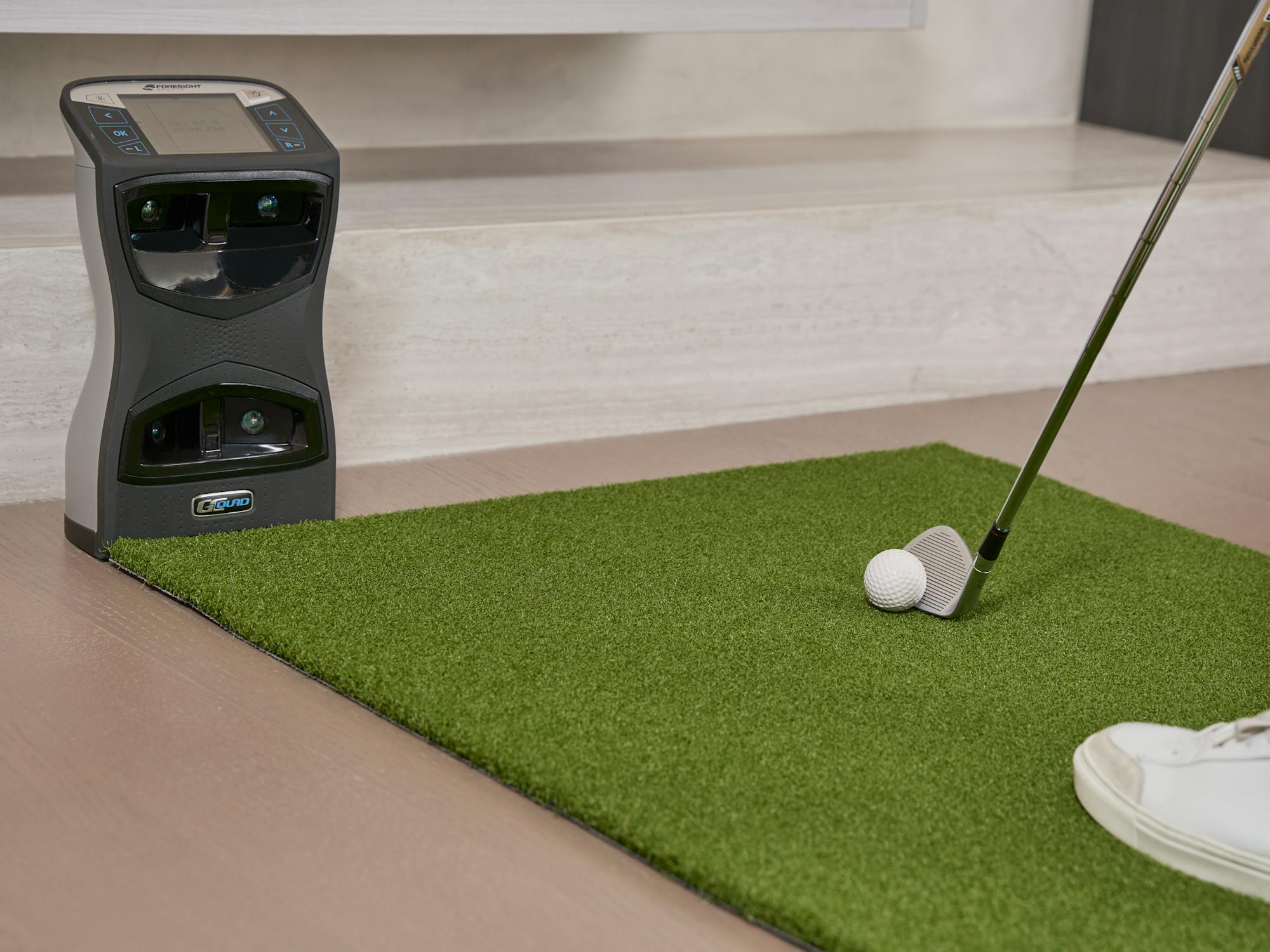
The best launch monitor under $1,000 is the Rapsodo MLM2PRO. MyGolfSpy named it best in its category in their 2025 personal launch monitor test, and independent accuracy data from Breaking Eighty and Rain or Shine Golf backs that up: indoor spin rates within 200 RPM of a GCQuad when using Callaway RPT balls, and carry distance within 2 yards of Trackman on wedges and mid-irons.
That's the short answer. The longer answer depends on where you'll use it, whether you care about outdoor spin numbers, and how much you're willing to spend on specialty balls over the next 12 months. Four monitors in this price bracket are worth your attention. Three are genuinely good. One has a limitation that most review sites bury in the fine print.
Quick Picks
- Best overall under $1,000: Rapsodo MLM2PRO ($699.99), accuracy that rivals monitors at twice the price indoors.
- Best for indoor-only setups: Square Golf ($699.99) if your monitor will never leave your garage or sim room. Stock can be limited.
- Best for home simulator on a budget: Garmin R10 ($599.99) if 42,000+ courses via Home Tee Hero and outdoor portability matter more than spin precision.
- Watch for hidden costs: The MLM2PRO needs Callaway RPT balls (~$35-$50/dozen) for indoor spin data. Nobody puts that in their comparison tables. I do.
What Actually Matters at This Price Point
Three metrics separate a useful sub-$1K launch monitor from an expensive toy: ball speed accuracy, spin rate measurement, and carry distance reliability. Everything else is noise.
Ball speed is the foundation. Every other calculated metric, carry, total distance, launch angle, depends on it. A monitor that's off by 3 mph on ball speed compounds that error across every data point it produces. At this price, expect ball speed within 1-2 mph of a Trackman or GCQuad.
Spin rate is where things get interesting. Full spin data (backspin and sidespin) lets you see shot shape, diagnose why your 7-iron balloons, and dial in wedge distances. Estimated spin? Less useful. Direct spin measurement is a method where camera or radar technology reads the actual rotation of the ball during flight, rather than estimating it. Algorithmic spin estimation is a calculated approximation of spin rate based on ball speed, launch angle, and descent angle, not a direct observation. The MLM2PRO gives you direct spin indoors with RPT balls. The Garmin R10 estimates spin using an algorithm. That distinction matters more than any feature list.
Carry distance is the number you'll actually use on the course. If your monitor says you carry a 7-iron 165 yards and the real number is 158, you're going to be short all day. Short-sided on every approach. At the sub-$1K level, both the MLM2PRO and Square Golf get within a few yards of Trackman on iron shots.
What matters less at this price: club path accuracy (directionally useful but not reliable enough for swing coaching at sub-$1K), face angle (same story), and metric count. A monitor that tracks 30 data points at +/-15% variance is less useful than one that nails five metrics cold. Fewer numbers, higher confidence.
The Picks
Rapsodo MLM2PRO: Best Overall Under $1,000
Price: $699.99 | Available at: Amazon
MyGolfSpy named it "Best Under $1K" in their 2025 personal launch monitor test, and the independent data backs that up. Breaking Eighty and Rain or Shine Golf both found indoor spin rates within 200 RPM of a GCQuad when using Callaway RPT balls. Carry distance came in less than 2 yards off Trackman on gap wedge and 7-iron indoors. Driver carry was about 5 yards off, which is reasonable at this price.
Those numbers put it closer to the $2,000+ tier than anything else under a grand.
Here's the catch: outdoor spin data requires Callaway RPT balls. Without them, you get ball speed, carry, and launch angle outdoors, but no spin. This isn't a minor footnote. If you're buying primarily for outdoor range sessions and spin data matters to you, the MLM2PRO becomes a different product entirely. I break that down further below.
For indoor use with RPT balls, though? It's not close.
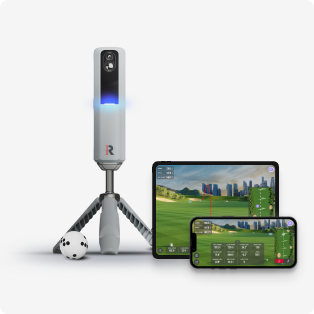
Rapsodo MLM2PRO
Square Golf: Best for Indoor-Only Setups
Price: ~$699.99 | Available at: Amazon (stock limited)
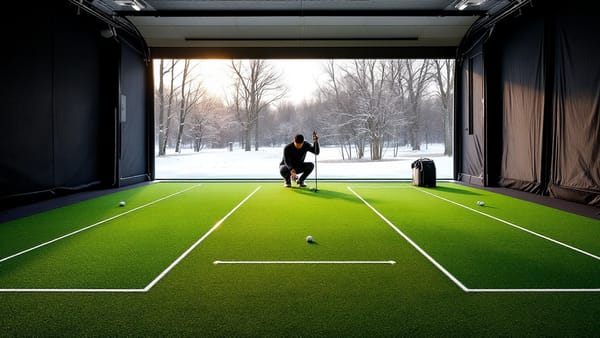
If your launch monitor will live permanently in a garage bay or dedicated sim room and never see sunlight, the Square Golf is purpose-built for exactly that. It's optimized for indoor accuracy and doesn't try to be an outdoor device.
Some retailer listings flag an imminent price increase, though such urgency claims aren't always reliable. Take that as you will. More interesting: the Square Golf Omni, their indoor/outdoor version, launches late April 2026 at roughly $1,600. If you need both environments, waiting for the Omni or going MLM2PRO are your two paths.
For a pure indoor setup on a budget, the Square Golf matches the MLM2PRO's price at $699.99 and delivers strong accuracy data in its element.
Garmin R10: Best for Home Simulator on a Budget
Price: $599.99 | Available at: Amazon
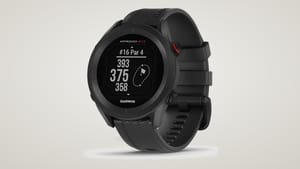
The R10 tracks 14 metrics including ball speed, launch angle, and club path, and pairs with Garmin's Home Tee Hero for access to 42,000+ virtual courses. At $599.99, it's the cheapest way into a functional home simulator setup.
Outdoor use is where the R10 earns its keep. Take it to the range, pair it with your phone, and get real-time feedback on every shot. No specialty balls required. The data won't match a GCQuad, but for a 14-22 handicapper working on consistency, it's more than enough to spot patterns and track improvement over time.
Spin data is the tradeoff. The R10 uses algorithmic spin estimation rather than direct measurement. For wedge work and shot shaping analysis, that's a real limitation. For general practice and having fun on a virtual course? Non-issue.
At $200 less than the MLM2PRO, the savings fund a decent hitting mat or net.
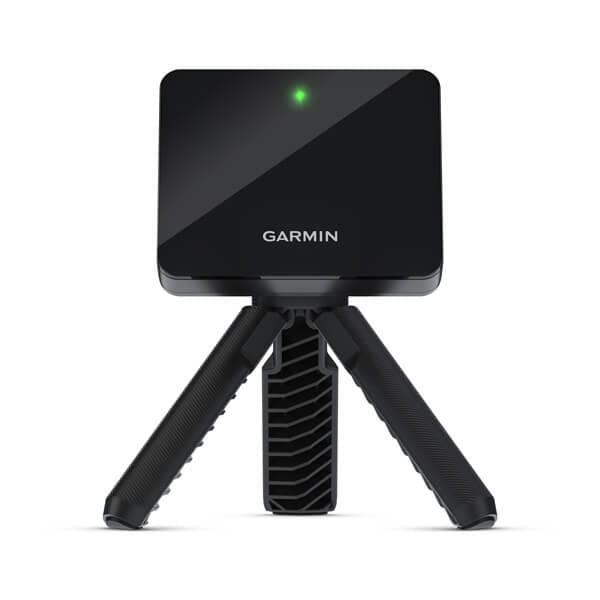
Garmin Approach R10
Swing Caddie SC4 Pro: Honorable Mention
The SC4 Pro sits in the same price bracket as the R10 and offers a competitive feature set for range use and outdoor data collection. Some reviewers give it the edge on raw metric count. Simulator capability is where it falls short.
If virtual course access doesn't interest you and you want a straightforward range companion, give it a look. For most golfers reading this, the R10 or MLM2PRO will be the better fit.

Swing Caddie SC4 Pro
Head-to-Head Comparison
| Feature | MLM2PRO | Square Golf | Garmin R10 | SC4 Pro |
|---|---|---|---|---|
| Price | $699.99 | ~$699.99 | $599.99 | ~$500 |
| Indoor accuracy | Within 2 yds of Trackman (irons) | Strong indoor optimization | Good, algorithmic spin | Good |
| Outdoor use | Yes, but no spin without RPT balls | Indoor-only | Strong outdoor performer | Strong outdoor performer |
| Spin measurement | Direct (indoor w/ RPT balls) | Direct (indoor) | Algorithmic estimate | Direct |
| Simulator software | E6 Connect, GSPro compatible | Compatible with major platforms | Home Tee Hero (42,000+ courses) | Limited |
| 12-month TCO | ~$950-$1,050 | ~$900-$1,000 | ~$700-$800 | ~$700-$750 |
The MLM2PRO Outdoor Limitation Nobody Puts in the Headline
This deserves its own section because competitor reviews consistently bury it.
The Rapsodo MLM2PRO does not provide spin data outdoors unless you use Callaway RPT balls. Without RPT balls, outdoor sessions give you ball speed, carry distance, and launch angle. No backspin. No sidespin. No shot shape data from spin.
For a golfer who plans to use this primarily at the range with regular balls, that's a fundamentally different product than the one the indoor accuracy numbers suggest. You're getting a solid outdoor ball flight tracker. Not a full launch monitor experience.
If your use case is "indoor sim room with RPT balls, occasional outdoor sessions where I don't need spin," the MLM2PRO is still the clear winner. If it's "primarily outdoor range sessions and I want full spin data," the Garmin R10's algorithmic spin estimate, while less precise, at least gives you something on every shot with any ball.
Not a dealbreaker. A use-case question. But you should know about it before you spend $700.
True Total Cost of Ownership (12 Months)
Every buying guide compares sticker prices. Nobody includes the ongoing costs. Here's what each setup actually costs over a year, assuming 2-3 sessions per week.
MLM2PRO Indoor Setup
| Item | Cost |
|---|---|
| Rapsodo MLM2PRO | $699.99 |
| Callaway RPT balls (3-4 dozen/year) | $105-$200 |
| Hitting mat (decent quality) | $80-$150 |
| Impact screen or net | $60-$200 |
| E6 Connect or GSPro subscription | Free tier / ~$250 (GSPro one-time) |
| 12-month total | ~$945-$1,500 |
Square Golf Indoor Setup
| Item | Cost |
|---|---|
| Square Golf | ~$699.99 |
| Practice balls (standard foam or limited flight) | $20-$40 |
| Hitting mat | $80-$150 |
| Impact screen or net | $60-$200 |
| Sim software | Free tier / ~$250 |
| 12-month total | ~$860-$1,340 |
Garmin R10 Hybrid Setup
| Item | Cost |
|---|---|
| Garmin R10 | $599.99 |
| Practice balls (any) | $20-$40 |
| Hitting mat (optional for indoor) | $80-$150 |
| Net (optional for indoor) | $60-$200 |
| Home Tee Hero | Included |
| 12-month total | ~$760-$990 |
The RPT ball cost is what separates the MLM2PRO from everything else in ongoing expense. At $35-$50 per dozen, replacing them every few months, you're looking at $105-$200 per year just in balls. That hidden line item transforms a $700 purchase into a $950+ first-year commitment. So is the accuracy premium worth $200 a year in specialty balls, or would you rather save that money and live with algorithmic spin?
Still worth it for the accuracy. Just budget for it upfront.
Who Each Pick Is For
Buy the MLM2PRO if you're building an indoor practice setup and want the most accurate data under $1,000. You don't mind buying RPT balls. You want data you can trust for distance gapping and wedge calibration, and you're a 14-22 handicapper who's serious about knowing real carry numbers.
Buy the Square Golf if your monitor will live indoors permanently. You want strong indoor accuracy without thinking about outdoor capability, and you're eyeing the upgrade path to the Square Golf Omni later this year.
Buy the Garmin R10 if budget matters and you want the most versatile device for the money. You'll use it at the range and at home. Simulator access (42,000+ courses) is a big draw, and spin precision matters less to you than overall shot feedback and fun.
Buy the SC4 Pro if you're a dedicated range golfer who wants solid data without simulator bells and whistles.
Where to Buy
All four monitors are widely available. For the MLM2PRO and Square Golf especially, buying from a seller with responsive setup support helps when you're configuring a new indoor bay.
If you're going the indoor route, I wrote up how to plan a simulator room covering space requirements, ceiling height, and screen placement before you spend a dollar. And if you're weighing simulator software, I put GSPro, E6 Connect, and TGC 2019 head to head so you can see what each price tier actually gets you.
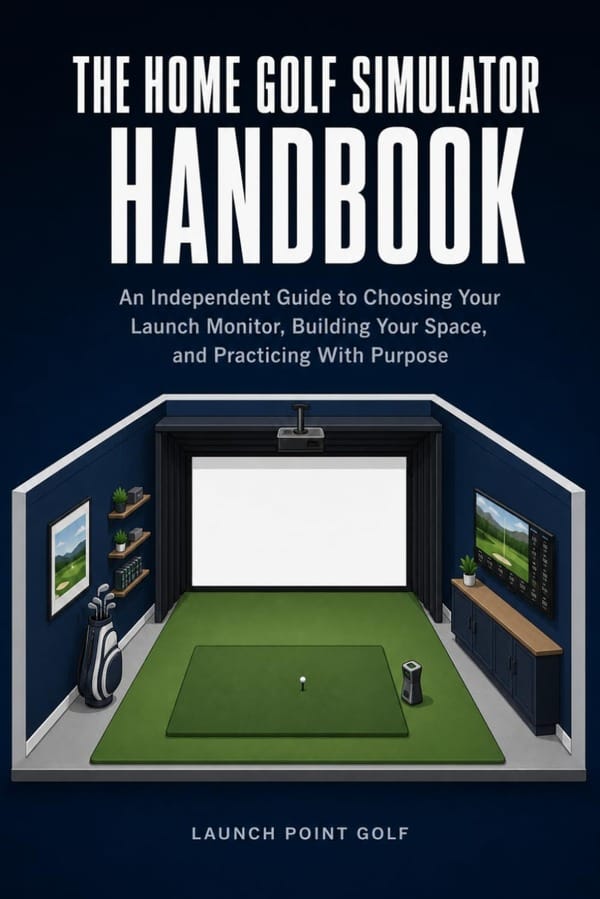
Building or buying a home golf simulator? I put the research most buyers do the hard way into one place. The Home Golf Simulator Handbook walks through picking the right launch monitor, fitting the setup to your actual space, and building a practice plan that pays off, without the brand loyalties or affiliate pressure that shape most buying advice.
Frequently Asked Questions
Is the Rapsodo MLM2PRO accurate enough for serious practice?
Yes. Independent testing from Breaking Eighty and Rain or Shine Golf shows indoor spin rates within 200 RPM of a GCQuad when using Callaway RPT balls, and carry distance within 2 yards of Trackman on irons. For a sub-$1,000 device, those numbers are strong enough for reliable distance gapping, wedge calibration, and practice feedback. MyGolfSpy named it best in its price category in their 2025 test. The key caveat: those accuracy numbers apply to indoor use with RPT balls. Outdoor accuracy without RPT balls is more limited, particularly for spin data.
Do I need special balls for the MLM2PRO?
For indoor use with full spin data, yes. The MLM2PRO requires Callaway RPT balls to deliver spin readings indoors. These run $35-$50 per dozen. Without RPT balls, you still get ball speed, carry distance, and launch angle, but no spin. Outdoors, the same limitation applies: no RPT balls means no spin data. Budget roughly $105-$200 per year in RPT balls if you're practicing 2-3 times per week.
Can the Garmin R10 work as a home simulator?
Yes, and it's the most affordable entry point for a home simulator in this guide. The R10 connects to Garmin's Home Tee Hero app, which gives you access to 42,000+ virtual courses. The experience won't match a $5,000 setup with a Bushnell Launch Pro and GSPro, but for casual rounds and practice at home, it's surprisingly capable. At $599.99, the savings over the MLM2PRO could fund a decent hitting mat and net to complete your indoor setup.
What's the difference between direct spin measurement and algorithmic spin?
Direct spin measurement (MLM2PRO, Square Golf) uses camera or radar technology to read the actual rotation of the ball. Algorithmic spin estimation (Garmin R10) calculates an approximate spin value based on ball speed, launch angle, and descent angle. Direct measurement is more accurate, especially for wedge shots where spin variation between clubs and swings is significant. Algorithmic estimation gives you a reasonable ballpark for general practice but can be off by 500+ RPM on individual shots. If you're using spin data to fine-tune wedge distances or diagnose ballooning iron shots, direct measurement is worth the price difference.
Is the Square Golf Omni worth waiting for?
The Square Golf Omni is the indoor/outdoor version, expected late April 2026 at roughly $1,600. If you need both indoor and outdoor capability and have the budget, waiting makes sense. If your budget is firmly under $1,000 and you'll primarily use a monitor indoors, the current Square Golf at $699.99 is the better value right now. The MLM2PRO also covers both environments (with the RPT ball caveat outdoors), so weigh that against waiting and spending an extra $900.
A year ago, getting spin data within 200 RPM of a GCQuad meant spending $2,000 minimum. The MLM2PRO moved that price floor. Go in with your eyes open on the RPT ball requirement, budget for the real 12-month cost, and pick the device that matches where you'll actually hit balls. If your budget stretches higher and you want to see how the mid-range stacks up, I compared the SkyTrak+ against the Garmin R50 to see which one actually earns the extra spend. Then start dialing in those wedge numbers.
Some links in this article are affiliate links. If you buy through them, I earn a small commission at no extra cost to you. This never influences what I cover or recommend. I link to gear I'd buy myself.









The golf newsletter that cuts the hype
Data-backed reviews and advice that works. No brand spin.
Recommended products